
Collection description
The National Immunisation Program (NIP) resource collection provides information and educational materials about vaccines funded through the NIP.
These resources support people to understand recommended vaccinations, who is eligible for free vaccines, and when vaccines should be received.
The collection includes brochures, fact sheets, posters, videos and other materials to help people make informed decisions about vaccination and protect against vaccine-preventable diseases.
National Immunisation Program schedule
Access the National Immunisation Program schedule.

National Immunisation Program schedule
This schedule provides recommended vaccines and schedule points under the National Immunisation Program.
National Immunisation Program general resources
General resources about the National Immunisation Program.
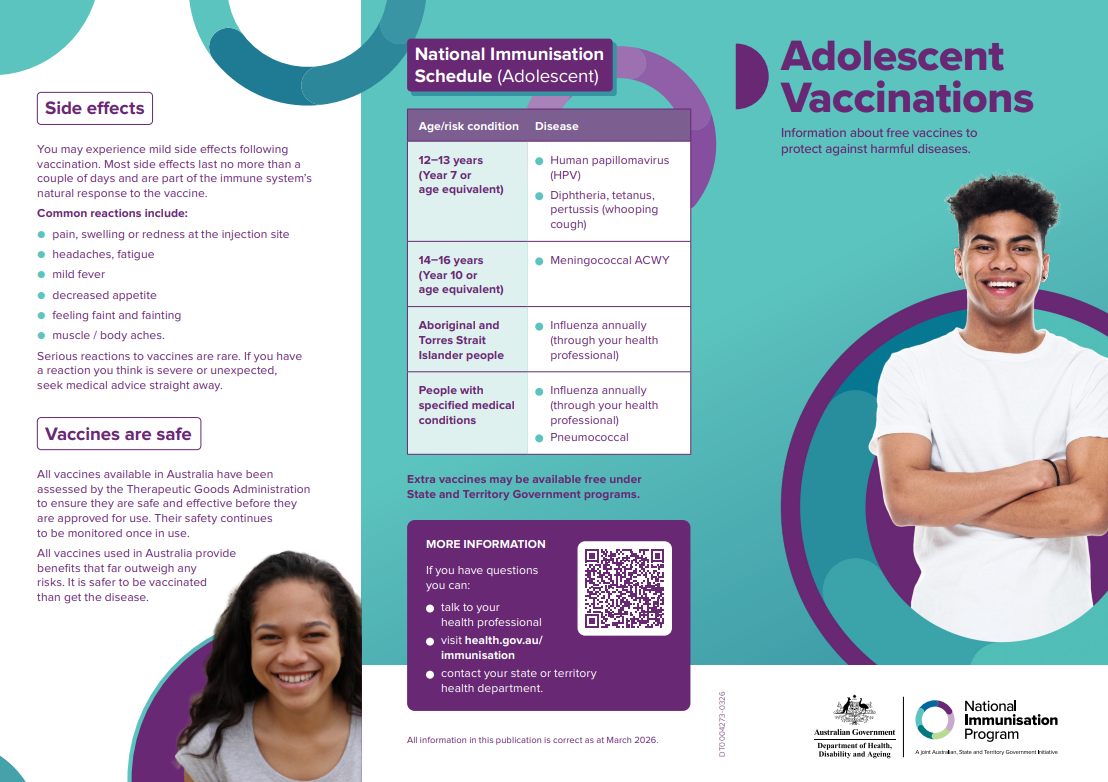
Adolescent vaccinations brochure
This brochure provides information about the recommended vaccines available free for adolescents under the National Immunisation Program.
Adult vaccinations brochure
This brochure provides information about recommended vaccines available free for adults under the National Immunisation Program.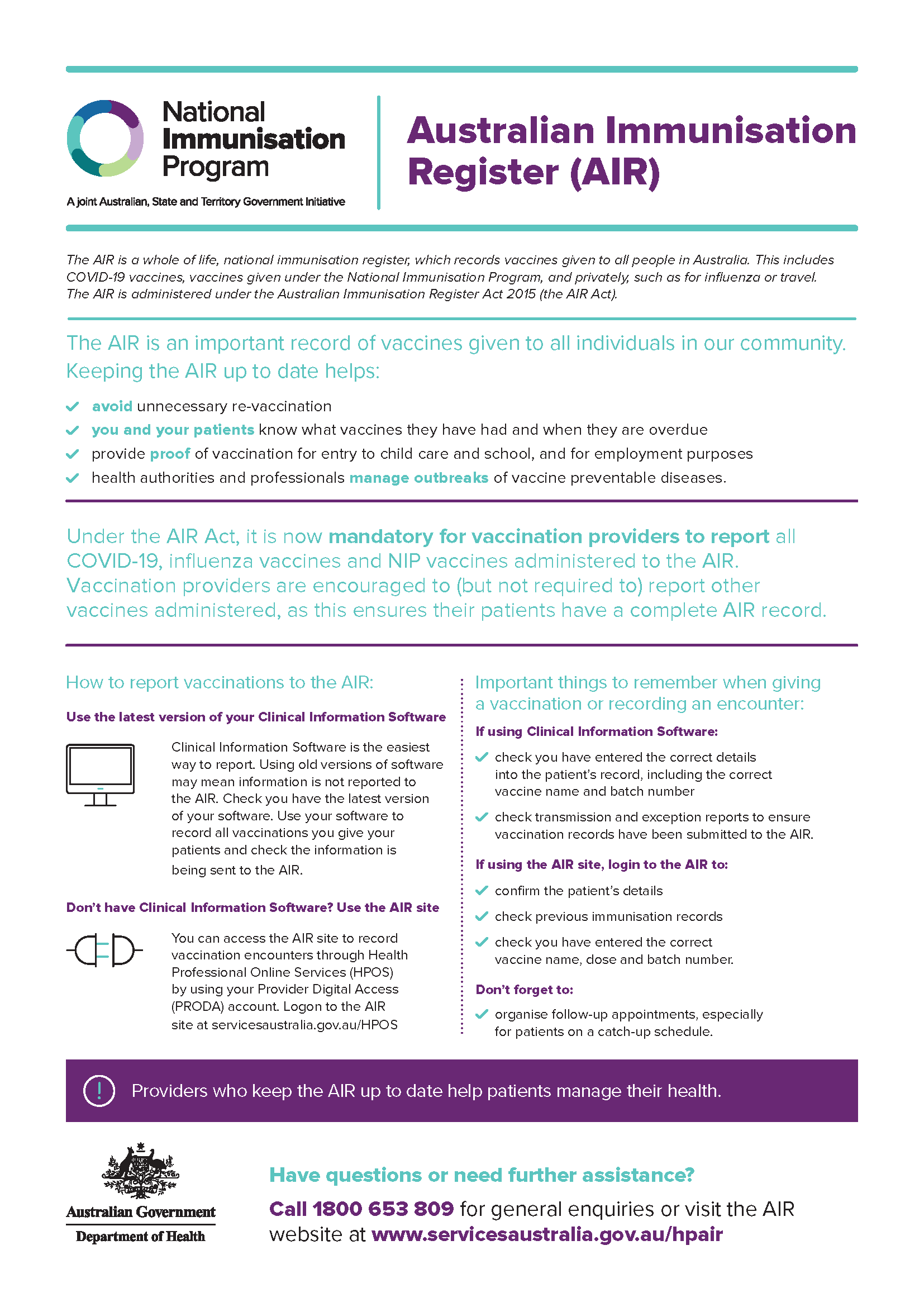
Australian Immunisation Register fact sheet
This fact sheet provides information about reporting vaccinations to the Australian Immunisation Register.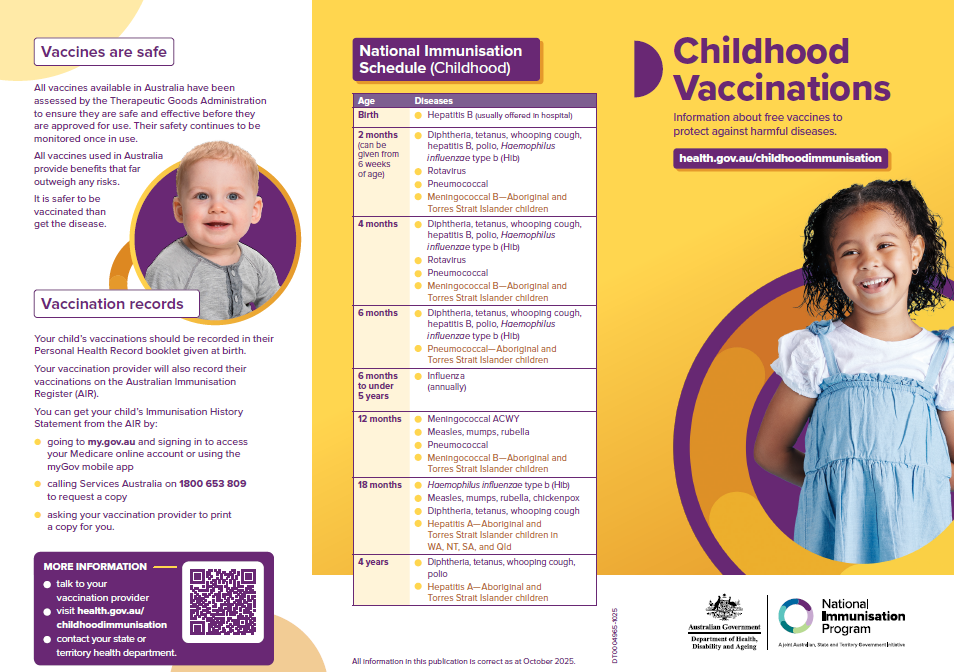
Childhood vaccinations brochure
This brochure provides information about the recommended vaccines available free for children under the National Immunisation Program.
Following vaccination – what to expect and what to do
This resource provides easy-to-read information on common reactions that may occur after vaccinations.
Maternal vaccinations brochure
This brochure provides information about the recommended vaccines available free for pregnant women under the National Immunisation Program.
National Immunisation Program (NIP) vaccine listing process
The National Immunisation Program (NIP) vaccine listing process sets out the regulatory steps that must occur in order for a vaccine to be supplied through the NIP.
National Immunisation Strategy (2025-2030) Implementation Plan
The NISIP is a comprehensive framework for immunisation efforts across the country. It details strategic vision, priorities, governance, roles and specific Commonwealth-led actions to improve vaccine coverage, equity, workforce strength, technology adoption, and governance reform.
Questions about vaccination
This document provides answers to many common questions about vaccination.
National Immunisation Program Consumer fact sheets
Fact sheets for consumers about the National Immunisation Program.

COVID-19 vaccine NIP transition – Consumer fact sheet
This fact sheet provides information about COVID-19 vaccines available on the National Immunisation Program from 1 October 2026.
National Immunisation Program – Shingles program advice for consumers
This fact sheet provides updated program advice for consumers.
Pneumococcal vaccination – Consumer fact sheet
This fact sheet provides information about getting vaccinated against pneumococcal.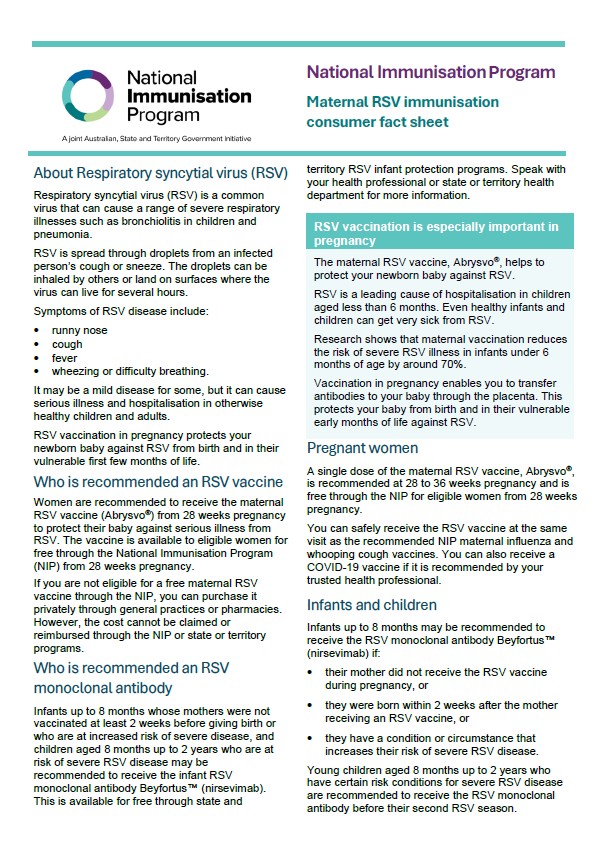
Respiratory syncytial virus (RSV) maternal vaccination consumer fact sheet
This fact sheet provides information to consumers on the maternal RSV vaccine and infant RSV immunisation products.
National Immunisation Program frequently asked questions
Frequently asked questions about the National Immunisation Program.

NIP childhood and adolescence pneumococcal vaccine Frequently Asked Questions
This fact sheet provides answers to frequently asked questions that consumers may have on the pneumococcal vaccine.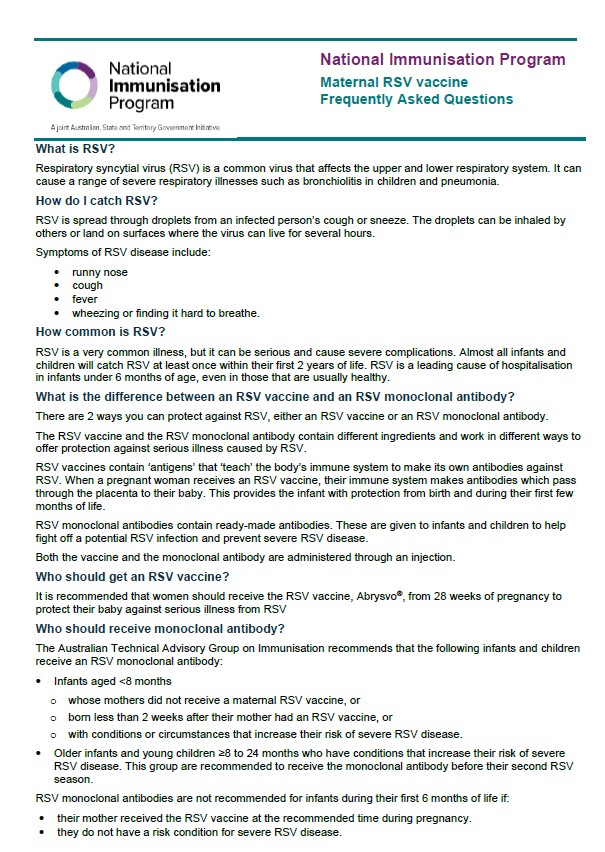
Respiratory syncytial virus (RSV) vaccine – Frequently Asked Questions
This fact sheet provides answers to frequently asked questions that consumers may have on the Maternal RSV vaccine and the RSV monoclonal antibody.
Childhood immunisation
Resources about childhood immunisation.
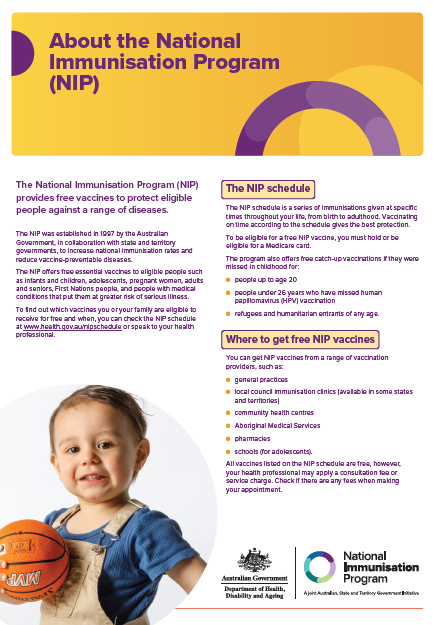
About the National Immunisation Program (NIP)
This fact sheet provides information about the National Immunisation Program (NIP). The NIP provides free vaccines to protect eligible people against a range of diseases.-
Childhood vaccinations brochure
This brochure provides information about the recommended vaccines available free for children under the National Immunisation Program. 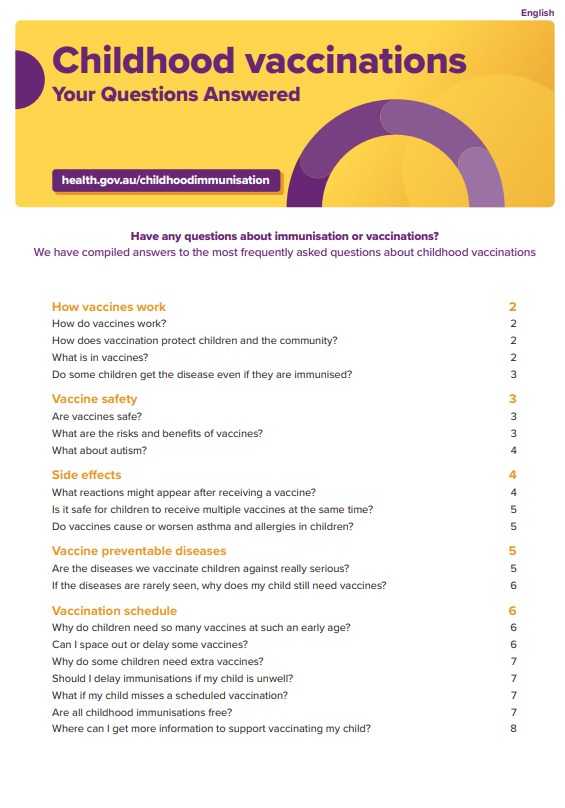
Childhood vaccinations – Your questions answered – FAQ
Have any questions about immunisation or vaccinations? We have compiled answers to the most frequently asked questions about childhood vaccinations.
National Immunisation Program childhood schedule fridge magnet card
This fridge magnet card outlines the series of recommended vaccines available free for children aged 0 to 4 years under the National Immunisation Program.
Sharing Knowledge About Immunisation (SKAI) parent website contact card
This resource provides details of the Sharing Knowledge About Immunisation (SKAI) website for parents. Healthcare providers can give this to parents to access the website at home. The SKAI website provides parent-friendly information about immunisation and provides answers to common questions.
Why does my child need a flu shot? – fact sheet
Fact sheet answering commonly asked questions about the flu shot (influenza vaccine) for children.
Childhood immunisation videos – personal stories
Personal stories about childhood immunisation told through videos.
- Image:
 02:12
Brenden Hall’s story – chickenpox can be serious in children
Brenden Hall OAM is a 5x Paralympic swimmer. At 6 years old, he contracted chickenpox, resulting in complications that changed his life forever. Chickenpox can be serious in children, and vaccines available under the National Immunisation Program protect kids from life-threatening complications. - Image:
 1:59
Dr Jana Pittman explains why childhood immunisations are important
Dr Jana Pittman is a former Australian Olympic athlete and is now a women’s health doctor. As a busy mum of 6 children, Jana tells us how she protects her kids from vaccine-preventable disease with childhood immunisations from the perspective of a mother and a medical professional. - Image:
 03:36
Lucy’s story – Influenza in children
Children can become seriously ill from influenza and in some cases, it can be fatal. This was the case for 2-year-old Lucy. In this video, her mother Rhiannon shares Lucy’s story, to warn other parents about the serious risks of flu in young children. - Image:
 3:21
Mabel’s story – Protect your children from pneumococcal
Children can become seriously ill from pneumococcal and in some cases, it can be fatal. This was the case for 6-month-old Mabel. In this video, her mother Carly shares Mabel’s story, to warn other parents about the serious risks of pneumococcal in young children and the importance of vaccination.


Childhood immunisation – schedule and tips
Information about the childhood immunisation schedule, and helpful tips.
- Image:
 1:20:00
Health professionals on the importance of routine childhood vaccination
When vaccinating your child, you may have questions about the vaccine being given. You can speak to your GP, practice nurse or immunisation provider about anything related to childhood vaccination. - Image:
 1:59:00
Health professionals on the safety of routine childhood vaccination
We asked a paediatrician, an immunisation nurse practitioner and an immunisation nurse about different aspects of childhood immunisation. When making a decision about vaccinating your child, it’s always good idea to talk to medical professionals first. - Image:
 2:10:00
Parents speak about routine childhood vaccination
Parents share information about routine childhood immunisations. Vaccines are a safe, simple and effective way to protect babies and children against vaccine-preventable diseases. - Image:
 00:58
Routine Childhood Immunisation – How vaccines work
When a child is vaccinated, their immune system produces antibodies, helping protect them from infection. This video explains the importance of parents following the National Immunisation Schedule, to ensure their child have the best protection against diseases. - Image:
 01:00
Routine Childhood Immunisation – Why timing is important
This video explains why timely childhood vaccination is important to protect your child from serious illness. It explains the safety and effectiveness of each vaccine, how many doses are required for full protection, and the age at which vaccines provide the best protection. - Image:
 3:10
Tips for your child’s vaccination appointment
Learn about what you can expect before, during and after your child’s vaccination appointment with immunisation nurse, Deidre Brogan. - Image:
 1:50
What is the childhood immunisation schedule?
Hear about when and why children are recommended to receive the vaccines listed on the immunisation schedule with immunisation nurse, Deidre Brogan.


Childhood immunisation – videos for expectant parents
Videos to help expectant parents understand childhood immunisation and know what to expect.
- Image:
 2:56
Childhood immunisation – what parents can expect
In this video, Australian Government Chief Nursing and Midwifery Officer Alison McMillan explains what parents and carers should expect when their child goes to get their first vaccination. This includes how they can prepare their child for vaccinations, what happens during the appointment and more. - Image:
 1:55
Childhood immunisation – what to expect in your child’s first 4 years
Vaccines under the National Immunisation Program give children the best protection from serious disease as soon as possible. - Image:
 3:16
Childhood immunisations – how do they work?
Parents and carers have lots of questions about childhood immunisations, and how they work to protect their child against illness. In this video, Australian Government Chief Nursing and Midwifery Officer Alison McMillan answers some of the top questions. - Image:
 5:05
Childhood immunisations – the schedule
The National Immunisation Program schedule outlines the routine childhood immunisations recommended for all children in Australia. In this video, Australian Government Chief Nursing and Midwifery Officer Alison McMillan answers questions from parents and carers about the schedule. - Image:
 3:00
Childhood immunisations – vaccine safety
Childhood immunisation is a safe and effective way to protect children against serious disease. Vaccines go through many stages of development and testing. Australian Government Chief Nursing and Midwifery Officer Alison McMillan explains how vaccine safety is ensured. - Image:
 2:04
Childhood immunisations – Why do we have yearly influenza vaccines?
The Australian Government Chief Nursing and Midwifery Officer Alison McMillan explains how and why influenza vaccines are updated each year. - Image:
 2:03
How vaccines work for pregnancy and newborns
This animation explains how vaccines help your immune system to make antibodies to help fight serious diseases. It helps parents understand how vaccines help while pregnant to protect the baby when they are born. - Image:
 01:11
Routine Childhood Immunisation – Simple and safe
Routine childhood immunisation is a simple, safe and effective way to protect children against serious preventable diseases. This video explains the importance of having high immunisation rates, vaccine safety and the immune system’s natural response to the vaccine. - Image:
3:10
Tips for your child’s vaccination appointment
Learn about what you can expect before, during and after your child’s vaccination appointment with immunisation nurse, Deidre Brogan.


Childhood immunisation – diseases we vaccinate against
Information about diseases we vaccinate against in childhood.
- Image:
 2:34
What is diphtheria? Why childhood immunisations are important
Diphtheria is a rare bacterial infection that can cause serious complications in children. - Image:
 2:56
What is hepatitis B? Why childhood immunisations are important
Hepatitis B is a virus that can have serious complications in children that can be chronic and lifelong. - Image:
 3:10
What is Hib? Why childhood immunisations are important
Haemophilus influenza Type B, also known as Hib is a bacterial infection that can cause serious complications in children. - Image:
 3:02
What is influenza? Why childhood immunisations are important
Influenza is a common and contagious viral infection and can be serious in children.
- Image:
 2:59
What is measles? Why childhood immunisations are important
Measles is a highly contagious infection that can cause serious complications in children. - Image:
 3:45
What is meningococcal? Why childhood immunisations are important
Meningococcal is a contagious bacterial infection that can be fatal in children and requires emergency medical attention. - Image:
 2:55
What is mumps? Why childhood immunisations are important
Mumps is a contagious viral infection that can have serious complications in children. - Image:
 3:24
What is pertussis (whooping cough)? Why childhood immunisations are important
Pertussis, also called whooping cough, is a bacterial infection that can have serious complications in children. - Image:
 2:35
What is pneumococcal disease? Why childhood immunisations are important
Pneumococcal disease is a bacteria that lives in the nose and throat and can have serious complications in children. - Image:
 3:04
What is polio? Why childhood immunisations are important
Polio is a rare and contagious viral infection that can cause serious complications in children. - Image:
 2:35
What is rotavirus? Why childhood immunisations are important
Rotavirus is a viral infection that can be dangerous in babies and children as it can cause serious gastro symptoms. - Image:
 3:17
What is rubella? Why childhood immunisations are important
Rubella is a viral illness that can have serious complications in babies and pregnant people. - Image:
 2:35
What is tetanus? Why childhood immunisations are important
Tetanus is a bacterial infection that can cause serious complications in children. - Image:
 3:04
What is varicella (chicken pox)? Why childhood immunisations are important
Varicella, also known as chickenpox, is a highly contagious virus that causes discomfort and can be dangerous in babies and pregnant people.

Childhood vaccination – easy reads
Easy read publications about childhood vaccination.

Getting more than 1 vaccine at a time – Easy Read
This Easy Read fact sheet tells us about how vaccines we give to children are safe and how children can get multiple vaccines in the same appointment.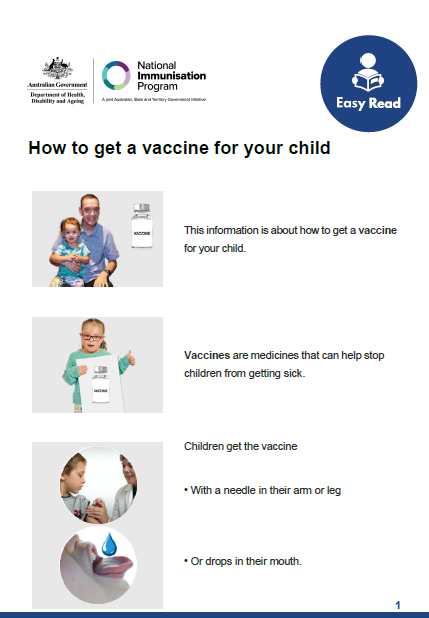
How to get a vaccine for your child – Easy Read
This Easy Read fact sheet tells you how to get vaccines for your child and how to get your child’s information ready for the appointment.
Side effects from vaccines – Easy Read
This Easy Read fact sheet tells you about the side effects your child might get from a vaccine and what you can do to help make them feel better.
Vaccines are safe for children – Easy Read
This Easy Read fact sheet tells us about how vaccines we give to children are tested to help keep them safe.
What are vaccines for children – Easy Read
This Easy Read fact sheet tells you about what vaccines are and how they stop children from getting sick.
What vaccines children should have – Easy Read
This Easy Read fact sheet tells you about the vaccines your child should get to keep them safe from serious disease.
Where to get information about vaccines for children – Easy Read
This Easy Read fact sheet tells you where to get the best information about vaccines for children, and help you get ready for your vaccine appointment.
Why it is important for children to get vaccines – Easy Read
This Easy Read fact sheet tells you about why vaccines are important to give to children to help keep everyone safe from serious disease.
Teen immunisation
Information and resources about teen immunisation.
-
Adolescent vaccinations brochure
This brochure provides information about the recommended vaccines available free for adolescents under the National Immunisation Program.
Teen immunisation – videos
A collection of videos covering topics about teen immunisation.
- Image:
 1:30
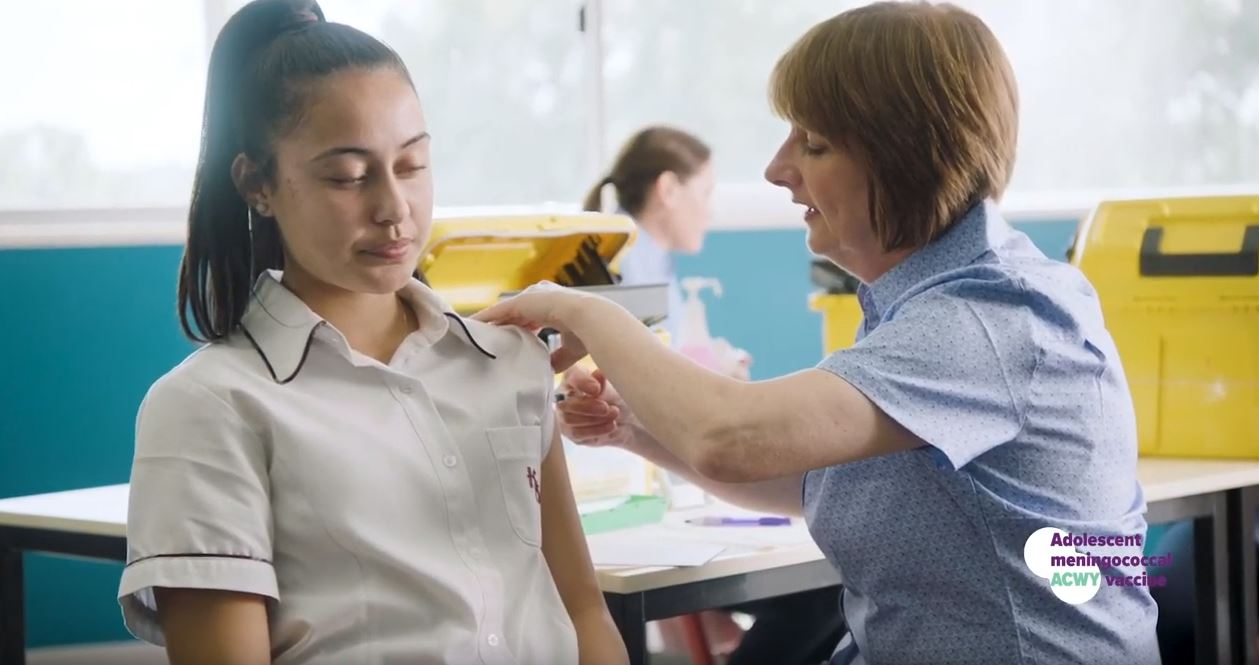
90 second animation – Meningococcal ACWY vaccine
Meningococcal disease is rare, but very serious, and you can protect yourself from it. The Meningococcal ACWY vaccine is provided free in schools for young people in year 10. - Image:
 5:42
Getting your diphtheria-tetanus-pertussis (dTpa) vaccination at school — what to expect
Vaccination is a simple and clever way to protect you from serious diseases now and later in your life. - Image:
 06:22
Getting your HPV & dTpa vaccinations at school – what to expect
Vaccination is a simple and clever way to protect you from serious diseases now and later in your life. Clinical nurse Caroline Scott explains how vaccination protects you, why it’s important, and what to expect when you receive your HPV and dTpa vaccinations at school. - Image:
 04:35
Getting your human papillomavirus (HPV) vaccination at school – what to expect
Vaccination is a simple and clever way to protect you from serious diseases now and later in your life. Clinical nurse Caroline Scott explains how vaccination protects you, why it’s important, and what to expect when you receive your human papillomavirus (HPV) vaccination at school. - Image:
 5:23
Getting your meningococcal ACWY vaccination at school — what to expect
Vaccination is a simple and clever way to protect you from serious diseases now and later in your life. - Image:
 01:04
HPV motion graphic for students
All students aged approximately 12 and 13 will be offered the HPV vaccine for free in schools as part of the National Immunisation Program. This short, animated video explains to students the benefits of getting the vaccine and how the vaccine is administered. - Image:
 02:10
HPV vaccine explained for parents and guardians
All students aged approximately 12 and 13 will be offered the HPV vaccine for free in schools as part of the National Immunisation Program. The video explains the importance of the vaccine.





Teen immunisation – personal stories
Personal stories from teens to help you understand what is involved with teen immunisation.
- Image:
 1:45
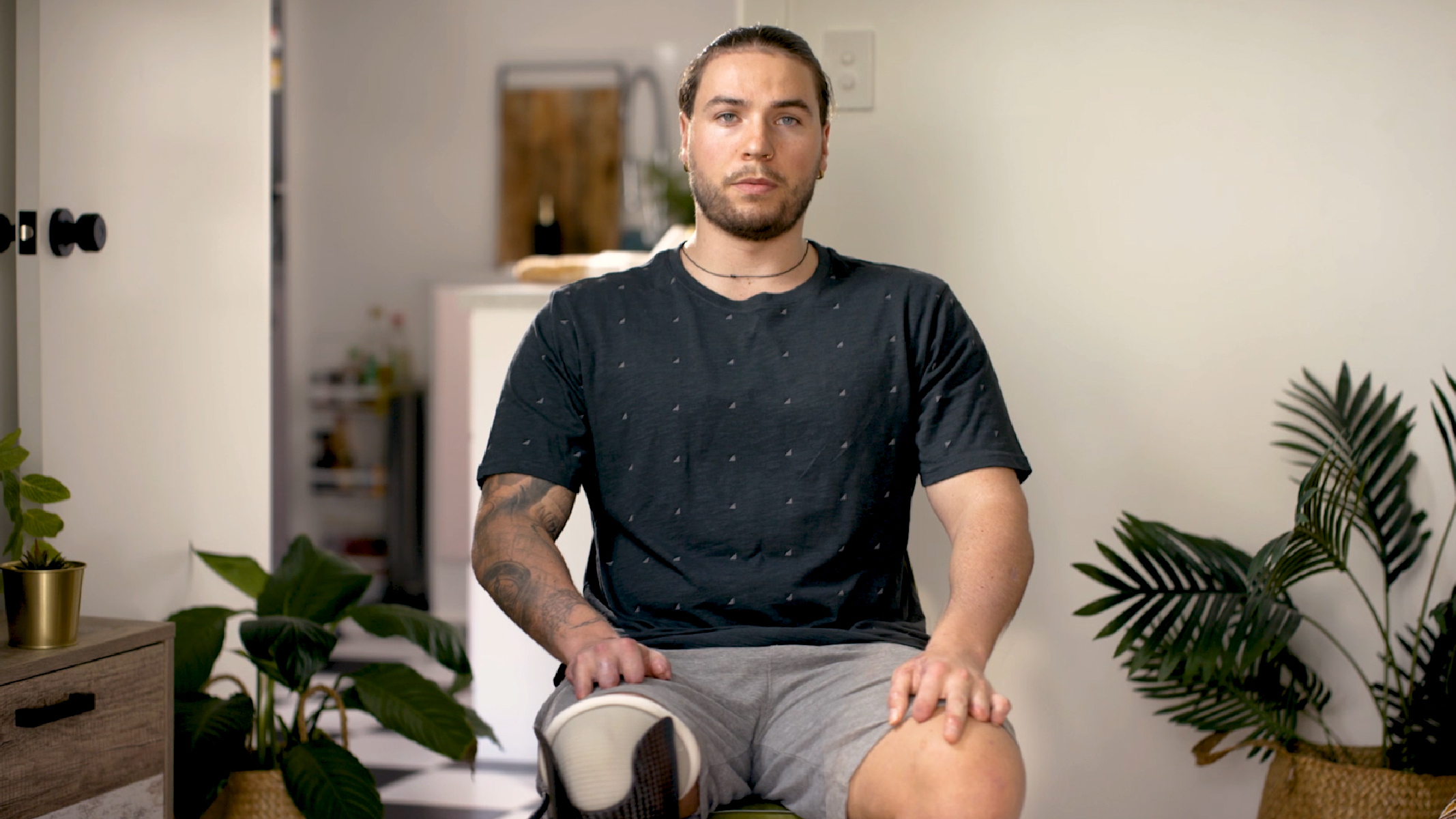
Adolescent meningococcal ACWY vaccine – Seb’s story
Meningococcal disease changed Seb’s life forever – but it doesn’t have to change yours. - Image:
 1:34
Samantha’s story - Surviving HPV related cancer
Samantha survived a rare but aggressive form of cervical cancer that her doctor said was highly likely caused by human papillomavirus (HPV). She urges all parents to sign the consent form so their child can be protected against HPV related disease as part of the school based immunisation program.

Adult immunisation
Information and resources about adult immunisation.
-
Adult vaccinations brochure
This brochure provides information about recommended vaccines available free for adults under the National Immunisation Program.
Maternal immunisation
Information and resources about maternal immunisation.
-
Maternal vaccinations brochure
This brochure provides information about the recommended vaccines available free for pregnant women under the National Immunisation Program.
Maternal immunisation – videos
Videos about maternal immunisation to help you understand how they work and what to expect.
- Image:
 01:34
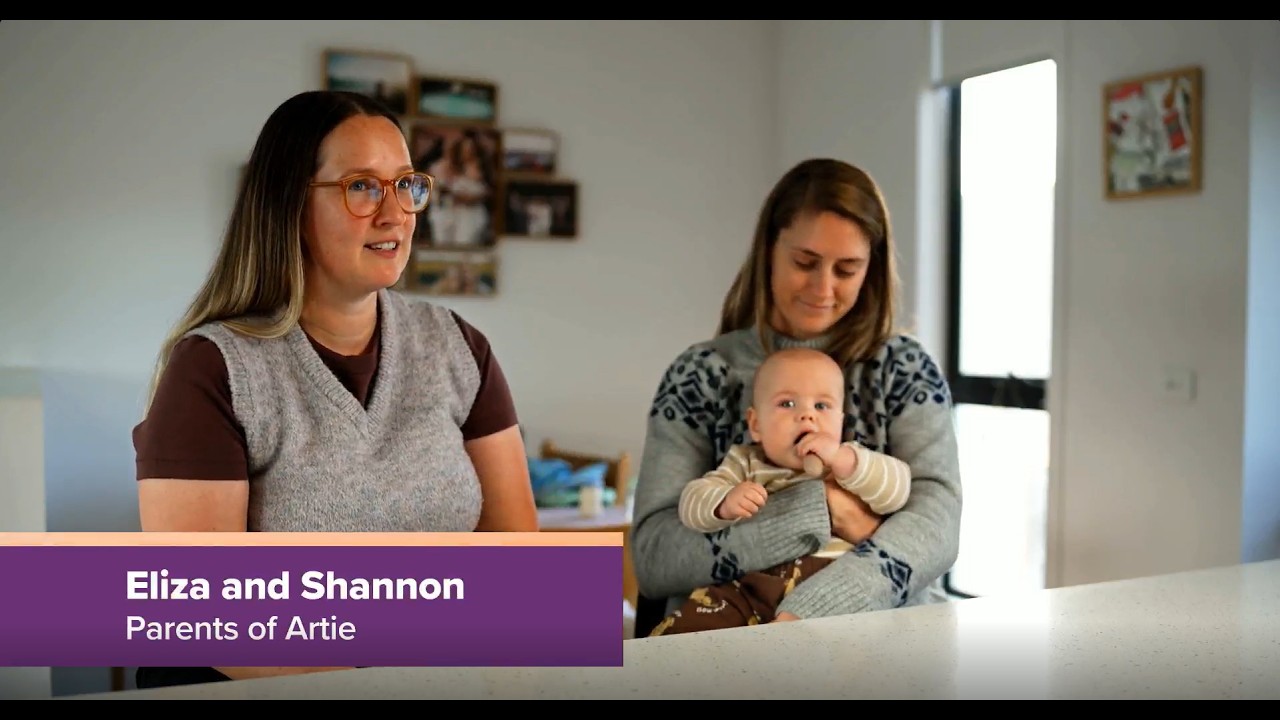
Eliza and Shannon – RSV Case Study
Eliza and Shannon share their experience with RSV and getting maternal vaccinations to protect their baby from birth. - Image:
 2:03
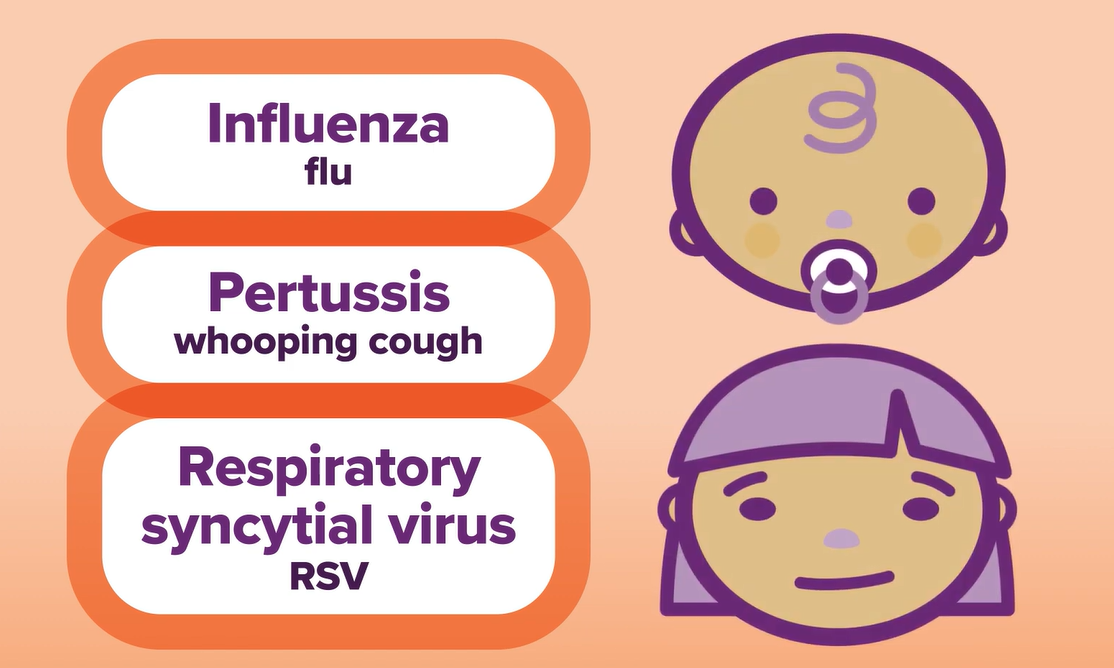
Maternal vaccinations – How vaccines work (Animation)
In this animated video, you’ll learn how vaccines work and how vaccination during pregnancy protects your baby from birth. Vaccines for flu, whooping cough and RSV are recommended. - Image:
 02:02
RSV Case Study – Bre O’Brien
Bre shares her experience with RSV, and the importance of being vaccinated. - Image:
 02:38
RSV expert video with Dr Linny Kimly Phuong
Infectious diseases paediatrician Dr Linny explains what RSV is and answers frequently asked questions. Talk to your health professional about getting your free RSV vaccine.

Aboriginal and Torres Strait Islander people
Information and resources for Aboriginal and Torres Strait Islander people.

Adaptable poster
This poster for Aboriginal and Torres Strait Islander Health services and clinics can be adapted to promote local clinic vaccination information.
Childhood immunisation – Frequently asked questions – First Nations fact sheet
This fact sheet provides information for Aboriginal and Torres Strait Islander people about childhood immunisation.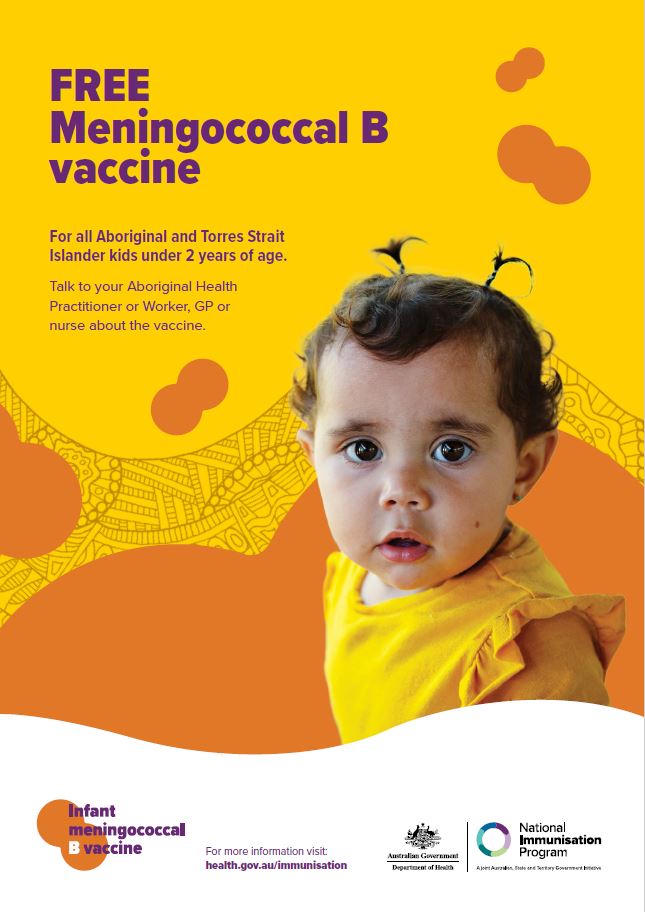
Free meningococcal B vaccine – poster for Aboriginal and Torres Strait Islander people
This poster provides information for Aboriginal and Torres Strait Islander people about the meningococcal B vaccine for infants, and can be used in health care and community settings.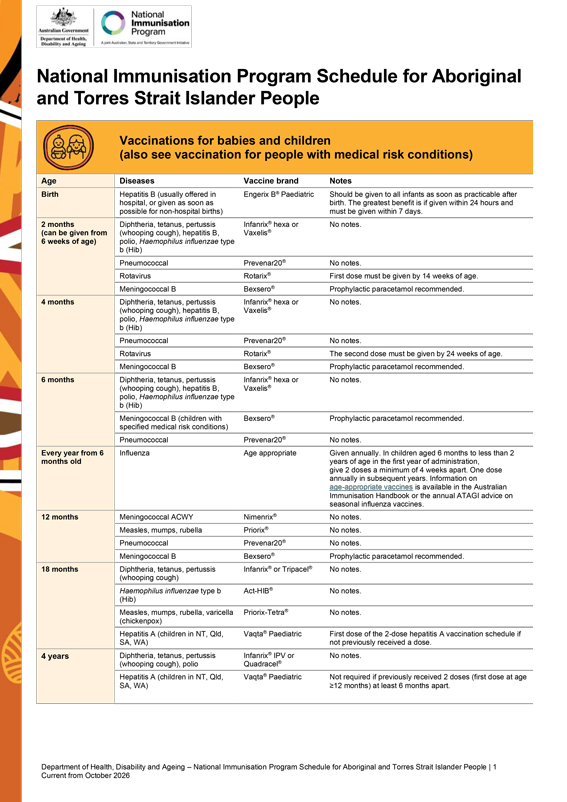
National Immunisation Program schedule for Aboriginal and Torres Strait Islander people
This schedule provides information on the free National Immunisation Program vaccines for Aboriginal and Torres Strait Islander people, including routine, catch-up and risk-based vaccination recommendations.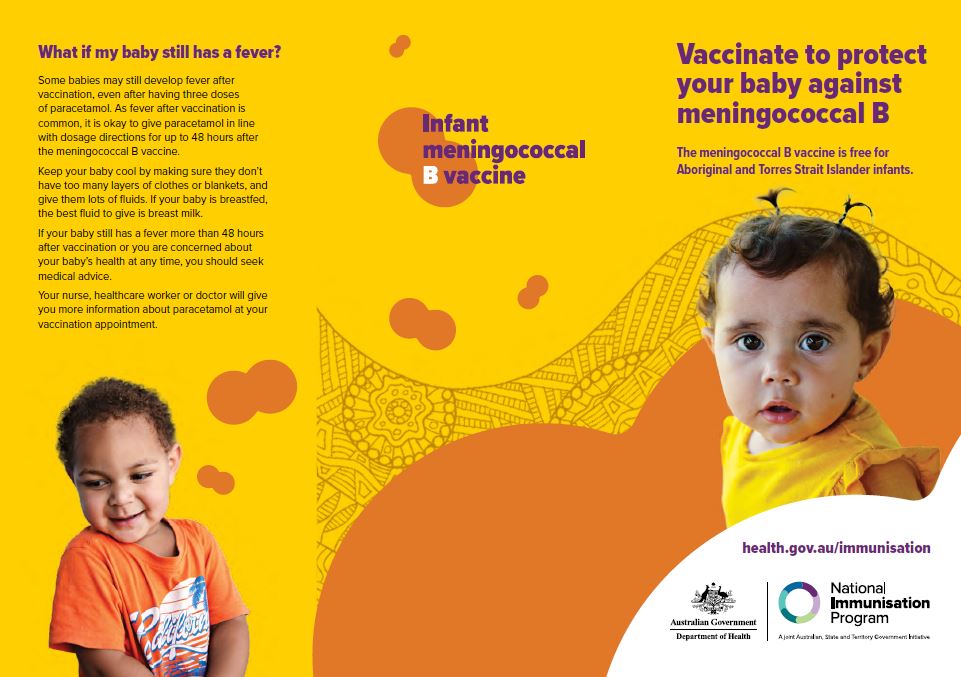
Vaccinate to protect your baby against meningococcal B – brochure for Aboriginal and Torres Strait Islander people
This brochure provides information for Aboriginal and Torres Strait Islander parents and carers about getting their child vaccinated against meningococcal B disease.
Yarning about vaccination fact sheet
This fact sheet provides Aboriginal and Torres Strait Islander peoples with information about vaccination, including how vaccines work, vaccine safety, common side effects and where to get trusted health information.
Aboriginal and Torres Strait Islander people – videos
Videos about immunisation for Aboriginal and Torres Strait Islander people.
- Image:
 03:15
Health worker Florianna talks about why children need to be immunised
Health worker Florianna Bero from Thursday Island in Queensland talks about why parents should get their kids immunised. - Image:
 02:37
Health Worker Irene talks about how getting immunised can protect your children
Advanced Health Worker Irene Nicholls from Mackay in Central Queensland discusses how immunisation protects children. - Image:
 02:30
Nurse Kristy addresses common questions from parents
Registered Nurse Kristy Lee Wickey from Wagga Wagga, Western New South Wales addresses common questions from parents about childhood immunisation. - Image:
 02:29
Nurse Tisha explains why childhood immunisations are so important
Child Health Nurse Tisha Waigana from Kwinana, Western Australia, explains the importance of childhood immunisation. - Image:
 00:50
Vaccines are safe
This short animation for Aboriginal and Torres Strait Islander families explains that vaccines have been carefully tested, to protect us from diseases.


Aboriginal and Torres Strait Islander people – teens
Information and resources for Aboriginal and Torres Strait Islander teens.
- Image:
1:30
90 second animation – Meningococcal ACWY vaccine
Meningococcal disease is rare, but very serious, and you can protect yourself from it. The Meningococcal ACWY vaccine is provided free in schools for young people in year 10. - Image:
 02:11
The HPV vaccine for Aboriginal and Torres Strait Islander children
All students aged around 12 and 13 will be offered the HPV vaccine for free in schools as part of the National Immunisation Program. Learn more about the vaccine.

Aboriginal and Torres Strait Islander people – adults
Information and resources for Aboriginal and Torres Strait Islander adults.

Shield yourself from shingles – Fact sheet – First Nations
This fact sheet answers questions Aboriginal and Torres Strait Islander people may have about the shingles vaccine.
Aboriginal and Torres Strait Islander adults – videos
Videos about immunisation for Aboriginal and Torres Strait Islander adults.
- Image:
 5:10
Shield yourself from shingles – Get your questions answered
Shingles is a viral infection that can be really nasty; especially if you’re older or if you’re immune system is weak. - Image:
 0:29
Shield yourself from shingles – Getting the shingles vaccine
If you’ve had chickenpox as a kid, you can get shingles as an adult.
Adrian, from Bundjalung, Minjungbal, and Coodjinburra Country, shares his experience with shingles.
The shingles vaccine is free for Aboriginal and Torres Strait Islander people 50 years or older. - Image:
 0:51
Shield yourself from shingles – Health professionals answer ‘What is shingles?’
Dr Richard Mills answers questions about shingles and encourages people to shield themselves from shingles with a vaccine – free for eligible people under the National Immunisation Program. - Image:
 0:33
Shield yourself from shingles – How to prevent shingles
If you’ve had chickenpox as a kid, you can get shingles as an adult.
Adrian, from Bundjalung, Minjungbal, and Coodjinburra Country, shares his experience with shingles.
The shingles vaccine is free for Aboriginal and Torres Strait Islander people 50 years or older. - Image:
 0:44
Shield yourself from shingles – The shingles vaccine
Dr Richard Mills answers questions about the shingles vaccine – free for eligible people under the National Immunisation Program. - Image:
 0:45
Shield yourself from shingles – Where to get the shingles vaccine
Dr Richard Mills and Registered Nurse Trina Scott encourage people to shield themselves from shingles with a vaccine – free for eligible people under the National Immunisation Program. - Image:
 0:44
Shield yourself from shingles – Who is most at risk?
Dr Richard Mills and Registered Nurse Trina Scott encourage people to shield themselves from shingles with a vaccine – free for eligible people under the National Immunisation Program.


Aboriginal and Torres Strait Islander pregnant women
Resources about immunisation for pregnant Aboriginal and Torres Strait Islander women.

First Nations Maternal RSV Fact sheet
This fact sheet provides information on what Respiratory syncytial virus (RSV) is and protecting baby from birth through maternal vaccination.
First Nations maternal vaccinations fact sheet
This fact sheet provides information for Aboriginal and Torres Strait Islander women about free vaccines during pregnancy.
Aboriginal and Torres Strait Islander pregnant women – videos
Videos about immunisation for pregnant Aboriginal and Torres Strait Islander women.
- Image:
 0:49
Maternal vaccinations – Flu
Flu vaccines have been around for decades and help protect you and your bub from serious illness. Yarn to your midwife or health worker about getting your free flu vaccination. - Image:
 0:54
Maternal vaccinations – RSV
Getting vaccinated against RSV from 28 weeks of pregnancy protects your newborn baby against Respiratory syncytial virus (RSV). Yarn to your midwife or health worker about getting your free RSV vaccination. - Image:
 0:50
Maternal vaccinations – Whooping cough
Getting a safe and free whooping cough vaccination between 20 and 32 weeks of pregnancy helps protect bubbas from whooping cough while they're still too young to get vaccinated themselves. Yarn to your midwife or health worker about getting your free whooping c - Image:
 1:04
Maternal vaccinations
Protecting your bub from serious illness starts before birth, with free vaccines you can get while pregnant. These vaccines help protect your baby against influenza, whooping cough and RSV. Yarn to your midwife or health worker about getting your free maternal vaccinations.
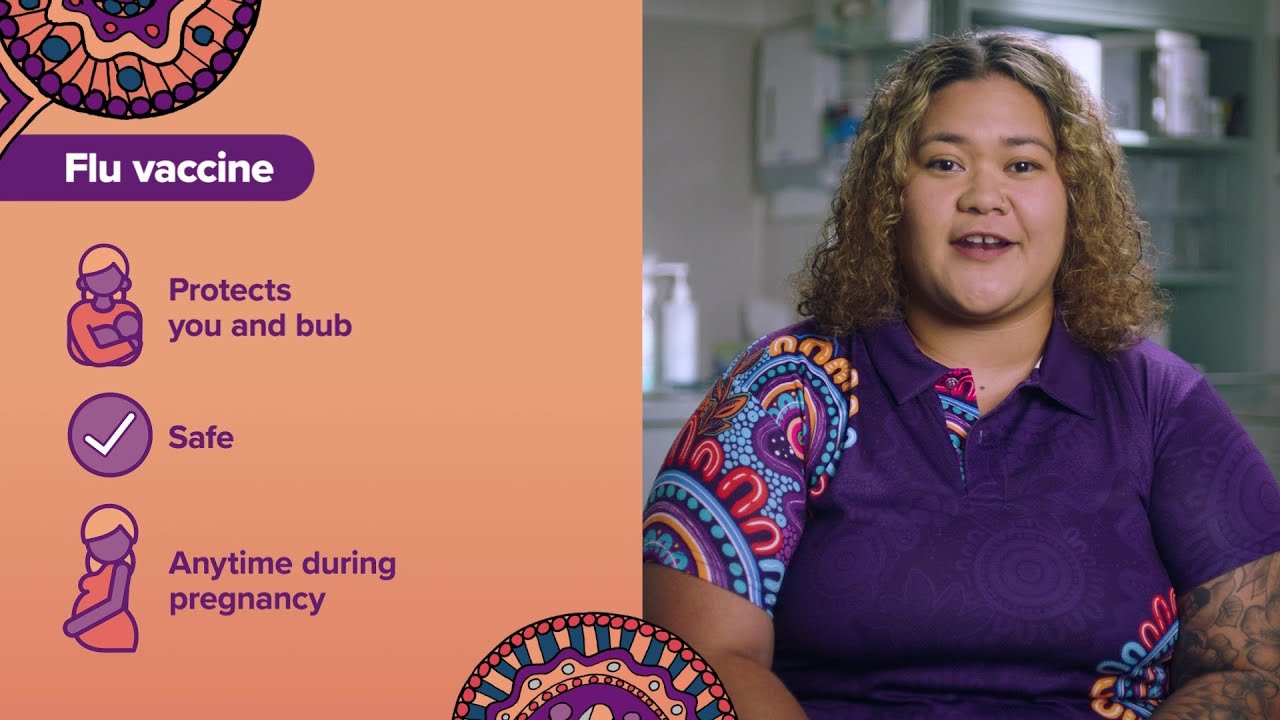


Influenza (flu) videos
Videos about immunisation against influenza (flu).
- Image:
 00:22
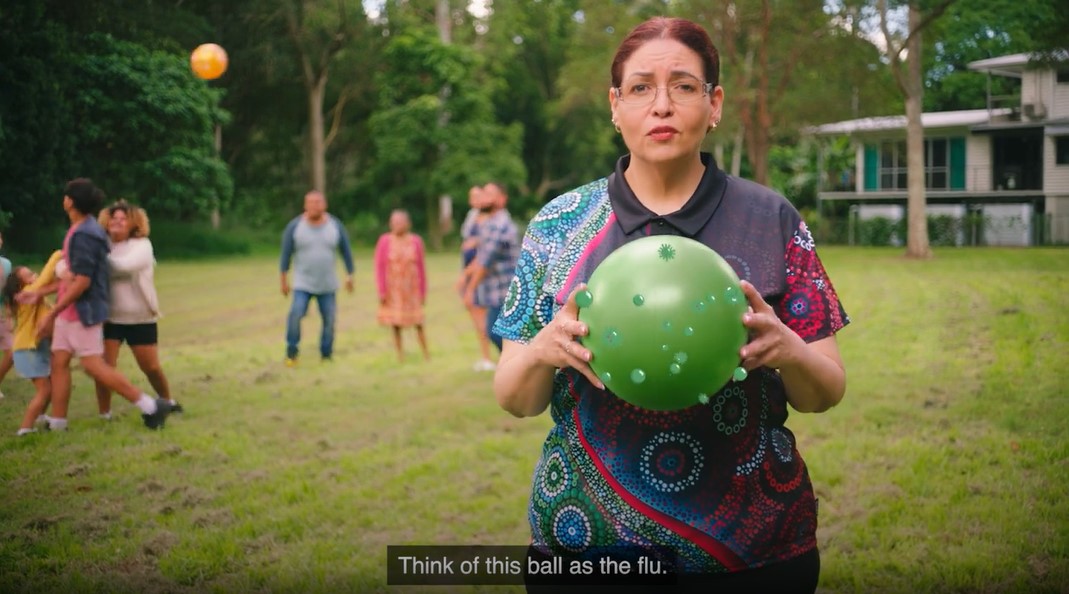
Give Flu the Boot – More than just sniffles – Video
Give flu the boot. Influenza can be passed around as easily as a footy. The best way to protect you and your mob is with a FREE flu vaccine. Yarn to your doctor or health worker about getting a flu vaccination today. - Image:
 01:10
Give Flu the Boot – Protect your mob with a free flu vaccination – Video
Give flu the boot. Influenza can be passed around as easily as a footy. The best way to protect you and your mob is with a FREE flu vaccine. Yarn to your doctor or health worker about getting a flu vaccination today. - Image:
 00:15
Let’s keep our mob safe from flu – Give Flu the Boot (15 second ad for Aboriginal and Torres Strait Islander people)
This video advertisement, produced for Aboriginal and Torres Strait Islander people, encourages everyone to protect themselves from the flu, with a free flu vaccination. - Image:
 00:30
Let’s keep our mob safe from flu – Give Flu the Boot (30 second ad for Aboriginal and Torres Strait Islander people)
This video advertisement, produced for Aboriginal and Torres Strait Islander people, encourages everyone to protect themselves from the flu, with a free flu vaccination.


Health professionals
Information and resources for health professionals.
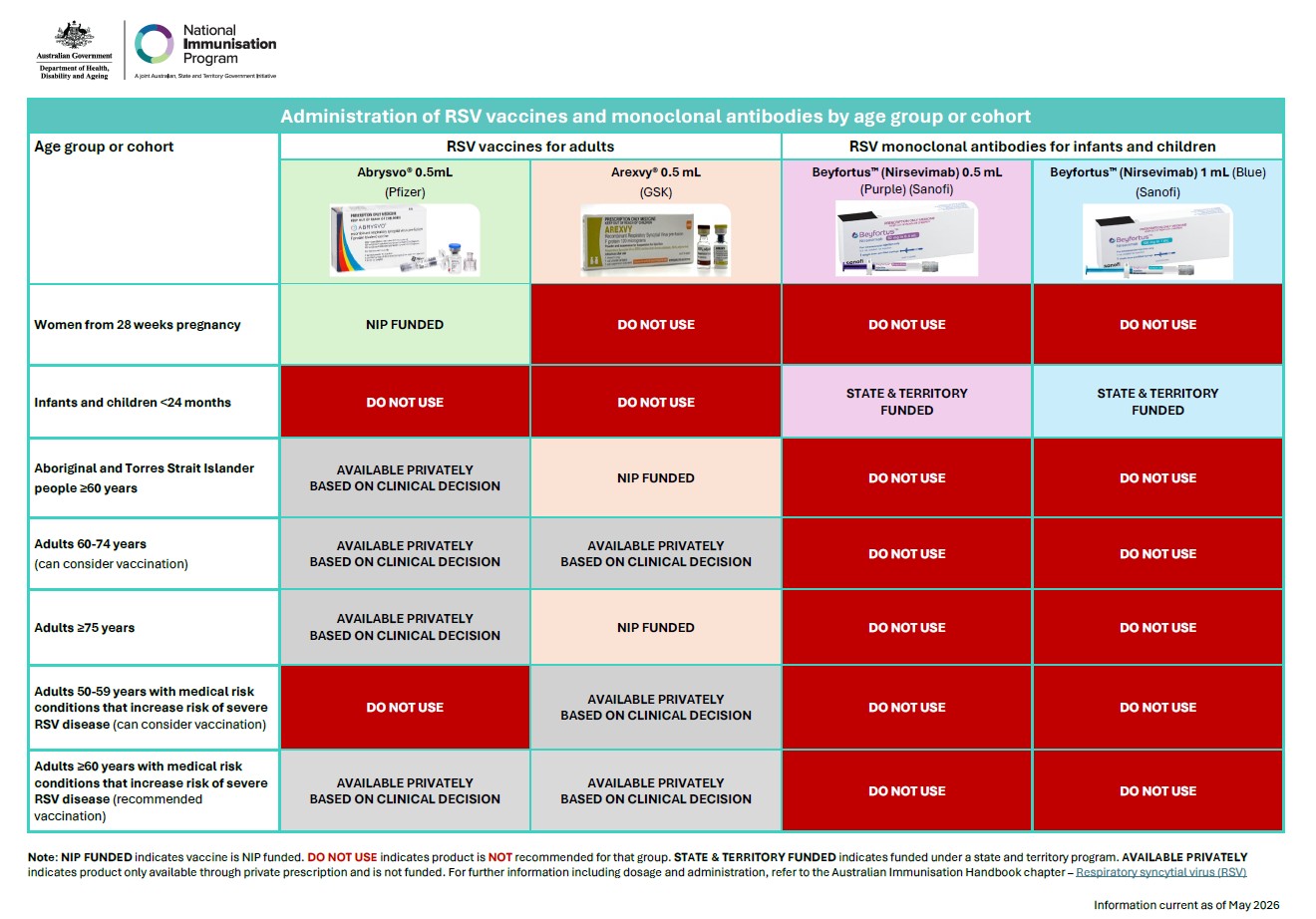
RSV vaccine and monoclonal antibody poster
This poster displays the recommendations for vaccination providers on administering RSV vaccines and RSV monoclonal antibodies by age group or cohort.
Health professionals – provider advice
Provider advice to assist health professionals with immunisation in their practice.

2026 influenza vaccination – Program advice for health professionals
This fact sheet provides advice for vaccination providers on administering influenza vaccines in 2026.
Adult pneumococcal vaccination – Program advice for health professionals
This fact sheet provides advice to vaccination providers on administering adult pneumococcal vaccines.
COVID-19 NIP transition – Program advice for health professionals
This fact sheet provides advice for vaccination providers about COVID-19 vaccines available on the NIP from 1 October 2026.
National Immunisation Program – Meningococcal ACWY vaccines – Program advice for health professionals (July 2024)
This fact sheet provides advice to health professionals on the changes to Meningococcal ACWY vaccines under the National Immunisation Program (NIP).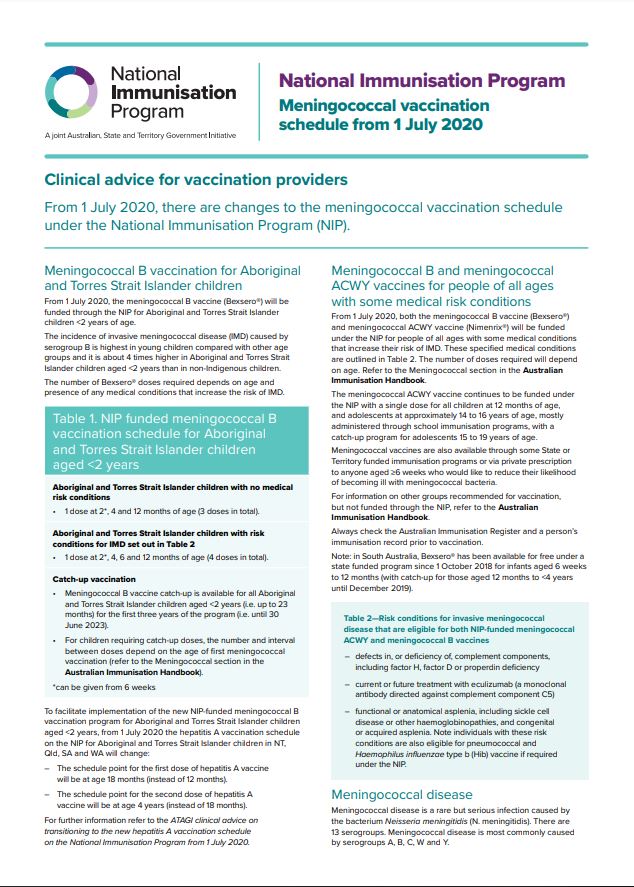
National Immunisation Program – Meningococcal vaccination schedule from 1 July 2020 – Clinical advice for vaccination providers
This fact sheet provides clinical advice for vaccination providers on changes to meningococcal vaccination on the National Immunisation Program schedule from 1 July 2020.
National Immunisation Program – Shingles vaccination – Program advice for health professionals
This fact sheet provides advice to health professionals on the changes to the National Immunisation Program (NIP) shingles vaccination schedule.
NIP childhood and adolescence pneumococcal vaccine provider advice for health professionals
This fact sheet provides advice and information to vaccination providers on the pneumococcal vaccine.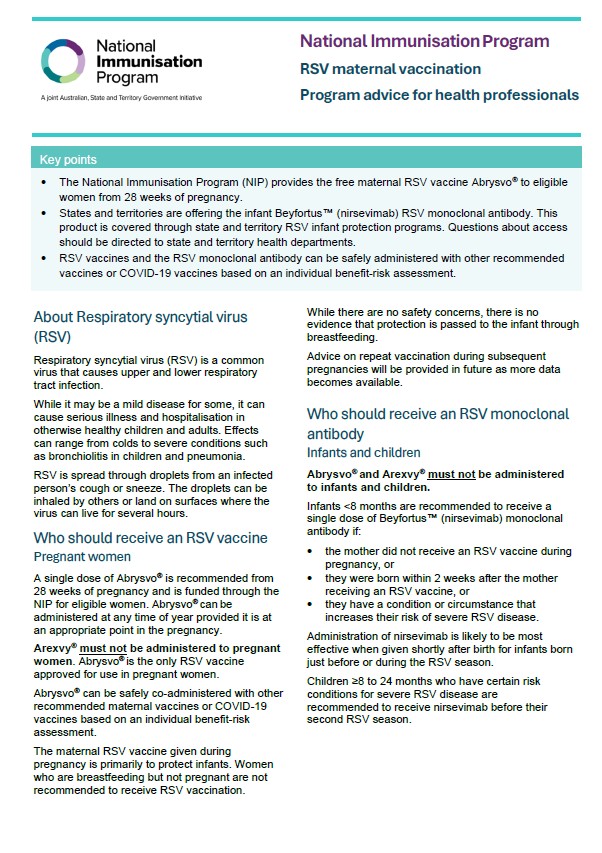
Respiratory syncytial virus (RSV) products – Program advice for health professionals
This fact sheet provides advice and information to vaccination providers on the Maternal RSV vaccine and RSV monoclonal antibodies.
Health professionals – kits
Information kits for health professionals to use in their clinical practice with immunisation.

COVID-19 vaccine NIP transition – Information kit for health professionals
This information kit is designed to help vaccination providers communicate 1 October 2026 COVID-19 vaccine changes.
Routine Childhood Immunisation – Health professionals’ kit
This health professionals kit designed to support you in conversations with parents and carers about childhood immunisation.
National Vaccine Storage Guidelines
Access the National Vaccine Storage Guidelines 'Strive for 5' resource collection.
- Image:

National Vaccine Storage Guidelines 'Strive for 5' resource collection
The National Vaccine Storage Guidelines 'Strive for 5', and additional resources.
Vaccination dashboards
Access the vaccination dashboards methodology and user guide.

Vaccination dashboards methodology
This page outlines the rules, assumptions and logic that has been applied in developing the four enduring Power BI dashboards.
Vaccination dashboards – User guide
The user guide provides a step-by-step walkthrough for users to interact with the vaccination dashboards.
We aim to provide documents in an accessible format. If you're having problems using a document with your accessibility tools, please contact us for help.