
My Aged Care has resources that the aged care sector can order to share with their clients. This includes brochures, booklets and checklists. These resources are also available in up to 22 other languages.
Resources
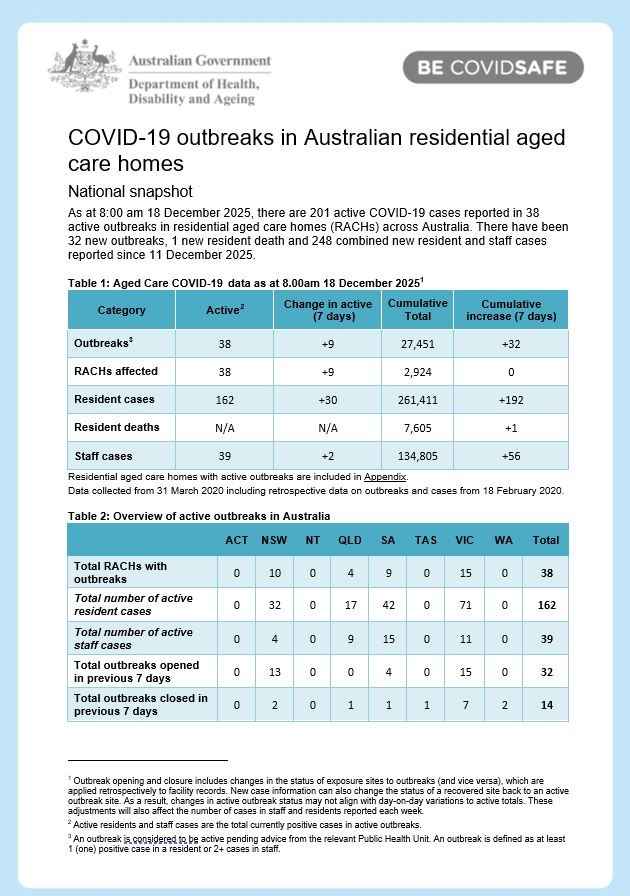
COVID-19 outbreaks in Australian residential aged care homes – 19 December 2025
This weekly report provides a snapshot of data on the impact of COVID-19 in residential aged care facilities nationally in 2025. It includes data on the number of services impacted and number of staff and resident cases, as well as workforce, vaccine rollout, testing and PPE provided to services.
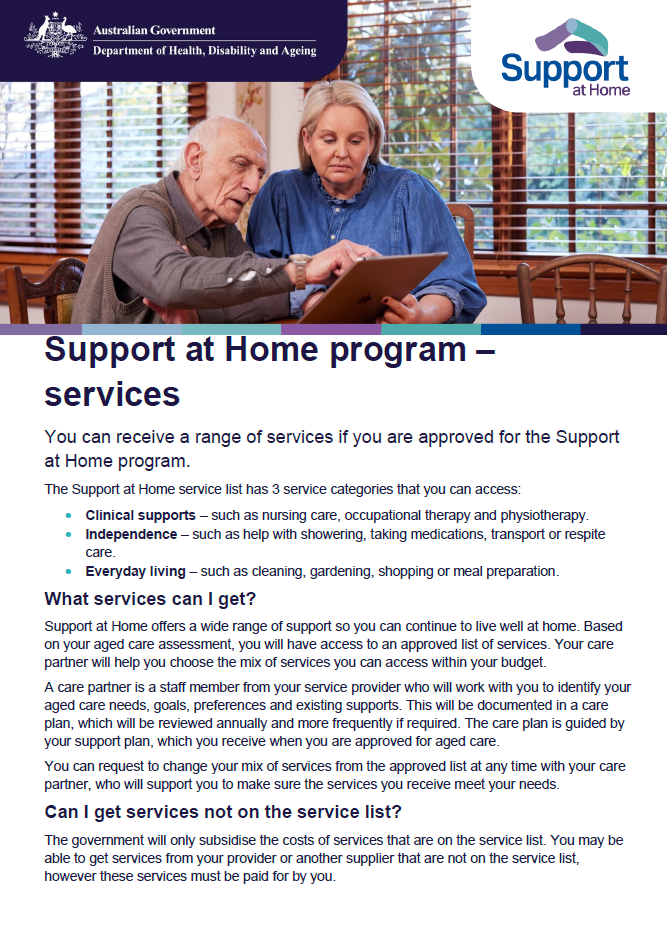
Support at Home program – services
This fact sheet provides detail on the range of services that can be accessed under Support at Home.
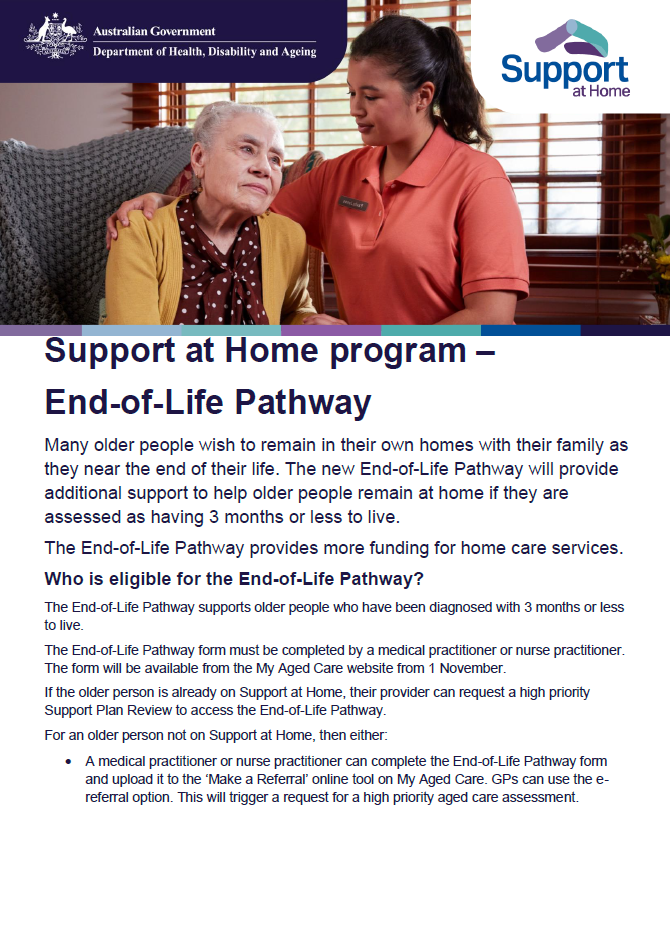
Support at Home program – End-of-Life Pathway
This fact sheet provides an overview of the End-of-Life Pathway, part of the Support at Home program.
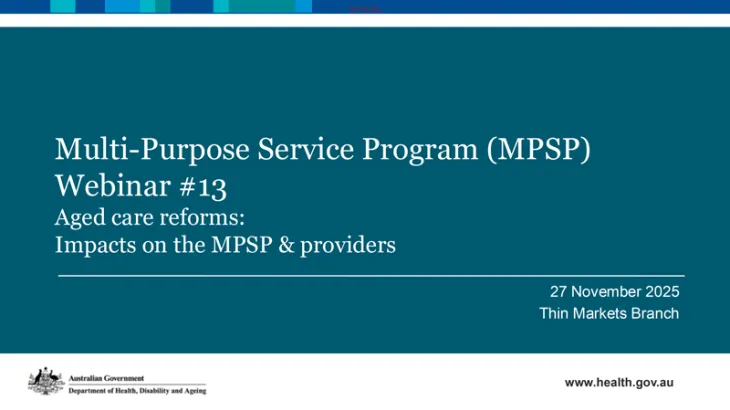
00:37:27
Webinar 13: Aged Care Reforms – Impacts on the Multi-Purpose Service (MPS) program and providers
The thirteenth webinar in the series provides information on the new Act, systems updates and final client transitional arrangements for Multi-Purpose Service (MPS) providers.
Webinar 13: Multi-Purpose Service – Aged Care Reforms: Impacts on the MPSP and providers – Presentation slides
Presentation slides from Webinar 13: Aged care reforms – Impacts on the MPS program and providers held on 27 November 2025.

Aged Care Transition Taskforce - Summary of sixteenth meeting - 9 December 2025
A summary of the Aged Care Transition Taskforce meeting held on 9 December 2025
The new regulatory model Guidance for residential aged care providers
This guidance outlines the regulatory changes affecting residential aged care providers under the new Aged Care Act (new Act). The new Act introduced a new regulatory model when it commenced on 1 November 2025.
Associated providers under the Aged Care Act 2024 – Webinar presentation
This presentation was developed to align with questions submitted by the webinar’s participants upon registration to attend the event. It provides detailed information and links to resources on Associated Providers.
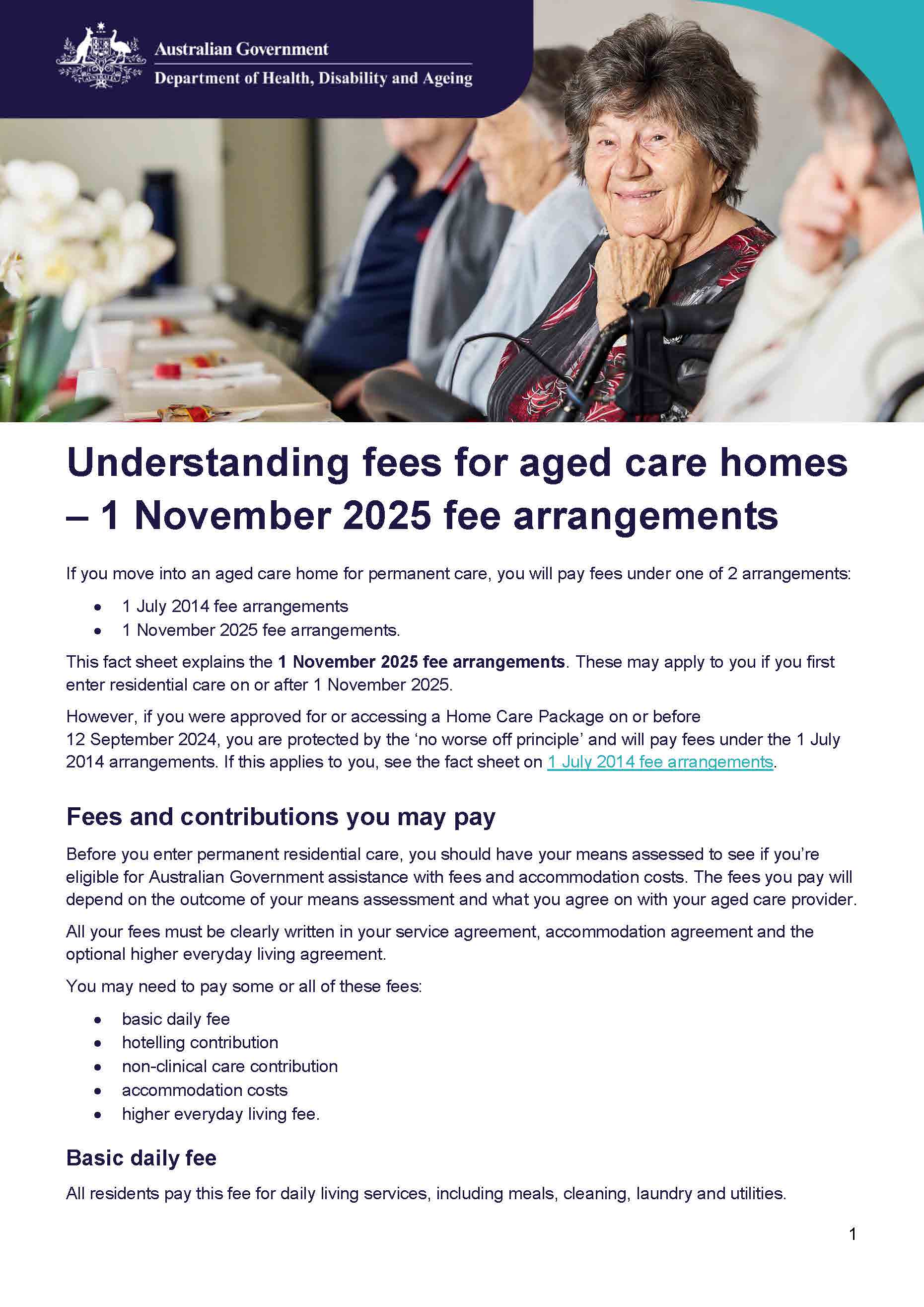
Understanding fees for aged care homes – 1 November 2025 fee arrangements
This fact sheet outlines the fees you may be asked to pay for permanent residential care under the 1 November 2025 fee arrangements.
Provider Application for Care Management Supplement – Privacy Notice
This Privacy Notice relates to the protection of information collected in the Provider Application for Care Management Supplement - Form.
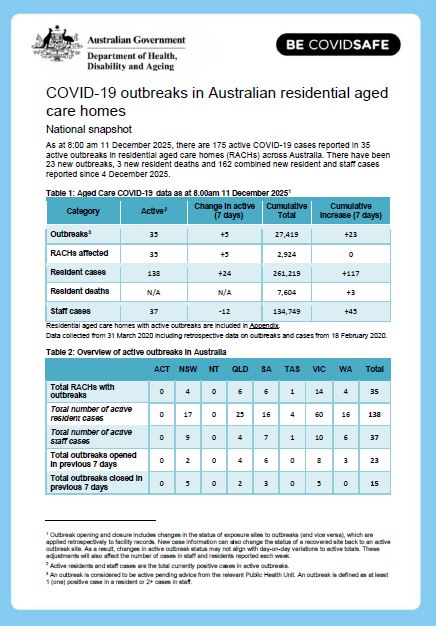
COVID-19 outbreaks in Australian residential aged care homes – 12 December 2025
This weekly report provides a snapshot of data on the impact of COVID-19 in residential aged care facilities nationally in 2025. It includes data on the number of services impacted and number of staff and resident cases, as well as workforce, vaccine rollout, testing and PPE provided to services.
Understanding fees for aged care homes – 1 July 2014 fee arrangements
This fact sheet outlines the fees you may be asked to pay for permanent residential care under 1 July 2014 fee arrangements.
Understanding fees for residential respite care
This fact sheet outlines the fees you may be asked to pay for residential respite care.
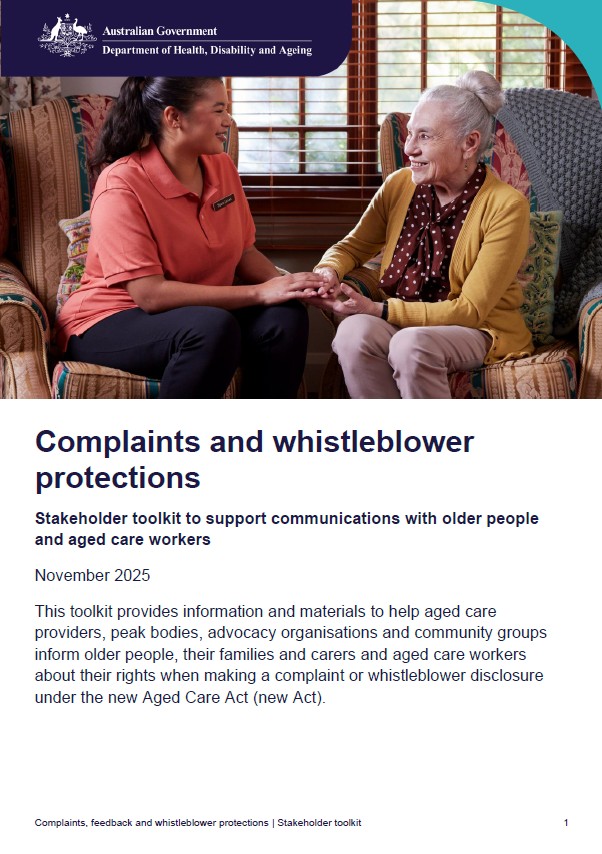
Complaints and whistleblower protections
This toolkit provides information and materials to help aged care providers communicate with older people, their families and carers and workers about their rights when making a complaint or whistleblower disclosure.
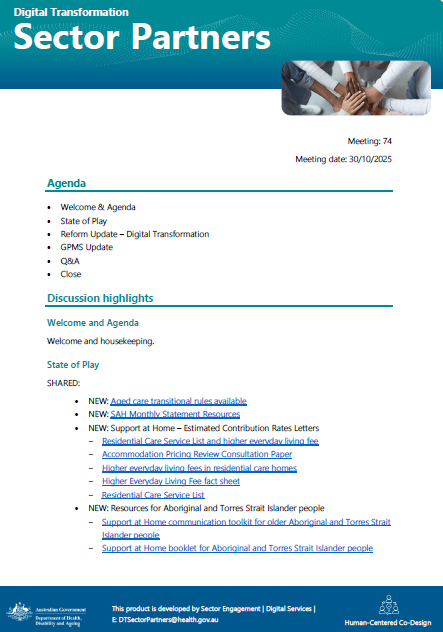
Digital Transformation Sector Partners meeting summary – 30 October 2025
This document summarises the discussion and outcomes of the Digital Transformation Sector Partners meeting held on 30 October 2025.

My Aged Care Service and Support Portal overview – Presentation slides
Presentation slides from Webinar 12: Aged care reforms – Impacts on the MPS program and providers providing an overview of the My Aged Care Service and Support Portal.

Digital Transformation Sector Partners slide presentation – 30 October 2025
This document contains the slide presentation from the Digital Transformation Sector Partners meeting held on 30 October 2025

Statement on automated administrative actions
This statement is made for the purposes of subsection 583(6) of the Aged Care Act 2024. This provision requires the System Governor to publish a statement on the Department’s website which gives details on the automated arrangements and the provisions of the Act to which they relate.
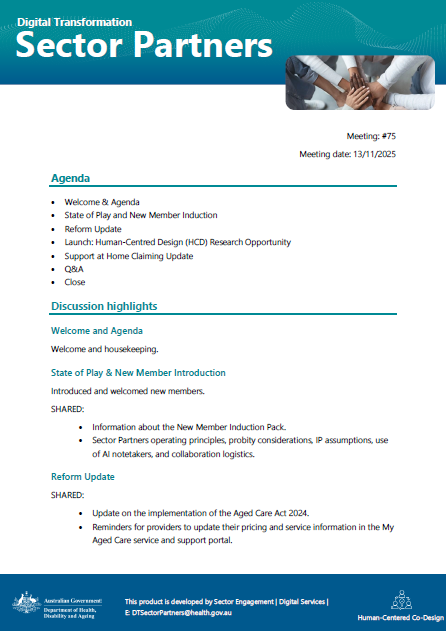
Digital Transformation Sector Partners meeting summary – 13 November 2025
This document summarises the discussion and outcomes of the Digital Transformation Sector Partners meeting held on 13 November 2025.

Digital Transformation Sector Partners slide presentation – 27 November 2025
This document contains the slide presentation from the Digital Transformation Sector Partners meeting held on 27 November 2025.

Digital Transformation Sector Partners slide presentation – 13 November 2025
This document contains the slide presentation from the Digital Transformation Sector Partners meeting held on 13 November 2025.
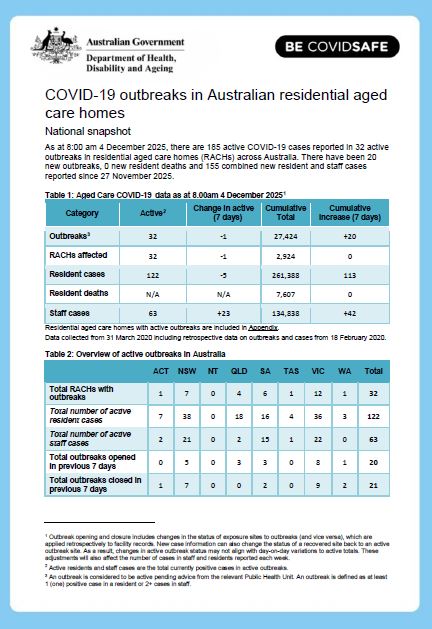
COVID-19 outbreaks in Australian residential aged care homes – 5 December 2025
This weekly report provides a snapshot of data on the impact of COVID-19 in residential aged care facilities nationally in 2025. It includes data on the number of services impacted and number of staff and resident cases, as well as workforce, vaccine rollout, testing and PPE provided to services.
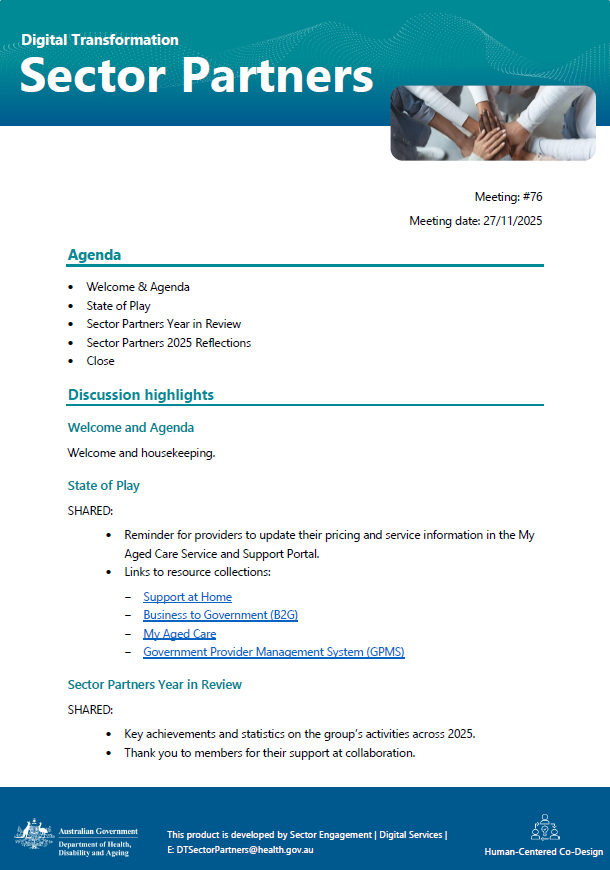
Digital Transformation Sector Partners meeting summary – 27 November 2025
This document summarises the discussion and outcomes of the Digital Transformation Sector Partners meeting held on 27 November 2025.

Digital Transformation Sector Partners slide presentation – 2 October 2025
This document contains the slide presentation from the Digital Transformation Sector Partners meeting held on 2 October 2025.

Digital Transformation Sector Partners slide presentation – 21 August 2025
This document contains the slide presentation from the Digital Transformation Sector Partners meeting held on 21 August 2025.
Date last updated: