
Filter results
You can narrow down the results using the filters
Audience
Topics
Our work
Diseases
11920 results
-
 1:35
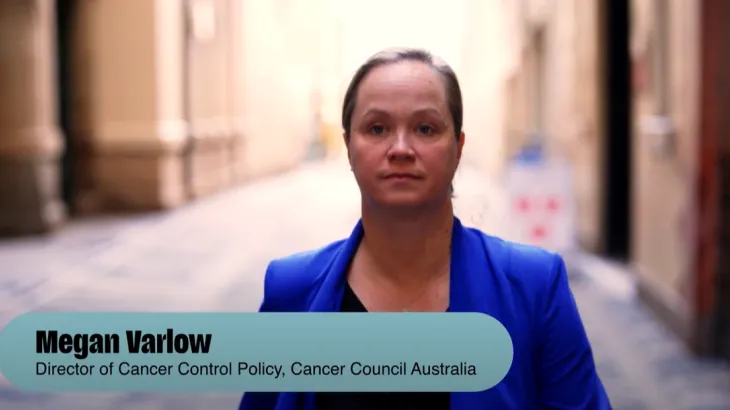
1:35Megan Varlow – Give up smoking for good
Megan Varlow is the Director of Cancer Control Policy at Cancer Council Australia. Watch as she talks about the health benefits of quitting smoking and what support services are available to help you give up for good. -
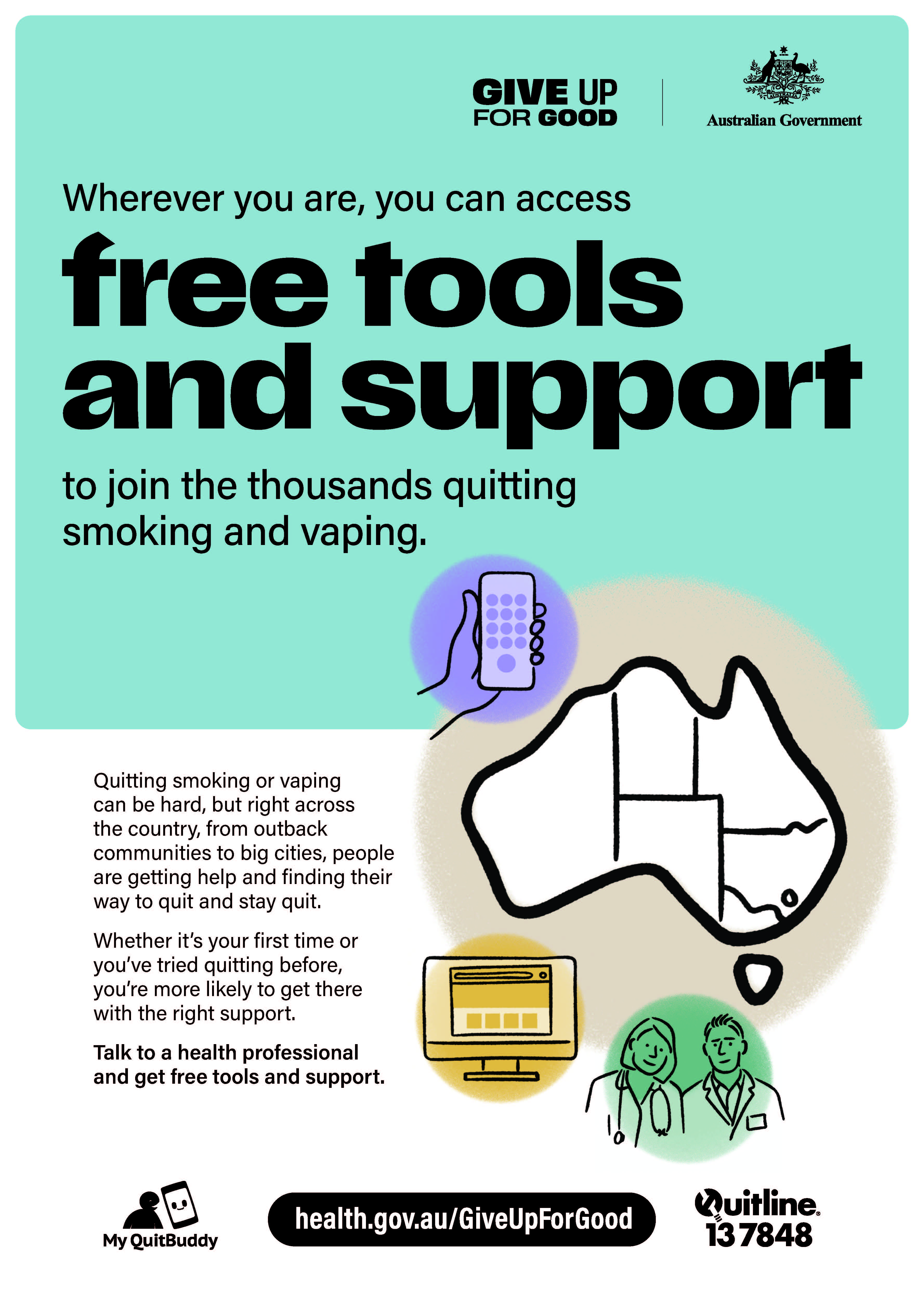
Free tools and support
Wherever you are, you can access free tools and support to join the thousands quitting smoking and vaping. -
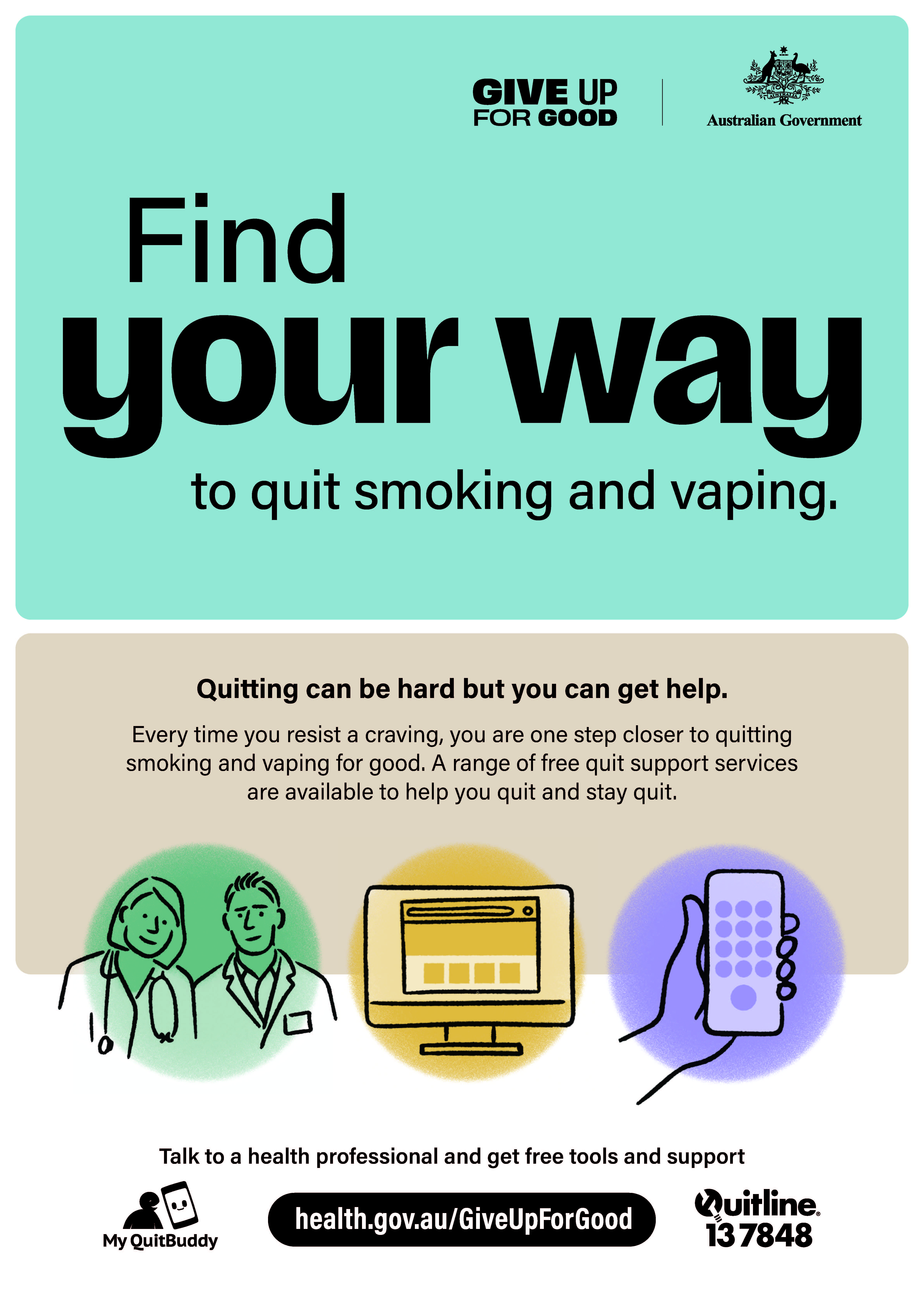
Find your way
Find your way to quit smoking and vaping. -
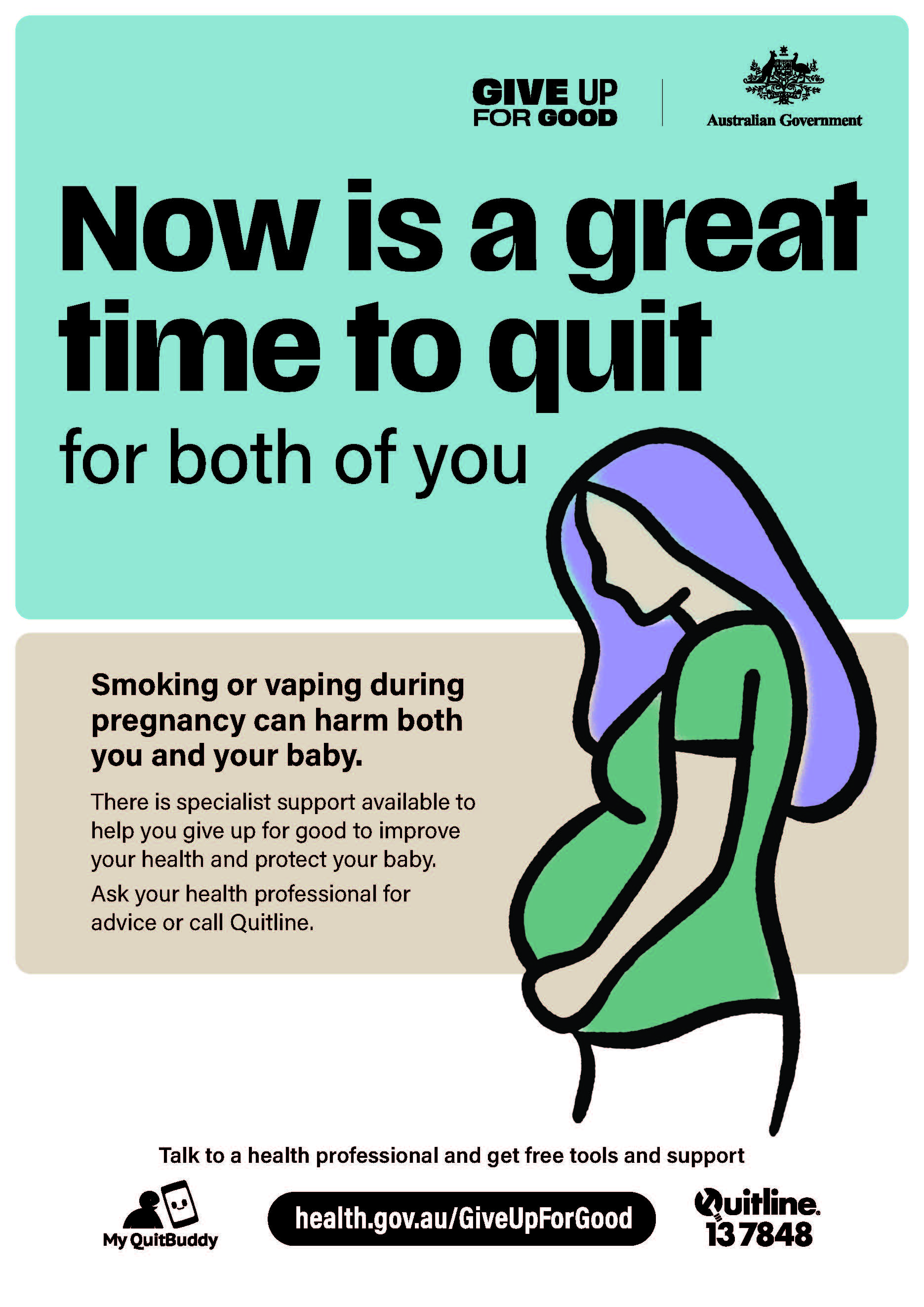
Now is a great time to quit for you and your baby
Now is a great time to quit for both of you. -
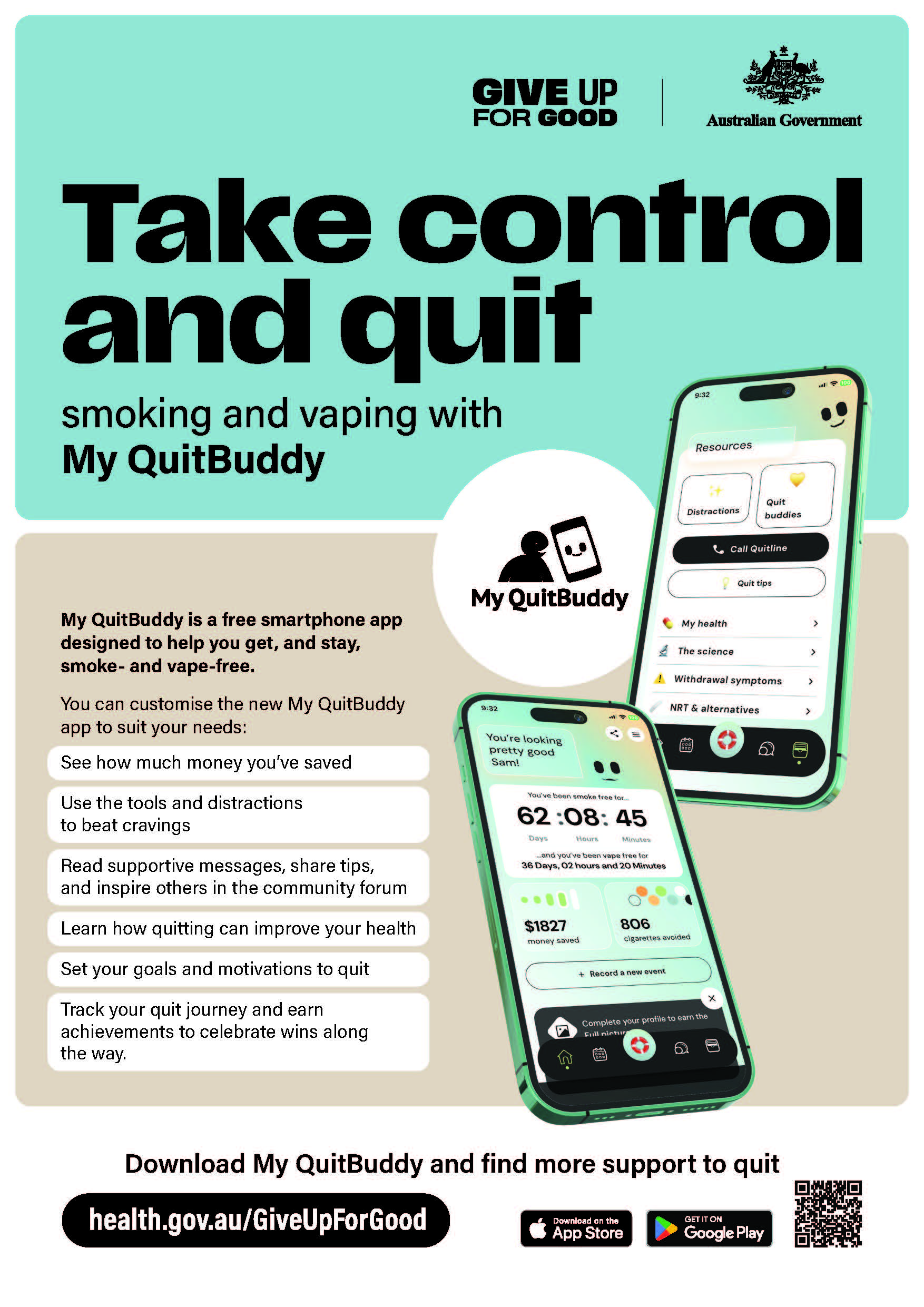
Take control and quit
Take control and quit smoking and vaping with My QuitBuddy app. -
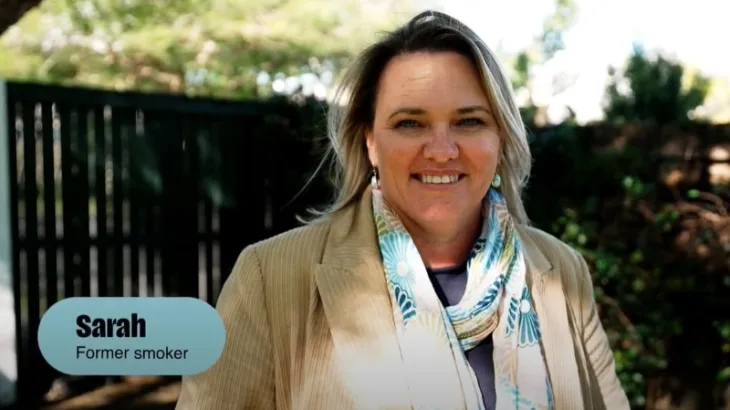 2:18
2:18How I quit smoking for good – Sarah’s journey
Join Sarah as she shares her journey to quit smoking and the challenges she faced along the way. She talks about the strategies that helped her succeed and offers tips for anyone trying to quit. -
 00:29
00:29Breaking habits – Sarah’s journey
Join Sarah as she shares her journey to quit smoking. She talks about the strategies that helped her break the habits that led to her smoking and offers tips for anyone trying to quit. -
 00:34
00:34What worked for me – Sarah’s journey
Watch as Sarah shares her journey to quit smoking. She talks about the strategies, including medication, that helped her succeed and the financial benefits of quitting. -
 00:31
00:31Don’t stop trying – Sarah’s journey
Hear Sarah’s story as she shares her journey to quit smoking and offers advice for others looking to do the same – don’t stop trying. -

Tips for supporting someone to quit
When someone decides to quit smoking or vaping, they’re more likely to succeed with the support of their family and friends. -

1800MEDICARE
1800MEDICARE (1800 633 422) is a free phone and digital service for general health information, urgent health advice, immediate non-emergency care, and service navigation. -
Commonwealth Home Support Program – Outcomes from the 2024 Wellness and Reablement Report
Read the findings of the Commonwealth Home Support Program 2024 Wellness and Reablement Report, about Commonwealth Home Support Program providers’ progress towards embedding wellness and reablement approaches. -

Webinar series: Home matters – Rethinking aged care design
This 8-part webinar series supports aged care providers and designers to understand and apply the National Aged Care Design Principles and Guidelines and supporting resources. Older people, families and carers will also learn about what good design looks like when choosing an aged care home. -
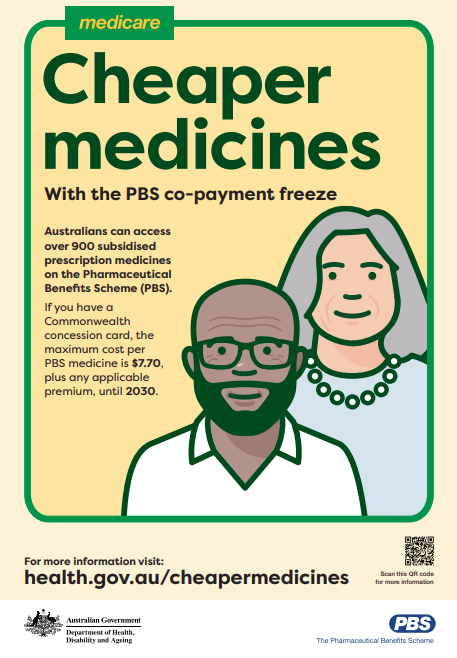
PBS co‑payment freeze : Cheaper medicines for concession card holders – A3 Poster
This poster highlights that concession card holders will pay no more than $7.70 per PBS medicine until 2030. It promotes access to over 900 subsidised medicines through the PBS. -
 00:30
00:30PBS co-payment reduction advertisement – 30 seconds
From 1 January 2026, anyone with a Medicare card pays a maximum of $25 for each PBS listed medicine, down from $31.60. Concession card holders continue to pay no more than $7.70 until 2030. -
 00:15
00:15PBS co-payment reduction advertisement – 15 seconds
From 1 January 2026, PBS medicines will cost no more than $25, down from $31.60, for everyone with a Medicare card. -
 00:15
00:15PBS concession co-payment freeze advertisement – 15-seconds
For Australian concession card holders, the maximum cost of PBS medicines remains $7.70 until 2030. -

Cheaper Medicines: FAQs about the lower PBS co‑payment
This FAQ explains how the reduced PBS co‑payment helps Australians save on medicines, what the changes mean for general and concession card holders, and how costs, Safety Net thresholds, and brand premiums may affect what you pay. -
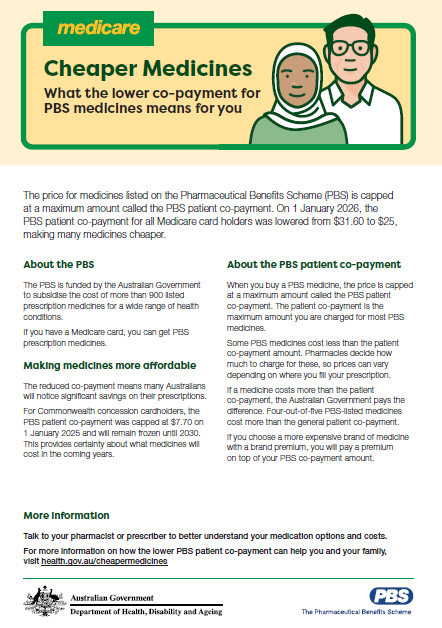
PBS price reduction: What the lower co‑payment means for you – Fact sheet
This fact sheet explains the reduction of the PBS patient co‑payment to $25 for Medicare card holders and the continued $7.70 cap for concession card holders. It outlines how the PBS works and how the changes make medicines more affordable. -
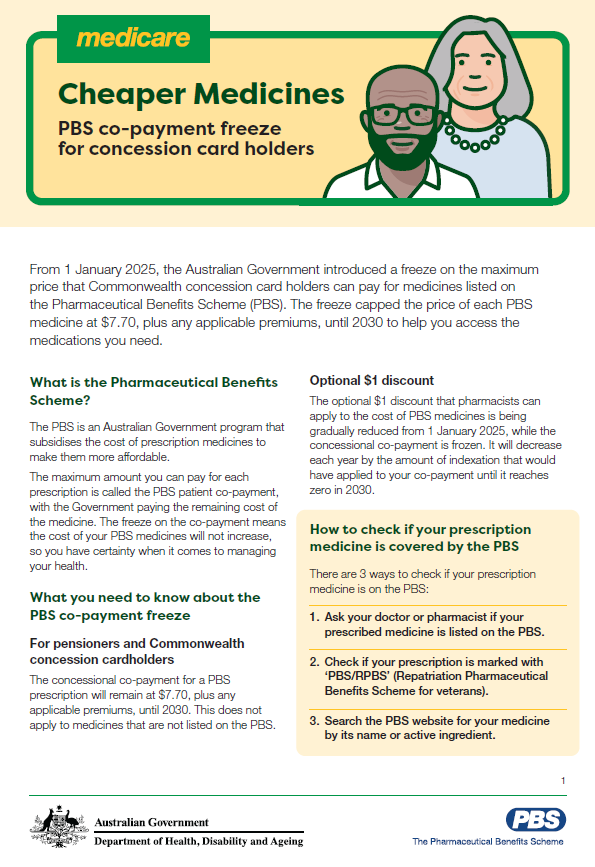
PBS co‑payment freeze: What it means for concession card holders – Fact sheet
This fact sheet explains the PBS concessional co‑payment freeze, keeping medicine costs capped at $7.70 until 2030. It outlines how the freeze works, ways to save on medicines, and where to find more information. -

PBS price reduction: Lower prescription costs for Medicare and concession card holders – A3 Poster
This poster highlights PBS medicine costs dropping to $25 for Medicare card holders from 1 January 2026, with concession card holders continuing to pay $7.70. It promotes savings on prescriptions through the PBS. -
Certification statement – PBS Awareness Campaign (Phase 3: Co-payment Reduction)
This certification statement, signed by A/g Secretary Professor Anthony Lawler on 5 January 2025, certifies that PBS Awareness Campaign (Phase 3: Co-payment Reduction) complies with relevant guidelines and policies. -
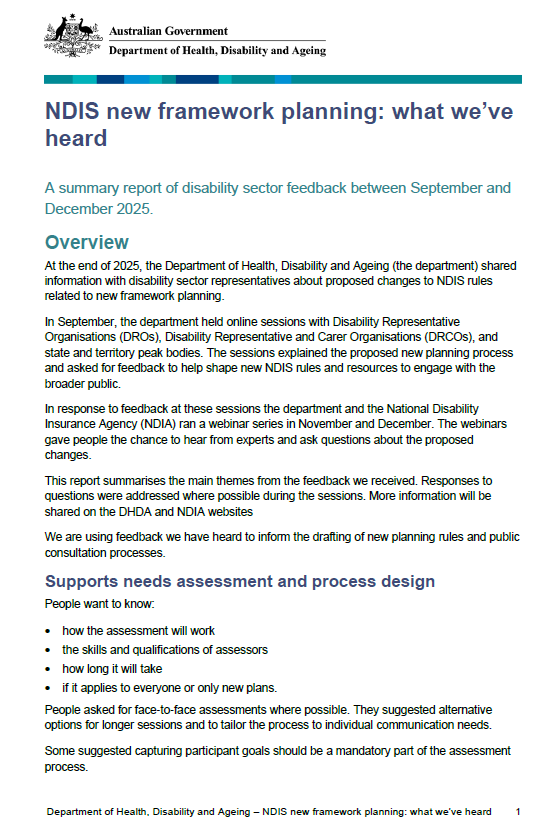
NDIS new framework planning: what we heard summary report
The report summarises disability sector feedback on proposed NDIS new framework planning, highlighting support for clearer, fairer planning and concerns about support needs assessments, assessor skills, tools, transparency, participant preparation, and inclusion of diverse groups. -
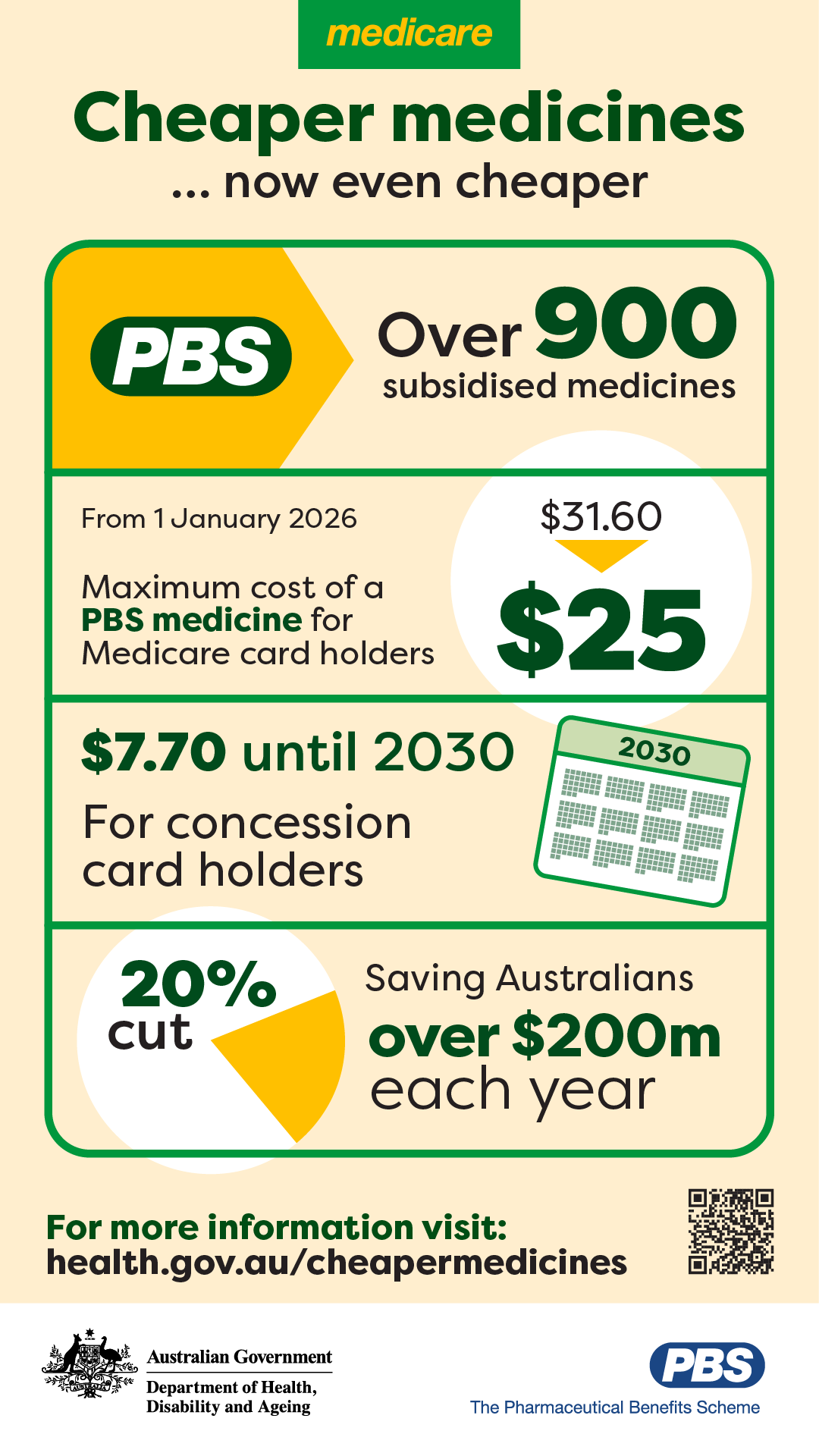
Cheaper Medicines: Key facts about lower PBS medicine costs infographic
This infographic highlights changes to PBS medicine costs, including a $25 cap for Medicare card holders and co-payment freeze for concession card holders until 2030, applying to more than 900 subsidised medicines. -

Cheaper Medicines: PBS price changes for Medicare and concession card holders – Postcard
This postcard highlights PBS patient costs dropping to a maximum of $25 for Medicare card holders from 1 January 2026, while concession card holders continue to pay $7.70 until 2030.