
Vaping can damage your health by exposing you to harmful chemicals. Vaping can impact your health and well-being, even if you only do it for a short time.
We know that vaping can damage your lungs and the nicotine found in vapes can harm the brain, which is still developing and maturing into your mid to late 20s.
There’s no such thing as safe vaping, even occasional vaping can be harmful to your health.
What you need to know
The aerosol (mist or vapour) from vapes is made by heating up liquid chemicals that you breathe in.
Vapes are battery operated and come in different shapes and sizes. Some are made to look like other objects, like cigarettes, cigars, pipes, pens or USB drives.
The vape low-down:
- vaping affects your health now
- vaping risks your future health
- the nicotine in vapes is highly addictive
- you may not realise you’re dependent on nicotine.
Vapes can only be sold through a pharmacy, subject to certain conditions being met. It is illegal for tobacconists, vape shops and convenience stores to sell any type of vape or vape product.
Read more about vaping laws.
Illegal vapes:
- often do not list their real ingredients
- can still contain nicotine, even if the label says ‘nicotine free’
- contain dangerous substances and over 200 different unique chemicals have been found, like:
- formaldehyde (used to preserve corpses in funeral homes)
- acrolein (found in weed killer)
- arsenic
- nickel and lead.
Watch this video to find out more about what’s really in an illegal vape.
What vaping does to you
You are exposed to chemicals when you vape. Vaping can impact your health and well-being, even if you only do it for a short time.
You can experience:
- lung inflammation and throat irritation
- persistent coughing
- breathing problems such as shortness of breath and wheezing, which can also decrease physical performance
- feeling nauseous
- swelling, bleeding and redness of the gums
- dizziness and light headedness
- seizures from inhaling too much nicotine or swallowing e-liquid
- burns or injury if your vape overheats or explodes
- becoming dependent on the nicotine in vapes
- feeling anxious or irritable because of nicotine withdrawals
- permanent lung damage
- a temporary loss or change in taste
- trouble with your asthma
Nicotine dependence
Nicotine is really addictive and can negatively impact your health. Nicotine activates receptors in your brain, which releases a brain chemical called dopamine that makes you feel good. But the feeling doesn’t last long.
The more someone vapes, or the longer they have been vaping, the more their brain and body gets used to the nicotine and needs more to get the same feeling. When you stop vaping and the nicotine levels in your body drop, your brain craves more dopamine. This cycle is what keeps people vaping and leads to nicotine dependence, which can develop quickly. This may mean you get withdrawal symptoms when you don’t vape.
Most vapes available in Australia contain nicotine – even if the packaging says they don’t.
If you’re thinking about stopping vaping, you’re not alone. Lots of people have quit vaping and you can too. It might take a few goes, but knowing what to expect when you quit and getting support will make it easier for you.
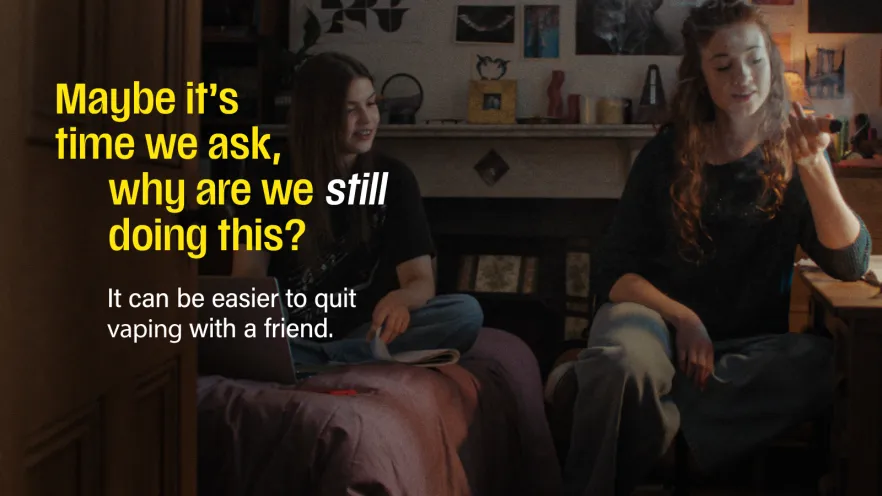
It can be easier to quit with a friend so buddy up and support each other on your quit journeys – it can boost your motivation and help you stay on track.
Vaping and your mental health
Vaping can expose you to very high levels of nicotine. This is particularly dangerous for young people as it can:
- harm your developing brain - which is still developing until your mid to late 20s
- rewire brain chemistry so it becomes more addicted to nicotine
- affect your attention, learning, and memory
- affect your mood.
While it may seem like vaping relives anxiety, in reality, it can make anxiety worse. The constant nicotine cycle, and its effects on the brain, can contribute to worsening mental health issues such as anxiety and depression.
There is help available if you’re experiencing mental health difficulties. Talk to friends and family, your doctor or a trusted health professional, or try one of these organisations:
- Kids Helpline (1800 551 800)
- 13YARN (13 9276)
- Headspace (online or phone 1800 650 890)
- ReachOut (online)
- Beyond Blue (online or phone 1300 224 636)
- Medicare Mental Health (1800 595 212).
Going vape-free
Thousands of Australians have quit vaping recently or are planning on quitting vaping soon. You can too.
Most vapes in Australia contain nicotine which is highly addictive (even illegal vapes which may not say they do), so it’s normal to experience withdrawal from nicotine when you cut down or quit vaping. Your withdrawal symptoms may last from a few days to a few weeks. But the good news is that the symptoms won’t last long and it gets better over time.
Withdrawal symptoms are different for every person and can start a few hours after someone stops vaping. They’re usually strongest within the first week (sometimes longer) as the body adjusts to being free from nicotine. Then they fade over the next few weeks.
Some signs of nicotine withdrawal include:
- nicotine cravings
- feeling irritable or grumpy
- finding it hard to concentrate
- feeling nervous or restless
- changes in appetite
- feeling like you have the flu
- feeling dizzy or having head spins
- depression
- finding it hard to sleep (insomnia).
Knowing what to expect when you quit and getting support makes it easier. Having a friend to help you through your journey is also a great way to stay on track.
Avoiding vapes altogether is your best move. If you’re currently vaping, there are heaps of benefits to quitting.
If you’re currently trying to quit, you might be having cravings and find it difficult to give up. Remind yourself why quitting is good for you and it’s ok if it takes a few tries to be completely vape-free.
Knowing when and why you vape will help you quit. Sometimes vaping gets tied to everyday stuff, like having a coffee, hanging out with friends, talking on the phone, taking a study break or even waking up. Your brain remembers these links and says, ‘Time to vape!’ when you do those things. When you stop, those same moments can trigger cravings. It’s just your brain remembering the old routine.
Think about your habits - are there certain times or activities that make you want to vape and could these moments tempt you after you quit? If you know your triggers, it will help you plan ahead and resist the urge to vape.
Your feelings are connected to nicotine cravings too. You might vape:
- when you’re sad or angry
- to hide uncomfortable feelings
- when you’re bored
- when you’re stressed or anxious.
Even after you quit, these links don’t disappear overnight. Your brain still remembers them, and it takes time to break those connections.
Learn more about how you can deal with cravings. Getting help and the right support will help you quit. You’re not alone on the journey.
Talk to your doctor, health professional, family or trusted friends to assist you in quitting. You can call the Quitline on 13 78 48 for free confidential advice and support from professional counsellors and request a free callback for a time that works for you. In some states and territories, you can chat to a counsellor online. You can also get help to plan your quitting journey through the My QuitBuddy app, Pave app or at quit.org.au.
You can also talk to your doctor about other medicines or therapies (such as nicotine replacement therapies) that may also be available to help people quit smoking and vaping.