
Resources
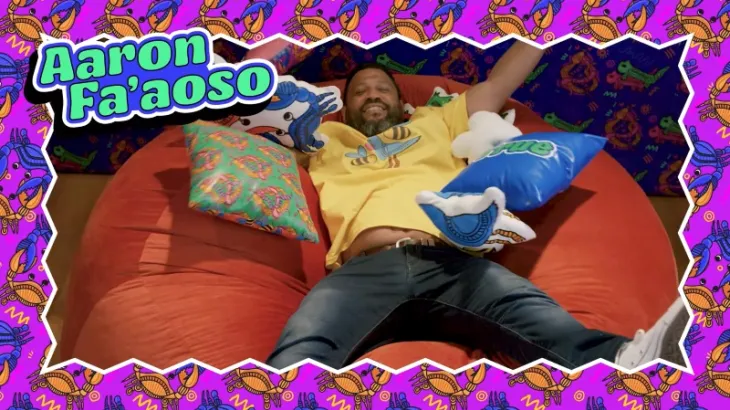
00:18
STIs promo with Aaron and Tawhio – True or Gammon – 20 second video
Comedian Aaron Fa’aoso brings his fun and cheeky humour in this short promo video about STIs.

00:13
STIs promo with Janty and Jecinta – True or Gammon – 15 second video
In this short promo, deadly comedian Janty Blair introduces STIs and invites you to watch the full video.
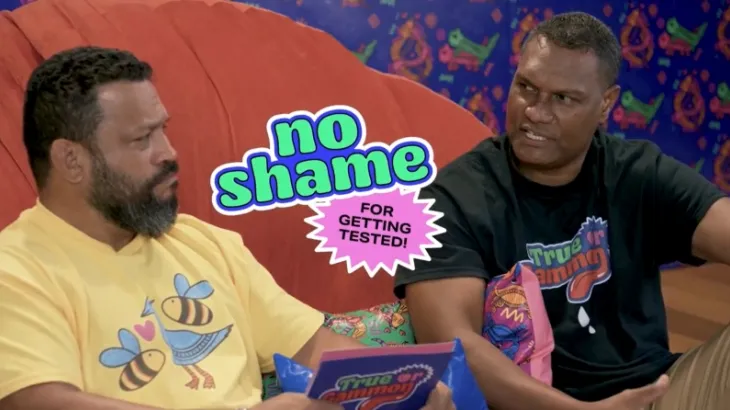
05:14
STIs with Aaron and Mario – True or Gammon – 5 minute video
Comedian Aaron Fa’aoso yarns with deadly Aboriginal health worker, Mario from the Torres Strait. They answer all your burning questions about STIs.
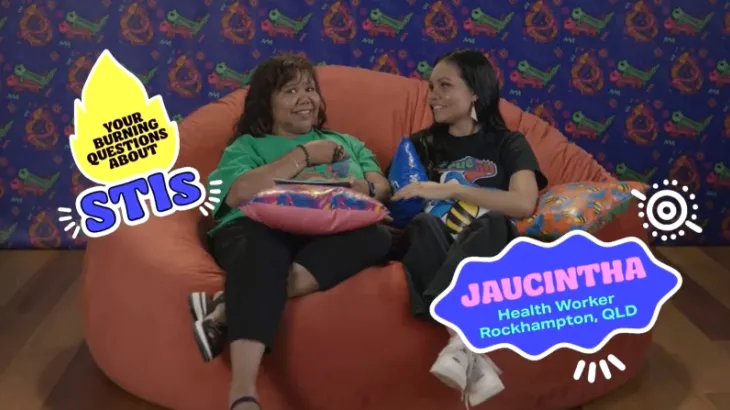
6:43
STIs with Janty and Jauncintha – True or Gammon – 7 minute video
Comedian Janty Blair sits down with deadly Aboriginal health worker, Jauncintha from Rockhampton, Queensland. Together they yarn about STIs and answer all your burning questions.
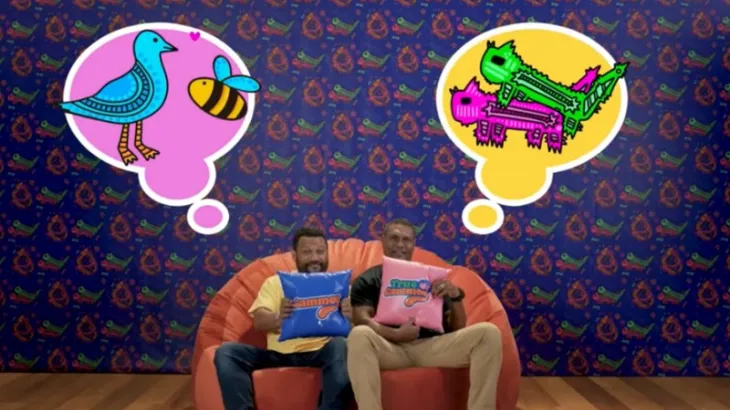
00:15
STIs promo with Aaron and Mario – True or Gammon – 15 second video
Comedian Aaron Fa’aoso brings his fun and cheeky humour in this short promo video about STIs.
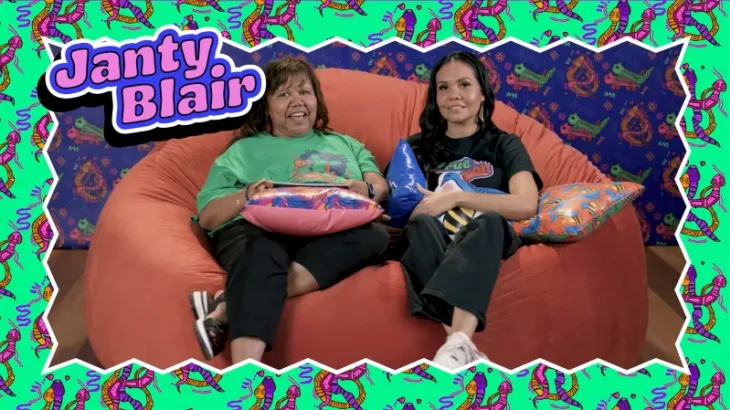
00:13
STIs promo with Janty and Jauncintha – True or Gammon – 15 second video
In this short promo, deadly Comedian Janty Blair introduces STIs and invites you to watch the full video.
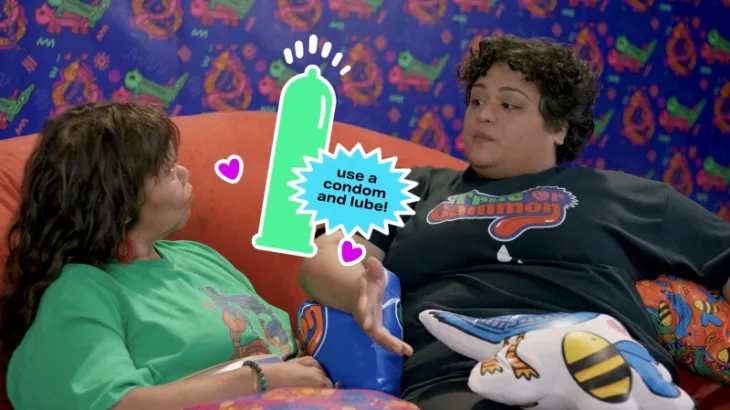
6:03
STIs with Janty and Jecinta – True or Gammon – 6 minute video
Deadly comedian Janty Blair yarns with Aboriginal health practitioner, Jecinta from Darwin, Northern Territory. In ‘True or Gammon’ style, they shed light on some myths about STIs.

00:15
Safe sex a prickly subject? – True or Gammon – Social animation
A 15-second video animation to share on your social channels to encourage yarning with Aboriginal and Torres Strait Islander people.
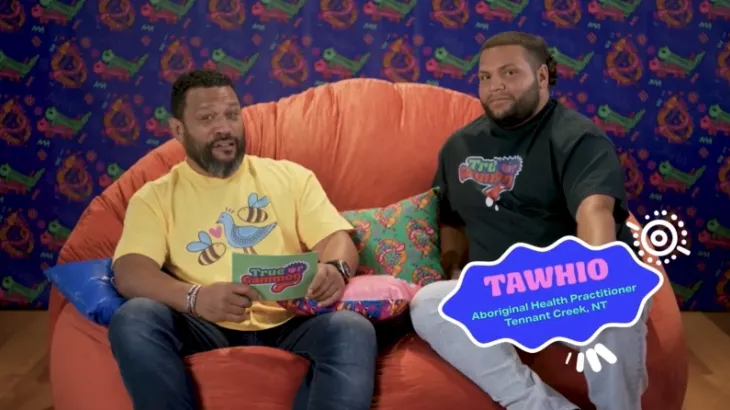
5:32
STIs with Aaron and Tawhio – True or Gammon – 5 minute video
Aaron Fa’aoso sits down with deadly Aboriginal health practitioner, Tawhio from Tennant Creek, Northern Territory. In 'True or Gammon' style, they answer all your burning questions about STIs.
Review of the Marketing in Australia of Infant Formulas: Manufacturers and Importers (MAIF) Agreement Final Report
This report presents the findings of the independent review by Allen + Clarke Consulting of the Marketing in Australia of Infant Formulas: Manufacturers and Importers Agreement (MAIF Agreement). The report contains recommendations to strengthen the MAIF agreement, and improve its effectiveness.
Review of the Marketing in Australia of Infant Formulas: Manufacturers and Importers (MAIF) Agreement Consultation Report
This report presents the key findings from the Allen + Clarke Consulting led consultations processes during the review of the MAIF Agreement. Visit the Department’s Consultation Hub to view the survey responses to the MAIF Agreement Review public consultation process.
Young Person (12 to 18 years) Comprehensive Health Assessment Program (CHAP) – Annual Health Assessment for People with Intellectual Disability
The Comprehensive Health Assessment Program (CHAP) is an evidence-based tool for conducting annual health assessments for people with intellectual disability in Australia. This version of the CHAP is for young people aged 12 to 18 years.
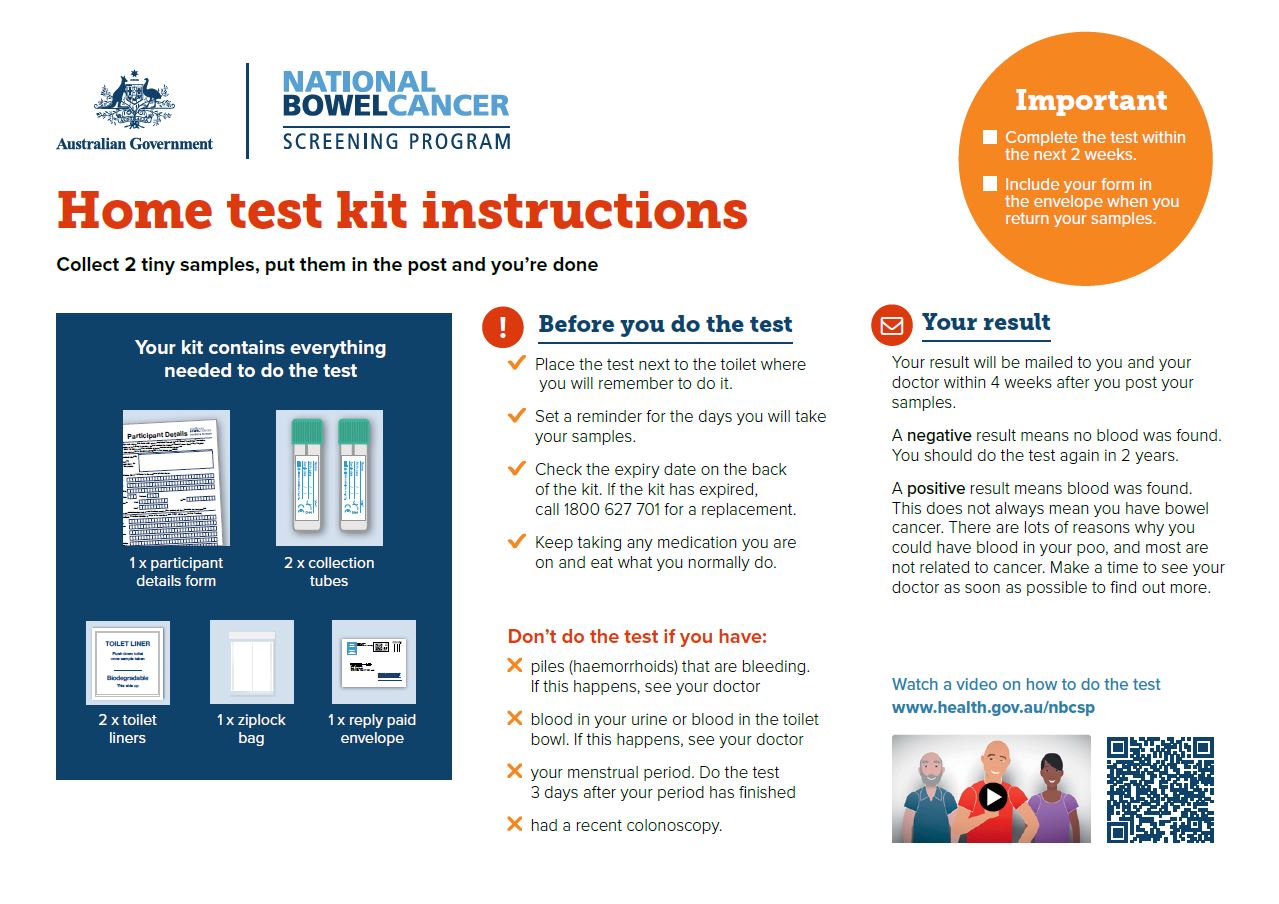
National Bowel Cancer Screening Program – Home test kit instructions
There are 4 easy steps to completing a home test kit for bowel cancer. Find out what the kit contains and how to do the test.
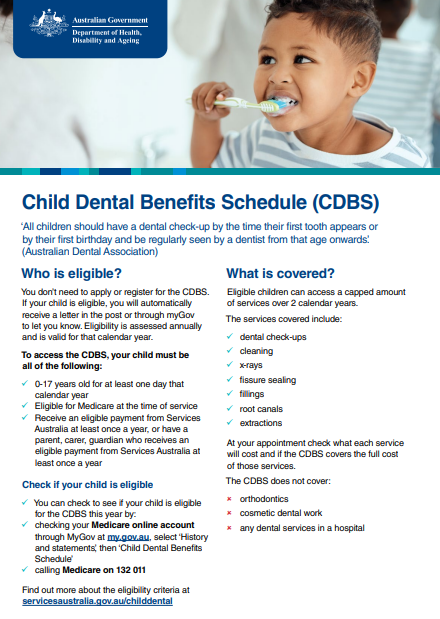
Child Dental Benefits Schedule (CDBS) Brochure
Keep your teeth healthy by brushing in the morning and at night, eating more fruit and veggies, choosing water as a drink and having regular dental check-ups.
Endometriosis Progress Report 2024
This report provides an update on the progress of the National Action Plan for Endometriosis.
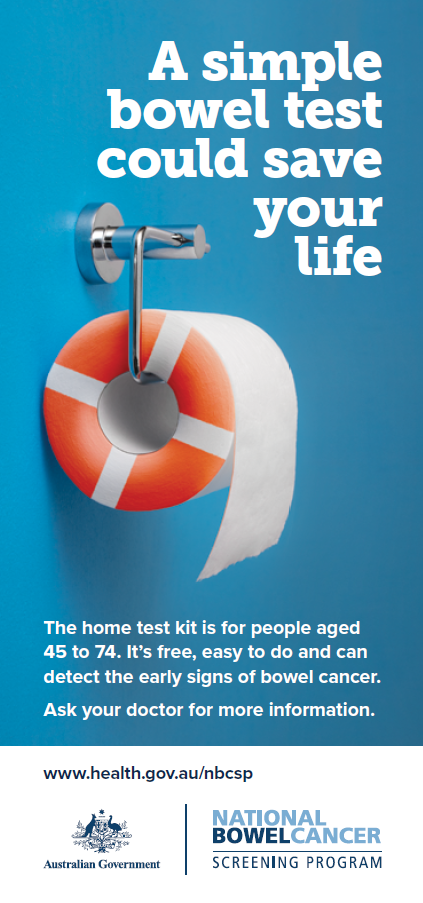
National Bowel Cancer Screening Program – Lifesaver brochure
This brochure provides information about the National Bowel Cancer Screening Program, including why it’s important to do the test, who should do the test, what the test looks for and the symptoms of bowel cancer. It also provides contact details for getting more information.
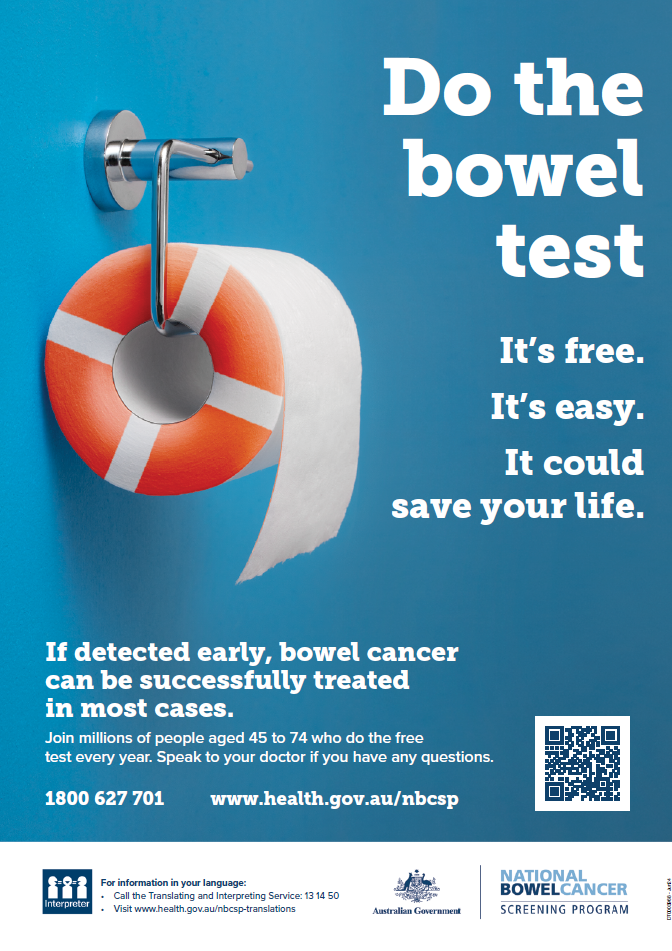
National Bowel Cancer Screening Program – Lifesaver poster
This A3 size poster encourages people to do the bowel screening test as part of the National Bowel Cancer Screening Program. The home test kit is free, easy to do and can detect the early signs of bowel cancer. Doing this simple test could save your life.
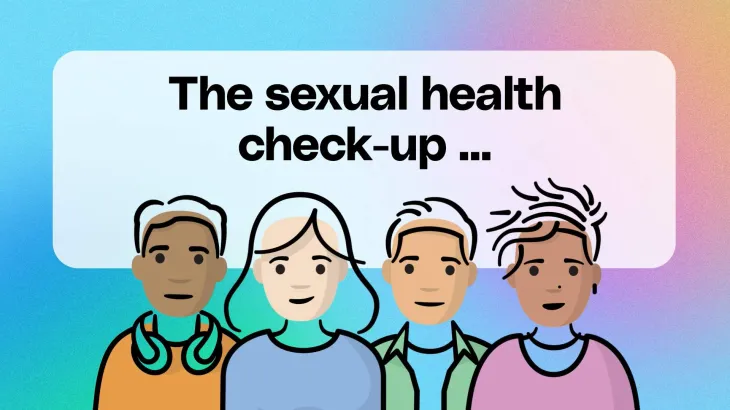
02:22
Sexually transmissible infections – Beforeplay – The sexual health check-up
This animation provides information about STIs and sexual health check-ups.
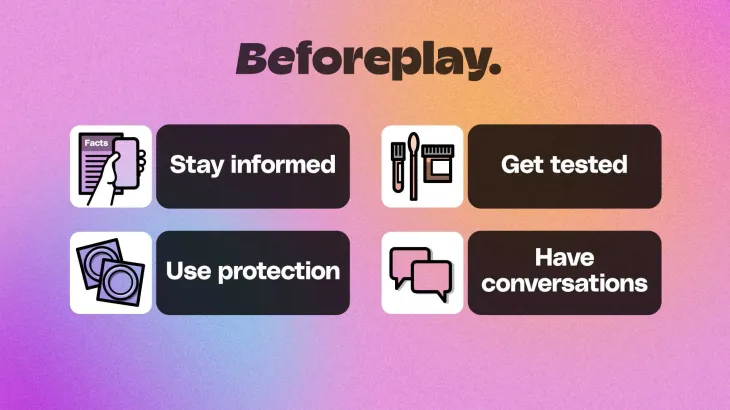
01:59
Sexually transmissible infections – Beforeplay – STI Mythbusters
This animation debunks common myths surrounding STIs and sexual health.
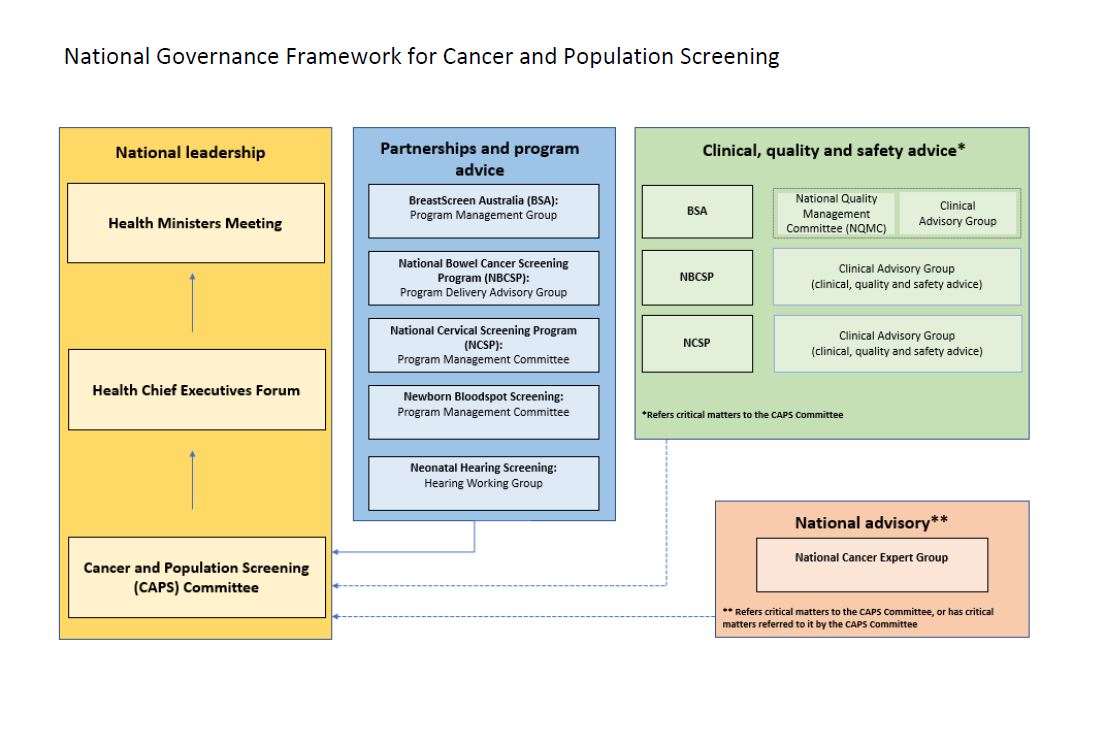
National Governance Framework for Cancer and Population Screening
The National Governance Framework for Cancer and Population Screening outlines the governance arrangements of our various committees and groups.
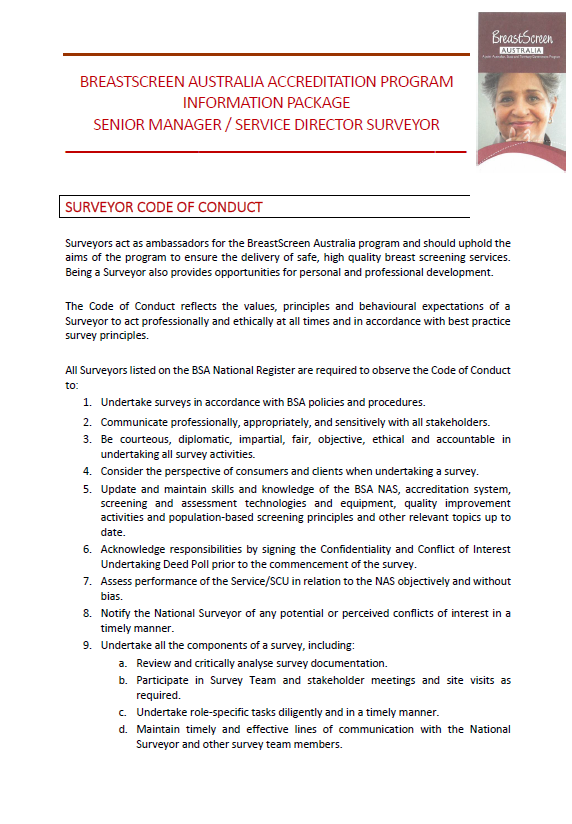
Surveyor expressions of interest – program managers and service directors
Information package for program manager and service director surveyors.
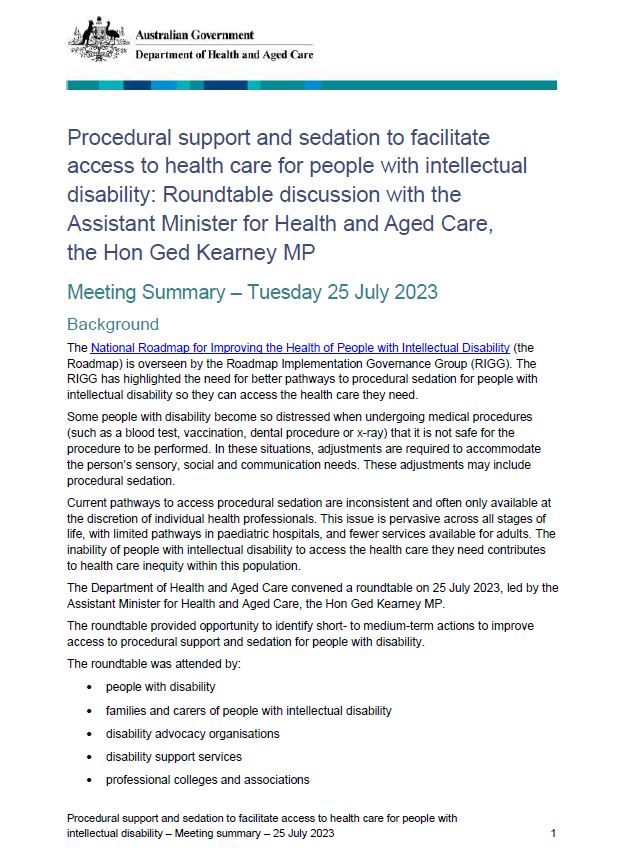
Roundtable on procedural support and sedation for people with disability
The Department of Health and Aged Care convened a roundtable on 25 July 2023, led by the Assistant Minister for Health and Aged Care, the Hon Ged Kearney MP.
3:31:00
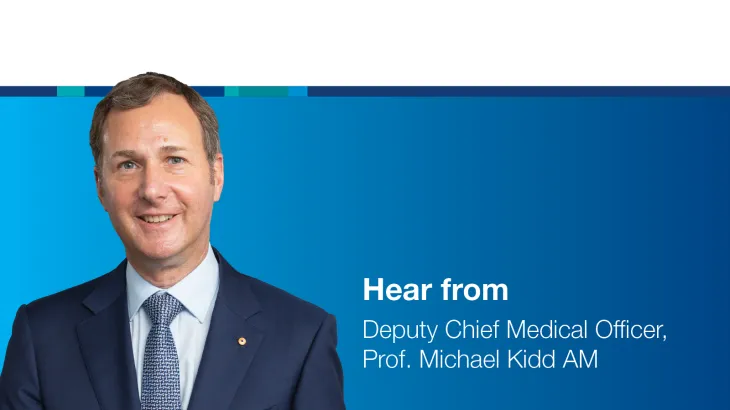
Bowel Cancer Awareness Month - GPs
This Bowel Cancer Awareness Month hear from Deputy Chief Medical Officer Professor Michael Kidd on the importance of completing your simple, free bowel cancer screening test.
2:50:00
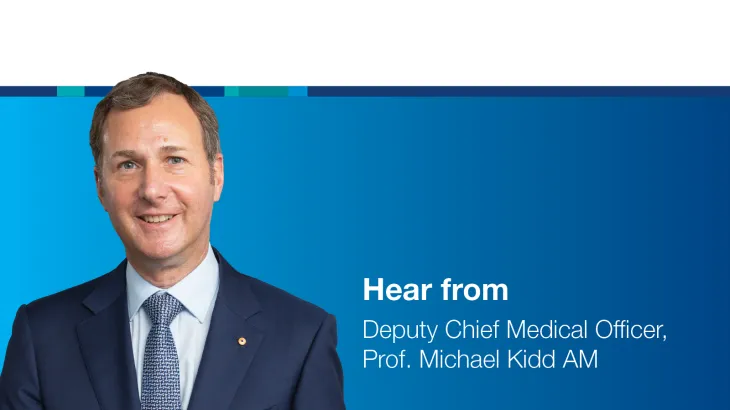
Bowel Cancer Screening with Professor Michael Kidd
This Bowel Cancer Awareness Month hear from Deputy Chief Medical Officer Professor Michael Kidd on the importance of completing your simple, free bowel cancer screening test.
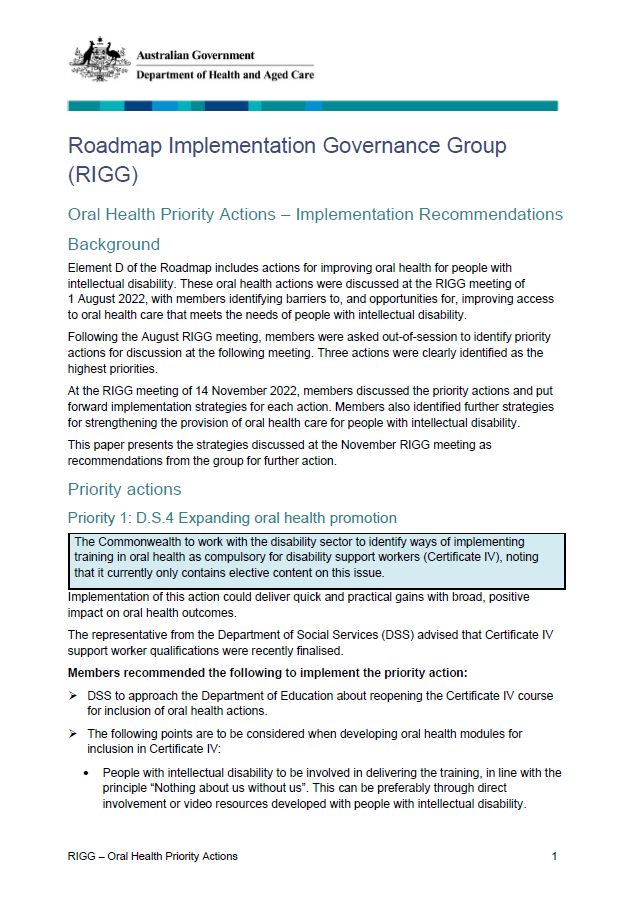
Oral Health Priority Actions – Implementation Recommendations
Element D of the National Roadmap for Improving the Health of People with Intellectual Disability includes actions for improving oral health. This paper presents recommendations from the Roadmap Implementation Governance Group for further action.
Date last updated: