
Resources
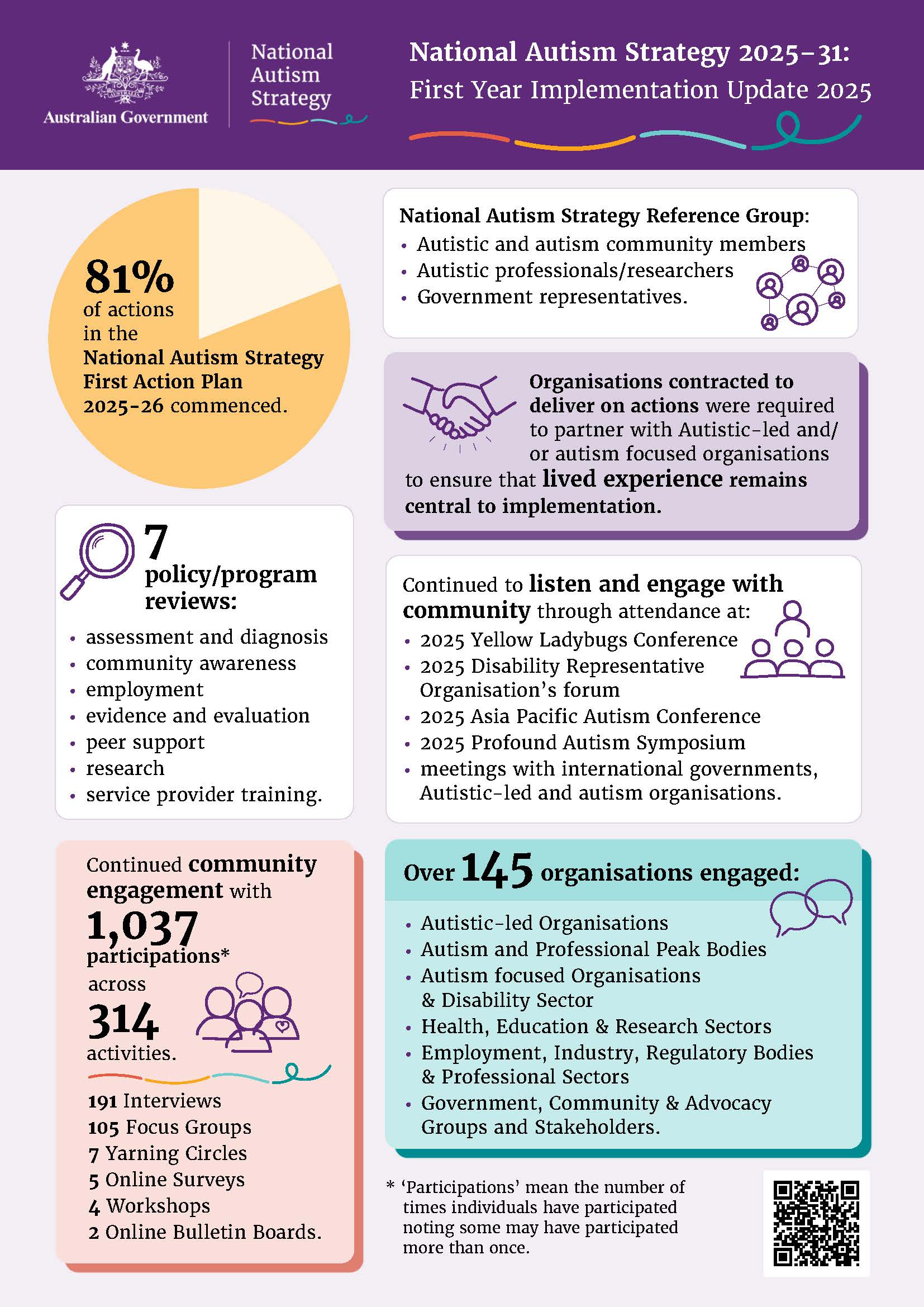
National Autism Strategy 2025-31: First Year Implementation update 2025
The National Autism Strategy Implementation update outlines key achievements and actions under the Strategy in 2025.
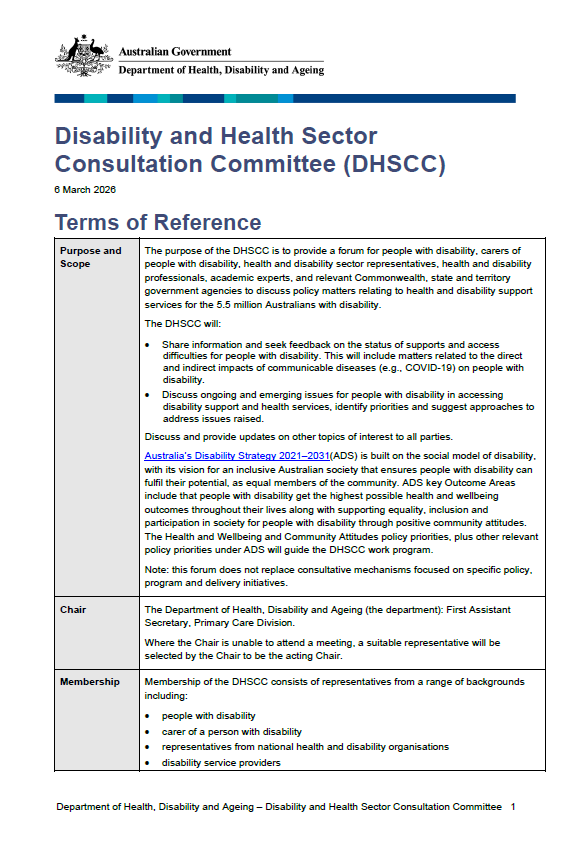
Disability and Health Sector Consultation Committee – Terms of reference
This document sets out the roles and responsibilities for the Disability and Health Sector Consultation Committee (DHSCC). It provides guidance on the DHSCC's purpose, roles, responsibilities, operations and obligations.

Postal Concessions for the Blind – Eligible participant application form
The Postal Concessions for the Blind program helps people who are blind or have a vision impairment send and receive approved items through Australia Post at no cost or at a reduced rate. Eligible participants will need to complete and submit this form to receive the concession rates.
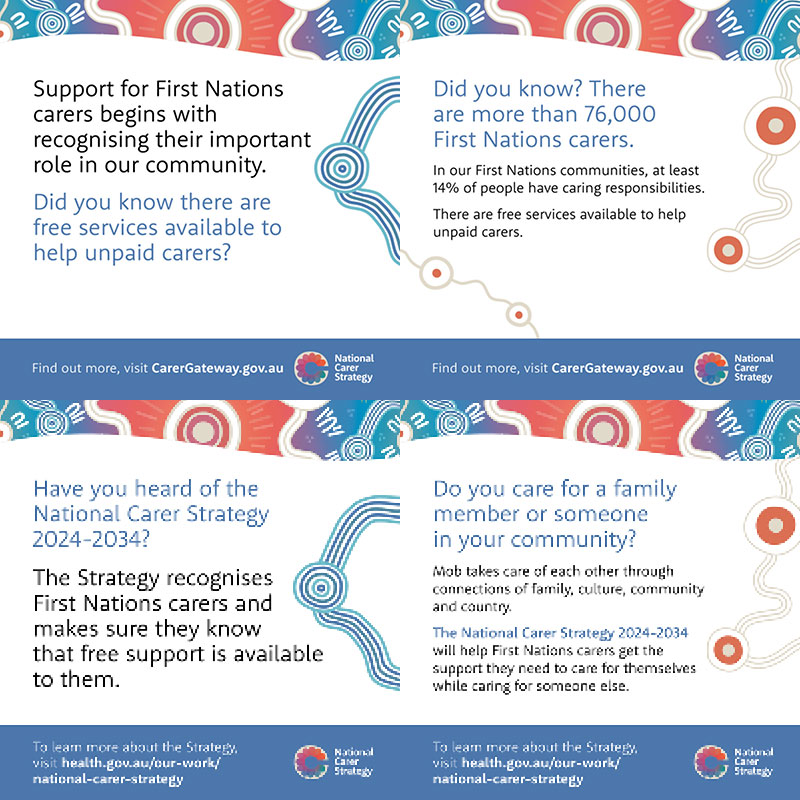
National Carer Strategy – Social media tiles – First Nations
Social media tiles you can use to promote the National Carer Strategy with First Nations people.
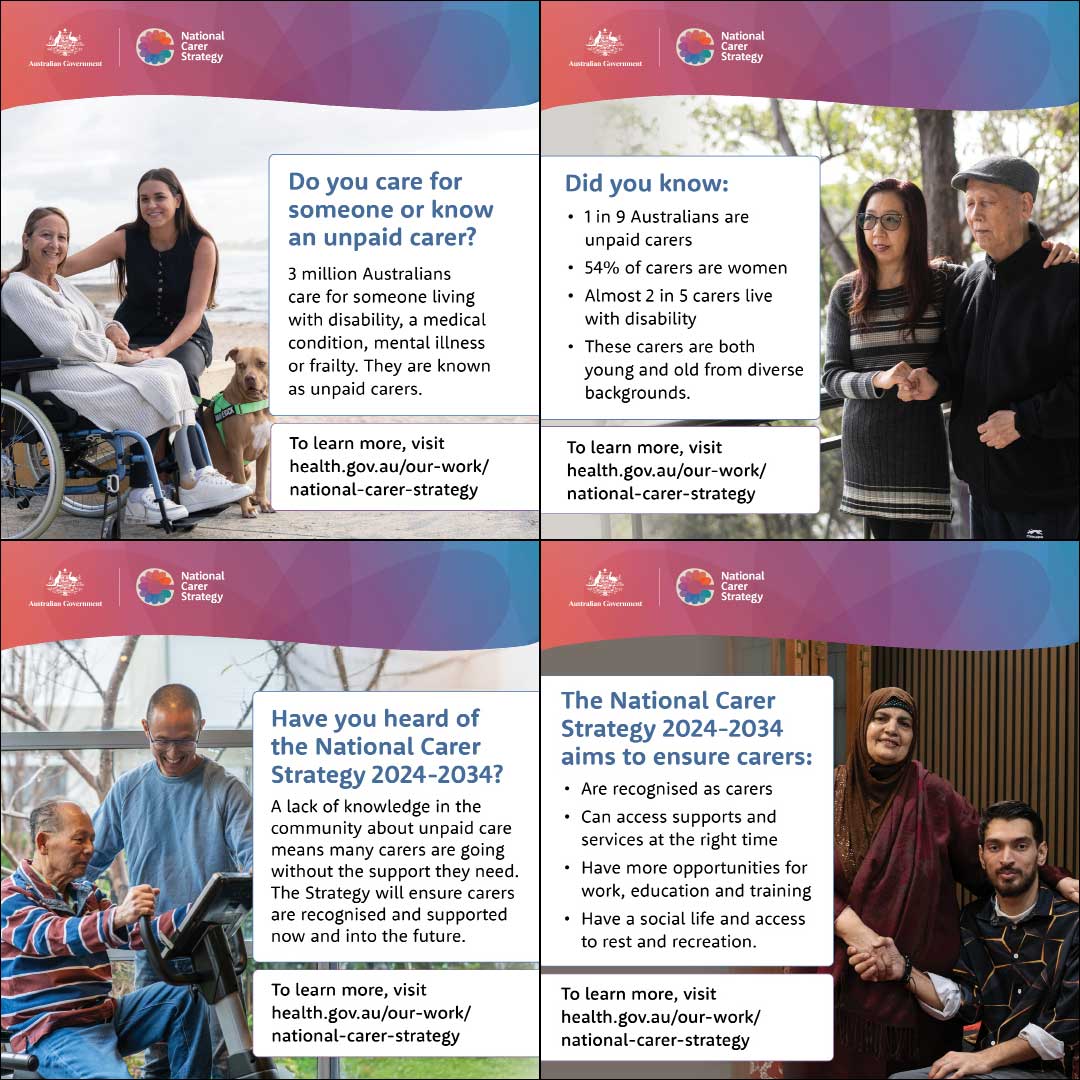
National Carer Strategy – Social media tiles
Social media tiles you can use to promote the National Carer Strategy.
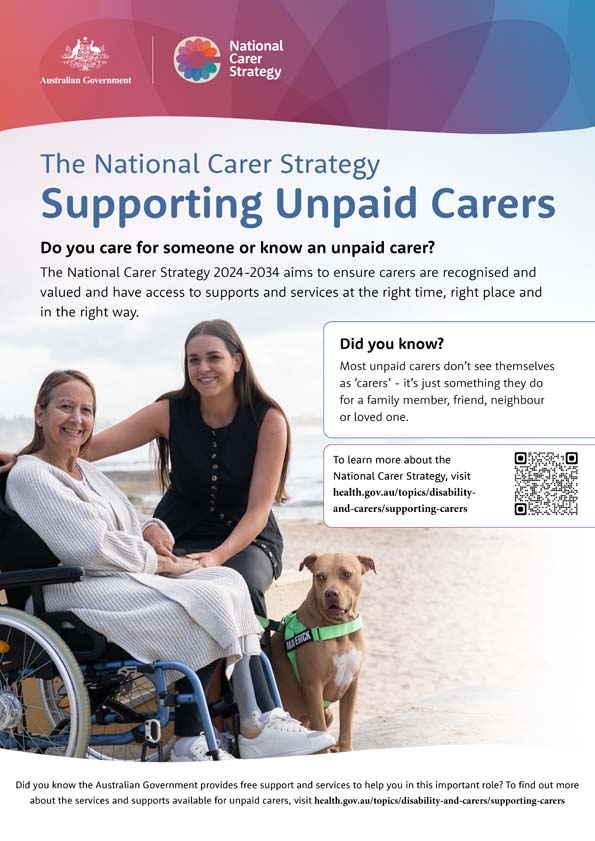
National Carer Strategy – Supporting carers poster
This poster explains who unpaid carers are, highlights the challenges they face, and outlines how governments will recognise carers and improve access to timely support, services, work, education, and wellbeing.

Introduction to the National Carer Strategy 2024–2034 – Highlights – Easy Read
Provides an Easy Read overview of the key highlights and priorities of the National Carer Strategy 2024–2034.

Defining Therapy Supports consultation with Allied Health Peak Bodies
We are seeking advice from allied health peak bodies on describing therapy supports for upcoming NDIS planning changes. Broader consultation on amended NDIS Supports Rules will occur in March 2026, with website updates to inform the sector and community.

National Carer Strategy – Supporting carers brochure
Learn about unpaid carers, the support they need, and how our National Carer Strategy aims to recognise carers and improve access to services, work, education, and wellbeing.

Terms of reference – National Disability Insurance Scheme (NDIS) Evidence Advisory Committee (EAC)
These terms of reference set out the objectives and operational arrangements of the NDIS Evidence Advisory Committee and the responsibilities of those associated with the committee.
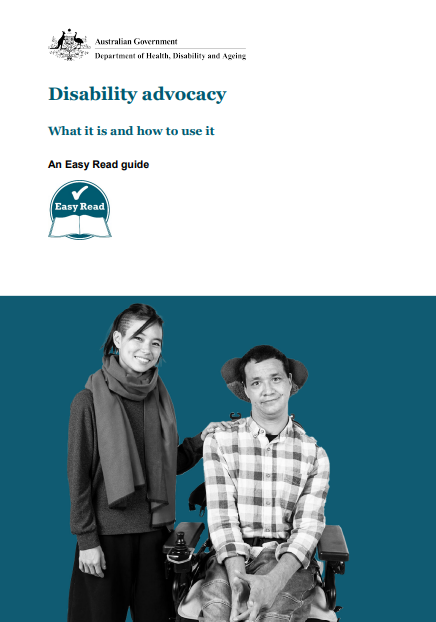
Disability advocacy for individuals fact sheet
This fact sheet on the Disability advocacy for individuals help promote, protect and defend the human rights of people with disability.
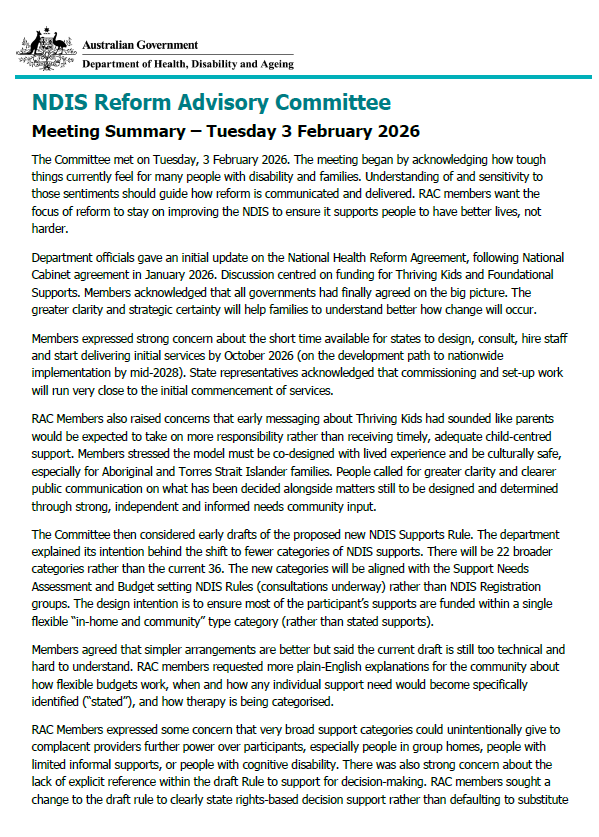
NDIS Reform Advisory Committee Meeting Summary – 3 February 2026
This meeting summary is for the NDIS Reform Advisory Committee meeting held on 3 February 2026.

15:26
Thriving Kids Advisory Group Final Report Summary – AUSLAN
This is the Thriving Kids Advisory Group’s final report summary.

Thriving Kids Advisory Group Final Report
This is the Thriving Kids Advisory Group’s final report. It includes a proposed national model for Thriving Kids.
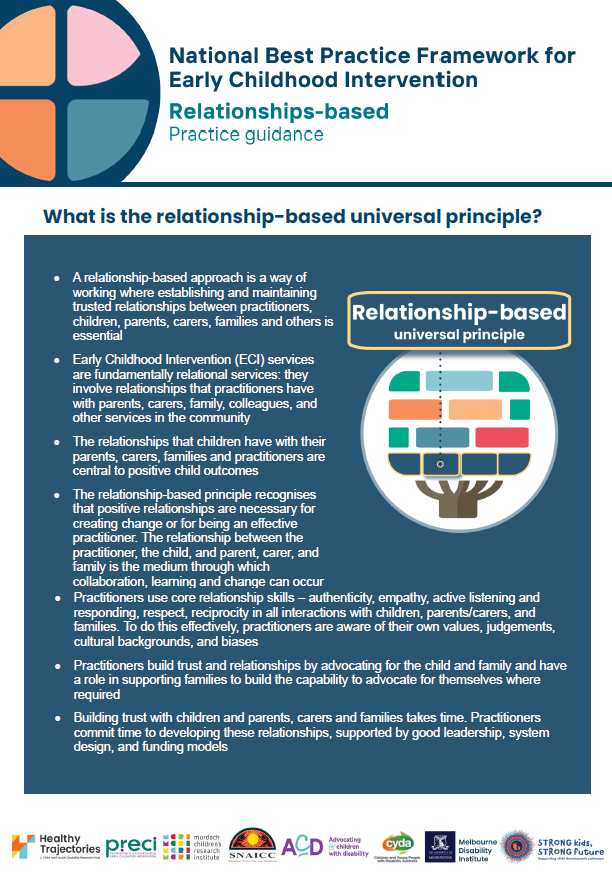
The National Best Practice Framework for Early Childhood Intervention – Practice guidance – Relationship-based universal principle
This fact sheet explains the relationship-based universal principle and how it applies to the National Best Practice Framework for Early Childhood Intervention. It outlines for practitioners what relationship-based practices are and how we'll know when they're working.
Step 1: Preparing for a support needs assessment
Explains step 1 of the new NDIS planning framework – how participants prepare for a support needs assessment, what the NDIA will provide, key notices involved, and that current plans continue until a new framework plan is made.
Step 2: The support needs assessment
Describes step 2 of the new NDIS planning process, where an NDIA assessor meets with a participant to understand daily life, support needs and preferences, documents outcomes in a support needs assessment report, and provides the report to the participant.
Step 4: Using a plan
Explains step 4 of the new NDIS planning process, covering how participants use their plan, access supports, have implementation meetings and check-ins, and how the NDIA can make limited plan variations without a new assessment.
Reviews and appeals under the new way of planning
Outlines how NDIS participants can request reviews and appeals under the new planning approach, including internal reviews and external appeals, what decisions can be reviewed, and how reviews focus on the support needs assessment and budget method used to set plans.
Explanatory document – Transition to new framework plan
Explains the rules for transitioning National Disability Insurance Scheme participants to new framework plans, including who will transition, how notices are issued, and how the National Disability Insurance Agency will gradually roll out new plans over time to manage change.
Explanatory document – Notice of Impairment
Explains the Notice of Impairment rules, including what a notice is, the impairment categories it lists, when the National Disability Insurance Agency can issue or vary a notice, and when participants can request a variation, to improve transparency about NDIS access and eligibility.

Explanatory document – Stated supports
Explains the stated supports rules under new framework plans for the National Disability Insurance Scheme, including which supports must be specifically listed in a plan, how they differ from flexible funding, and why some supports are always stated to manage risk, cost or integrity.
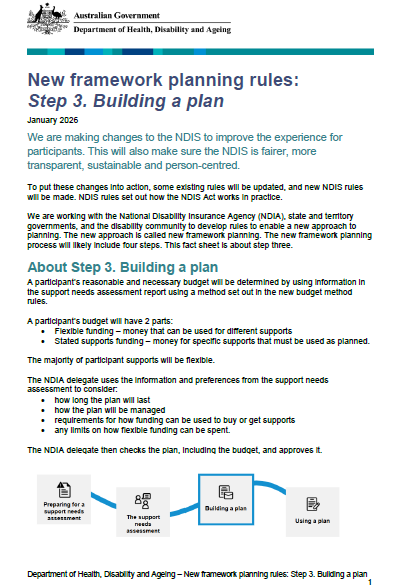
Step 3: Building a plan
Explains step 3 of the new NDIS planning process, where the NDIA uses the support needs assessment to set a reasonable and necessary budget, decide flexible and stated supports, confirm plan details, and approve the participant’s plan.
Explanatory document – New framework plan spending rules
Explains the rules for how National Disability Insurance Scheme (NDIS) funds can be spent under new framework plans, including requirements to spend funding only on NDIS supports, rules for flexible and stated supports, and limits or conditions to protect integrity and participant safety.
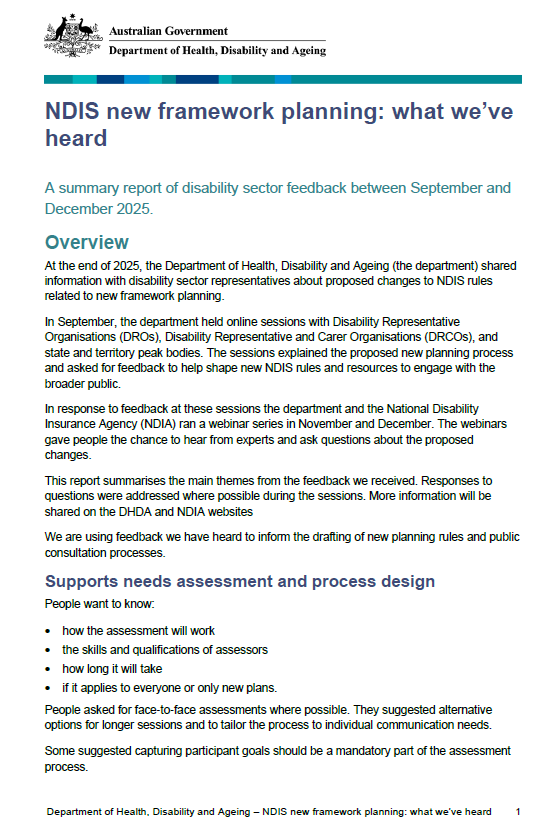
NDIS new framework planning: what we heard summary report
The report summarises disability sector feedback on proposed NDIS new framework planning, highlighting support for clearer, fairer planning and concerns about support needs assessments, assessor skills, tools, transparency, participant preparation, and inclusion of diverse groups.
Date last updated: