
Filter results
You can narrow down the results using the filters
Audience
Publication type
Topics
Our work
Diseases
9693 results
-
2024 Aboriginal and Torres Strait Islander Health Roundtable – Outcomes Report
This report focuses on enabling Aboriginal and Torres Strait Islander peoples to share their experience and expertise with each other and governments, as well as to identify priority areas where parties can work together and in partnership to achieve better outcomes. -
ATAGI 116th meeting bulletin – 15 October 2025
This document provides an overview of the discussion from the 116th Meeting of the Australian Technical Advisory Group on Immunisation (ATAGI). -

Private Health Insurer pandemic commitment monitoring – June 2025
A summary of June 2025 funds returned from private health insurers to policyholders in response to the COVID-19 pandemic. -
BRoSS user guide – University users
This guide for university staff on using BRoSS to manage Bonded Medical Program participants covers registration, login, adding applicants, viewing and editing records, legislative changes, and support contacts. -
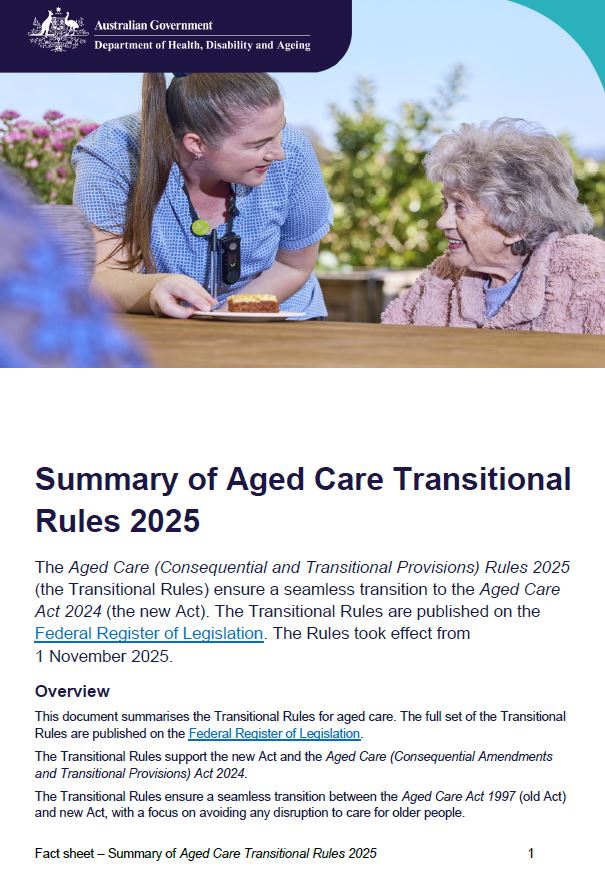
Aged Care Transitional Rules 2025 Factsheet
The Aged Care Rules 2025 ensure a seamless transition to the Aged Care Act 2024. This document summarises the Transitional Rules for aged care. -

PBS approved suppliers portal – How to submit an application to change ownership of an approved pharmacy (not involving relocation)
This user guide provides instructions on how to navigate the PBS Approved Suppliers Portal, complete the online application form and submit an application for approval to change ownership of an approved pharmacy to supply pharmaceutical benefits at particular premises (not involving relocation).
-
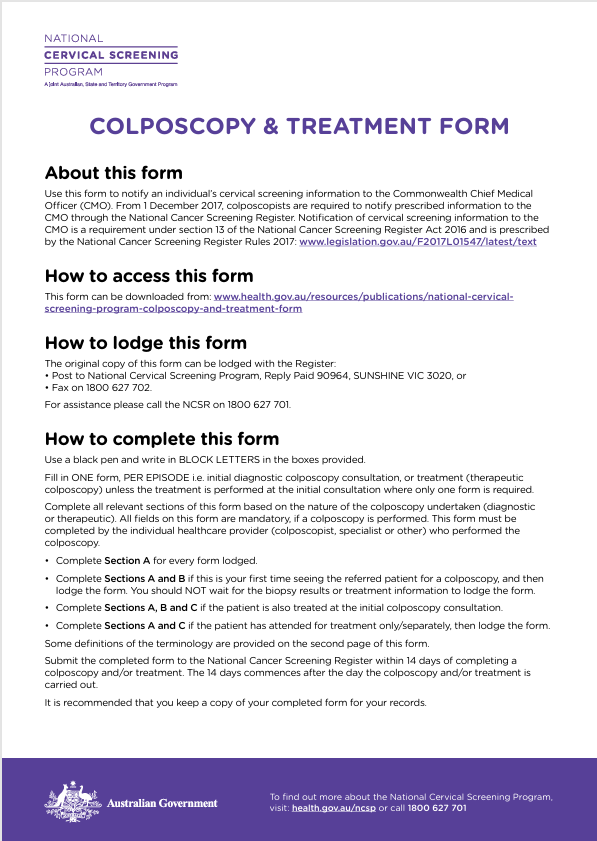
National Cervical Screening Program – colposcopy and treatment form
This form is no longer available to order and is undergoing an extensive clinical review and process. The aim of the review is to ensure the form aligns with the Clinical Guidelines and supports best practice. Once updated, the new form will be available online or for download use only. -
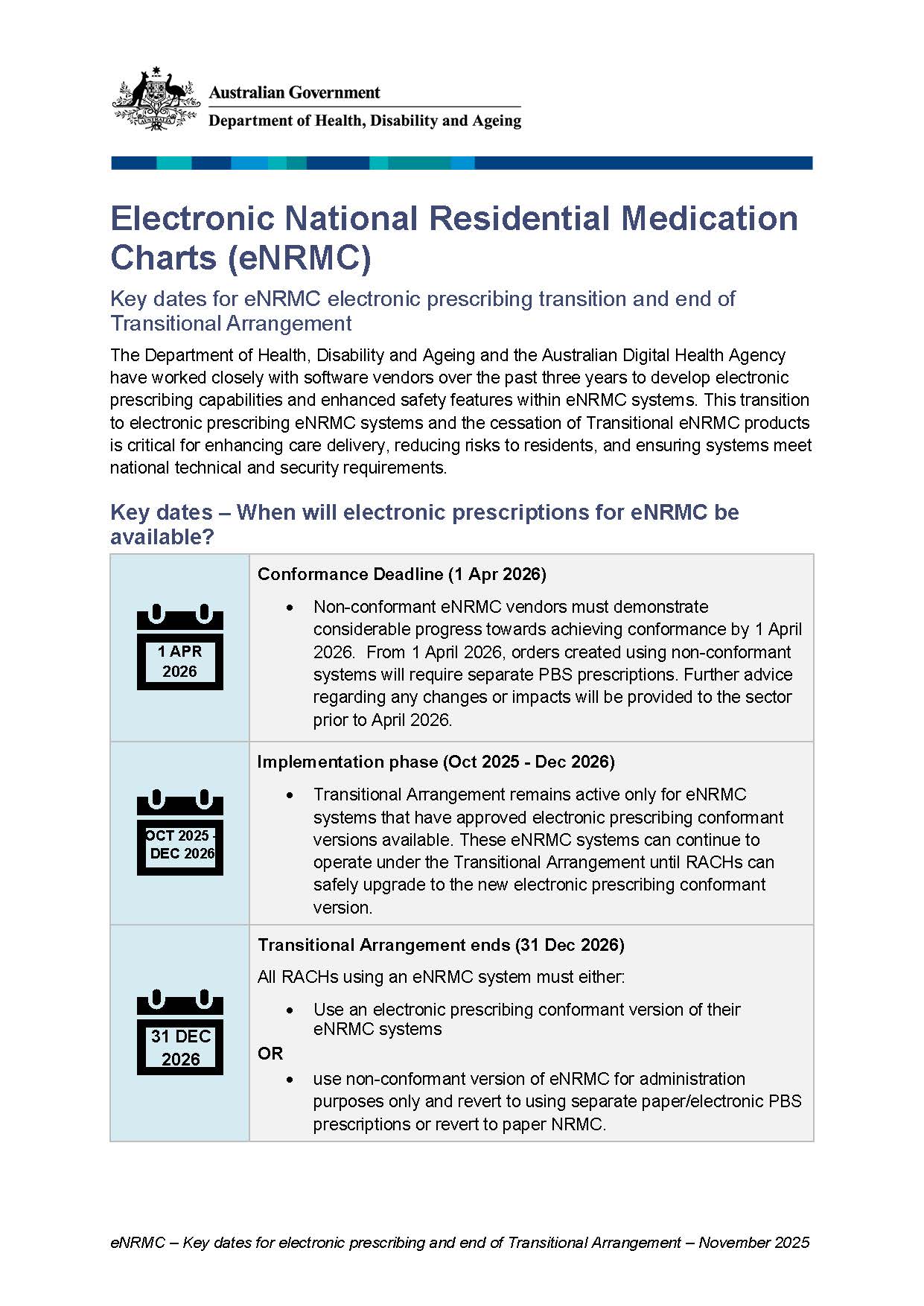
Electronic National Residential Medication Chart (eNRMC) – Key dates for eNRMC electronic prescribing transition
The Department of Health, Disability and Ageing and the Australian Digital Health Agency have worked closely with software vendors over the past 3 years to develop electronic prescribing capabilities and enhanced safety features within eNRMC systems. -

Learning Health System Strategic Advisory Committee – 21 August 2025
The Learning Health System Strategic Advisory Committee met on 21 August 2025. This document is a report from the Chair and provides a record of the meeting. -
FNGPTC communique – 27 October 2025
This communique summarises the discussions and decisions by the First Nations General Practice Training Committee (FNGPTC) at its 27 October 2025 meeting. -
ATAGI GP bulletin – 28 November 2025
This document provides a short overview of key issues from the ATAGI meeting relevant to General Practitioners. -
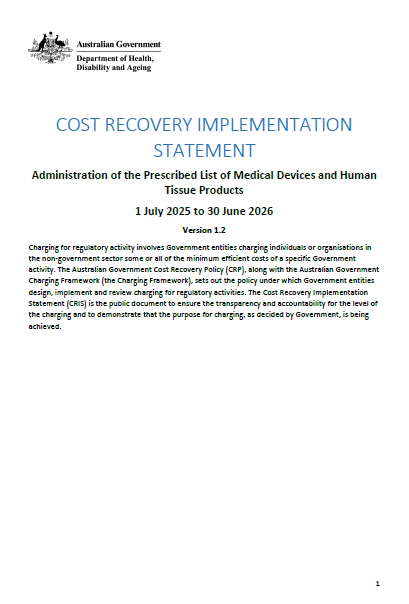
Cost Recovery Implementation Statement – Administration of the Prescribed List of Medical Devices and Human Tissue Products 2025–26
This cost recovery implementation statement describes how we recover the costs of administering the Prescribed List from 1 July 2025 to 30 June 2026. -
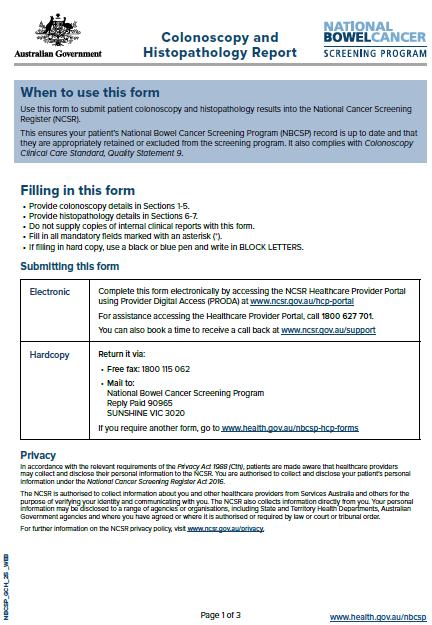
National Bowel Cancer Screening Program – Colonoscopy and histopathology report
Use this form to provide information about your patient’s colonoscopy and histopathology result. -
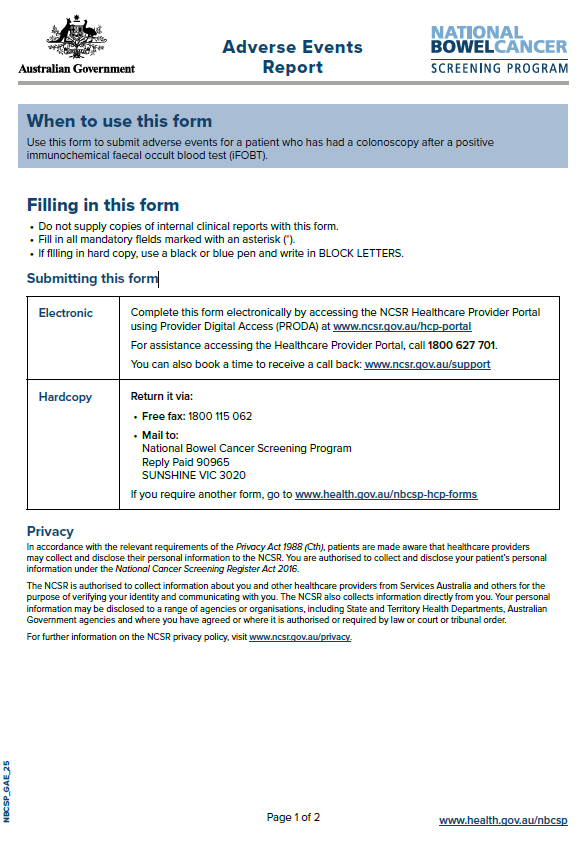
National Bowel Cancer Screening Program – Adverse events report
Colonoscopists use this form to report adverse events from diagnostic investigation procedures for program patients. Only use this form if the information has not already been included in the colonoscopy and histopathology report. -
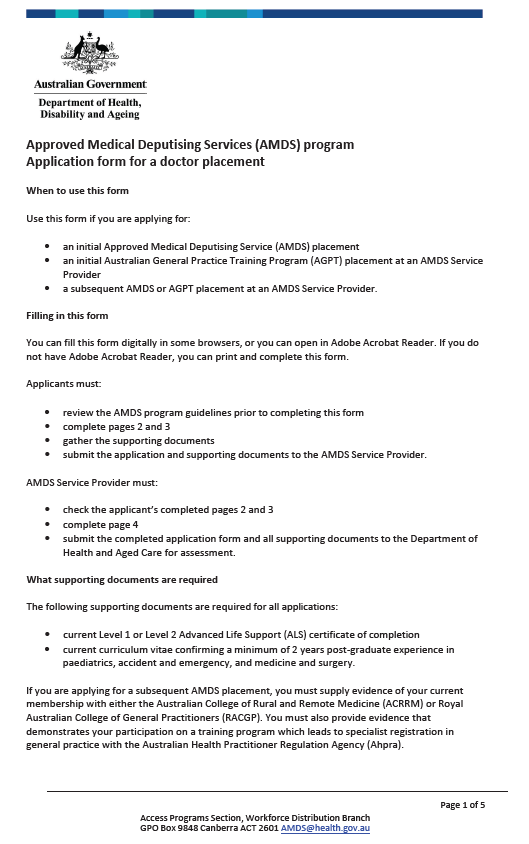
Approved Medical Deputising Services (AMDS) program – Application form for a doctor placement
Doctors should use this form when applying for an initial or subsequent to Approved Medical Deputising Services (AMDS) program placement with their chosen Service Provider. -

Medicare UCC Operational Guidance
The Medicare Urgent Care Clinic (Medicare UCC) Operational Guidance has been developed by the Australian Government in consultation with state and territory governments. They outline the scope and minimum services to be offered at Medicare UCCs and is reviewed and updated on a regular basis. -
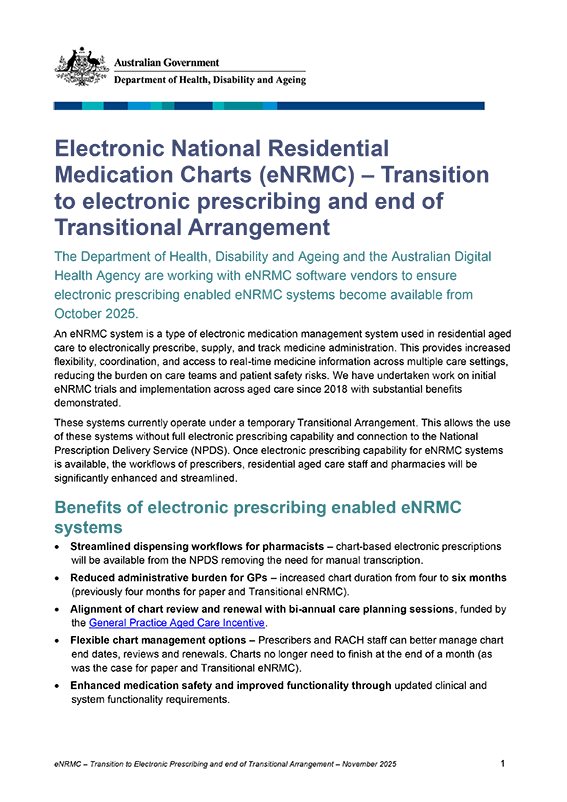
Electronic National Residential Medication Charts (eNRMC) – Transition to electronic prescribing and end of Transitional Arrangement
This document provides an overview of the revised timeframes for eNRMC systems to achieve electronic prescribing conformance and for aged care services to transition. -
Dose Administration Aid (DAA) Evaluation 2025
The study aimed to assess the DAA Program’s clinical benefits, identify who benefits most, and suggest future directions for ongoing reviews of the DAA program. -
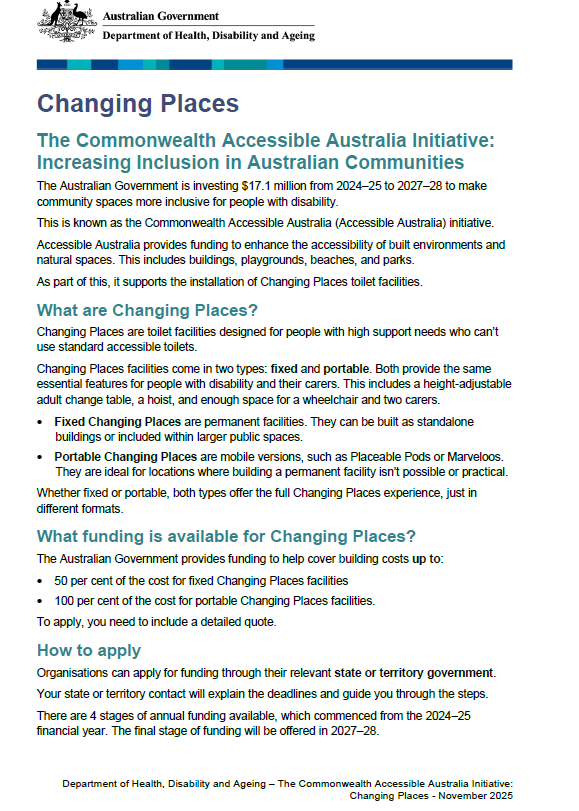
Changing Places – The Commonwealth Accessible Australia Initiative
Accessible Australia provides funding to enhance the accessibility of built environments and natural spaces. This includes buildings, playgrounds, beaches, and parks. It supports the installation of Changing Places toilet facilities. -
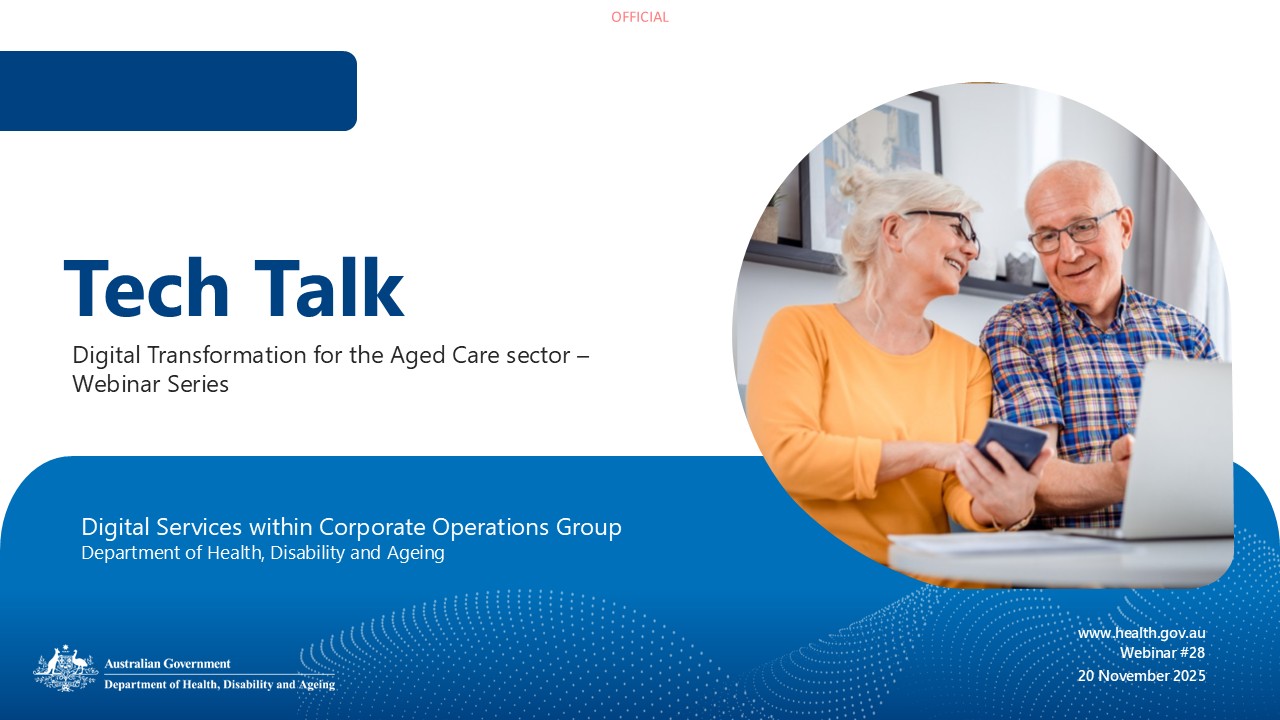
Digital Transformation Tech Talk – 20 November 2025 – Presentation slides
This presentation contains the slides presented at the Digital Transformation Tech Talk webinar for aged care and IT professionals on 20 November 2025. -
PBS National Residential Medication Charts Repeal Instrument 2025
This instrument is the signed approval for repeal of the Instrument of Approval for PBS National Residential Medication Charts -
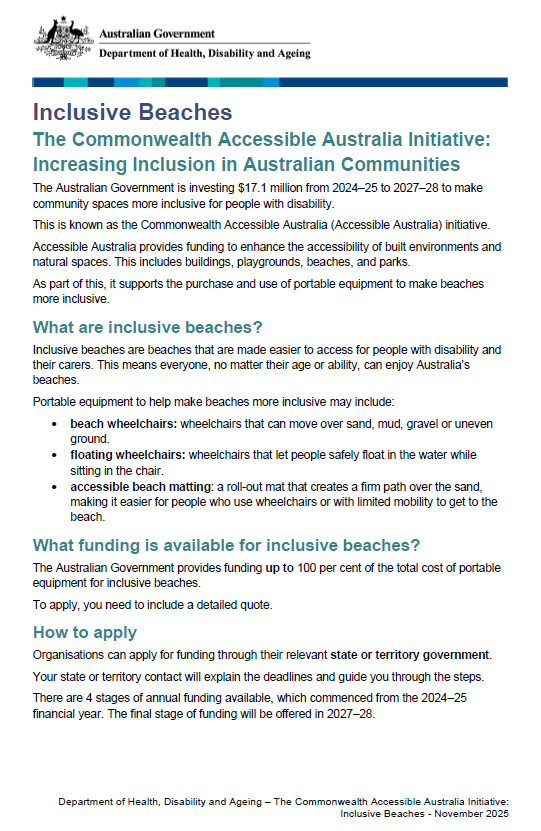
Inclusive Beaches – The Commonwealth Accessible Australia Initiative
Inclusive beaches are beaches that incorporate access for people living with disability and their carers. This allows all people to use Australia’s beaches, regardless of age or ability. -
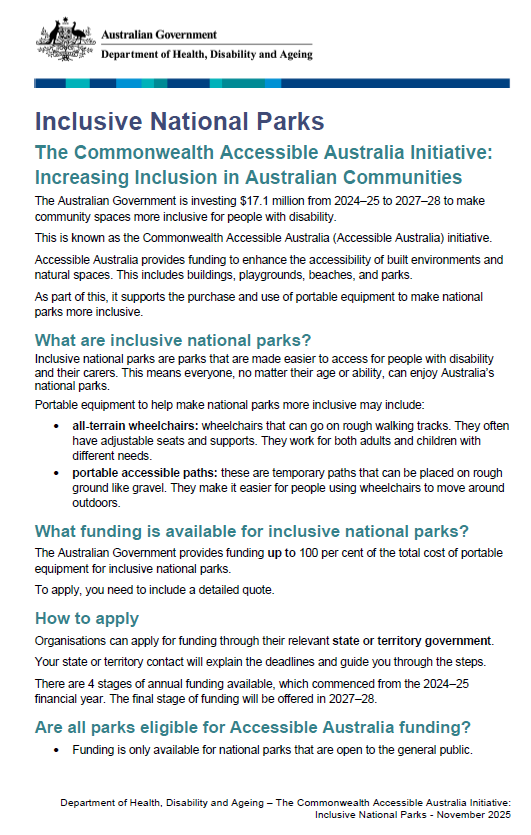
Inclusive National Parks – The Commonwealth Accessible Australia Initiative
Accessible Australia will improve access to the natural environment for people living with disability and their carers. National parks are a key part of the Australian natural landscape. -
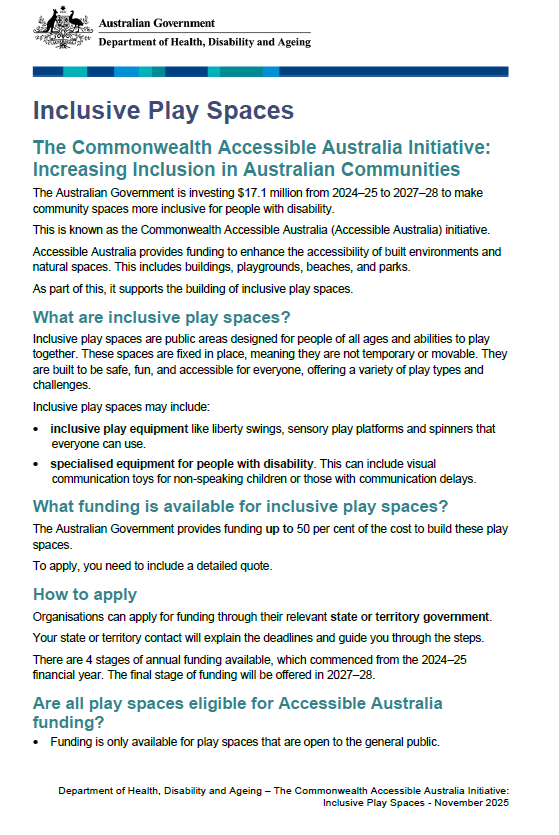
Inclusive Play Spaces – The Commonwealth Accessible Australia Initiative
Inclusive play spaces are community spaces designed for people of all ages and abilities. An inclusive play space should provide a range of play types and challenges, while incorporating principles of inclusive design and accessibility. -
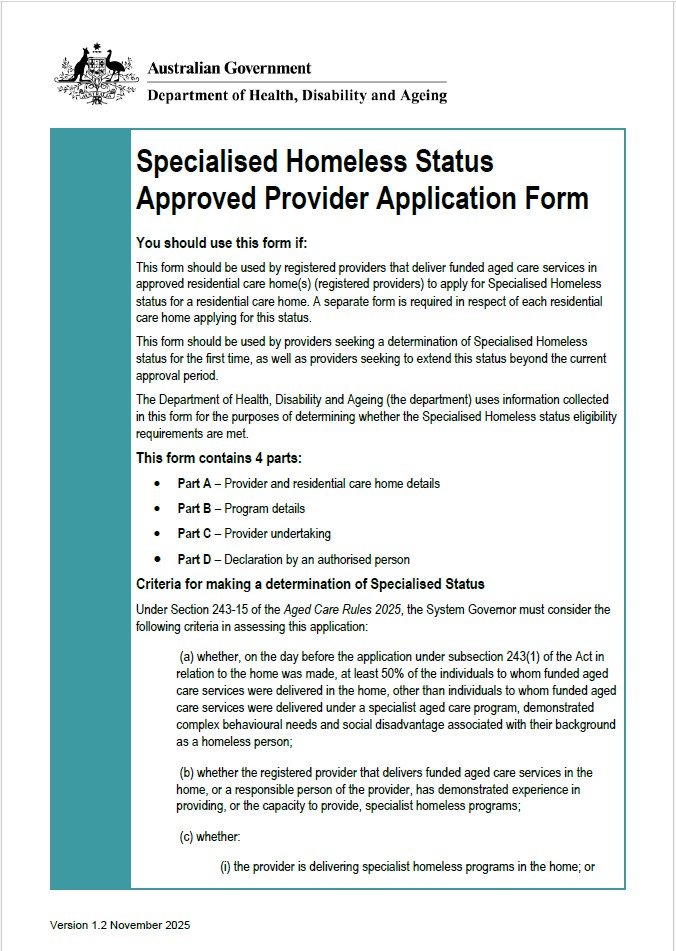
Specialised homeless status registered provider application form
This form should be used by registered providers of residential care to apply for Specialised Homeless status for a service under the Australian National Aged Care Classification (AN ACC) funding model.