
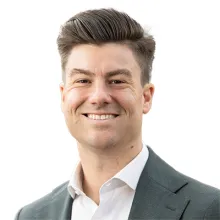
ANDREW CLENNELL, HOST: Joining me live is the Minister for Aged Care and Seniors and former state secretary and campaign director for Victorian Labor, Sam Rae. Appreciate your time, Sam Rae, on this very difficult morning for the Labor Party. Now, as a former state director of the Party, what do you make of a result where you'll be competing with the Greens for opposition status?
SAM RAE, MINISTER FOR AGED CARE AND SENIORS: Thanks for having me, Andrew. It is a difficult morning for the Labor faithful. I mean, firstly, I want to say congratulations to Jess Wilson and her team. Premier Elect Wilson ran a fantastic campaign, and the Victorian people have entrusted in her the greatest honour of public office, which is to serve them in government. I wish her the very best in doing that. As for our mob, look, it's obviously been an incredibly difficult night. Not the election result that any of us would have liked. There's counting going on across the board, and Tom's just gone through how complicated some of that counting is. But what is very clear is that the Coalition have won enough seats to form government.
CLENNELL: You got absolutely smashed. Do you concede that?
RAE: Yeah. I do. I think that's right and that's obviously very painful for Labor people. But most importantly, it's painful because our job is to relentlessly focus on the needs of working people, and the Victorian people sent a very clear message last night that they don't have confidence in the Victorian Government in doing that, and that will be cause for some pretty serious self-reflection for the Victorian caucus.
CLENNELL: Could be painful for you too, because the state seats in your electorate went to primarily the Liberals, maybe one to One Nation, didn't they?
RAE: I think the seats in most electorates went predominantly to Liberals and One Nation, Andrew. I think that might be part of the story of this election campaign, but you're right, people in my community have been doing it tough. Cost of living challenges are real. You spoke through that in your introduction. The other part that's relevant in my world is this is the fastest growing part of Australia, and so the infrastructure pressures here are very real as well. Pressures on transport infrastructure, health, and education infrastructure. As I said, the Victorian people made it very clear last night that they didn't have confidence in the approach.
CLENNELL: Are you worried about losing the next federal election now?
RAE: I'm focused on making sure that we do our job, Andrew. I'm a bit old fashioned in that I believe in the cause, the relentless focus that we need to have on delivering for working people, making sure that their quality of life is continuously improving. That's our Government's focus. It's our Prime Minister's focus. Election outcomes are obviously symptoms of that, but what really matters is that focus is maintained and that we're able to continue to deliver and deliver effectively.
CLENNELL: It was put to me yesterday there were people at the polling booths telling Liberals that Victorian Labor were going to get it, which they did. And quote, Albo is next, unquote. What do you make of that?
RAE: There's always a bit of banter at the polling booth, Andrew. I think that's part of the Australian electoral culture. So I have no doubt that there was a bit of that going on. I think the reality is this election was predominantly focused on Victorian state issues, and we saw that throughout the campaign from all of the parties. And there were themes that were very clear around crime and potholes, things like that that are obviously very Victorian-focused. But nevertheless, there's not an election that happens where we can't draw a lesson. There needs to be a very thorough and professional review of what led to these circumstances here in Victoria, and all of the Labor Party and movement will be drawing lessons from that.
CLENNELL: Do you think the Federal Budget helped or hindered the vote last night?
RAE: As I said, I think the Victorian election was predominantly fought on the basis of Victorian issues, Andrew. Obviously, elections happen in a context, and the context here is one where cost of living challenges are very real. We've got international inflation pressures. I thought you did a great job in summarising the dynamics based on the international oil prices and the wars and conflicts in the Middle East. But I think this Victorian election was predominantly focused on Victorian issues.
CLENNELL: Do you think it was a mistake to switch from Jacinta Allan to Ben Carroll so late in the piece?
RAE: Honestly, Andrew, I don't think leadership was the main driver of this outcome. I think whatever the motivations or intentions were in changing leaders, that wasn't successful in reviving the Labor Government's electoral prospects. That's very clear. But ultimately, I think the issues were much deeper. I don’t think this election was lost in the last four weeks or even the last four months. I think there have been some messages from the Victorians over a long period of time. While in 2022, during the Victorian election Victorians gave Labor another chance. I think they also sent some clear messages about things they were dissatisfied with. So I think these lessons need to be heeded and acted upon in the future.
CLENNELL: Bill Shorten criticised Dan Andrews last night. Do you have any criticisms for Daniel Andrews and how he took that election win? Was he too arrogant?
RAE: I don't think there's anything particularly productive about singling anyone out. The reality is we're a collective movement, Andrew. It's what binds the Labor Party together, and there's a collective responsibility when elections are lost, and indeed when a government loses its way as has happened here in Victoria. I think there is a collective responsibility for members of that Victorian Government to reflect upon here and to learn from as they rebuild in seeking to better serve the Victorian people.
CLENNELL: What lessons do you think Federal Labor can take out of this defeat?
RAE: As I said, this election was obviously focused on those Victorian issues, but elections happen in a context. We know people are doing it tough out there, Andrew. These inflation pressures have caused pain for household cost of living, and we'll continue to focus as we do every single day. It's the number one focus of the Federal Government, to help Australians with these cost of living challenges. Just last week, we announced the extension of our cheaper medicines policy by rolling out our tax cuts. We need to stay relentlessly focused, as we always have since being elected in 2022, on assisting Australians and supporting them through these cost of living challenges.
CLENNELL: If you don't kill inflation, you're probably dead, aren't you?
RAE: I think inflation’s one of those core dynamics within the Australian economy. And while inflation is a global issue. We're seeing global inflation all across the world. We're seeing interest rates going up all across the world. We take responsibility as a Federal Government for our part in that fight against inflation, and we definitely take responsibility for supporting Australians to the best level that we possibly can as they deal with these cost of living challenges.
CLENNELL: What did you make of One Nation's result?
RAE: Obviously, a pretty high primary vote for One Nation, Andrew, and in many cases, I suspect One Nation will end up assisting to elect Coalition members here, there, and everywhere. I think there's a lesson there in that when people are under cost-of-living pressures, they look for other answers. My focus and the Prime Minister's focus, our Government's focus, is on making sure that when it comes to working people, we have the answers and the focus to alleviate those challenges that they're feeling every single day.
CLENNELL: Should the Labor Party ever consider preference deals with One Nation in limited circumstances? In this election, they recommended- One Nation recommended preferencing Labor and Greens last in every seat and that seems to have had an effect. Do you think there can be limited circumstances where a preference deal is possible with One Nation now that they're getting so much of the vote?
RAE: Andrew, that's a hypothetical for party officials to deal with. I used to be a party secretary, as you know. Today, I'm thinking about those party officials who've worked very hard, but ultimately, those are decisions that they've got to make. Those are decisions that have both strategic and tactical ramifications. And of course, they need to be considered in the context of the values of our party and our movement, the people that we represent.
CLENNELL: Do you think it was a mistake to call a Royal Commission at this time because it emphasised the corruption while the Government was in power?
RAE: Andrew, as you know, there have been long-standing calls for a Royal Commission in Victoria. It was one of those very first things that Ben Carroll did when he became the Premier. Look, there'll be a lot of consternation, back and forth about whether it was the right thing or the wrong thing from an electoral perspective. I think Ben Carroll, from what I understand, decided to call that Royal Commission on the basis of what he believed was right, and I accept that.
CLENNELL: We know the mid-year budget update is out shortly. There's going to be pressure on areas to cut spending in tackling that inflation fight. Will there be any cuts to aged care, or will the Government quarantine that area?
RAE: The Treasurer and the Prime Minister have made savings in every single budget process since we were elected back in 2022, and the entire Government is working very diligently to make sure that we can continue to make savings where we can, in order to maintain the health of the Australian economy and reduce the impacts on working people. We need to do that- as much as possible without impacting services. As we know, with an ageing population and explosive demand for aged care, it's not one of those places where we're looking to make savings.
CLENNELL: The final budget outcome during the year for last financial year was found to have a $1.4 billion shortfall in aged care spending, the biggest shortfall of any area. Why was this? Couldn't this have been spent on more home care packages?
RAE: Andrew the aged care budget this year is $44 billion. In fact, it went up by $3.7 billion just in the last budget. So, in its context, obviously while it's a large sum of dollars, it's a relatively modest proportion of the overall aged care budget. It was largely driven by investments that we were seeking to make as a Government that the sector was struggling to respond to, predominantly because of workforce challenges. We've got to continue to invest in our aged care workforce. It's not just Government money that drives the aged care system. Much more important than that are the amazing human beings that deliver that care. That's one of the real limiting factors in meeting the demand challenge, so we'll continue to work closely with the sector, with worker representatives, trade unions, to make sure that we have these highly skilled workers available within our economy.
CLENNELL: But there are 100,000 people on the waiting list. Why couldn't the $1.4 billion have gone to that?
RAE: Again, Andrew, we last financial year we invested another 83,000 packages of home care into the home care system. This year, we're creating another 32,000 packages under Support at Home, and the reality is that the sector is, in many cases, struggling to respond to that rapid uplift. We're seeing them get there, but there's a bit of stickiness when you have such a rapidly expanding program. Support at Home, will have effectively grown by 200% since COVID. So the speed at which demand for aged care services is rising is creating a bit of a choke point when it comes to finding the workers that can deliver that care, the onus is on us to continue to work with the sector to make sure that we've got those amazing people who can look after the people we love.
CLENNELL: There was a report last week that older Australians are paying up to $135 an hour for a cleaner who isn't allowed to clean above head height. Why is this?
RAE: I've seen some of these reports and I'm a little concerned about the prices that have been reported. We've got an Aged Care Quality and Safety Commissioner, a very strong Commission with powers to investigate and take action against providers who are charging inappropriately. Where we get reports of that, we refer them to the Commissioner. I think some of those reports that we've seen over the last week will be very closely examined by the Commissioner in order to make sure that we're not seeing exorbitant pricing against older people's packages.
CLENNELL: What are you going to actually do about it, though? Because the Commissioner, as our previous interview revealed, aren't looking at that many complaints. It seems system wide and you're trying to cut government spending. What can you do to cut these charges?
RAE: Well, Andrew, respectfully, I disagree with that characterisation. The Commission has been doing exceptional work in investigating any examples and every example, in fact.
CLENNELL: How many investigations is it involved in relation to that?
RAE: Well, you and I have discussed this before, and I will leave it to the Commission. They are doing careful investigatory work and I don't want to prejudice that work. But in terms of findings, they have already returned hundreds of thousands of dollars to the packages of older Australians where inappropriate charges have been levied against them. So the role of the Commission is working. The Commission are doing a very good job of it. I think the vast majority of aged care providers do the right thing. They're involved in the sector to assist and support older people, and they do that faithfully. There are a small number who, in some cases, have been doing the wrong thing, and there are some others who've made mistakes. And the Commission takes very seriously its role. That's why we've seen hundreds of thousands of dollars being returned on that basis.
CLENNELL: There seems a proper mark up for the home package services compared to if I just hire a cleaner, though. Do you concede that?
RAE: The way that we structure the pricing system is such that all of the costs have to be rolled into a single price, Andrew. Previously providers could charge for transport and other administrative costs. There's now a cap on the amount that people can charge for administration. We used to see prices for administration up around 35 to 40% of packages. That's now capped at 10% of packages, and these prices have to be rolled into a single price. So it's a one price for the service that you get, and that obviously makes it more transparent for older people to make decisions about what they're doing. We've also rolled out very significant price protections for older people, but we're watching this very closely. All of these reports we take very seriously. We work closely with the Commission, and where people are doing the wrong thing, they can expect that there will be very serious consequences for that.
CLENNELL: Sam Rae, thanks so much for your time.
RAE: Thanks, Andrew.