
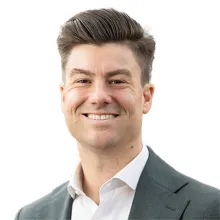
STEVE AUSTIN, HOST: Let's go to Australia's Minister for Aged Care and Seniors, Sam Rae. Minister, morning to you.
SAM RAE, MINISTER FOR AGED CARE AND SENIORS: Good morning, Steve. Thanks for having me on.
HOST: How many Australians does the government know are living with dementia today? Can you say?
RAE: Well, I think we just need to go back to those key points that you just made there, because they're critical, Steve. I don't think people have reflected on this enough. Dementia is now the leading cause of death in Australia, and half of those cases could be avoided. We are seeing thousands of people being diagnosed. But I've got to say, we're also pretty sure that there are lots of people going undiagnosed across the community as well. So, the number of people living with dementia might indeed be much higher than we actually can measure at this point. And that's why the Federal Government is embarking on this first ever public health campaign. We're sending out 340,000 letters to Australians who've turned 50 over the last year, outlining some of the key risk factors and providing them with some additional follow up resources.
If we as a community, Steve, if we all invest in brain health in the way that we have in heart health and skin cancer avoidance, we can drive down these dementia rates and ensure that every Australian is living a longer and more fulfilled life.
HOST: I'm surprised when I've read the list of things that Australians, that I can do to reduce my risk, because it's not new. It’s the health message that health professionals have been running for decades. But would you like to give me the list and then we'll reflect on why it is that it's such a hard message to get through. So, Minister, go for your life.
RAE: Well, Steve, you're right. Some of these aren't necessarily ground-breaking, but they're important in this context. Of course, staying active and eating a healthy diet, getting regular vision and hearing checks, looking after your heart health and making sure that your diabetes is under control. Of course, seeking help for any mental health challenges, quitting smoking and limiting alcohol, and importantly, being social and keeping your brain active. And that's an important one. Everything that we can do as adults moving through our lives, where we are training our brains, teaching our brains to learn something new, remapping our neural pathways if you like. That is a critical step in avoiding dementia risk moving forward.
HOST: This is the use it or lose it line, Minister. If you don't exercise your brain, you're going to lose your brain cells.
RAE: Well, it's not just about exercising. You, of course, have to do that. You have to teach it new things. We need the physiology of our brain to be constantly growing, constantly evolving. So this is a critical part of my ...
HOST: Which is why a lot of people do Sudoku, I believe, apparently.
RAE: Well, that's right. The trick here though, Steve, is you have to keep learning new things. You can't just do same thing over and over. Some of the experts say things like learning a musical instrument or picking up a language or a number of languages. These are great ways to constantly be teaching your brain new things. That builds new neural pathways, it significantly reduces the risk of dementia, and it certainly delays any onset of dementia along the way.
HOST: Forgive me for the personal question, Minister, but how old are you?
RAE: Well, it's a bit of a touchy subject, Steve. I'm turning 40 next month, so I can assure you...
HOST: Wait, you're 10 years away from the 50 mark, because you're sending this letter out to people over 50 very soon.
RAE: Yes, but that said, you're never too old and you're never too young to start thinking about brain health, Steve. And what we want to do is raise awareness across the community so that every Australian, no matter what their age, is thinking about their brain health. They're thinking, along with their heart health and avoiding cancer, they're thinking about brain health. This is an opportunity for everyone across our community to live much richer lives for longer. And if we embrace this as a community, this concept of brain health, we invest in our own brain health, the benefits for us as individuals and as a community will be immense.
HOST: All of our labour-saving devices and our tools, the technology we're creating makes life easier. And that's actually working against this process. We actually want life to be complicated, difficult, because that's what exercises the brain. I mean, AI is taking away our own brain capacity. People sit mindlessly gaming on the internet or just using the internet, staring mindlessly at YouTube or something. That is actually making our brains lazy, Minister.
RAE: Well, there’s lots of different ways that we can teach our brain new things, and technology can play a role in teaching our new things. People are learning how to code they're learning how to solve complex problems. For many people, particularly older people, they're learning how to use particular IT systems for the first time.
These are actually really healthy things to be going on, but they're not the only things, of course, Steve. We want people to be engaging in a rich range of learning opportunities, keeping their brains active. Part of that is also social engagement. When we learn new things, we tend to engage socially with other people that have a similar interest. So there's real value that can be created at a community level, as well as for our own brain physiology.
HOST: My guest is Australia's Minister for Aged Care and Seniors, Sam Rae is his name. You're only about to turn 40, Sam. You're a young man.
RAE: I've got three kids, Steve, so I can assure you I don't feel like a young man.
HOST: Yes, fair enough. Now, listen, while I've got you, Four Corners are running a feature tonight on aged care. Are you worried that it will reveal that there are major problems with getting a placement in an aged care centre in Australia?
RAE: Steve, my focus is on making sure that we continue on the pathway to entirely rebuild our aged care system. This is no small job. I'm very honoured to do it, I can assure you. It certainly keeps me awake at night from time to time. We are rebuilding the aged care system from the ground up. Of course, we had the Royal Commission under the previous government that had damning findings about the state of the aged care system. And since then, since we were elected in 2022, Prime Minister Albanese and our Government have made it clear that rebuilding the aged care system would be a key priority for us. We want every Australian to be able to access safe, dignified and high-quality aged care services. We're trying to rebuild that in the context of the most rapidly ageing population in the history of our country. So there are rich challenges here, but if we can succeed in this ambition, the benefits for our country, for our community and of course for older people will be very, very significant.
HOST: Your Government is using the IAT, the Integrated Assessment Tool, to determine the level of care for support at home participants in aged care. Isn't that a flawed system? Aren't you repeating the risk of the previous government with their Centrelink debacle?
RAE: No, they're not comparable in any way, Steve. The Integrated Assessment Tool is part of our broader assessment reform. Under the old assessment system, people were waiting up to 10 months to get an aged care assessment, and we had a huge amount of error occurring in that system as well. So this system is a significant improvement on the old one. But I'm always straight with people about this, Steve. There's more work to be done here. There are more improvements to be made. We only brought that system in November last year. Since then, I've already made a number of changes, including changes to the queue rate. We've announced a rapid review of the priority mechanism. We're going to keep making the changes that older people tell us they need to get a better outcome from the assessment system and from the aged care system more broadly.
HOST: Is there a human reviewing the cases? So you're using this IT tool, this artificial intelligence tool, but shouldn't a human be at the top or the final point and say, okay, the computer may have it wrong in this case?
RAE: Steve, there's no artificial intelligence being used whatsoever. It's not correct. There's unfortunately a lot of misinformation going around at the moment, but I can assure you that is not how this system works. A qualified clinical assessor comes and does the assessment, usually in the home of the older person. They collect that clinical data and they record it in the Integrated Assessment Tool. And we then draw from that data to use the aged care rules to determine what the classification, the type of care and the priority, the speed at which that care needs to be delivered. And, of course, there is a review process in place so that people can seek a review if they're not satisfied with those outcomes. And, as I’ve said, at the moment we’re doing a bit of work around the priority piece to make sure that is as well tuned as possible to meet the needs of older people in our community.
HOST: Minister, thanks for your time and happy birthday for the next couple of days.
RAE: Thank you, Steve. Appreciate it.