
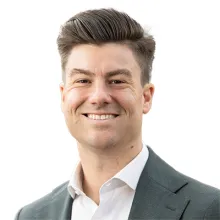
JULES SCHILLER, HOST: The state government has put a lot of attention on aged care and its effect on ramping. We’re now joined by the Federal Minister for Aged Care and Seniors, Sam Rae. Good morning to you, Minister.
The state government had a crisis meeting yesterday. There was an empty chair at that meeting with your name on it. They say they gave you 6 days’ notice but you didn’t attend. Why?
SAM RAE, MINISTER FOR AGED CARE AND SENIORS: Good morning, guys. Look, let’s be serious here. This is a really serious issue that we're talking about, this issue of delayed discharge and longer stays for older patients in hospitals, and it's a longstanding issue. It's one that we're working on nationally with all the states and territories.
Unfortunately, giving only a few days' notice meant that I couldn't get to Adelaide for the meeting. But immediately, obviously, offered to meet with our South Australian counterparts, which we're in the process of organising now. But I regularly meet with South Australian health ministers to discuss this issue and work through those aged care challenges, and I'll continue to do that.
SONYA FELDHOFF, HOST: All right. Well, there's dispute over whether it's 4 days, 6 days' notice, but whatever. You weren't at that meeting, but important issues were raised indeed. Short term, will you respond to the calls to help out and prevent winter seeing modelled extra bed block in South Australian hospitals next year?
RAE: As I said, this issue around longer stay older patients, and the issue of delayed discharge, which is the terms in which we speak about this issue – that's the respectful way to speak about it – is a long-standing one, and it's one that is prevalent at a national level. It needs a national approach.
We recently went through the National Health Reform Agreement with the states, and the federal government invested another $25 billion into the state government hospital systems. And we sought through that process to ring fence $2 billion of that investment in order to deal with this very issue. But unfortunately, the states rejected that and decided to take the cash alone. Just in the last 4.5 years, we've invested $145 million in South Australian projects for aged care. And I was in the state just months ago announcing that we've unlocked another $135 million…
FELDHOFF: Okay, well, there are a lot of numbers, Minister. But the fact is this was on the back of new modelling that showed the crisis is escalating at a rate that is frightening, even more so than it has been up until now. So, in terms of the crisis, don't we need to have to change tack, no matter who's to blame?
RAE: I think the numbers are relevant here. I think to dismiss the numbers to engage in the rhetoric would fail the opportunity to address the substantive issue. The point that I'm making here is that we are already addressing this issue. I know that perhaps the South Australian Health Minister is particularly agitated about it this week, but this is something that the federal government have been working on, along with the states and the territories, for a very long period of time to try and make the substantive changes to both our aged care and health systems to make sure that we get better outcomes for older people.
SCHILLER: You're listening to Sam Rae, the Federal Minister for Age Care and Seniors. It's six minutes to nine, ABC 891 Adelaide. Sonya and Jules here for Breakfast. So are you saying that the state government is exaggerating the crisis, that are finger pointing at you, Sam Rae, and the federal government to try and paper over some of their mistakes?
RAE: No, Jules, I absolutely am not saying that, and I have not said that. That is a construct that you’re making. What I have said…
SCHILLER: Well, are you- are they exaggerating the crisis then? Because they seem to be downplaying the support that you've suggested they're getting, and they seem to be putting the focus on what they're not getting and how it's affecting ramping.
RAE: No, Jules, I disagree with your characterisation of the circumstances. I think what we're seeing is the South Australians drawing attention, very rightly and fairly, to the scale of the challenge that we collectively face. But this is not a new challenge; it's a very long-standing issue. They are fairly and rightly thinking forward to the challenging period of winter ahead, and we're seeking to work together to understand how we can get the best outcomes for older people and reduce…
SCHILLER: They put an empty chair at this…
RAE: Jules, if you’d just let me finish for a second.
SCHILLER: Sorry, Sam. Yeah, I was just going to say they put an empty chair at this meeting with your name on it. Don't you take that personally to some extent?
RAE: I think it would be a little indulgent for me to take these things too personally. If you've got a thin skin, being in the business of governing for Australians is not really the place you should be. It's a bit of a stunt, to be fair, to put someone's name on a chair, given that I had 4 days' notice of the meeting and have a...
FELDHOFF: Well, they say 6 days.
RAE: Okay…
FELDHOFF: Anyway, well, whatever. Let's take it…
RAE: Guys, you've got to let me just finish here. And we've already set in train a process to get together as soon as possible to have a conversation, another conversation, about these substantive issues. As I said, I've met with multiple South Australian health ministers. We've been working on this issue for a long time. It's why we continue to make unprecedented investments in the South Australian system.
FELDHOFF: Sure, but the urgency is increasing because it's taken 4 years, from 2022 to 2026, to go from 60 to 500 people in bed block. The projections that were released last week were- yesterday that came out last week show that it's going to go to 700 from 500 in one year. That certainly points to a greater urgency than we've ever had before. Doesn't that require a new meeting, a new chat?
RAE: Yes, that's why, as just I said, Sonya, that we are organising to get together again. These are ongoing conversations. These conversations don't end. They don't normally happen in front of the media. They normally happen with the policymakers in the room to actually work out the substantive outcomes that can deliver better outcomes for older people, better outcomes for the health system.
As I said, we are making unprecedented investments in South Australia. In fact, South Australia receives the highest level of funding per capita for aged care than any other state in the country. Notwithstanding that, we've got an ageing population. We all know that. The number of people that are turning 80 is 600% on what it was 15 years ago.
SCHILLER: So do you…
RAE: So this is part of that challenge. We have to rise to that challenge. We have to continue to evolve our aged care systems and our health system to make sure that we can meet the needs of older folks.
SCHILLER: Final question, Sam Rae. So do you think it was disappointing that this meeting was held yesterday in front of the media?
RAE: No, I think it's fine. The South Australians obviously decided that they needed to raise the profile of this issue. It's a very important issue. I don't disagree with them about that. I'm looking forward to continuing to work together to find those substantive solutions to get the better outcomes for older people.
SCHILLER: Sam Rae, thank you for your company this morning. He's the Federal Minister for Age Care and Seniors.