
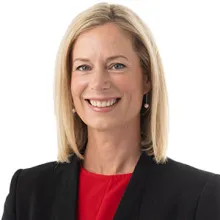
LEON COMPTON, HOST: Rebecca White is Assistant Federal Minister for Health and Ageing on Mornings. Rebecca White, good morning to you.
REBECCA WHITE, ASSISTANT MINISTER FOR HEALTH AND AGEING: Morning, Leon.
COMPTON: Before we start this morning, actually, we'll take a different turn. I just want to talk to you about Helen Haines for a moment, as we have a larger chance now to reflect on the tragedy that she's battling. Rebecca White, do you feel safe in your political life?
WHITE: Thanks Leon. I would also just like to reflect on what happened to Helen and say it's deeply shocking and our best wishes go to her and her family and her recovery. I feel safe. I think like most members in public life, there's been threats made, but I've never felt never felt unsafe in my community. But I feel like at this point it’s an opportunity for us all to reflect on how we can behave better, how we can contribute to a more civil conversation, and make sure we do take the temperature down.
COMPTON: What does that actually look like? I asked Andrew Wilkie this yesterday. What does it actually look like in reality, taking the temperature down?
WHITE: I've always tried to conduct myself in political debates discussing the policy and not trying to attack the person. I've failed to do that 100 per cent of the time, and I guess for me it's about reflecting on how I can do better and make sure that when we are having debates it is respectful, issues and not about the people. And to also think about how we can do better more broadly in society. Just reflecting on recent events in Tasmania over the last week, Leon, our premier made some statements on social media about a school in the north. I think he went off half-baked. He could have picked up the phone and got the facts there. That's led to increasing distress for that northern school community, and I know that he knows better than that and I'd call on him to make amends for that because I think that is a really tangible example of how we as community leaders can put forward a really civil conversation and lead better. Do better, behave better, make sure we've got the facts before we speak and make sure that we do speak in a way that is respectful.
COMPTON: It is an interesting one, I’ll touch on that separately to this interview, it has been interesting to look at a number of state Liberal ministers who have used AI generated content double down on that criticism of a decision made- there is complexity and nuance to it, of a decision made by, I think, a school volunteer community and the teachers at that school in northern Tasmania. But that's something that people can look at as we, the Mornings program, have been looking at this morning and make your own decisions about it.
WHITE: I think the other thing to note here is not just about politicians. We've got public officials on the front line at schools, at hospitals, police, who are really at the front line of copping abuse, and potentially violent attacks on them. And this is where community leaders we have to do better because we can talk about how we protect politicians and how politicians might go about their jobs differently in light of what's happened sadly to Helen. But I think it's incumbent on all of us to think about how we make sure we are supporting workers at the front line across every discipline, because they are at the front-line copping abuse more so than any of us in political life every single day and I think it's an opportunity for us all to think about this a little bit more deeply.
COMPTON: I'm not sure I've seen the conversation head to this place, but I think it's fair to ask now. Is it possible, Rebecca White, that one of the big conversations we need to be having off the back of the Helen Haines tragedy is about mental health treatment in Australia or the lack of it for people who are in crisis? Something that politicians, including yourself, can take potentially more responsibility for doing something about.
WHITE: I have no doubt that's part of it. There's certainly more to come with respect to the matter with relation to Helen and there's a matter before the court today. So I do not want to pre-empt any outcomes or decisions that may be made with respect to the motivations of this particular case, but I think we know from some early reporting that could have been a contributing factor. And so, it is incumbent on all of us to think about how we support people who might be struggling. And I think it’s a reminder to reach out today to somebody who might be struggling in light of this attack and the information that might be really distressing for them but also to think about other people in our community who are doing it tough. How can we wrap our arms around them and support them? How can we connect them to services? Our government's put over a billion dollars into mental health services across the country making it easier for people to access that support, but it doesn't end there Leon, you're quite right, what else can we do and it's a timely reminder for us to think about that.
COMPTON: People living with their own mental health challenges at the moment, indeed, loving somebody who is. I’m interested in your experience this morning, if you want to share it. If you reach out. It's one thing. Is there somebody there to help when you need? Tell me about your experience this morning. 1300 222 936 is the number. Rebecca White's our guest, Assistant Federal Minister for Health and ageing.
The reason that we asked you on this morning was to talk about a story that Mornings and David Riley talked about last week, HELFs. Higher Everyday Living Fees for a growing number of residential aged care residents, being asked to pay for things like television. I'll play you some of Lisa Wood's discussing this last week.
[Excerpt]
LISA WOODS, DEPUTY CEO OF ADVOCACY TASMANIA: If you're living in residential aged care, you don't have a lot to look forward to day to day. There's not a lot that you can engage in. So having a television, whether you might want to watch it one day or not, it really is a basic human right.
[End of excerpt]
COMPTON: That was Lisa Woods, Deputy CEO Advocacy Tasmania, Rebecca White, talking to us last week. Should residents of residential aged care be paying to have a TV that they can look at in their room?
WHITE: Yeah, I think this story has surprised a lot of people when it first came to light. Obviously, people have been dealing with this through their families, but it hit the media in recent weeks. There's a couple of things I'll say. The first is that providers charging additional fees is not a new programme in aged care. It has been occurring for a number of years, but the high everyday living fees, the way it's being described now, it is a minimum standard for aged care providers to offer a TV in communal areas. So that has not changed. However, we are seeing that some TVs in rooms are being provided for free by some providers. Others are choosing to introduce a charge for it.
What I would also say is the Aged Care Quality and Safety Commission has been given significantly more powers to investigate where people's rights have been eroded or potentially, they may be charged a fee that nobody thinks is fair. So, I would really encourage any examples that have been raised on your show or people who've got examples in their own lives to contact the Aged Care Quality and Safety Commission and report those because all of those instances of non-compliance or bad faith action can be followed up and we have already seen some aged care providers have to repay funds that they have taken from older residents.
COMPTON: OK. But to the substantial question is, for your Government, is it acceptable TV in your room, in many instances, residents will be charged an additional rate?
WHITE: Well, as I said, this is not a new programme It's just had a new name. And it is an expectation that at the minimum standard, TVs will be made available for aged care residents as part of their communal facilities. And many aged care providers still do provide TVs in rooms for free. So it is, again, a case-by-case instance. And if residents or their families feel like what has been presented to them in their invoice is not fair, please raise it with the Aged Care Quality and Safety Commission. The best way the Government can take action, where we are seeing bad faith actors or non-compliance with the intent of the law, is for us to have these examples brought to our attention so we can act on them.
COMPTON: Do you think it's fair that people have charged for telly in their rooms? I mean, you know, you must visit a lot of aged care facilities. We're being listened to this morning in aged care facilities around Tasmania. You'd know that at different times or for some residents all the time, they're pretty much limited to their room. Is it fair they should have to pay extra to have a TV there, do you think?
WHITE: Yeah, you're quite right. I do go to visit a lot of aged care facilities and I do meet with a lot of older residents and I do see them watching a telly. I think most of us would expect it's pretty reasonable to have a telly in your room and not be charged for it.
COMPTON: Rebecca White's our guest this morning. 936 ABC Hobart, ABC North Tas. Appreciate you coming on this morning. A final question for you. Is the Government still determined to cut the subsidy to over 65, that extra subsidy that helps them cover their health insurance costs, Rebecca White?
WHITE: So as you would know, as your listeners might have followed, the Senate didn't even want to have a debate about that legislation last week. So this is for the subsidy to be changed for over 65s. I think it's really important just to remind people you're not having your subsidy removed if you're over 65 and you've got private health insurance. In most instances, people who are over 65 and have got private health insurance will still have up to 25 per cent of that paid for by the Federal Government. But we didn't even get to have the debate in the Senate. We couldn't consider any amendments that might have been put forward by other parties. They simply voted down even having that discussion.
So what the Minister did last week was he reintroduced that bill again in the same form to the lower house. It is our expectation that we'll be able to have that debate next week. Again, hoping that the Senate will allow the debate and that we can consider any improvements that members across different parties might like to make. It is our intention…
COMPTON: [Interrupts] This is respectfully, this is confusing. The government wanted to cut the additional subsidy that over 65s had to cover their health insurance costs. And then, as the Health Minister said, use that money to pay for other aspects of the health care system. But for our listeners, a myriad listeners called in talking about how upset that plan was making them and the worry they’d have drop their health insurance completely, is your Government still determined to do it?
WHITE: We are determined to do it because we need that $3 billion to put into aged care, Leon. This is the tough choice you have to make in Government. We've just been talking about some of the pressures in aged care. One of the ways that we have chosen to increase funding for more packages of care, more beds, is by making this change. We are not removing the subsidy for private health insurance. We are simply changing the rate that people receive. And all of that money will be earmarked for further investment into aged care and this is about prioritising …
COMPTON: [Interrupts] But what are people telling you about that. If hundreds of Tasmanians, older Tasmanians, drop their private health insurance off the back of that and then have to put themselves in the public system, like is that a good outcome?
WHITE: Well, there's a couple of things here. One is that people thought it was being cut entirely because of the misinformation that had been pushed by certain individuals. That's not true. So when I've spoken to people and let them know and reassured them that they'll still get up to a 25 per cent rebate, they've been okay with that. I mean, they're not loving it, because of course they want to have additional support, but we've put a lot of money into aged care, $47 billion this year. We've put a lot of money into making medicines cheaper. We've put a lot of money into bulk billing GPs, urgent care clinics. We are putting $25 billion more into hospital care. Our Government has invested significantly in health because we can see the pressures it is under. We want people to stay out of hospital, to stay well and access primary health care through their GPs. And the uplift in funding that we've offered there does provide relief to a lot of Australians, including older Australians, who hopefully won't have to rely as much on their private health insurance because of the further investments we’ve made right across the system. I understand that people feel worried about this, but I want to reassure them that the money that we are investing into aged care because of this change will be about investing in their futures and their good health outcomes in the future too. It's not putting it into consolidated revenue to do something different. It's staying in the system.
COMPTON: Rebecca White, appreciate you talking with us this morning. Thank you.
WHITE: Thank you.