
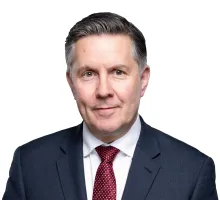
JAMES GLENDAY, HOST: Well, as promised, let's bring in the Federal NDIS and Health Minister Mark Butler now. Mark, welcome back to the program.
MARK BUTLER, MINISTER FOR HEALTH AND AGEING, MINISTER FOR
DISABILITY AND THE NDIS: Thank you, James.
GLENDAY: Now, we've been hearing from a range of people already this morning about some of these changes to the NDIS. I think a common question that is being asked is how did you come up with these changes? How did you decide these were the areas that needed the most focus?
BUTLER: First of all, I have to say I heard most of that interview and a lot of what Sophie says makes complete sense and resonates very much with the approach I'll be taking over coming months as we try to bed down the principles I announced yesterday. Certainly, nothing about us without us is a core philosophy of the NDIS, and so I said yesterday working with the disability community as well as obviously states and territories who are co-stewards of this scheme is central to achieving what I announced yesterday. But in terms of how we came up with the plan I announced, it really goes back all the way to the review of the NDIS we commissioned when we came into Government that was delivered to National Cabinet by Bruce Bonyhady and Lisa Paul back in 2023. Some of that had already been the subject of work but much of it was still to do.
Since that time since National Cabinet's first consideration of that back in 2023, there's been a lot of work underway to see what we need to do to make sure, as Sophie said, that enormous human rights achievement that we made 13 years ago in this country is secured for the long-term future. Because the truth is right now, it's at risk. It's way off track. Community support for it is slipping away very, very fast and without a major reset I'm deeply concerned that it won't be there in the same way for generations of people with disability and their families in the future.
GLENDAY: So much of the public debate has centred around the NDIS's rate of growth. I know it was 20 per cent a few years ago. It's now sitting at around 10 per cent. You want to get it back to closer to two per cent over the next couple of years. Is that going to be achievable? Because efforts to reduce the cost of this scheme in the past, or at least the growth in this scheme, have really hit a number of hurdles through the Federal Parliament.
BUTLER: That's right. And I want to get the growth down to two per cent while it's undergoing a major reset. That will cover things like who's in the scheme, the eligibility issues that Sophie and you just talked about then, but also dealing with some of the major cost drivers that we haven't been able to get under control. And partly that reflects the design of the scheme, the legal powers of the Minister and the Government for example. That's why I'll be introducing a bill, legislation of the Parliament when we come back in a couple of weeks’ time to clear those hurdles that we continue to confront when trying to get the spending growth under control. As well obviously, we'll be dealing with the ongoing fraud that I know a lot of your viewers would be concerned about and I know people with disability are particularly concerned about because at the end of the day that diverts money from their plans and their care and support.
GLENDAY: Does it have a perception problem, the NDIS, do you think? Because you're right, so many of the headlines you see about the NDIS is not about the life-changing work that it's doing, it's about dodgy providers and it's generally about the overwhelming cost. Does there need to be a bit of a shift in how this scheme is viewed?
BUTLER: And that really is at the heart of what I've been trying to do over the last 12 months, starting with the Thriving Kids reforms I announced last year. Last year, I talked about research that demonstrates, I think, confirms what we know anecdotally, that the Australian community is deeply concerned about this scheme. They're very proud of it, they understand the degree to which it has utterly transformed the lives of hundreds of thousands of people, but they're concerned about cost blowouts, they're particularly concerned about dodgy providers and rorts, and this sort of tsunami of stories of people making themselves rich quick, or undertaking fraud and rorts on the back of people with disability, is really contributing to a loss of social licence, as I've described it, or community support for this scheme, six in ten Australians tell us they think it's broken. That's the word they use, that it's broken. I wish I could say nothing needs to change or nothing much needs to change but that simply wouldn’t be the truth, James. And that’s why I tried yesterday to be as honest and put as much detail in the community as I possibly could because I deeply worry without a major reset, this scheme is at risk for the future.
GLENDAY: I just want to get quickly to two other issues in your portfolio. One change you announced yesterday that I think a lot of younger Australians might be happy to hear is that they're going to get the same private health insurance rebate as those over 65. That special treatment, that special rebate for older Australians will go. Are there other things you're looking in the health space to improve generational inequality? We keep hearing that's going to be a big focus of this next budget.
BUTLER: And it will. The Treasurer has made that point, the Prime Minister has made that point. Something we're very concerned about is the loss of opportunity for so many young Australians, particularly in housing. But what I talked about yesterday was, let's be frank about it, forgive me for being a cynic, was a bit of an election handout by John Howard back in 2004 to increase the private health insurance rebates, the subsidy people receive for their private health insurance, but only for older Australians.
It just makes no sense in a policy sense, but also it's grossly inequitable. Why should two households get different levels of government support based on their age alone when they have exactly the same income. And I said as well, we can't continue to put taxpayer money into something like that, that frankly is inequitable and has no policy basis, when we need to do so much heavy lifting in aged care. The Australian population is ageing at a very rapid rate. There's a very big need for more aged care services, more aged care beds, more packages, and so we decided to re-divert that money from the private health insurance rebate premium, effectively, that older Australians were getting into the aged care that they need so desperately.
GLENDAY: And that, just before I let you go, segues nicely into what I wanted to ask you about. We know that some of our older viewers have been really concerned about this issue. We know that health ministers around the country come on our show and they talk about hospitals having too many people who need aged care beds being stuck in hospital and therefore putting strain on the system. You announced 5,000 extra aged care beds yesterday. How much is that going to do overall though to easing what's been described as bed block in our hospitals around the country?
BUTLER: It will go a very long way. We introduced reforms over the last couple of years that have already stimulated construction of beds, but mainly for people who can afford to pay their way for accommodation. The reforms I announced yesterday with Sam Rae were particularly about stimulating construction for people, pensioners for example, who don't have the ability to pay for their accommodation.
We also announced significant expansion of support for people with high level dementia. They are often stuck in hospital because they have difficulty transferring to a standard aged care facility, so we're expanding specialist units for people with particularly high-level dementia. We're very focused on doing what we can to support state governments to move older Australians, older patients out of the hospital system when it's appropriate and into aged care. There's some more to do. Sam Rae will start working with some further recommendations we've received to get construction moving, but this is going to be a challenge for quite a while, James.
GLENDAY: Mark Butler, we do appreciate you joining our show this morning.
BUTLER: Thanks, James.
Media event date:
Date published:
Media type:
Transcript
Audience:
General public
Minister: