
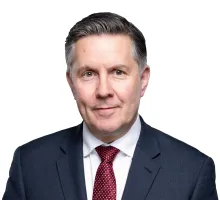
THOMAS ORITI: A blood test could soon diagnose Alzheimer's, even decades before symptoms appear. Neuroscience Research Australia says the development of new technology will enable earlier and more accurate diagnosis of the disease, which researchers say could help people to manage their symptoms before they become a problem. And this is significant, right? Around 447,000 Australians live with dementia, which includes Alzheimer's disease. Also significant is a new centre of excellence to address a critical gap in tackling Alzheimer's disease in Australia and in the Asia-Pacific region. It's been launched in Sydney today by the Federal Minister for Health and Ageing, Mark Butler, and the Minister is with us now. Minister, good afternoon.
MARK BUTLER, MINISTER FOR HEALTH AND AGEING, MINISTER FOR DISABILITY AND THE NDIS: Hi, Thomas.
ORITI: Thanks for joining us. Earlier and more accurate Alzheimer's detections obviously crucial. Dementia is now the leading cause of death in Australia. I'm not a scientist, right, but in layman's terms can you explain what we know about this new early detection tool and how it's all going to work.
BUTLER: It's a pretty simple blood test that your listeners will be very familiar with, it seeks to identify in people whether or not they have particular what are called biomarkers, so things in their genes or their proteins that would indicate a much higher risk of Alzheimer's. There is particularly a gene called APOE4 that about a quarter of the population, a quarter of humanity has, that means you’re at a higher risk of developing Alzheimer's. There are then some proteins, particularly tau protein that will be tested in this blood test as well, again, indicating a higher risk of Alzheimer's as well.
There's no single silver bullet to determine whether or not you definitively have Alzheimer's or will develop Alzheimer's, and that's really one of the really tricky things about this debilitating condition, it is really hard to diagnose. This is going to take us a long, long way if we can prove this up and, ultimately, get this onto the Medicare system.
ORITI: I mean, how far in advance could this test identify changes before those brain disorder symptoms appear? Are we talking years?
BUTLER: Decades.
ORITI: Wow.
BUTLER: We're talking decades, really. That gene, APOE4, we know means that people are probably two or three times more likely to develop Alzheimer's than the general population. If they have two copies of that gene, they're many times more likely. That will give you a sense that you're at high risk and you should think about the risk factors, which are well known to your listeners Thomas because they're the same risk factors for heart disease and so much else. It's very much a case of healthy body, healthy mind.
This will take us a long way to helping people understand that they are at risk early in their adulthood or certainly in middle age and start, first of all, to modify their lifestyles to reduce those risks. Then if, perhaps a little later in life, those signs of dementia start to emerge, then go and get some help and some advice as quickly as possible. One of the things we know has been a real challenge for the Australian community and communities overseas is just the length of time it takes for people to get a good diagnosis. A diagnosis is critical to finding the right support, the right care and, in time, hopefully the right medical treatment as well.
ORITI: It's interesting because I'm getting some texts along the lines of, you know - I'm paraphrasing here - but look, I don't really want to know. If this is going to happen, why would I want to know 20 years ago if there's nothing I can do about it? You know, what's the point of doing this? But you're saying, no, that there are preventative measures you can take. If you find out 20 years early, there are things you can do to change your life to at least stave off some of the- well, I guess the worsening symptoms of advanced dementia.
BUTLER: I'll come back to that healthy body, healthy mind. There’s now a very strong consensus around the modifiable risk factors that will drive a much greater likelihood of developing Alzheimer's. They're the same sorts of things that people are thinking about in middle-age anyway so, you know, smoking, diet, physical activity, those sorts of things, keeping your mind healthy. We know those things about remaining healthy for the long term anyway. It is an opportunity to work out that you might be at slightly higher risk and then, if you are, to take particular care about some of those lifestyle issues.
ORITI: Okay.
BUTLER: Look you're right, your listeners are right to say, Thomas, that sometimes technology runs ahead of our emotional ability to deal with some of these messages that we're getting, and I was talking to a number of clinicians about that. There are a range of tests that people are reluctant to take about their vulnerability to particular conditions, potentially decades down the track. Ultimately, people make those choices. They either take the test or not. It's not compulsory. It's up to them.
ORITI: Yeah. So, I've got some people saying, when you mentioned Medicare or the potential for Medicare to be involved in this, Mark Butler, when, hypothetically, could people get this test? How would all that work?
BUTLER: I was talking to the company, this is a terrific research institute as part of the University of New South Wales precinct out at Randwick, that is hosting this. It also relies upon the cooperation of Roche Diagnostics, which your listeners will have heard of. They've got to prove this up. They've got to use this opportunity out at Randwick to present Australian clinical data that show that the test is effective. They would then present that to the experts that oversee our Medicare schedule and, if they're satisfied about it, it would be added to the MBS schedule as well, and then would attract a Medicare payment for patients willing to do it.
They can do it on the private market, but the Medicare system and the pharmaceutical benefits system, for that matter, have always relied upon companies being able to demonstrate an effectiveness for their medicine or, in this case, their blood test, before taxpayers will fund it.
ORITI: All right, because I've got a text here. Afternoon, Thomas and Minister Butler. What qualifies you for the blood test? I'm 66, and both of my parents died with dementia and Alzheimer's. Did you- you mentioned there that it is actually currently available on the private market if people wanted to do it now.
BUTLER: Your listeners should follow up with the neuroscience research institute known as NeuRA, which is out at the Randwick campus of the University of New South Wales. If you've got a family history of that type, you're of that particular age, then that is precisely the population group that I know the company and the researchers are thinking about. That is the question that ultimately the experts that oversee the Medicare system will want to know. Who is this going to be most effective for? Is it a population-wide test that anyone can go for, or is it a group in the population that their doctors think might be at particular risk, for example, because they have a family history?
ORITI: Keen to get your thoughts on this text as well, Mark Butler. This listener says, what about the impact on employment health insurance, emotional impact? All well and good, we look at improving health, but we all know people who have done that and ended up with Alzheimer's.
BUTLER: I think that just goes to a point I made earlier, that the really frustrating thing about this condition is it's been hard to nail.
ORITI: Yeah.
BUTLER: We know more about minimising your risk now than we did a couple of decades ago, and it goes to those points we've been making, but a diagnosis is still really difficult. There's not a single blood test that will tell you definitively whether or not you have Alzheimer’s, and we hope that the thing we announced today will take us some way to improving that, but it won't be the whole answer. Even if you do get a diagnosis, some of your listeners who focus on this area will know that there's been some new medicines that have come onto the market globally that modify the disease, don't cure it, they don't even reverse it, at best, they slow it down. For decades now, pharmaceutical companies have been ploughing billions of dollars into research to find a medicine that really cracks this disease for good, and they haven't yet done that.
There are all of these questions. How do you prevent people getting it? How do you diagnose the condition if it seems to be emerging in someone, diagnose it quickly so the family can get support as quickly as possible? When are we going to get a medicine that makes a real difference to patients? These are the diabolically difficult questions around a condition that I know impacts so many Australian families.
ORITI: Yeah, and increasingly so. Minister, while I have you- Mark Butler is with us, the Health Minister, on 702 ABC Sydney, 4.18. I'm just keen to get your thoughts on this. The Royal Australian College of GPs and the Australian Medical Association are jointly calling on your Government today to prepare temporary changes to Medicare Telehealth servicing limits if Australia moves to Level 3 of the National Fuel Security Plan. So basically, there are limits on the number of Telehealth consultations GP’s can do in a year, and doctors are saying that should change to make sure patients can continue getting care if fuel shortages get in the way. Would you be open to tweaking that if we get to that point?
BUTLER: Without being definitive about that, we've obviously been thinking very carefully within Government about the arrangements we would make across society, across the economy, if we move to that level of fuel restrictions. We're obviously nowhere near that right now. We've performed incredibly well at not only sustaining our fuel supplies but improving them since February 28. Things like that have been on the table. They're being considered deeply by the coordination group that is overseeing our response here. We're not there yet. And certainly, if we got to a position where there was a decision that National Cabinet took to lift us to that level, obviously impacts on the health system and making sure that people could get good care and advice from their doctors would be right at the forefront of things that government would be thinking about.
ORITI: Okay. Minister, just finally, I'm keen to hear your thoughts on the NDIS given that's part of your portfolio. There's a Senate inquiry examining draft NDIS legislation that has resumed today. There's a provision in the bill that requires people to have exhausted all treatments that can alleviate impact of their impairment in order to gain access to the scheme. Why would that be necessary in the case of someone born with a permanent disability like deafness or who's acquired a spinal cord injury, for example?
BUTLER: For a range of people who would be enrolled into the NDIS, that's not really going to be a particular question. The NDIS was never intended to replace things like rehabilitation systems or other supports available in the healthcare system. We've tried to make that point clear again. It was always clear, as we were developing and introducing the NDIS in the first place. But equally, as we've been debating this bill in the House of Representatives, I've been very clear, and we've made some changes that reflect this, that obviously, people would not be expected to undertake alternative treatments that were not publicly funded or were considered unreasonable, for example, restrictive practices. You talk about people with hearing loss, for example. People would not be required in any sense to access a cochlear implant, for example, if they didn't choose to do that.
This is an unremarkable position in that people should be expected still to access healthcare supports before a permanent disability scheme. Obviously, this is a common sense application of that fundamental principle. Obviously, we're watching this Senate inquiry very closely. If there are other ideas about how we can make that clearer, I'm all ears.
ORITI: Okay. Great to have you on the program, Minister. Thank you very much.
BUTLER: Thanks, Thomas.
ORITI: That is the Federal Minister for Health and Ageing, Mark Butler.
Media event date:
Date published:
Media type:
Transcript
Audience:
General public
Minister: