
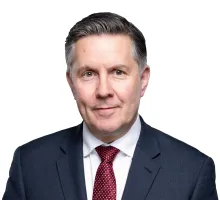
REBECCA NORMAN, HOST: Joining us now is Federal Minister for Health and Ageing, Mark Butler. Welcome to Central Victoria.
MARK BUTLER, MINISTER FOR HEALTH AND AGEING, MINISTER FOR DISABILITY AND THE NDIS: Thanks very much.
NORMAN: Now, aged care is, as we know, is federally funded. How concerned are you that older patients are staying in hospital beds, taking up much-needed beds, simply because there aren't enough aged care places available here in Central Victoria?
BUTLER: I've said I'm very concerned about this. One of the very big focuses of our government over the last several years has been, first of all, getting the aged care system back on track, really. It went through a terrible several years, characterised by a Royal Commission whose report was titled Neglect, and then exacerbated by COVID, particularly here in Victoria and to a degree in New South Wales but broadly across the country. So getting things back on track has been a huge focus of our time and energy, and huge amounts of money, frankly.
I've also tried to be as honest as I can with people that the demand for aged care now is skyrocketing at a rate we've never seen before in this country. That's essentially just a product of mathematics. If you go back 80 years, and 80 is the key age for people starting to need aged care, you get to 1946 and next year 1947. That is really the time when the baby boom takes off like a rocket.
We don't have enough aged care beds in this country. I've made that clear. We have to open a new aged care facility every three days in Australia now for 20 years. It's not just a short period of investment we need, it's a sustained long period of investment. Over the last couple of budgets we've been trying to put money into the aged care sector that means that the providers start building new facilities at a rate that we need. We're not there yet. I'll just try to be honest about that. We're not yet there, and I'm deeply concerned about that. We did more in the budget a few weeks ago. We're doing more work with providers over the course of the coming months leading into the end of the year about other things that will help them build new facilities. But this is creating pressure right through the health care system in hospitals.
I have to say in Victoria it's less of a pressure because Victoria is quite unique in having all of these public aged care facilities, state-run aged facilities. It’s a real jewel, frankly, for Victoria. It means hospitals are much better placed to move older patients into state-run aged care facilities than in a place like New South Wales where this is a really serious, big pressure on all of their hospitals.
NORMAN: We heard from Seniors Australia this morning, Chris Grice, who said that where shortages are across the country, places like Queensland are worse than Victoria. But when we asked him about how many people are waiting on aged care spaces, he said that there's no formal reporting numbers in Victoria. The last report was 246 people, but that's quite a long time ago. So why does that differ from state to state and that different from state to state and why don't we have these numbers if we'll be able to fix the problem?
BUTLER: I think you're talking about people waiting to get out of hospital into aged care. We rely on states to report that obviously because they run the hospital system. We've got some work underway between our government and all of the states to get much better data on who is in a hospital, what their level of need is. Some people are in a hospital quite capable of moving to an aged care facility if a place is available. Others have more complex needs that probably can't be catered for. Even in a well-run, well-staffed aged care facility, they might have very complex levels of complex medical needs.
What we've said as a Commonwealth is we need better data. We report very transparently on waiting lists for aged care places as far as we know them. We do it on a quarterly basis. Every three months, people get a sense of how many people are waiting for a home care package, for example. We're seeing those waiting times come down, which is a good thing.
We do need better data from state governments. As I say, the numbers in Victoria are significantly lower than New South Wales and Queensland because you've got this state-run aged care facility system that serves this state magnificently well. But it doesn't mean it's not a problem.
NORMAN: Yeah. So what's it going take to get more Support at Home packages so people can stay at home longer, Mark?
BUTLER: We're expanding that about as fast as we can. Last financial year, we increased those places by 25 per cent. That's a huge increase in one year. And it's about the limit of what we can do without running into shortages of workforce. I was worried that increasing it by 25 per cent would mean we were putting out packages that frankly were there but couldn't be staffed. We've got low unemployment and all those sorts of things. So again, we're expanding home care packages, which is essentially what people want. People don't want to go into an aged care facility if they can avoid it. But we’re doing it about as fast as we can. And as I say, just the number of people hitting that aged care age means we've got a bit of a runaway level of demand that we're trying to keep pace with.
NORMAN: Well, we've had a few text messages just about that whole process for people trying to keep their parents at home and just saying how complex it is. We've had a text message here from Susie: there’s a very real need for funding for an aged care navigator, the state run some things, federal government run the other things, but it's so complex. Would your government consider an aged care navigator? This seems to be the common sentiment of people that find it really frustrated in that pressure that's putting on families to be able to care for their parents and find them the right place.
BUTLER: We have a system like that, basically spread through the country. We don't call it a navigator, I think we call it a care finder. That is something we've heard over the years when we first set up My Aged Care, which was a single portal you could go to find out aged care information. There used to be literally dozens of different phone numbers and websites. We coordinated that into one place online and one phone number,but also heard a message that sometimes people needed help navigating that, to use your term. And so we have set up systems like that.
I think everyone out there understands, particularly if you've had an experience with this, this is a complex and often very emotional period of a family's life to try and find that.
NORMAN: Have you been through this, Mark?
BUTLER: Yeah, not particularly with my parents, but with in-laws and other members of family. I think there are very few people, particularly if you get to an age like me, who haven’t gone through this directly or indirectly, and got a sense of the complexity of decision-making at a time that's emotionally fraught. It's a very confronting time. If you're going into a facility, it raises questions about finances and housing and all the rest. So, I'm acutely aware, having worked in this sector for decades, for more than 30 years, about the obligation really to make this really difficult time for families as easy as possible.
NORMAN: Why isn't it getting any easier for people? Because there's a text message here, they've been through this for the last 10 years. And she says as a nurse and someone with parents and aged care, the balance isn't right. The wait time to secure something in the community is really challenging, so they have to move away. We need a system that is fair, easier to navigate and focused on delivering high quality care without placing enormous financial and emotional burden on families because it's means tested.
BUTLER: I know wait times are longer than many would like. We're managing to get those wait times down. We're particularly keeping those wait times very short for people who need care urgently, so under a month, to get your package delivered. For high priority, those wait times are pretty short as well. All of our work is designed to get those wait times down as much as possible. The wait time for assessments, which was something understandably people were complaining about in the community, they've come down markedly over the last 12 or 18 months because of investments.You're getting an assessment quicker. Then obviously, once you've got the assessment, you've got to find a package with someone actually able to come and visit your home. We're getting those down as well because of the huge number of packages we're putting into the system.
But again, going back to my first point, I'm not going to gild the lily on this. The demand for healthcare, demand for disability care, veterans care, it's all climbing. It’s all a pressure on our system, our terrific world-class system, but demand for aged care is literally going through the roof like a rocket. And it's going to be a very huge pressure on governments, not just for the next couple of years as we see those leading edge baby boomers hit the system, but it's going to be a sustained pressure for a couple of decades.
NORMAN: John says: typical, all governments have known about this so-called baby boom coming. Why haven't they prepared? Seems as if they blame boomers for getting old.
BUTLER: I set up the beginning of this aged care reform process 15 years ago, and I did it on the basis when I was aged care minister under Julia Gillard, that there would be a rolling five-yearly reform process to get us ready for the late 2020s. I remember saying that in 2012, and I have to say, in that decade under the last government, those five-yearly reports were ignored. Money was taken out of the system by Scott Morrison and put elsewhere into government, so it wasn't reinvested in aged care, it was just cut out of aged care. And that is what led to the Royal Commission. Aged care providers ended up so skinny on funds that they weren't able to deliver the care that people rightly expected, and so you saw the Royal Commission. And just as we were coming out of that, we hit COVID. So I really regret that we've spent the first few years of our time back in government having to get it back on track, get staff back in, pay them properly, get standards in place for nutrition, where what should have been happening over the last 10 years is an expansion of quality and the number of places, because your caller’s right, your message is right. We knew this, and that's why we set this process up 15 years ago and it went off the tracks, and frankly everyone's paying the price for that.
We're doing everything we humanly can. As I said, there are limits to how quickly we can expand home care because we have to have the staff to deliver that. Increasing their wages means that recruitment of those staff has improved dramatically, we're keeping them, which is important for continuity of care, so care recipients know who's coming into their home. But we've got a huge task ahead of us, Rebecca. I don't pretend otherwise.
NORMAN: No, it is. And speaking of the public health system and the pressure on it, Mark, the last couple of weeks we've been discussing local councils handing back their maternal child health services to the public health system. So they're saying they can't afford to run it as the state government is no longer maintaining the 50-50 funding split with councils. We've just got some audio here of a mother who's really concerned about what this means for her family.
[Excerpt]
CALLER JESS: I think if I'd not had the continuity and the same support and the same confidence from the maternal health nurse that we see, that I might not be as confident in- like, I'm breastfeeding him and we're just moving on to solids now. And I just don't think that if I didn’t have the continuity and the constant support, the more frequent check-ins that we've had, I don't think I'd be continuing to be breastfeeding. I don't- I think Bill would be on formula. I think we'd- I don't know, I think it would shake my confidence as a new parent to know that my son was actually okay.
I think maybe if there are mums who don't have quite as much of support as I do, just having, I don't know, a change in the service, it might really throw people. And if it's not based quite so much in the community, it might be difficult to have mums groups and connections to other services that the council offers for babies and young parents. Yeah, just [indistinct] difficult.
[End of excerpt]
NORMAN: That was Jess, who is a first-time mum in Bendigo, Mark, who's saying her- concerned about these maternal health services, which have been around for 100 years and gold-class standard services, and now moving back into the public system, which no doubt will put pressure on this system. So are you hearing this or- in other states and territories, or this is isolated to Victorian councils?
BUTLER: Again, this is something that is a little bit unique to Victoria. The councils in Victoria have traditionally delivered far more services than other states, really at both ends of the life spectrum. Early in life, they do a lot more in that maternal child health space, and frankly, late in life as well they deliver more aged care services than is customary in other parts of the country, and that's been a terrific thing for Victoria. High quality services by councils who are accountable to their community in elections and all that sort of thing. I'm not really into the detail of what's happening between the Victorian Government and Victorian councils, but what I will say is that as we've been going through the process over the last 12 or 18 months about what I've described as Thriving Kids, the need to really put in place great systems to identify any developmental issues among children under nine, really hopefully when they're babies or infants. What we've found through that work is across the country, we need to expand and rebuild in many cases our child and maternal health systems.
NORMAN: Why?
BUTLER: They're often being pulled back. Often what we find is that families start to lose touch with that system, sometimes as early as six to 12 months in terms of the baby's age. What we want to do is keep that contact in place to help those nurses and support parents to just monitor their child’s development over that critical age group. When I had the Thriving Kids Advisory Group working with me last year with Frank Oberklaid, who's really the elder statesman of paediatrics really across the country, from the University of Melbourne, one of the things we really heard clearly was how important these child and maternal or infant and maternal nurse systems are for parents. We want to keep that relationship in place for as long as possible. At some point, parents will start to move away from that system, and their GPs and other systems will be their major touch point to just keep in touch with areas of support that they can check on their children's development through. But we want to see these child and maternal health systems really bolstered around the country.
I'm a little agnostic about whether they're delivered through state systems or council systems. That differs across the country. But we have provided additional money as a centrepiece for this Thriving Kids model that we've committed to with all state governments. The Victorian Government has given me a blueprint of their Thriving Kids approach, which includes a significant role for child and maternal health nursing, and I'm very pleased with that model that the Allan Government's come up with.
But really, whether it's delivered at council level or state government systems, I mean, in my state, for example, it's largely state government, is not something we're particularly focused on as a Commonwealth. We just want to make sure it's there. And it's giving that support that your caller just talked about. It's just so critically important at that early age.
NORMAN: It's a vital service that a lot of people listening will have used and continue to use, and it can make the difference in how those years of first early development for any child. We're speaking with Mark Butler, the Minister for Ageing and Health on ABC Central Victoria. Now, we know the changes to the NDIS is causing real anxiety for the people that live with a disability. Are you aware of this story, Minister, about Maldon man Joshua Ruff? His story, it made national news recently. So the NDIA has stripped him of his right to self-manage his own care. So the 33-year-old who has Duchenne Muscular Dystrophy and runs a lavender farm out in Maldon, you might have seen him on Gardening Australia, has self-managed his NDIS fund since 2017. He's employed- he’s trained family members and support workers. So now his NDIS plan was changed from self-managed to agency managed, meaning the NDIA now controls how his supports are arranged after having a recent heart attack. This is just a bit how- his reaction when he spoke to us last week.
[Excerpt]
JOSHUA RUFF, NDIS RECIPIENT: Just taken that away from me and put me into such a dangerous situation now. I'm overwhelmed, scared, and like, I don't know where I'm going to be. It's just really hard. Yeah. It's just really hard that I don't understand like, NDIS, like, they’ve taken away my agency, my control and assurance of how I choose to take care of myself, which is hard.
[End of excerpt]
NORMAN: What's your reaction to hearing the pain in Josh's voice and what he's going through and how this will impact his day-to-day life and wellbeing?
BUTLER: I'd read the story. I hadn't heard the pain in the voice really, which really came through in that little excerpt there. All I really have is the detail I've seen in the media. I don't have access to individual case details. That's a legal barrier between politicians like me, even the Minister, and the agency. I know one of the issues here has been whether or not this gentleman is able to essentially use his plan to pay his own family members. That's generally not something we support in the long term.
NORMAN: It was exceptional circumstances which they applied for.
BUTLER: There are exceptional circumstances, and usually that's a transition period. But no other care system, aged care, for example, do we allow taxpayer funds to be used to pay family members to care for a recipient. The NDIS is quite unique there, but it's not intended to be an ongoing permanent feature of a plan. I'm loath to talk about the precise detail there because the scheme was set up very much on the basis the agency, which is an independent, effectively operationally independent from government, has access to all this information that I don't.
I guess what I would say as a general sort of philosophical position that guides all of our thinking about the NDIS, is that we want people to have as much choice and control over their lives as possible. That's really the central philosophy of the scheme, and in a way, that's sort of a bit different to other parts of the health and social care system, because we're dealing here with a system that supports people usually for their entire lives. We want as much individualisation, as much choice and control. That does have to have some quality controls though in it for taxpayers to ensure and be confident they're getting value for money there. One of those things is that paying family members is only seen as something in exceptional circumstances that will usually be temporary.
NORMAN: Which he's been doing since 2017. So he's had it for quite some time.
BUTLER: That's a very long time. In my experience, that's a very long time for people to be allowed to effectively pay family members to deliver their scheme. I understand this fellow, I don't quite remember where he lives, but he's in a regional community which makes access to service providers a little bit more difficult.
NORMAN: Yes, absolutely.
BUTLER: People in regional Victoria, other parts of regional Australia are given more leeway than they would be in the city, for example, where there are more options for independent service providers. But I hear the pain. I hope that there's a process of review of these decisions that have been taken after this gentleman was in hospital and after he was discharged. I hope that gives you a sense of our general approach here.
NORMAN: Well, he has been given reprieve for six months, but that's only six months. And you talk about choice and how you want to live your life- [coughs] excuse me. He has created a job, a business. His family are fully trained to take care of him and to manage his health conditions. If he relies on agency, he may end up in a hospital for the rest of his life. So there goes these agency and choice.
BUTLER: No one wants one to see that happen, and this man's story is a remarkable story, what he's been able to build with the support of a remarkable scheme. A scheme that has transformed the lives of hundreds of thousands of people with disability and allowed them to make choices like this. Obviously, I want to see a path forward for him and his family that allows him to continue to live that life.
NORMAN: Will you be able to help him?
BUTLER: I don't have the ability to interfere with these decisions. That's not how the scheme has been set up. It was deliberately set up in that way. I don't have that ability, which I might have in some other parts of the health and social care system. I'll certainly have a think and take some advice about this case to the extent I can.
NORMAN: Okay. And so you're in Bendigo today to talk about Bendigo having the second highest bulk billing jump in the nation.
BUTLER: It's pretty extraordinary, really. Since we started investing back in bulk billing a couple of years ago, bulk billing in Bendigo has climbed by more than 20 per cent. Out of 150 electorates, there's only one that's had a bigger increase, that's up in Darwin. In significant part, I think that's down to Lisa Chesters just advocating and advocating the importance of a stronger Medicare. The number of GP practices in this electorate that bulk bill all of their patients all of the time has tripled. I'm going to see one later this morning that only opened this week, so we've got new practices opening on this basis as well.
We've got more bulk billing, more people able to go to the doctor whenever they feel they need to rather than when they feel that they can afford to. We've got cheaper medicines. We've got new clinics like the urgent care clinic that's seen almost, or more than 20,000 people, taking pressure off the emergency department at the hospital here that we were talking about earlier, Rebecca, the new endometriosis and pelvic pain clinic.
So for Labor, and I know for Lisa Chesters, a stronger Medicare is just so core to everything we do as a Labor Government. And Bendigo, frankly, is one of the best case studies I've seen around the country about making a real change for people.
NORMAN: Thank you very much for your time.
BUTLER: My pleasure.
NORMAN: That's Mark Butler, the Minister for Ageing and Health.
Media event date:
Date published:
Media type:
Transcript
Audience:
General public
Minister: