
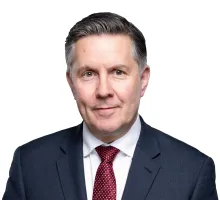
GRAEME GOODINGS, HOST: We have Mark Butler, the Federal Health Minister, in the studio. If you have any questions for the Minister, give us a call now, 8223-0000 is the number. Minister, good morning.
MARK BUTLER, MINISTER FOR HEALTH AND AGEING, MINISTER FOR DISABILITY AND THE NDIS: Morning Graeme.
GOODINGS: Quiet week?
BUTLER: Another quiet week. What’s happening in the Middle East is just extraordinary. Deeply, deeply distressing. There’s still about 115,000 Australians stuck in the region. We’re really pleased we had a flight land in Sydney last night, another flight land at about 6.30AM this morning in Melbourne, and probably about now, within 10 or 15 minutes, we’ll see another flight from Abu Dhabi land in Sydney with I think four more planned for the next 25 hours.
But it’s still incredibly distressing, obviously for those who are stuck in the Gulf, but for all of their family back here. I know my office is receiving calls. The consular helpline is receiving huge numbers of calls. And this conflict continues to rage. Iran, as we were saying in the ad break, Graeme, has lobbed missiles into 11 different countries. They really are expanding this conflict well beyond just the three countries that were directly involved – Israel, the US and Iran.
GOODINGS: With so many Australians stranded there trying to get home, really it’s a logistical nightmare. You can’t move 100,000 people in such a short time.
BUTLER: That's right. We've deployed a couple of Air Force aircraft, RAAF aircraft there for contingency planning. But we've also been clear the only way you shift that number of Australians at scale is through commercial airliners. Ultimately, it depends on the airspace being open, frankly, whether they are Emirates or Qatar flights, or whether they are Air Force flights, defence flights. It depends upon the airspace being safe. We're seeing a lot of reports coming in from the Pentagon about a very big decline in the number of missiles and drones able to be launched by Iran because the Americans and the Israelis are destroying so much of offensive capabilities. That holds some hope out for the airspace becoming safer in the nearer future.
But yes, I'm glad we've got some flights out, but we really need very big numbers of flights to clear that number of Australians. I mean, 24,000 alone in the United Arab Emirates, but tens of thousands elsewhere in the region.
GOODINGS: Remarkable. 8223-0000 is the number if you have a question for Health Minister Mark Butler. Before we take some calls, Minister, you've got an announcement, a follow-up from the last time you were in the studio.
BUTLER: A few weeks ago, you and I had a talk with a number of callers, Graeme, and one of them, Maxine, who I think she said she was about 84, like many people that age, has regular injections into the eye. A pretty difficult procedure, but very important to deal with macular degeneration. And she and a number of other people I've spoken to recently were very concerned that there might be changes on 1 July that would essentially restrict their ability to get those procedures in a hospital. If you can't get it in a hospital, you can't then claim it on private health insurance, so then their fees would have gone up dramatically.
This was a clinical recommendation I received from some experts a while ago. I was really worried that it was going to jack up out-of-pocket costs for a lot of older Australians. I can announce to Maxine this morning, but to many others who are impacted by this as well, that I've scrapped that recommendation from the clinical experts and there will be no change to your current arrangements receiving eye injections. If you currently receive eye injections in your local private hospital with your clinician, that will be able to continue to take place and you'll be able to continue to claim it on private health insurance.
GOODINGS: Okay, let's take some calls. Kay, good morning.
CALLER KAY: Good morning, I've just been pipped at the post because that's the very subject that I was angry as hell about and was going to discuss, but yeah, you've pipped me at the post.
BUTLER: Apologies for that, Kay, for grabbing your thunder. But I know this has been distressing for people. I received a package of recommendations from a group of clinical experts for eye procedures or ophthalmology. A number of them I am continuing with because they will deliver better practice, but this one, from the time I received it, worried me. I delayed its introduction for 12 months to allow further discussions, particularly with patient groups. And over that time, particularly over the last six months or so, I've been completely convinced that even if at an abstract level this might have some clinical reason behind it, it's just going to hurt people's hip pocket and disrupt their ordinary arrangements. These are difficult regular procedures people have to have. I don't want to see them have to change their arrangements, let alone be hit by big gap fees.
GOODINGS: Kay, thanks for your call. I'm sure you're happy with the outcome. Steve, good morning.
CALLER STEVE: I'm not too sure where to begin, but let's start here. As I spoke with Graeme earlier, I have a daughter that's disabled with cerebral palsy.. I'm having a lot of difficulties in performing as a father, and as the male parent. I'm using the office of the public advocate for quite a few years. The NDIS funding has reduced my access rights and I don't know where else to seek help. I'm on a disability support pension myself. I love my daughter. She loves me. She lives independently. I can only see her for six hours every Sunday and I'm afraid to pursue my role as her male parent because I'm constantly being punished for trying to improve the quality of her welfare. I haven't been convicted in any court of law anywhere. I'm absolutely bankrupt with lawyers that did nothing and actually put me in worse condition. I don't know where else to go to help my daughter. Wherever I go, since I was a contender in the Royal Commission to tell her story a few years ago, the best word I could say is that I'm being persecuted as a parent, as a male parent. I'm worried about my daughter's welfare. It's absolutely appalling. I'm not allowed to go into her home. In 2023, there was a carer that took my property out of my bag and wouldn't return it. Since then, I’m not allowed to go in the home. She reported me that I was nasty, which is not true. I've got evidence that are provable beyond the facts. I don't know where else to seek help.
BUTLER: Well, Steve, obviously very distressed by all this and I'm deeply sorry for that. I'm glad your daughter is receiving good care under the NDIS. That has been the wonder of this program over the last 15 years. It's transformed the lives of hundreds of thousands of Australians like your daughter with serious and lifelong disability. In terms of your particular circumstances though, it's difficult for me to provide a response really over the radio. I'm not sure where you live, but I'd encourage you, if you don't think that your particular rights and your daughter's rights are really being abided by, to contact your local member of parliament. That's what we are there for. If you're in my electorate, you can contact my office. Get some advice from your local MP who sometimes is able to sort of push through some of the bureaucratic barriers that exist in enforcing people's rights.
I'm sorry I can't give a more detailed response to your circumstances without the details in front of me, but I really would encourage you to contact your local MP.
GOODINGS: Let's take another call now. Billie, good morning.
CALLER BILLIE: Good morning Graeme, and good morning, Minister Butler. My question for Minister Butler, Senator Ruston tabled my near 28,000 signature petition this week, calling for proton therapy in Australia. I met with you nine months ago and was told an announcement was coming soon, but nothing has happened. Senate estimates shows Commonwealth and SA have been corresponding for over half a year now, yet nothing has changed. You're both in South Australia, why not meet and finalise a pathway forward?
BUTLER: Hi, Billie, and I saw the story about your petition. I remember I was having a discussion about this issue. Anne Ruston hasn't yet reached out to me, I don't think, but I'd be more than happy to sit down with her and have a talk about her perspective on this. Obviously, we try to cooperate as much as we possibly can across the political aisle on matters like this. As you know, Billie, and as I've talked about publicly before, this project, quite tragically, has essentially fallen apart because the provider of the proton unit that we were hoping to implement or put in place here on North Terrace in Adelaide has fallen over. It's a provider that frankly has not been able to deliver units beyond one unit in the United States. It's dependent upon Russian supplies and so essentially has fallen through. We have, as you said, been corresponding and meeting with the South Australian Government to see whether they have a fallback plan. I have since reached out to other governments, particularly New South Wales and Victoria, and asked them whether they have an alternative proposal to deliver a proton unit.
At the moment, we would only need one proton unit somewhere in the country. Whether it's in Adelaide or Melbourne or Sydney, it will be providing proton therapy services, particularly as your story, your personal story indicates, Billie, for children with cancer. I haven't yet gone through the responses or got the responses back from those other governments. But this is a terrible situation we have found ourselves in because of an arrangement that has certainly not delivered for the people of Australia.
CALLER BILLIE: Minister Butler, there's a twofold question to that, though. The South Australian Government has actually seen through the ProTom court finalising, and that's actually been awarded to the South Australian Government. Whether or not they see the $35 million they were awarded, that's a separate issue. To reemphasise my question, when I say that you've been corresponding with the other side of the government, I meant South Australian, and in terms of specifically Malinauskas, that the Senate Estimates said that you received correspondence from Malinauskas middle of last year and that your office has then replied and that you're waiting for a more formal request for money. And that was for six months – it wasn't actually clarified as to when your office replied or why the Malinauskas Government hasn't replied yet over a six-month period.
My question is actually around the fact that both you and Premier Malinauskas are both South Australians. You both agree publicly that Australians need a proton centre. The actual Cancer Australia document that was released in 2023 states that by 2026, we should actually have two centres. And yet, both you and Malinauskas are both South Australians and you can't even get together and find a way forward. My question is, why not?
BUTLER: Well, not particularly Peter, not particularly the Premier, but I've engaged a number of times with the Treasurer, who has responsibility for the property on North Terrace, and obviously, the Health Minister and our officials have been meeting. Yes, I'm a South Australian, but as the Federal Health Minister, my overarching responsibility is to deliver a national capability as soon as possible and in the most effective way. Now, it would be preferable for that to be delivered here in Adelaide because there's a lot of human capital, a lot of people here with particular expertise in this area, some of whom have moved here from other parts of the world, as you know, Billie. So preferably, it would be here in Adelaide, but if it can't be here in Adelaide, then I thought it was the responsible thing to do as the Federal Health Minister to start a discussion with other states to see whether they're in a position, if Adelaide falls through, to deliver that national capability in Melbourne or in Sydney.
CALLER BILLIE: My petition has always been about getting it in Australia somewhere. I've never been aligned to Adelaide specifically, even though I'm from Adelaide myself. I've always said that we need proton therapy somewhere in Australia. Yet ProTom failed over 18 months ago, and yet the government and your federal health ministry has still not come up with a secondary solution. Why not?
BUTLER: There has been a process in South Australia to look for an alternative solution. The bunker, as you know, on North Terrace has been constructed, a very significant construction, around the particular nature of the unit that was going to be delivered by the company that has since fallen through. There are questions about how much work would have to be done to change the South Australian circumstances to fit a different unit provided by a different company. There would be different costs as well and timeframes to ensure that any changes that need to be made to the bunker would be able to be made. There are other proposals from around the country that would potentially need to be considered alongside any backup plan the South Australians put forward.
GOODINGS: We have Health Minister Mark Butler in the studio. If you have a question, ring up now. 8223-00-00 is the number. Just before we take another caller, Minister, Urgent Care Clinics set up to take the pressure off public hospitals report that the eight federally funded Medicare Urgent Care Clinics here in South Australia aren't fulfilling their obligation. They're not staying open the hours that were expected.
BUTLER: I haven't got all of the hours in front of me, Graeme. We said when I promised this new model of care - it didn't exist before we were elected - that we'd like expect them to be open seven days a week, and they all are, but we'd also like them to be open extended hours, and I said at the time, 8am to 10pm. Not all of them are able to do that because of essentially workforce pressures and things like that. Some of them are open 8 till 8, and some open a little bit earlier, close a little bit earlier. It's variable. We've got 132 clinics open now over the country.
But what they're all committed to doing is to expanding those hours over time. I mean, this is a new model of care. They do have to find staff. The other important aspect is they're required to have imaging and pathology services available. Some of them have them on site very quickly and they've been able to ramp that up immediately. Some are taking a little bit of time as well. I’m trying to be as patient as I can for them to get their staff, to make sure they’ve got doctors to cover what is essentially a 14-hour shift, seven days a week, including on weekends. But it’s taking a little bit of time. They’re still contractually obliged, though, to have a plan to get to those hours.
GOODINGS: Let’s take another call now. Kat, good morning.
CALLER KAT: Morning to you both. Look, just wondering about nursing homes. So as far as I know, this particular one, a friend of mine has got one of her friends in there. She went and visited and this person is under comfort care, so they should be getting checked on every couple of hours and changed, and all that sort of thing, because she’s not in a well state at all. Her daughter went to visit her, and she was just in a sopping wet bed, filthy and left there for hours.
I was just wondering, does the Government not have checks and balances on nursing homes, whether they’re private or government-owned? Do you do surprise visits, don’t give them a warning. Just go and check on things, see how they’re running. And this friend of mine who went and visited, she’s an ex-head nurse, and she said she can’t believe how untrained, how poorly trained the staff are. She was asking, why are you not doing this? Why are you all here in the lunchroom and not attending to your patients? And they were like we’re waiting for the next lot of staff who are coming on after their break so we can go on break. Well you should be working up until the point that you go on break.
BUTLER: That’s a very distressing story, Kat, and we’ve heard far too much of it over the many years. People might remember the Royal Commission into Aged Care before the COVID pandemic. Its title was Neglect. Some of the stories were frankly bone-chilling that we were hearing about people in nursing homes, they paid their taxes all their life, they’d raised their families, worked hard, and frankly deserve some dignity and some high quality care but were malnutritioned, were not being moved and so had bed sores, all these sorts of things. That’s why when we came to Government, we made a very big increase in staffing in particular.
It was extraordinary when I told people, even though we call them nursing homes, there used to be no requirement to have a nurse in there. Now there's a law that says you have to have a nurse, an RN, in there 24/7, seven days a week. We were told when we introduced that there weren't enough nurses, we couldn't do it, but it's happened and it's there. We've increased the number of staff very dramatically, the non-nursing staff, so those care workers you were talking about, very dramatically. I think there's about 4 million minutes of care every day being delivered additionally to what was happening a few years ago.
But you're right, we've got to keep an eye on these operators. They're receiving taxpayer money, they're receiving money from the residents and their families themselves. They've got to be held accountable. We do have a system of spot accreditation visits where the accreditation agency turns up without notice, knocks on the front door and says, we're coming in to have a look at your operation. That is a really important part of our quality control system. I'm really sorry about that story, Kat, that you've told. We do keep a steady conversation going with our commission that does these spot audits without notice. There are some audits where the operator does have notice, but we've seen over the years that's when the flowers come out, that's when things are cleaned up. That's why this spot audit where no one's given notice, they just turn up as a surprise, is a really important part of our control system.
GOODINGS: Let's take another call. Helen at Glenelg, good morning. You have an aged care question?
CALLER HELEN: Yes. Good morning, Graeme and Minister. Look, unfortunately, my husband is terminally ill. I've had to succumb to the ghastly aged care. I am now going downhill. I cannot get any help. I've rang 13 places – there isn't any money, they keep telling me. Now Minister, with respect, I don't want any verbal diarrhoea, I want action. I've been to the Federal Minister here in Glenelg I want help.
BUTLER: You've been where, sorry, Helen, in Glenelg?
CALLER HELEN: Louise Miller-Frost.
BUTLER: Right.
CALLER HELEN: I've emailed you and I've emailed Sam Rae. But the other day, I cannot get anyone to come in, mow the lawns or clean my windows. I manage inside. The other day I had to pay $250 privately. My husband is in a nursing home, paying $70 a day to care for him. I’m not a money tree. I can’t keep it up. I said, can I be reimbursed for the 250 –no, can’t do that. But you cannot access any service in that aged care because they haven’t got the funding, apparently.
BUTLER: I’m seeing Louise Miller-Frost later this morning, and I will raise your case with her. I can’t give you a detailed a response over the radio. I hope that doesn’t sound like verbal diarrhoea, to use your language. But I will give you an assurance that I will raise this issue with Louise and see whatever we can do, we can do for you.
GOODINGS: Thanks for your call, Helen. I think we’ve got time for one final call – Rick, go ahead.
CALLER RICK: G’day, Graeme, Mark. Given that obesity has now overtaken smoking as the major cause of death through lifestyle choices, when are actions going to be taken to try and curb the highly addictive sugar, salt, fat triumvirate, not just the sugar? I see ads on television at the moment about sugar, but the three together are quite deadly.
BUTLER: You make a really important point. There’s no question that going forward, the major public health challenge we have is around weight, obesity and the lack of physical activity, and it's right through the life course. We're seeing it among children as well as adults now, diabetes diagnosis happening earlier and earlier in life. It's the big public health problem I worry about most. Unlike smoking though, it is not as conceptually easy to deal with. Smoking at least conceptually is relatively straightforward. You just say, don't smoke. Practically, it's harder because it's highly addictive. But we need to work across a range of different areas to deal with weight.
And you're right, it's sugar, it's fat. The food ministers only met a couple of weeks ago and came and gave a report to the health ministers about what they're doing around food labelling, for example. This is something that industry has resisted for a long time to make sure that consumers know exactly what they are feeding themselves and just as importantly, maybe more importantly, what they're feeding their children as well. We do work with industry on trying to cut down the amount of sugar and salt and saturated fats in their foods. We've been doing that for a long period of time, but there's frankly more we should be doing there as well.
There's no easy answer to this particular public health challenge, but you're right to point it out as the significant public health challenge for the future.
GOODINGS: Health Minister Mark Butler, our guest in the studio.
Media event date:
Date published:
Media type:
Transcript
Audience:
General public
Minister: