
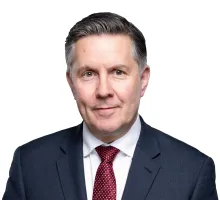
GRAEME GOODINGS, HOST: My pleasure to welcome in the studio, Health Minister Mark Butler. Minister, good morning to you.
MARK BUTLER, MINISTER FOR HEALTH AND AGEING, MINISTER FOR DISABILITY AND THE NDIS: Good morning, Graeme.
GOODINGS: I think obviously people are going to ask questions about health and your portfolio, but as a senior minister I think we need to at least address the crisis facing Australia at the moment with fuel. We just heard on the news that the Prime Minister is in Singapore. How well do you think the nation is handling the crisis overall?
BUTLER: As your listeners know, this is a global fuel crisis. Every country is dealing with the enormous impact of closing the Strait of Hormuz, 20 per cent of the world’s oil is locked up, effectively, by this closure, and that’s impacting every economy around the world. Our focus has been very much on getting as much fuel into the country as we possibly can and dealing with the price impact of this oil shortage. Now, the Prime Minister is, I think you said in your intro, is in Singapore today. Singapore provides more than half of our petrol. Slightly less than that share of our diesel and jet fuel as well. It’s a very important supplier of our fuel needs though, talking to them, talking to other partners in the region. The Deputy Prime Minister was in Japan over the last few days as well, another important partner in energy, to make sure we get as much fuel into the country as possible has been a strong focus of ours.
We’ve also provided an underwriting guarantee, to underwrite the risk that private companies face to try and grab fuel off the spot market. They’re doing that as well from relatively new sources like Mexico, North America. There was a press conference yesterday about the impact that is having on Ampol and Visa, that operate the refineries in Brisbane and Geelong as well. Doing everything we can to grab as much fuel as possible to get it into the country means that into the second half of May, we think we’re pretty confident about the supplies we have.
But like every country on the planet, we wake up in the morning to work out what is happening in the Middle East, and what prospects there are of a ceasefire holding, which is critically important, and then after that, the Strait of Hormuz opening so that oil can start to flow into the global economy again.
GOODINGS: As fuel prices rose, the government decided to cut the fuel excise in half, and I think we all appreciated that. But can that be counterproductive? I mean, people more fuel and the impact on the economy inflation and the like,
BUTLER: We thought about that very carefully and we still thought on balance it was the right thing to do. It saves about $20 or more for an average fuel tank and we've seen those prices flow through particularly for petrol, prices are down 30 to 35 cents a litre from the peak that we saw a couple of weeks ago for petrol. The diesel market's a little bit trickier. Diesel wholesale prices shot up after the conflict much more than the petrol prices. We haven't seen the same price reductions for diesel that we've seen for petrol.
GOODINGS: Now, Minister, just can I interrupt there? Because everyone, not everyone, I get lots of calls and texts from people saying, why is it that diesel is particularly impacted? You know, fuel goes up but nowhere near as dramatically as diesel. Is there a logical reason for that?
BUTLER: It's really about the wholesale price, it's not about retailers, although the ACCC, the consumer watchdog, is watching the retail market very, very closely to ensure that there's a pass-through of all of this. But the wholesale market for diesel appears to have been hit harder by the global crisis than the petrol market so there's also significant demand for diesel because a lot of the operations in mining and a whole range of other areas like farming, particularly in seeding season, demand is still very, very strong for this. The diesel market has been trickier for us, but the important thing is that whatever the price is now or today, it would be 30 to 35 cents a litre higher if we had not done what we did to cut fuel excise, to get the states on board to pass back their windfall gains that they were seeing through their GST as well.
People are saving about $20 a tank against what they'd otherwise be paying, but we completely understand that it's still painful out there for people, really painful for households, very painful for businesses, particularly if they're exposed to the transport market. And I heard you talking to Michael Kaine earlier about that, which is why we need to see this conflict brought to an end. We need to see the energy market get back to a stable position.
GOODINGS: Obviously the government is fully committed to dealing with the situation now. Do you think after this, and hopefully it's resolved fairly soon, there are lessons to be learned? Can we be better prepared for, because you know, the Middle East is always at flashpoint. Should we be better prepared?
BUTLER: We have more fuel than we've had for 15 years. When we came to government, we recognised our fuel reserves were too low. We took action to put in place a minimum stockholding responsibility for fuel companies so that we're better prepared now than we were at any other time in the past 15 years.
GOODINGS: It still doesn't reach IEA. I mean, they suggest, and 30 countries abide by the 90-day limit. We are nowhere near that and haven't been ever.
BUTLER: No, that's right, and to do that would cost an enormous amount of money on the budget, but I think, sure, at the end of this global crisis, we do have to take stock and have a think about our energy settings. Certainly people in Adelaide would know, they'd remember the Port Stanvac refinery. There's been a big, big closure process of refineries in Australia over quite a period of time. Four of them were lost in the last decade, meaning that we've only got two refineries now in place. In part, that's a product of the fact that the crude oil supply we saw from Bass Strait for so many decades has started to decline. But of course, we will, at the end of this crisis, have to take stock and see what lessons we learn. At the moment, we're focused on dealing with the impact of the crisis for households and for businesses, but there must be lessons for us to reflect on.
GOODINGS: We have the Health Minister, Mark Butler, in the studio talking on other matters just at the moment. But if you have any questions for Mark Butler, now's the time to call. Marie, you've been waiting for some time. Go ahead.
MARIE, CALLER: Oh, hello. How are you?
BUTLER: Good, thanks.
MARIE: I'm just phoning up about the ratios in aged care. I'm specifically talking about nursing homes. It's quite disrespectful, I think, and it's all to do with funding. I used to work in the aged care sector and then I'm now in disability and I can't believe the difference between the ratio with the clients. In aged care, it's quite disrespectful. You’re run off your feet. And I feel really sad for these residents because they've been taxpayers all their life and they've contributed to the country and they're in nursing homes where they've got staffing that's really hard and it's just so disrespectful. And their families are paying big money for them to go into nursing homes, and I just wish that issue could be addressed.
BUTLER: Thank you, Marie, for your call and for the work that you've done over aged care and in disabilities as well. We have actually, as you probably know, very substantially increased the staffing requirements in aged care. I think whenever I say to members of the community that before we were elected, there was actually no requirement to have a nurse in a nursing home, they are gobsmacked. And we introduced or reintroduced that requirement. And so now across every nursing home across Australia, there is a registered nurse on duty 24/7, 99 per cent of the time. And that's a big, big change.
We've also, though, increased those staff ratios substantially. It's been a very big investment of taxpayers into that. A lot more staff in aged care now delivering about, from memory, about four million minutes of additional care every to aged care residents. Now, you can always make the argument that there could be more, but we took advice on this after the Royal Commission about better staffing levels. We've made a huge investment into aged care to get those staffing levels back up. And I think what that means is better care. It also means more one-on-one time between a carer and a resident, even if it's just to sit down by their side and have a chat while they have a cup of tea. This is something we've been very focused on but I understand that some people would like to see it even better.
GOODINGS: Marie, thanks so much for your call. Just before we take another call, from the text line, Bill says: “approximately two months ago, 6 February, Mark Butler came on FIVEAA telling us we need to build three new aged care facilities per week for the next 10 years. My question is, in the eight weeks since the announcement, how many new facilities have been built? Eight weeks at three new facilities per week, the answer should be 24. Minister?”
BUTLER: He's right that 8 x 3 is 24. I think what I said is we need to build or open a new aged care facility every three days. A little bit more than two per week, not three, but that still remains the case. And we need to do that for 20 years, I was very honest and clear. We are not doing that right now, which is why I'm so focused on working with the provider sector, those people who actually do the building, on ways to make sure we can lift that construction rate. It's going the right way but not nearly fast enough, and we're thinking through that very carefully right now as we speak. Thank you to Bill for reminding me of that. I want to be reminded of that as often as possible because I think it's one of the most pressing challenges, I feel, that we have in my portfolio of health and ageing and disability, is to make sure we have enough aged care homes for a growing number of people who are hitting that age.
GOODINGS: Let's take another call. It's another Marie at Two Wells. Marie, go ahead.
MARIE, CALLER: I'm a bit nervous, I'm sorry. I've never done this before.
GOODINGS: You'll be fine.
MARIE: Mr Butler, I have a 58-year-old disabled daughter who's with NDIS. At the moment, she's living in care. She was with us for 50 years, and I had absolutely no help whatsoever for 50 years. And as we're getting older, well, she has to go into help. We're both not well ourselves now and we can't look after her so she's in care. I just wonder why the NDIS is blaming all the people that are on it about wasting money when the NDIS wastes so much money themselves. I've had so much trouble with funding. For the last two months, her funding actually ran out, and I must say, thank goodness for Novita, they've actually still been looking after her and they've been covering the cost. Yesterday, I was told that her plan has been rolled over. We have had a change of circumstance in probably four or five months. Nothing's happened. We haven't got anywhere with that. We actually went to the Tribunal to get her some extra funding when she needed to go into care. We did get some, she's in care. We did get her SDA that she needed, which she already had, and then the NDIS took away from us without letting us know. I just want to know why the NDIS does not listen to parents, and they listen to all the people that went to uni that don't know anything about disability?
BUTLER: Marie, thank you for calling in and telling us your story. Your story, your family's story, is why the NDIS was set up in the first place. I remember working with the disability sector 35 years ago, well before the NDIS, and hearing stories exactly like your family's, where parents were caring for a disabled child, not just for their childhood, but well into adulthood, and getting very worried about what would happen as they aged. That really was, I remember very well, probably the biggest driver of the establishment of the NDIS in the first place. And it has changed the lives of hundreds of thousands of people and their parents and their families and their loved ones. Thank you for your story.
But what worries me about your story is that you feel you're not being listened to. And in terms of your individual circumstances, if you feel that your application and your plan is not being dealt with properly, I encourage you to talk to your local members office, your local MP's office, the NDIA. The agency has liaison officers who work with MPs’ offices to try and sort of clear some of the blockage that people too often experience in dealing with things like that.
But to your broader point, Marie, I would be horrified if there was a sense among NDIS participants and their families that they are being blamed for what I think is a very serious issue. The NDIS has grown much faster than everyone thought it would. It is still growing, frankly, a little too fast for the budget to sustain, we are going to have to look at ways in which we get some more discipline into the management, including the financial management of the scheme. That should not in any way reflect on the enormous advance that's been made for people with disability through the establishment of the NDIS. I was involved in that. I want to see it around for decades to come. And at the moment, the pressure on the scheme because of those costs running essentially out of control is putting at risk the sustainability of the scheme and all that it's achieved for your child, for your family and hundreds of thousands of other families like it.
GOODINGS: Is funding for the NDIS likely to be cut in the upcoming budget?
BUTLER: Again, I've been very honest and frank with people to say that National Cabinet, which is the Prime Minister and all of the Premiers, agreed several weeks ago to reduce the growth in the NDIS. It's currently growing faster than any other social program, faster than aged care, Medicare, the Pharmaceutical Benefit Scheme, everything like that. Certainly, they committed to getting that growth rate down to about 5 or 6 per cent or slightly lower than that. That would bring it into line with the growth we're seeing in Medicare, in aged care. It's not cutting the scheme. It will continue to grow. But certainly, trying to get the growth to a more manageable level is something that all governments have agreed to and is now my job, and we're working through that as part of the budget preparation.
GOODINGS: And we have Mark Butler, Health Minister, in the studio. Caesar, Jenny, Quentin, hold the line, we'll take calls in a moment. But Minister, you have some announcement to make about bulk billing.
BUTLER: Yes, Graeme. As your listeners know, regular listeners, you and I have talked a number of times about the investment we're making to increase bulk billing for GP visits, very big investments that took effect on 1 November. And I'm very pleased to say that the number of practices in South Australia that bulk bill all of their patients all of the time has more than doubled in just those short few months. I'll be heading down to a clinic after we're finished that used to charge gap fees back in last October, as recently as then, and has since become 100 per cent bulk billing because of the investments we've made.
We're all reasonably conservative in this. We said that we think this will get us to a 90 per cent bulk billing rate by the end of the decade. And in doing that, we projected that we'd have 3,600 general practices, about half of the total general practices in the country, bulk billing by 2028. We've already well exceeded that. We're well over that target for two years' time, only three or four months into the investment. It's going well, there's more to do. We want to see more practices come online. It's increasing every single week. But here in South Australia, we are seeing a good increase in bulk billing.
GOODINGS: Caesar, go ahead.
CAESAR, CALLER: Oh g'day, Minister. Just a couple of questions. First one, private health insurance policies. I know there's a strain on the public health system. What's your idea on making premiums tax deductible so it's not a cost to the government but it's immediate effects for those that are supporting the private health insurance?
BUTLER: For some years Caesar, the approach of government of both political persuasions has been to pay a rebate to private health insurance members. That pays quite a substantial share of their health insurance premiums every year. We spend, from memory, about $8 or $9 billion a year from the Commonwealth to effectively subsidise the private health insurance premium. It has the same effect of a tax deduction. That's been in place since John Howard introduced it in 2001, so for a quarter of a century. And I think it gives people who take the option to take out private health insurance, about the right level of support.
GOODINGS: Good on you, Caesar. Thanks for your call. Let's move on. Jenny at Edwardstown. Go ahead.
JENNY, CALLER: Oh, hello. Hi, Minister. Hi, Graeme. Just ringing because my nan is 101, lives at home on her own, and recently had a fall about six weeks ago. And she was on a level three package, she's been assessed and we've got a higher package, which is great, but they're saying we have to wait up to eight months for the funding to come through. And we can't sustain the current package. She needs support morning and night and my provider's saying that they can only come once a day Monday to Friday. We have to wait all this time. I'm going to care for her and run my own family. It's a lot.
BUTLER: Yeah, Jenny, I'm so sorry that your family's gone through that. I don't know the exact circumstances and the provider and whether that's a funding issue or a workforce issue. I might see whether I can get your details from the station if you're willing to leave some details and we'll see whether we can follow that up with you.
JENNY: That’s great.
GOODINGS: So Jenny, just hold the line and we'll put you back to our producer.
BUTLER: Thanks Jenny.
GOODINGS: Quentin, go ahead.
QUENTIN, CALLER: Good morning, Minister Mark, and welcome to the beautiful world of Gather Round in South Australia. I hope you’re liking it.
BUTLER: I'm loving it. I was down at the river earlier this morning with Sunrise. There was already a huge sense of energy at about 6.30am, so it's going to be a great weekend.
QUENTIN: Yeah, I'm happy.
BUTLER: Provided Port Power win on Sunday night, of course.
QUENTIN: No, no, no. We want Gold Coast to win on Saturday afternoon, but that's another story. Hey, just with NDIS, one of the ways you can save some money on that is to cut down on the rort for the big businesses and small businesses that are rorting the system. There was one business here a few years ago that they set up. Six years later, they sold their business to a bigger company in the tune of something to do with $10 to $15 million, where their only income that they got for that business was NDIS funded. How can that happen? How can somebody in six years sell a business for that sort of money incomes only coming from NDIS? That's where the costs blow out of the scene, not to people like myself who have two kids on the spectrum and we don’t rely on but we're very grateful for the NDIS. That's my question for you.
BUTLER: Thanks Quentin, and for your interest in this area, obviously a personal interest but a broader interest in making sure this scheme works, not just for your kids, but for the hundreds of thousands of people who are set up to serve. And you're right, there are frankly far too many fraudsters and shonks, and frankly even some pretty serious organised criminals who are attracted to this honeypot. And we've got to do better on cutting down on that fraud. We now analyse more payments every single day than the NDIS did in an entire year five years ago. There just were not the proper controls on fraud and integrity in this scheme that there should have been. We only passed new legislation through the Parliament again last week, and we're going to come back and do more in the parliament over the course of the coming months, I'm sure, because this is a scheme that just does not have the controls on the use of taxpayer funds that it should. And at the end of the day, I'm worried, of course, about the use of taxpayer funds, but I'm even more worried that participants aren't getting the services that they deserve because there's too much skimming off, frankly, by intermediaries, by providers. And we're determined to stamp that out, Quentin. I don't pretend it's going to be easy. There are hundreds of thousands of providers, as you know, who aren't even registered. That wouldn't be acceptable in any other social program. We don't even know who they are, what their character is. This is going to be a long piece of work, but it's right at the top of our list, I can assure you.
GOODINGS: Thanks for your call, Quentin. Let's move on. Judith, go ahead. Are you there, Judith?
JUDITH, CALLER: Yes.
GOODINGS: Go ahead. The Minister is listening.
JUDITH: Oh, yes. Okay. Look, I've been with the home care system for quite a while with my husband, who has now passed away, and with myself. And the new system that the government has put in is an absolute train wreck, as far as I'm concerned. My services have cut back by a half. I've got people who are all around me at the moment who are just not getting services they want and something's wrong with the whole system.
BUTLER: Judith, firstly, I'm sorry for your loss of your husband and I'm sorry that has been your experience. We introduced this new system to ensure that there were more packages, that the packages were better, and that we were also able to make sure that more of that money went through to participants, a bit following on from the theme I was talking about with the NDIS. For example, really clamping down on the management fees that providers were taking from the package rather than spending as much money as possible on care. I'm very sorry that that has been your experience. We're monitoring the rollout of this new system very closely, as you would expect. And if that has been your experience, I really encourage you and would value you sending us a note about this, talking to your local MP. I'm talking to all of my colleagues about this. It was time to have a new system that would better serve the interests of older Australians. I think this, at the end of the day, is the right system to introduce. But if there are problems around its implementation that are impacting people like you, Judith, I want to know about it and I want to know how we can fix it.
GOODINGS: Judith, thanks so much for your call. Minister, we're out of time. Thanks for dropping by today.
BUTLER: Thanks for having me again.
GOODINGS: And hopefully we can have you in the studio again in the not-too-distant future.
BUTLER: See you soon.
GOODINGS: We've been speaking with Health Minister Mark Butler.
Media event date:
Date published:
Media type:
Transcript
Audience:
General public
Minister: