
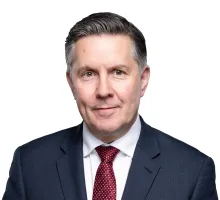
BEN FORDHAM, HOST: Mark Butler, the Federal Health Minister, is live on the line. Minister good morning to you.
MARK BUTLER, MINISTER FOR HEALTH AND AGEING, MINISTER FOR DISABILITY AND THE NDIS: Morning, Ben. That was quite an intro.
FORDHAM: Thank you very much for joining us. We appreciate it. Let’s kick off with Support at Home, is this turning into another NDIS?
BUTLER: I’m determined to make sure it doesn’t turn into another NDIS. I want the NDIS to be more like the aged care system, frankly, where people broadly can have confidence that the organisations, the companies providing services, are subject to strict quality controls, that the prices being charged have been looked over by a pricing authority. That’s all the things that a good social program should have. We have it in Medicare. We’ve traditionally had it in aged care. We don’t have it in the NDIS. You might have seen a story this morning that two-thirds of the NDIS plan managers, for example, are currently under review for fraud or non-compliance. We’re completely overhauling that system to make it more like a well-functioning social program.
But there’s no question there are some pretty serious issues that I’ve expressed really serious concern about in the aged care system right now around charging, and we’re determined to get them back under control.
FORDHAM: Alright, I’ll get to the charges in a moment. But you talk about the strict quality controls for Support at Home, but even some of the dodgy NDIS providers are looking at Support at Home and thinking, okay, this is another chance for us to make some money, because The Australian has reported in the last 24 hours that nine providers who’ve been previously fined by the NDIS regulator have been re-hired, and now they’re working in aged care. It’s good to crack down on the NDIS, but at the same time we’re rolling out the red carpet for the crooks to take advantage of another system.
BUTLER: Yeah, I saw that story, and I want to look through that list of nine. Some of them were big church organisations that have been operating in this area for a very long time. They may have been pulled up on some sort of non-compliance. Whether that was serious enough to exclude them entirely from a program is something I wanted to look into after seeing that story. But I do want to make sure, part of the reason why I wanted to take over the NDIS portfolio was to make sure that between healthcare and aged care and NDIS, there is more consistency around how we make sure that the people getting the benefit of that program are getting everything that they’re entitled to; proper pricing, proper control over the providers, making sure we screen the workers who are often going into people’s homes, the homes of people who are pretty frail, pretty vulnerable. Making sure the right people are doing that was all really the rationale for bringing these portfolios together, I don’t want to see people who are excluded from one program being able to jump into another.
FORDHAM: Okay, I know you’re saying Support at Home is going to be, I suppose, policed more than the NDIS was in the dark days of the NDIS. But if you have a look at Support at Home, it does appear to be heading in the same direction. Services like dressing, shaving and medication reminders have jumped by almost 50%. The price of a dozen pre-packaged meals for elder Aussies has gone from $88 to $264. In one case, seven smoothies that used to cost $20 is now $118. Transport for up to 4 kilometres has gone from $28 to $100. And from our listeners, Jan says: personal care to have a shower assistance is now $144 an hour, $152 on Saturday, $249 on a public holiday. Sally says: my hubby’s physio was $130 an hour, it’s now $220 an hour and $480 on a public holiday. So shouldn’t you have introduced the prices caps that you promised to introduce in July?
BUTLER: The problem with introducing, and I’ll come back to some of those pretty outrageous rip-off stories. The problem with introducing it in July we found was that the scheme had only been operating for by then seven months or so, and we didn’t really have enough information to set the price caps in the way in which we thought would give confidence to a new program. What I think is happening here is that when we came into government, people delivering and organisations delivering home care packages could charge as much as 35% of the package value as a so-called admin fee, or administrative fee. And we’ve gradually brought that down, first to 20, I think, and now it’s capped at 10%. For every $10 that an older Australian is receiving from taxpayers to fund their care at home, the provider can only take one of those dollars, or 10% as their admin fee, and we think that’s a more than reasonable amount to cover the cost of doing a business, running a business that provides home care. And I think you speak to, most business commentators, they would’ve thought that 10% is a pretty good return. Thirty-five was an outrageous, frankly -
FORDHAM: Sure, but I think most business commentators and commentators in general, Minister, would say if you want to control pricing, you introduce a price cap like the one you promised to introduce in July.
BUTLER: And we’re still committed to doing that. We just didn’t think that seven months of data, as we looked at it, was giving us a clear enough value. In the meantime, what we’re doing is making sure that the safety and quality commission for aged care that regulates this sector has got all the powers it needs to intervene when they see these rip-offs happening. They’re already doing it. They’re already ordering organisations to provide refunds when the price that’s been charged is clearly unreasonable. There are statutory obligations on these providers to be able to demonstrate that the price that they’re charging is reasonable and does reasonably reflect the cost of the good or the cost of the service. And we’re not going to stand by and see these providers essentially try and recoup the money they were making with a 35% admin fee by charging the sort of fees that you talked about, Ben. And we’ve -
FORDHAM: Okay, but to be fair to the providers, how are they to know what to charge when you haven’t set price caps? It’s a bit like pulling someone over who’s speeding and saying, you’re going too fast, and the driver says, I don’t know what the speed limit is because there are no signs.
BUTLER: You don’t have to be a rocket scientist to know if you’re buying smoothies for the sort of price you mentioned and then on-selling them for five times of the price.
FORDHAM: Alright.
BUTLER: Something’s not right. And what we also do -
FORDHAM: Well, let me do some rocket science with you. Minister, let me just jump in and do some -
BUTLER: Let me just finish. What we also do is we are publishing on a quarterly basis all of the prices that are being charged out in the sector. I’m particularly indicating what the average price for every service is. Now, that’s not only available to providers. It’s also available to older Australians and their advocacy groups so that they have a sense of what the average price for a particular service is out there in the sector, and what some of these rip-offs are.
FORDHAM: Okay. So, let’s do some rocket science now. You say you want providers to be reasonable with their pricing. So what is a reasonable price on a regular day for someone to do, say, one hour of cleaning or gardening?
BUTLER: I don’t have that dollar figure in my head, Ben, for every single service on every single day. Obviously, you’ve got to pay the wages. You’ve got to pay for the fact that these workers are travelling from home to home. It’s very different to services being provided in a facility where the person lives. We’ve said that travel has to be incorporated now into the price, rather than a separate charge. We think that will deliver better value to the people. I mean, some of these workers are doing a number of clients every single day. They’re, it’s pretty precarious work.
FORDHAM: Sure. But Minister, you can see what I’m asking here. If you aren't able to give us a- you know, and I'm not talking about public holidays or Sundays or anything. I'm just saying, what's a reasonable price on a regular day for a standard one-hour cleaning or gardening job?
BUTLER: I can tell you that would, that is published on a three-monthly basis. If someone wanted to know what a reasonable price was, they could go to the website and work out what the average price being charged is right.
FORDHAM: Right. What website do we go to? Do we go to Support at Home, do we?
BUTLER: I'll get the website to your producer. I don't have the website in my head, but they are published every month. Not only for providers to look at and check that the fees they're charging are in the ballpark of reasonableness, but also for providers, for older Australians themselves to look at and compare the bill that they've been given by their provider and see whether they're frankly paying above the odds.
FORDHAM: Okay, how many people are waiting to be assessed or waiting to receive a package?
BUTLER: The wait list is around a hundred thousand right now. That turns over pretty quickly. The wait times for the package have come down quite dramatically over the last ten months. The wait time to be assessed has come down even more sharply. But Ben, I'm going to be frank with you, the spike in demand for aged care we're seeing right now is something like we've never seen before. We've tripled the number of packages for people at home over the last several years. Tripled it, increased by 200%. But still, we're struggling to keep up with demand. And the reason for that, Ben, I think, is pretty obvious when you think about it. The baby boomers who were born, like my dad, when the soldiers were coming home in the mid-1940s, are all turning 80 right now, and that's really the age where people start to need aged care and much more healthcare than they might have needed in their younger years.
We're getting those wait times down. The packages are better packages than was the case twelve months ago. Instead of capping out at about $50,000 of value, the highest package is more like $80,000 or $90,000 of value. We're getting better packages. We've tripled the number, but we do have to get a handle on some of these things that are emerging around price rip-offs. I'm pretty clear in my head about that. I know you are, and your listeners are.
FORDHAM: Okay, we'll need those price caps pretty soon, though, because you're looking at what's happening at the moment. It's just going to keep on increasing and increasing until you put the caps in place. So we'll wait and find out when that's going to happen.
On another issue, you want to cut the private health insurance rebate for over 65s. It had initially been anticipated the changes would result in 44,000 elderly Aussies cancelling their cover, but the industry is saying that could blow out to eight times the original estimate. So, that's going to put an enormous strain on the public health system, Minister.
BUTLER: If that were to happen, it would. But it's not just the Commonwealth Government's modelling. As you say, maybe 44,000 people would drop out of a scheme that's 11,500,000. We also project that health insurance will continue to grow every year. The University of Melbourne has done independent modelling that thinks the impact would be even less than what we think as a Commonwealth Government. And then, yes, of course, you have the private health insurance industry doing its own modelling, but I've been around this game for a while, and I've seen industry groups put out modelling time and time again that is self-serving.
Now, I'm not sure whether it's still there, but only a few weeks ago, the private health insurance website still had modelling that they had put out in the public realm when we were means testing the health insurance rebate some years ago, that said that 1.6 million people would leave insurance, that 850,000 more people would be rolling up to public hospitals, and none of it happened. I've seen it in pharmacy where they -
FORDHAM: Alright, I take all of that on board. Let me just bring in the over 65s as opposed to the industry. What do you say to these Australians who worked hard their whole life? They've paid all of the taxes they're required to pay, and now they're being told we're taking this benefit away. What do you say directly to them, Minister?
BUTLER: I'm saying this is a hard decision we've had to make to find the money we have to find every single budget update now to put more money into aged care. Every dollar that we save on this measure is directed to more aged care beds, more aged care packages, and better care so that people, for example, don't have to contribute to the cost of their showering when they're receiving a package of care at home.
And what the decision would do if it passes the Parliament is basically return the design of the insurance rebate to its original design, which is that people don't get different rebates depending on age; they get rebates depending on their household income. If you have two households right next door to each other, one in their 50s and one in their late 60s, on exactly the same household income, they will receive the same taxpayer support for their private health insurance.
FORDHAM: Are you sorry that these over 65s are being forced to pay more? And I’ve only got 20 seconds until the news.
BUTLER: I wish I didn’t have to do it. I wish that I could just find new money to expand aged care services the way we’ve been doing it. It was $24 billion a year when I took this job five years ago. This year it’s $44 billion, an extra $20 billion every year. And still, there’s going to be more demand next year and the year after. These are some of the hard decisions sometimes that we have to make in the budget. I wish I didn’t have to, but we do.
FORDHAM: Okay. Let’s talk again, and maybe we can get a date soon on when the price caps are coming in for Support at Home. I've got to rush to the news, but thanks for joining us.
BUTLER: Pleasure, Ben.
Media event date:
Date published:
Media type:
Transcript
Audience:
General public
Minister: