
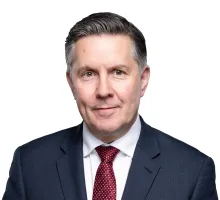
FIONA PHILLIPS, MEMBER FOR GILMORE: Hi everyone. I’m Fiona Phillips, the Federal Member for Gilmore, and we are here at the Nowra Medicare Urgent Care Clinic, and I’m really thrilled today to be here with Mark Butler, the Minister for Health; and for Adam Phillips, no relation, the CEO of Grand Pacific Health; and Prue, the CEO of COORDINARE.
It’s wonderful, we’ve just actually had a look in the Urgent Care Clinic, and 10,500 patients have now gone through the Nowra Medicare Urgent Care Clinic, which is just amazing. The demand for this urgent care service is really there, and it’s great that people can walk in. It is a free service, and it’s really been appreciated by the community.
I’ll hand over to Adam to talk a bit more about the clinic.
ADAM PHILLIPS, CEO OF GRAND PACIFIC HEALTH: Yeah, this is a very busy service. We’re seeing up to 50 people a day, and we have a great collaboration with the local health districts, the ED departments. So, patients are transferring between ED or the urgent care centre depending on what their needs are. And the connection is terrific, so it’s working out really well. Terrific for the community. And it’s a real multi-service, even with scanning as well, so X-rays and so forth.
MARK BUTLER, MINISTER FOR HEALTH AND AGEING, MINISTER FOR DISABILITY AND THE NDIS: Thanks, Fiona. Thanks, Adam. This is a really important part of our Strengthening Medicare agenda. Building 137 or opening 137 Medicare Urgent Care Clinics across the country now means that every year about two million Australians will go through these high-quality clinics, fully bulk billed, and take real pressure off our busy emergency departments. Alongside that, obviously, we were committed to turning around bulk billing. Bulk billing was in freefall when we came into government five years ago, and our investment in bulk billing is starting to produce really terrific results.
We put in place record investment last year, and just 12 months on, we're already halfway to the target we set for 2030. We've seen an increase of 6% in bulk billing just in 12 months, more than 10% for people who don't have the benefit of a concession card, and the increases are even bigger in regional communities like the South Coast, represented by Fiona Phillips. At the low point, bulk billing was about 77% in the electorate of Gilmore. It's now almost 89%, thanks to the investments that we've put in place. Which means that more people on the South Coast can go to the doctor whenever they feel they need to, rather than checking their wallet and seeing whether they can afford to.
Urgent Care Clinics, turning around bulk billing, training more doctors, cheaper medicines, these are all parts of our Strengthening Medicare agenda that help relieve the cost of living pressure on households, but also build a healthier Australia. Happy to take questions.
JOURNALIST: Minister Butler. The Australian Law Reform Committee’s final surrogacy report is due to be tabled today. Are you confident it can eliminate the patchwork of policies that exist across the country?
BUTLER: This is a really timely inquiry that the Law Reform Commission has been undertaking for some time now. We obviously haven't seen the report. I'm looking forward to receiving it. It's obviously commissioned by the Attorney General, but has some significant implications for the health portfolio, and I'll be looking at it very closely.
JOURNALIST: Queensland and the Northern Territory, they've already rejected the puberty blocker interim advice by the National Health and Medicine Research Council. I mean, do you think national consistency on this issue is even possible?
BUTLER: At the end of the day, state governments who run these clinics and employ the clinicians who deliver services to gender diverse and trans kids are going to make these decisions themselves. They're accountable to voters in their community, in this case, in Queensland and the Northern Territory government, and I fully respect their right to make these decisions. What I thought was important as the Federal Health Minister though was to ask our preeminent, health medical research body, the NHMRC, to review the evidence and develop clinical guidelines. They've been doing that work under the charter of the legislation for literally decades, and rather than have this very highly charged public debate driven and settled by opinion writers in our newspapers, I thought it was important that families and the community have the confidence that clinicians are using the most up-to-date, highest quality clinical guidelines.
Now, every state government will make their own decision about how they deliver services. My job as the Federal Health Minister was to provide them, and the broader community, the highest quality clinical guidelines that I hope they look at closely.
JOURNALIST: What about other Commonwealth-led solutions, though? Like, could the federal government fund private multidisciplinary services? You know, tie health funding to adherence with the NHMRC advice?
BUTLER: Some private services may well arise in jurisdictions that aren't delivering these services anymore. Queensland and the NT are the obvious ones. Up until now, these services pretty much exclusively have been provided by state government paediatric gender clinics, by clinicians employed by state governments. But if private clinics do arise, private services are providing care and support to young people, gender diverse young people, then I would expect very clearly that they align those services with these clinical guidelines. I don't want to see any private prescribing behaviour arise that does not align very clearly with these clinical guidelines. And if I do see that, then we reserve the right to take some action.
JOURNALIST: I want to take you to aged care now, sorry, to home care now. On home care providers forced to refund for overcharging, do you need to introduce further disincentives to, and penalties attached to that sort of behaviour?
BUTLER: Yeah, we'll be talking to the commission to make sure that they have the powers and the resources they need to protect older Australians from being ripped off by providers. There have been some pretty shocking stories about providers charging older Australians way above the odds for the value of the good or the service that they're providing under a taxpayer-funded Support at Home package, and I'm not going to put up with it. I don't think Australians generally expect the government to put up with it.
Now, this is a relatively new program. We're already seeing the Safety and Quality Commission take action against providers to force refunds where they're charging over the odds. But we'll continue to do everything we can and everything necessary to protect Australians or older Australians from rip-offs.
JOURNALIST: Some shocking stories in that sector. Was this clawback though only instigated after that media reporting of those stories? And if so, can the sector be trusted?
BUTLER: No, we've been doing that work since the new Support at Home program started about twelve months ago. It takes some time for a very new program to settle down in terms of the prices being charged out there. But there clearly are some operators charging above the odds, and I expect them to be pulled into line, and for older Australians to be refunded.
JOURNALIST: A group of people in New South Wales have been easily able to fake NDIS invoices and backdate them in order to claim millions of dollars in fraudulent billings. Is the current system too easily manipulated?
BUTLER: It's pretty clear that when we came to government, the National Audit Office said there were essentially no controls on fraud in the scheme, a scheme that now costs more than $50 billion every single year. Right now, we are every day checking the same number of NDIS invoices that previously were checked in an entire year. We're moving to a digital payment system that will hugely improve integrity. We've given the NDIS Commission new powers to crack down on operators who are engaging in some of this false and misleading advertising about the services that they're able to provide. We started from a very low base when we came to government. There was essentially no control on fraud, and this had become a honeypot for shonks and for crooks, and in some cases for serious organised crime, who found this a very easy way to make money, and we're determined to correct that, to make sure that we crack down on it.
JOURNALIST: I'm sure you've heard the concerns from people, especially here in this community, about changes to insurance policies that will decrease access to home births, mainly because the compulsory second midwife now needs to be endorsed. Do you accept that may be a consequence of this new scheme, and are you considering any changes in response to this feedback?
BUTLER: We've been working with private practising midwives, particularly those who deliver home birthing over the last little while, and with the College of Midwives. Just to recap; every health professional is required to hold professional indemnity insurance for very obvious reasons. And for years now, probably 15 years, privately practising midwives delivering home birth services have been a group, the only group that have been exempted from that requirement, because it's been hard to find an insurance product to cover them. Now, an insurance product has been developed to cover them, and 18 months ago, all health ministers decided that it was time to remove that exemption and bring those privately practising midwives into line with every other health professional in the country, i.e., a requirement to hold proper indemnity insurance.
The sector was informed about that very clearly 18 months ago when that decision was taken. It takes effect on 1 January 2027. But obviously we're determined, and I know MPs are talking to me about the fact that this may impact people's sense of choice, particularly mums' sense of choice about the way in which they give birth. Obviously, we want to balance the question of choice with the need to ensure safety. And insurance arrangements are in place for these professionals, as they are for every other single health professional in the country. And we'll keep talking to them about ways in which we can get that balance right.
JOURNALIST: And just to be specific about the safety concerns that are being articulated here in the Shoalhaven, we've heard from women here who have said that they may consider having a free birth due to the lack of midwife services that may become the reality if this insurance policy takes hold next year. What do you say to that?
BUTLER: Obviously I'm concerned about that risk. I'm concerned about that not being a safe way in which to give birth, particularly in the case of complications. We want to avoid that as much as possible, and I know this is an issue more in regional communities than it is in the big cities. Ultimately, these questions of endorsement of midwives are a matter for the relevant professional board, the Nursing and Midwifery Board. They're looking at those arrangements right now, particularly the hours of work that a midwife would have to have under their belt before they were eligible for endorsement. That’s probably a matter for the relevant professional board, not for governments. But I accept this is raising some anxiety in the community. We're doing everything we can to resolve that anxiety and to get that balance right between choice and safety on the other hand.
JOURNALIST: And I know you're probably aware that the state's Health Minister is one of those people that's also raised concerns this could have perverse outcomes. Have you met with him? Are you looking to discuss these reforms with Ryan Park?
BUTLER: Yeah. Of course, Ryan Park was at the meeting 18 months ago. He's chair of the health ministers' group. He was at that meeting that resolved that now was the time to bring midwives into line with every other health professional in terms of the requirement to hold insurance. Ryan Park was obviously a part of that decision. But he, like other health ministers, other MPs, like I'm sure Fiona, are hearing that desire, that deep desire, not just from midwives but from mums, most importantly, pregnant mums, about their desire to have as many choices open to them as possible. But obviously, like everyone in the community, they want those choices to be safe.
JOURNALIST: Now, back to the Urgent Care Clinic. There have been a number of occasions in recent months when the Urgent Care Clinic has been closed. What's brought that about?
BUTLER: I might ask Adam to respond to that, but can I just say that is not at all unusual, as we've been opening what are now 137 Urgent Care Clinics. This is a new model of care. They are new services. They're open seven days a week, and even in the big cities, some of them are taking a while to get their staffing compliment fully up and running. Some of them take a little while to get their imaging services in place and accredited by the relevant accrediting body. But ultimately, they get there. We're operating very well across the network of 137. There are clear contractual requirements for operators around staffing and opening hours. But as government, we recognise that in the real world, that can take a little while to get fully up and running for a service that, in this case, I think has only been operating for eight months. But Adam may want to say something particular about this one.
ADAM PHILLIPS: We've actually been doing really well as far as recruiting GPs into the Nowra urgent care centre. In fact, a lot of GPs have shown an interest in working part-time in our services, and they've really enjoyed working and having experience. From time to time, of course, certain GPs have personal matters in their lives that, all of a sudden, you can't come to work for various reasons, and so we don't have the backup of having GPs sort of coming on tap should something happen with some of our GPs. But we've actually recruited really well here, and in fact, I'm surprised how well we have recruited. So we're feeling very confident in regards to the level of servicing that we're doing for the Nowra community.
JOURNALIST: So, how many GPs are actually working through the Urgent Care Clinic? Are we able to get numbers?
ADAM PHILLIPS: Yeah, I'll have to come back to you on the exact numbers, but it's more than what I expected.
JOURNALIST: Okay, are there enough doctors in the local community? And given that we're expanding the hospital, we've, you know, there's always waiting lists for other GP clinics, are there enough doctors active within the Shoalhaven?
ADAM PHILLIPS: Well, the great news is that, because of the new hospital, it is attracting quite a large medical workforce to the Nowra region. So it's a very positive thing. In fact, we're collaborating really well with the local health district in sharing resources between the two services as well. And so our connection with the local health district and bringing in medical workforce into the Nowra community has been going really well for this community. In actual fact, it's these developments that help grow and bring more medical workforce than what the Nowra community has ever had before. And because of the connection with the local health district and the Urgent Care Clinic, it's more attractive for people that are working within medicine to work between the two services as well. So it's been a very positive change for the community.
JOURNALIST: I have some questions for Fiona, if that’s okay?
FIONA PHILLIPS: Yeah, sure.
JOURNALIST: Look, thank you. There's been a significant rollout of Urgent Care Clinics across your electorate. Are you happy with mental health services? Would you like to see more Medicare mental health services provided as part of the acceleration of what's already happening in this space with bulk billing?
FIONA PHILLIPS: Yeah. We've already seen, for example, in Gilmore, we've gone from 21 bulk billing GP clinics. We're now up to 35 in one year. And particularly pleasing, I think, as well, we're seeing a lot of those in our smaller villages. It means that quite often that people don't have to go outside of their village to be able to see a GP for free. That's really wonderful. I think one of the proudest things, as well, that I've really been able to achieve in government is our Medicare Mental Health Hub that we have in Nowra, which is also going to be expanded to a full Medicare Mental Health Centre, and that is just fantastic. That is a walk-in service for people with mental health conditions, so that is fantastic. It's similar to the same one that is now operating in Moruya in the Gilmore electorate, we already have a full Medicare Mental Health Centre in Moruya. They are significant advancements. We haven't seen that type of investment in mental health by the federal government here before.
When you complement that with our Urgent Care Clinic and many other mental health services that we've established locally, like MyRecovery, which is here locally but provides services around the region, and that's for more moderate to complex mental health conditions. We've got a number of services locally, and yeah, my next thing I'm looking forward to is the expansion of the Nowra clinic to be a full Medicare Mental Health Centre.
JOURNALIST: Yeah, and the expansion of mental health services here at the Shoalhaven Memorial Hospital, that's been hamstrung by a lack of trained psychiatrists, which is an issue across the state. Do you foresee that being something that will come up in this future expansion that we're talking about?
FIONA PHILLIPS: Look, I think so. But I think what Adam said as well is that there's been such an investment in health right across this region, not just here at Nowra, but all the way. We've got a new hospital being built at Moruya, one up at Shellharbour. And I visited, we visited a local GP service here yesterday, and they're providing a fantastic service to the local community. I visited another GP service, for example, in Moruya just the week before last, where they're training five registrars. There's so much training that is going in to support local GPs. We've got the University of Wollongong Shoalhaven campus, where we've now for the first time got rural end-to-end medical training. That means we're training more local GPs or more doctors locally, and we're training more as GPs. And we know if we do that, we train more in the regions; they're more likely to stay in the regions, so we're definitely seeing that. So there's a whole lot of things going on here to support the pathway for more medical staff in general across the region.
JOURNALIST: So it's not just built it and they will come, it's a, you're hoping that this local-led training initiatives will see people stay here and actually join the workforce?
FIONA PHILLIPS: Yeah, for sure. And we want to have the, obviously have the health infrastructure that attracts them to be here, and not just for the workers, but for their families as well. And so that's why things in the local community are so important, because we want to make an attractive place for people to come and work, stay, and live.
Media event date:
Date published:
Media type:
Transcript
Audience:
General public
Minister: