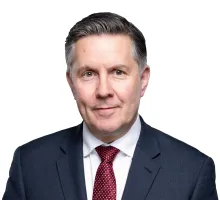
MARK BUTLER, MINISTER FOR HEALTH AND AGEING, MINISTER FOR DISABILITY AND THE NDIS: Thanks for coming along today. I'm joined by the Assistant Minister for Customs, Julian Hill. I want to thank him for being in Adelaide today as well.
Smoking is still the most significant public health challenge Australia faces. It's the biggest cause of preventable death by a fair distance. Every single day, on average, somewhere between 50 and 70 Australians lose their life because of complications caused by smoking. We've known this for decades. Australia, for more than 50 years, has had a concerted effort to drive down the rate particularly of daily smoking, and we've had enormous success in doing that. The trends and the data have been tracked for a number of decades now by the Australian Institute for Health and Welfare. This is a statutory authority established about 35 years ago at a Commonwealth level that has responsibility for measuring a whole range of different elements of our health and our welfare systems. It is universally recognised as the authoritative source in this area, particularly around smoking trends. Over the last 24 hours, the Institute has released its latest data on smoking, and it shows that daily smoking among adults has dropped to the lowest level ever, about 5.6 per cent, which is not far off our 2030 target of daily smoking among adults getting down to 5 per cent. This is a significant reduction on the latest report that was from 2022/2023, which showed then that smoking rates were a little over 8 per cent. This means that Australia now has some of the lowest smoking rates anywhere in the developed world, and as I say, that is the product of a concerted effort over many, many decades to drive down those rates of smoking and to improve the health of as many Australians as possible.
The fact that Australians are continuing to quit shouldn't be of any surprise. We know from research conducted over many years that well more than 90 per cent of Australians who smoke want to quit. We also know that nicotine is one of the most addictive products we have. So they need help. They need support to make that a reality. This government has been expanding the supports in place for Australians who do smoke but who want to kick their habit. We put in place new digital apps that help them do that. The My Buddy Quit app is being downloaded at record rates. The download rates last year were double the previous year. The download rates this year again have doubled, showing that more Australians who smoke want to access these types of supports. Prescriptions for nicotine replacement therapy have increased every single year while we've been in government, in spite of the fact that the total pool of Australian smokers has been declining at the same time.
There are a range of other supports that Australians who do smoke have been accessing at record levels. It should be no surprise really that Australians are continuing that downward trajectory in daily smoking rates, now down a little over 5 per cent, because they know the risks and they know that there are now supports in place from their government to help them kick the habit.
We also know though that there are some really disturbing trends in this market. Julian will talk about the law and order issues associated with the illicit market, I've been pretty clear that I've long been concerned about the risk to our most important public health program posed by the wide availability of cheap illicit cigarettes. I'll let Julian say some words about that.
We're also concerned though from the latest Institute report about a significant increase in use of nicotine pouches. Industry is marketing a wide array of different nicotine products, particularly to young people. I've talked over the last several years about the concerns I have about vaping in particular. The Institute report today has some very reassuring data about vaping rates. That reflects a range of other pieces of evidence that show that particularly the rates of vaping among teenage Australians is starting to reduce after years of escalating at pretty alarming rates. That has been a very significant positive.
This use of nicotine pouches has climbed by a number of that, by a multiple over the last several years. We're putting in place some measures to close some loopholes in terms of legal access to nicotine pouches, but also I know this has been a really significant part of Julian's work as well.
I'm going to ask Julian to say a few words about the enforcement issues associated with these illicit markets, and then happy to take questions.
JULIAN HILL, ASSISTANT MINISTER FOR CITIZENSHIP, CUSTOMS AND MULTICULTURAL AFFAIRS: Got a few facts and figures. Firstly, can I say I really welcome the progress that we made in driving down adult smoking rates to amongst the lowest in the developed world, and particularly just want to pay tribute to Mark for his leadership. You don't always get a lot of shout-outs, but it was your work and leadership and determination that drove through the vaping legislation and reforms about three, four years ago Just imagine a horrible alternative universe where the National Party had their way and wanted to see vaping legalised and rolled out across the country, condemning the next generation to the scourge of nicotine addiction. I say very clearly, it's not the Labor Party that takes donations from big tobacco, but the same can't be said of the Coalition.
I want to be very clear on the law enforcement front. There is no surrender of our nation's health policy to organised crime. There's no back-down, no backsliding, no surrender in the fight against organised crime and illicit tobacco. I'll just give you a bit of an enforcement update. So, the government, since early 2024, has committed over $365 million to the fight against illegal tobacco. About 98 million of that is now flowing to the states and territories to support their important work.
We think about this stuff in three ways, pre-border, at-border, and post-border. So pre-border, the best container of illegal tobacco and vapes, the best shipload, is one that never arrives on Australian shores. The work of Border Force has disrupted over the last year around 27 tonnes of the stuff from never getting to a Australia because of our ramped-up intelligence partnerships with partners overseas across the world.
At-border, I couldn't be prouder of the work of the Australian Border Force over the last 12 months. Through Operation Printwall from December, over the following four months, they seized over a kiloton, that's over a 1000 tonnes of illegal tobacco at the border. They had a record month in March, a record week in March, a record month in April, a record week in April. But the truth is no country can stop this at the border alone, although we've seen dialled-up enforcement.
It's post-border that I just want to talk a little about, because that's where we can see the biggest gains, and it's the most urgent area for action. Firstly, we need to work, and we are working with the states and territories, to shut the illegal shops. That work is urgent and we do need more and we're partnering more, particularly with the big jurisdictions. I want to praise South Australia. I met with the Minister for Police, Consumer and Business Services, Minister Brown, this morning for the good work which they've done leading the nation along with Queensland. South Australia has closed more than 320 illegal shops, including a dozen over the last week here in central Adelaide. Together, the states and territories have now closed over a thousand of these illegal shops. Most of those closures in Queensland and South Australia. It's incredibly important.
I just want to be very clear. This is not a victimless crime. These illegal shops are selling an illegal product trying to get our kids hooked on nicotine. Now, Australians wouldn't put up with a meth lab in the middle of their strip shopping centre run by organised criminals, and neither should they put up with criminals running tobacco shops. They're making billions of dollars of profits now. Organised crime are making more money from illegal tobacco than meth and ecstasy, than heroin, combined. They use those profits to reinvest in other criminal activities. We've seen in some states and territories crime as a service, paying young kids to commit violent crimes. The profits are coming from illegal tobacco. It's not fair to the mum and dad small retailers next door who are following the law, trying to do the right thing, and it risks unwinding these hard-line health gains.
We also need to go after the crooks and the profits. And so, the Federal Police, working with state and territory counterparts, have now seized or restrained almost $50 million of assets, taking their cash, their houses, their cars, their boats, their toys. Hit them where it hurts. AUSTRAC, the nation's financial regulator, now has new powers. They suspended and debanked nearly a thousand bank accounts and service points and that will continue to grow, cutting off the money flow, making it harder for the crooks to move around their profits. There's now over a hundred persons of interest through the National Disruption Group. That's all the states and territories and Commonwealth agencies working together now. It's been up and running and led by Border Force. They're mapping the criminal networks and investigating over a 100 persons of interest who are key to this trade. We've also put through AUSTRAC the financial service providers on notice. The government's new anti-money laundering laws from 1 July have extended to cover lawyers, accountants and professional advisers. Someone's got to be setting up the bank accounts. Someone's got to be setting up the ABNs and the companies that allow the crooks to move the money around, and AUSTRAC can now go after them with the new powers.
Final couple of things I'll just say. What Mark announced then – and great work by the Health Department, the TGA and the health portfolio – to close the last loopholes and ban nicotine pouches, people as of next week will no longer be able to get a prescription and import them, is really important. It's important for health, but it's also important for Customs and Border Force, because they're tying up a lot of resources for the officers trying to figure out when these boxes of this stuff arrive at the border, is it legal or is it illegal? As of next week, when they find it at the border, they'll destroy it. So very clearly, to Australians, you can no longer order nicotine pouches online and get them through the border. They'll be seized and destroyed.
The very final thing I just want to say. This feels big, and taking on organised crime is a tough endeavour. The states, the territories, and the Commonwealth are working together, but the community can play its part. I want people to understand that we are making progress. There's encouraging signs. Here in South Australia, they've been seeing a rise in the price of illegal tobacco, showing that we're having an impact. In Queensland, we’ve seen the price of vapes spike towards $60 to $80 a vape, which shows we’re choking supply and driving people away from that trade. We’ve got early positive data from Queensland, showing that where the states and territories crack down, we see the legal sales starting to rise and a spike in people then wanting to quit. These are all positive signs.
The community can play its part. If you see a shop around the country selling illegal products or you suspect it, you can call Crime Stoppers, you can call Boarder Watch, you can report it to your state and territory authorities. If you see websites, if you see social media posts, then let’s get ahead of that, phone it in. The TGA and the Tobacco Commissioner have taken down over 8500 social media posts and over 400 websites to disrupt this trade and make sure they can't just move it online. Australians can play their part and we can turn this around.
JOURNALIST: Minister, you're not committed to removing the tobacco excise and there are a lot of measures going on to reduce illicit tobacco, but it is still happening. What's the silver bullet here to finally end the illicit tobacco trade?
BUTLER: First, I want to say that the public health effort of reducing smoking rates, particularly daily smoking rates among adults, continues to be a success. We continue to lead the world in that. I know there's been a lot of debate over recent months about whether or not the explosion in the illicit tobacco market would be hampering our broader public health campaign. This authoritative data that we’ve seen today does confirm that Australians are continuing to quit in record numbers. Hundreds of thousands of Australians have succeeded in kicking the habit since the Institute last reported on these data. There's no question that this is a really significant law and order issue. It also has public health elements to it. I am still concerned about the health challenges that are posed by the significant illicit tobacco market. The availability of cheaper cigarettes does provide a drag on the reasons why people might choose to quit smoking, so I am still concerned about it. I think these data do confirm that our public health campaign more broadly is still succeeding.
There is no silver bullet, as Julian has said, in dealing with such a broad concerted effort by organised criminal gangs to make money out of the market like this. We need Commonwealth efforts partnered with state government efforts. We need the community to lean in in the way that Julian talked about. There is a Senate inquiry, a parliamentary inquiry going on right now that's due to report in coming weeks. We look forward to that. If that's got some ideas about additional efforts that we can make, we're all ears because we are utterly committed to continuing the success of our 50-year-long public health campaign for the nation to kick the habit. We're also determined to remove this lucrative source of revenue from some of the worst criminal elements in our country.
JOURNALIST: What do you make of the contrast between this data that we’ve seen today and ABS data that suggests that tobacco use is actually going up?
BUTLER: ABS has been tracking wastewater, and it's done some experimental work in trying to extrapolate from that what people are doing in terms of nicotine consumption between cigarettes, nicotine pouches and vapes. I want to stress this is the authoritative source on smoking rates in the country. The ABS would accept that. They partner with the institute, recognising the institute's expertise in measuring health issues like this.
The ABS has done some work in publication of wastewater analysis, but I think a range of people have made the point that there is no ability to distinguish in those samples between nicotine that’s flowing through nicotine pouch consumption, vapes or cigarettes. We know that nicotine pouches have very high levels of nicotine. We know that vapes increasingly are having even higher levels of nicotine than we saw only a couple of years ago. I've also got advice that illegal cigarettes tend to have higher levels of nicotine than legal cigarettes. The switch from legal cigarettes to the illicit product would be causing a spike in nicotine per cigarette smoked as well. There has been, I know, a lot of discussion around these wastewater samples that track nicotine rates. There is an increase in nicotine that I think reflects those things that I’ve just said. I want to be really clear about this – the authoritative source of data and evidence on daily smoking rates which is the key metric in our public health campaign is this institute report. It tracks 17,500 people, it tracked them over several months. It's a survey that has been going on now for decades and recognised by everyone in this space as the authoritative source.
HILL: The ABS work around wastewater, as Mark said, measures nicotine. Just to give you an illustration, a vape these days can have the equivalent nicotine to about nine packets of cigarettes. We’ve seen similar trends in other countries, including the United States, that we see a rise in vape use and the nicotine pouches. You see an increase in the amount of nicotine in wastewater, which doesn't necessarily mean there's an increase in tobacco consumption.
Just on the exercise, also to step it through, Australians are not stupid, they can do maths, right? In Cambodia, you can produce a packet of illegal cigarettes for around 30 to 40 cents a packet. You can buy them for about a dollar. And so organised criminals can flood national borders, and they're doing this to every country regardless of excise policy, and they only need to get a bit of a percentage through and they can still make money. There’s no ideology in this, as Mark said. We're open to evidence. We'll look at the Senate inquiry and so on. There's no evidence that's been presented that there's a reasonable level of excise reduction that would resolve the issue. There's no magic bullet.
To take it to the extreme, even if you wiped out all tobacco excise, the illegal products would still be cheaper, and the states and territories would still have to go and close the shops. The majority of people running this argument are vested interests from big tobacco, people who are not control experts or, in some cases, state and territory authorities seeking to avoid their own political constitutional responsibilities to go and close the illegal shops.
JOURNALIST: In your statement, you said there was quite a big emphasis on law enforcement. But do you think there needs to be stronger preventative measures that are going to target changing Australians’ behaviours?
BUTLER: When we came to government a few years ago, we found a tobacco control landscape that hadn't really shifted in a decade. Nothing had been done under the previous government except to see those record increases in excise. To be clear, under the term of the last government, tobacco excise increased by 215 per cent. While since we've in government, that increase is 30-something percent, so 215 per cent. None of that money was reinvested in tobacco control campaigns. There was not a single community wide information campaign about the dangers of tobacco smoking under the last government. We changed that. We've put in place tens of millions of dollars to educate Australians, particularly young Australians, about the risks associated with smoking and with vaping. We know from the evaluations, the formal independent evaluations of those campaigns, they are changing attitudes and they are changing behaviours. That's had an impact.
We've also significantly lifted resources to well-established services Quitline. As I said earlier, we've established the My Buddy Quit app so that people are able to get digital support on their phone to resist the urges and deal with all the other challenges, including this very difficult habit. We're seeing that work. The downloads of these apps are doubling every year. Prescriptions of nicotine replacement therapy is increasing year on year, despite of the fact the pool of smokers is shrinking at the same time. Calls to Quitline services have been increasing. As Julian said, they're spiking at the time where there is a bit more public attention around the illicit tobacco market.
We are leaning it on prevention. We recognise that this is a really hard habit to kick. Nicotine is one of the most addictive products known to society. If you've got an ingrained habit, we recognise our responsibility to help you as much as possible to kick that habit, and we've been meeting that responsibility over the last few years.
JOURNALIST: Minister, what has Special Envoy Pablo Kang achieved since being appointed in February this year?
BUTLER: There's been a range of ways in which we have leaned in to try and make sure there's some accountability and some transparency for these awful tragedies that took the lives of Holly and Bianca at just 19 years of age, and four other foreign nationals at the same time. It was not just a tragedy, it was an absolute travesty, and someone needs to be held accountable. As I've said over the course of today, those representations have been at the highest levels. The Prime Minister has spoken to his counterpart. The Foreign Minister Penny Wong has spoken to her counterpart a number of times. We appointed a special envoy to ensure that on an ongoing basis, the Lao authorities could not have been clearer about Australia's expectations here, the Australian Government's expectations and broader Australian community’s expectations.
I think everyone's devastated about the reports coming out of Laos that there will not be a prosecution at a level that I think we'd all expected. The Lao ambassador has been called in to the Department of Foreign Affairs this morning to reiterate our deep concerns about this. The special envoy has been dispatched again to Laos today to reiterate and reaffirm our expectations around accountability here. The Foreign Minister, Penny Wong, will see her equivalent, her counterpart at the ASEAN meeting next week and will again take the opportunity to reaffirm this. But right now, I've got to say I think all of our thoughts are particularly with the parents of these two very young women, who were going through a well-established rite of passage. When parents wave their young adult children off for that rite of passage at the airport, as so many have done over so many years, we expect them to be able to come home safely. We expect if there's a misadventure and a tragedy like this, that someone will be held accountable. We expect from the Laos authorities better than this.
JOURNALIST: So how far are you willing to go to get justice here? Would the government considering pulling aid to Laos if the right outcome isn’t achieved?
BUTLER: I've said a couple of things. We're waiting for formal announcements about the position on this from the Laos authorities over the course of today, as we understand it. We've got some indication, but we are waiting for the formal announcement, and we'll have more to say after we've considered that. I've also said that our foreign aid efforts in our region are obviously directed at trying to lift people out of what is sometimes pretty extreme poverty, including in countries like Laos, but also to lift standards around governance and transparency and accountability. For example, some of the foreign aid to Laos right now is spent on initiatives to prevent methanol poisonings of the type that took these two young Australian women at such a young age. This is a programme across our region that's intended to lift standards of accountability and governance and transparency in the way that was found wanting, has been found wanting in this case. But as I said, we'll listen to the formal announcement. We'll have more to say in due course about this. The Laos authorities, though, could not be clearer the Australian Government's expectations around accountability here. I'm sure the governments of the other four foreign nationals who've lost their lives through the same event from the UK, America and elsewhere will be making exactly the same representations to the Laos authorities right now.
JOURNALIST: You mentioned the foreign minister. Will you- do you think the Prime Minister should also approach his counterpart to protest the charges?
BUTLER: Yeah, well, as I said, the Prime Minister has spoken to his counterpart previously about this, that is how seriously we take this after tragedy and travesty, and how serious our expectations around accountability have been as has been. As I said, we'll have more to say about our response to this, beyond the actions we've already taken out of the course of this morning to call the ambassador in, to dispatch the special envoy, to reiterate our concerns. We'll have more to say about this in due course.
JOURNALIST: Just on Pauline Hanson's appearance on the Tommy Robinson podcast, what's your response to her claim that Muslim migrants are among those taking advantage of the NDIS?
BUTLER: It's baseless. If she's got some data that I, as the Minister for Disabilities and the Minister for the NDIS have never seen, I'd like to see it. Frankly, I suspect it doesn’t exist. I suspect it's a baseless smear, because the evidence I have doesn't suggest any change in the proportion of people, by way of nationality or religious background, in terms of their enrolment with the NDIS. I think this is nothing more or less than a smear.
JOURNALIST: Should she apologise for meeting with Mr Robinson, a convicted criminal, during this two-week UK trip?
BUTLER: I think she's got to explain how that advances the interests of the Australian people. She's spent an extended period of time now on the other side of the world, including spending time and engaging in a podcast with this convicted criminal, a convicted criminal who has been disowned by a number of senior figures on the right, including people like Andrew Bolt here in Australia, Nigel Farage over there in the UK. It's for her, really, to explain how this is advancing the interests of the Australian people at a challenging time. I can tell you the work of the government, while Ms Hanson is on the other side of the world, is focused on relieving cost of living pressures, on delivering better services for the Australian community. That's what we see the job of parliamentarians as being. But I know, Julian, you might want to add some remarks to this as the Assistant Minister of Multicultural Affairs.
HILL: You hesitate to get too sucked into Pauline Hanson’s antics with right-wing podcaster and a convicted criminal. I'll just make a couple of points to Australians, because there are also things that were said in that podcast that are pretty offensive to a lot of Australians. For people who are curious about One Nation, I encourage us not to get sucked into the culture wars. Senator Hanson can explain why she thought it was a good use of her time as a paid Australian senator to be on the other side of the world having this conversation with a convicted criminal. For people who are curious, focus on what One Nation and Senator Hanson have done over the last 30 years. Don't get sucked in by the social media or the cute videos or the culture wars. At every point, when Senator Hanson has the opportunity to make a difference, she votes to cut people's wages, to oppose wage rises, to make it easy to sack people. Her latest crusade from the press club to abolish the Health Department, abolish the Education Department, get rid of paid parental leave and go after child care. She's no friend of working Australians, but people can draw their own conclusions if they choose to look at the actual words that she used, and I think they'll see what she's really about.
JOURNALIST: In the interview she said the end of the White Australia policy was the beginning of Australia's issues with migration. What are your thoughts on that?
BUTLER: The abolition of the White Australia policy was one of the great advances in our community and was, up until I think this interview, a source of political consensus across the political spectrum and has been for 50 years. So again, it’s one thing for Ms Hanson to say something like that on the other side of the world, it will be for her to explain here in Australia how that is going to advance the interests of Australian households.
JOURNALIST: Minister, Telstra has conceded that last week's software update was due to human error. Is that good enough for Australia's most largest and relied upon telco?
BUTLER: I think the government, from the Prime Minister to the Minister, has made it really clear that Telstra's got to account for this significant outage. There is an investigation underway by ACMA, the relevant statutory authority here, and we want to let that investigation take its course. There's a Senate inquiry, which I think Telstra is cooperating with fully, and that will do its work as well. The government remains in a position that it's important that Telstra accounts for this significant average. It had a very significant impact on the community very broadly, and I guess we're going to let those investigations and inquiries run their courses.
JOURNALIST: The Greens have pushed that they will introduce reforms to make telcos accountable to produce a reliable service. Is that something you see the government supporting?
BUTLER: Our government's acted very significantly in response to the Optus outage some time ago, particularly to ensure that there is as much confidence as possibly can be around the triple-0 system. Very quick welfare checks, which we saw in this outage, we didn't see as much in relation to the Optus outage. That change is because of actions that Minister Wells and the government have taken. We’re always open, and I’m sure the Minister is always open, to good ideas about how the community can have the fullest possible confidence in these telecommunications systems, which underpins so much of our lives today. But as I said, there's an authority inquiry underway, a Senate inquiry underway. We're going to let them run their course and assess the outcomes and annual recommendations that flow from them.
JOURNALIST: On another matter, overnight we've seen confirmation that life-changing medications to treat MS will remain subsidised for Australians. Would you say that pressure from the US Government is behind the recent string of pricing disputes with global drug makers?
BUTLER: I've made it clear that the pricing environment for medicine is quite dynamic right now. That's largely being driven by changes in the US pricing system, given how important the US market is to the global pharmaceutical industry. It's not the only element though, there are reference pricing changes being made by other significant players in the world market, including China for example. It's hard to say that one particular dynamic is driving any particular change here. I think the important thing, though, is to say first of all that we have secured these really important MS medicines on the PBS, at a time when I think people were really anxious and worried that they might be ripped out of the PBS very, very soon. We've secured them on the PBS. I think it's really important that the advisory committee for our PBS now undertake a broader review about MS medicines. This is a broad landscape, rather than thinking about this medicine by medicine, I think it's time we, for MS patients, their representatives through MS Australia, neurologists who play such a critical role in this area, are able to work with the Pharmaceutical Benefits Advisory Committee to provide us with some global advice, really, some broad advice, about the best medicinal response to this condition, rather than having to play whack-a-mole with particular medicines. I’m really glad that the advisory committee did this work quickly after we requested them to do it. I’m very grateful for the cooperation from patient groups, particularly MS Australia, from a number of neurologists who I know participated in this. I look forward to a very positive outcome for MS patients and their community in the future.
Thanks everyone.
Media event date:
Date published:
Media type:
Transcript
Audience:
General public
Minister: