
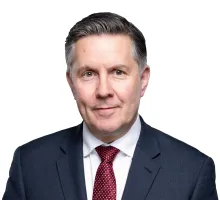
MARK BUTLER, MINISTER FOR HEALTH AND AGEING, MINISTER FOR DISABILITY AND THE NDIS: I’m so delighted to be here at MND Australia’s national conference. They’ve been here for a couple of days. People with lived experience, clinicians, clinician researchers, patient advocates, MND Australia just does such a terrific job frankly, fearlessly, relentlessly talking to governments and talking to the community about the particular, in ways unique challenges that people living with MND and their loved ones face. This is the fastest acting of all of the neurodegenerative diseases that the community has to deal with. And in a year where we lost Neale Daniher some months ago, and in a week where Jai Arrow stepped onto the field to record his hundredth game with the South Sydney Rabbitohs, community awareness and community solidarity with the almost 3,000 Australians living with MND and their families and friends and loved ones, I think, is at a real high point. And not just MND Australia, but the Australian community in its broadest possible sense wants to see us do better and find new ways to battle what Neale used to call the beast.
Part of that, I’m only here to talk about one element, and that is the medicines that we can list on the PBS. As I said in this conference earlier, we are lucky to be living in this turbo-charged period of discovery that’s bringing new medicines onto the market to treat conditions that not too many years ago were thought to be untreatable, or certainly incurable. And today, we add another medicine to the PBS to provide relief, to slow the progression of MND for a relatively small patient group in the MND population, a medicine called Qalsody. And I’m delighted that we’ve been able to do that effective from 1 October. It will provide significant relief to the, we think, 70 or so patients every year who’ll be able to access it. They have a particular genetic mutation, a particular subtype of ALS, the most common form of MND.
But without the PBS listing, it would cost patients about $28,000 every single script. It will now, from 1 October, be available at the just PBS price of $25. This follows the listing of another drug on the PBS yes last year, Edaravone, which is more broadly based, probably impacts almost 400 patients, and drugs that are already on the PBS as well. This is a huge step forward. But as the advocates at MND Australia, FightMND and other groups and individuals and families tell us, that is good, but it’s not a cure. And we've got to continue this fight, and we've got to continue to back our amazing researchers to learn more about this disease to be able to track exactly where it is in the country and how it's progressing so that one day, we can go beyond these medicines, as highly effective as they are, to find something that is truly curative.
I’m going to hand over to the wonderful Clare, who is the CEO of MND Australia. We’ve got David Schultz, a neurologist who treats patients with MND. We've got Luke, who’s been generous enough to talk about his experience with MND and has an experience with this particular medicine. And then Alice, representing Biogen, the pharmaceutical company that’s developed Qalsody. So Clare, over to you.
CLARE SULLIVAN, CEO, MND AUSTRALIA: Thank you, Mark. Today it is quite remarkable to see such a strong investment from the Australian Government in a medicine that is significantly improving the lives of people living with MND. Biogen have been working on Qalsody for almost 15 years, and is a medicine that demonstrates there is hope, there are treatments available, and when we bring researchers together we will be able to bring more medicines, more treatments online, and hopefully one day find a cure for this disease. I’d like to personally thank the Australian Government for investing in the medicine by listing Qalsody on the PBS and ensuring that more people have access to this medicine at an affordable price.
JOURNALIST: Clare, I suppose people, unless they were getting this drug through compassionate avenues, they just won’t take it in Australia, it’s just too expensive?
SULLIVAN: That is absolutely right, yeah. What we have in Australia with the PBS means medicines are far more accessible than they would be otherwise.
JOURNALIST: And so Clare, obviously there's just under 3,000 people. How do you select the 70 that will get it?
SULLIVAN: It's not a selection. The medicine works for people who have a particular gene- genetic mutation. It’s people who have that genetic mutation that the medicine works on. Those people will be able to access the medicine more easily through the PBS listing.
JOURNALIST: And so we’ve got 70 -
SULLIVAN: We’ve got 70 people with a SOD1 mutation in Australia.
JOURNALIST: Have you got any number on how many people there are in South Australia with MND, just a figure?
SULLIVAN: There’s about 600 people in South Australia with MND.
JOURNALIST: Is there other drugs that people with MND and that gene would’ve been accessing before this was on the PBS?
SULLIVAN: The most widely available and used drug is Riluzole. It’s been around for about 30 years and been listed on the PBS for some time. Most people with MND diagnosis are prescribed Riluzole, and it is shown to give you approximately an extra 6 months of life from diagnosis.
JOURNALIST: So how does this Qalsody differ in terms of effectiveness and impact?
SULLIVAN: I might defer to David and Alice for more detail on the science on that one.
NEUROLOGIST DAVID SCHULTZ: Sure, thanks very much. Motor neurone disease is a devastating disease. It affects people often at the prime of their lives. Every day, two people are diagnosed with MND, and another two people die from MND. It's a disease that affects the motor nerves which control our muscles, and so, as a consequence, people lose their ability to move, to speak, to swallow, and eventually to breathe. We don't know what the cause of motor neurone disease is in the majority of people, but there’s about 10 per cent that have a genetic cause. And in those with a genetic abnormality, there’s a small percentage that have this particular gene mutation called SOD1. And this drug, Tofersen, targets this particular genetic mutation and offers hope to those people that have this form of motor neurone disease. It’s not a cure, but it will slow progression, we hope, in these people.
Ultimately, what we want is a treatment that will affect all patients with motor neurone disease. It probably emphasizes the importance of genetic testing in people with motor neurone disease, so that every patient should have the opportunity to have genetic testing to see if they might have this particular genetic form and therefore be suitable for that treatment.
JOURNALIST: Are there any that are being sort of trialled or practiced internationally that we are hoping to get into the country?
SCHULTZ: There are other genetic mutations that people are actively looking for a similar treatment to Qalsody, and we are hopeful that there may be some other targeted treatments that can be offered in the future for those people with other genetic mutations.
JOURNALIST: How often do people with MND undergo that genetic testing? And is there particular barriers that are stopping some people from having that testing?
SCHULTZ: In the past, because we didn't have focused treatments for genetic testing, it was probably more limited. Those that had a clear family history often would want to know. But we've now discovered that even people without a family history, sometimes you can identify that people have genetic mutations. It’s been offered more and more to people, and I think everyone deserves the opportunity to think about having genetic testing. There’ll be some people that will choose not to because it does have implications for other family members, and they may not want to have that knowledge.
ALICE TIEN, MANAGING DIRECTOR, BIOGEN: Thank you Clare, thank you Minister Butler, for the opportunity to be here today. I wanted to say a few words to the community. And today is a really important milestone for Australian patients with ALS SOD1 and their families. Minister, I’d like to sincerely thank you and the Australian Government for recognising the urgency of access for Qalsody, you made available through PBS. As I learned times again from this community, for a rapid progressive disease like MND, time is not an abstract concept. Time is deeply personal. It matters to the person living with MND, and it matters to their family and it matters to everyone who cares for them. This is why tiny access to scientific innovation matters so much, and that is why today's announcement is so significant. This moment has taken many, many years of research, collaboration, and persistence. Science does not move forward in one dramatic step. It advances step by step. Each discovery builds on the one before, and every step brings us closer to what may come next.
Today represents the progress for one group within the broader MND community. We know this is only one step. We also know that many people living with MND still needs, urgently needs for new options. There's so much work to do. But in a disease with so few advances, one step is never small. Every scientific advances, as to our understanding, it opens new possibility and it gives us greater hope for the future, and it gives us precious moments with our families. For more than 15 years, Biogen has remained committed to MND research. The journey has not been straightforward. There has been challenges, there has been setbacks, and there has been difficult times and lessons learned. But our belief in the science has not changed. Neither has our determination to keep going in this area.
Today would have not been made possible without the contribution of many people. I especially want to acknowledge those who took part in clinical research and also acknowledge their families. Many made that choice during that incredibly difficult time, an uncertain time of their lives. Your courage helped to find new hope. It creates new possibilities not only for the people of today, but continue to benefit future generations.
I'd like to recognise MND Australia and FightMND. And I thank the clinicians, researchers, and the advocates across Australia. And I thank your expertise, persistence and commitment to help us reach this moment. Today is a moment to recognise progress, but it's not the end of the journey. There's still so much that science needs to answer, and there's just so much more that we must do for people living with MND and their families. Our commitment continues. We’ll keep investing in the science, and we'll keep continuing our understanding of the disease. We keep pursuing new possibilities, step by step. To everyone in the MND community, thank you. Thank you for your partnership. Thank you for your courage. Thank you for your determination. We are very honoured to stand alongside you, and we look forward to continuing this journey together.
JOURNALIST: Great, thank you. Can you just run us through on how long it's taken exactly to get here?
TIEN: In the research which takes many, many years, at around 15 years to get us here today.
JOURNALIST: Why does the script cost so much? Is it the manufacturing of the drug or is it the research deficit they put forward?
TIEN: Of course it’s the value of the innovation, continued with many, many years of research.
JOURNALIST: What about the manufacturing of the drug? Does that cost a fair bit?
TIEN: I will not comment on the manufacturing of the drug, but it’s really the years of research, the people who voted in that, and of course, the government working together with us and finally getting us to where we are today.
LUKE EDMONDSON: Good morning. My name is Luke Edmondson. I'm 34 years old, and I’ve been living with SOD1 ALS for the last 10 years. My symptoms began in 2015 beginning with the weakening and eventual loss of the use of my ankles and my toes. I was diagnosed with MND after five long years of testing and monitoring in February of 2020. My diagnosis was devastating and shock at the time, being a 28 year old with a new baby. The severity and uncertainty of the diagnosis had a profound impact on not just myself but my family and my friends. My diagnosis was confirmed in September of 2020 via genetic testing. It was found that I had a genetic mutation in the SOD1 gene. Having a genetic form of MND adds additional consequences that must be considered. It not only affects my body and life, but other things such as family planning and risk to relatives. This meant that now it wasn’t just a concern to myself, now my results had a potential impact on dozens of my loved ones. In turn, my wife and I brought my extended family into our MND journey and provided education and support to them on what this might mean.
Being diagnosed with MND brings with it a wave of emotions. I’ve had many instances of anger, sadness, regret, the “why me” conversation. But also, a lot of concern for others in my family that may be impacted by MND in the future. I know that the uncertainty of potentially being a carrier of this mutation has also weighed on the minds of all my family. SOD1 is a cloud hanging not over just my head, but my loved ones as well.
Many of us, myself included, were just starting the journey of family planning at that time of diagnosis. And this was now an awful but important consideration to take. No one wants to potentially pass this onto future generations, so difficult decisions had to be made. The uncertainty of my prognosis has also been a constant thought on my mind for the last six years. The concern on how long I could provide for my family or be the parent I wanted to be, what would my life look like in three to five years, and what impact that may have on my children.
I’ve had these stresses weighing on my mind ever since diagnosis. However, in the past two and a half years I’ve had some hope. In February of 2024, I began receiving Qalsody treatment via compassionate access. And while I can only speak to my experience, that experience has been great so far.
Personally, I've noticed little to no progression of my symptoms since being on this treatment. My doctors have also confirmed my personal belief via their regular assessments. This has given not only me, but my wife, my children, my parents and my family relief and renewed hope for the future. It's now reassuring to know that access to this treatment will continue and that anyone in the future that may develop SOD1 ALS may also have access to the treatment that can give them hope and relieve some of the burden of living with SOD1 ALS. Thank you.
JOURNALIST: Thank you for sharing. Would you have been able to financially afford this drug if you weren’t given that compassionate access?
EDMONDSON: Probably not, no. It’s yeah, it’s very expensive.
JOURNALIST: And so how much were you paying for them prior?
EDMONDSON: I was actually not paying anything out of pocket. I believe the compassionate access was sort of included, I believe it was Biogen covering it. Yeah, so there was nothing out of pocket for me.
JOURNALIST: And was that from the start?
EDMONDSON: From the start, yeah.
JOURNALIST: And you mentioned it completely changed the way your disease was progressing.
EDMONDSON: Yes.
JOURNALIST: Just take us to the emotional impact that’s had on, you talk a lot about the people around you, how that’s made them feel though when this drug is working and it’s helping you.
EDMONDSON: Yeah, no, it's amazing. I know my parents in particular took the diagnosis extremely hard. I actually didn’t have any family history in my direct line since my maternal grandmother so no one was expecting the MND diagnosis. And my family took it very hard but they’re extremely grateful that I’ve been on this treatment for two and a half years. And yeah, it’s just brought new life to the family.
JOURNALIST: Minister, can I please ask you, how much has the events over the last few weeks with Jai Arrow and Neale Daniher pushed or encouraged the Government to spend more money and put these drugs on the PBS?
BUTLER: It doesn't impact the decision to put a drug on the PBS. We're working with companies, to your question earlier, Biogen very generously provided a compassionate access program for patients like Luke while we were undergoing the formal process of assessment of the medicine and then a price negotiation. That hasn't been impacted by that. We would have done that anyway, frankly, even if there was a sort of public discussion that Neale’s case and more recently Jai Arrow’s case has agendaed.
There's no question in my mind that their willingness to share their private struggles with their community and make that a public story in a public struggle has lifted community awareness. And what that’s done is added enormous ballast to the research effort. The Big Freeze that was the first after Neale passed saw just countless ordinary Australians provide a little bit of money to the research effort.
The Government's put $40 million in to create the clinical network that will do really important work. And I know having been at the event, there were some really big philanthropic contributions as well. And frankly, those sorts of things happen when there is a public consciousness that comes from people being willing to share their story and use their profile.
At the end of the day, every diagnosis, ever struggle, every loss, is the same. No matter who you are and what your profile is. But your ability to use that profile to get that community momentum behind you has frankly yielded dividends for the MND community. And we want to make sure for Neale’s legacy and for everyone else, like Luke and his family, that money is used to the best effect and we give ourselves every possible chance, not only to have a medicine like this that slows the progression of disease in people like Luke. But actually gives much better hope for curing this thing.
JOURNALIST: Minister, if I can on a couple of other issues? Is it appropriate for the Government to be investing over $6 million into a golf course where the Prime Minister is an honorary member of and lives around the, has a property around the corner?
BUTLER: The Prime Minister has answered this question not once or twice but several times, both through the media and in the Parliament itself over the course of the last few days. I have nothing else to add about that. I completely support the Prime Minister’s answers.
JOURNALIST: The Prime Minister actively campaigned to maintain part of this golf course in 2019. He said that he has attended the golf course over decades. Is this not a clear example of pork barrelling?
BUTLER: And again, he's answered those questions as have others who were involved in this. And I have nothing to add to that. I think those answers were spot on.
JOURNALIST: Well, there’s a class action as well in Queensland, on a different topic, seeking compensation for 500 Queensland kids that are being prevented puberty blockers and other treatments. Do you have an opinion on the ongoing ban in Queensland? Is there an update on the National Health and Medical Research Council?
BUTLER: This is a decision taken by the Queensland Government. They have their own review conducted by Ruth Vine, who was well known to me. She was our chief psychiatrist at a federal level, a person for whom I have significant respect. But ultimately, given that these services are pretty much exclusively provided by state government gender clinics, these are going to be questions for state governments to grapple with. The NHMRC though, the National Health Medical Research Council is, as you know, conducting a comprehensive review of clinical guidelines for this area, including the use of puberty blockers in minors, and they'll be providing that advice. I asked for that advice to be provided earlier than the overall piece of work on clinical guidelines. They’ll be providing that, as I understand, later this year.
JOURNALIST: I understand you obviously don't have any direct responsibility for the Whyalla Steelworks. But I guess, as one of the senior members of Government, you know, what is your understanding of happening? Are you worried about the workers and the families? Do you believe the Government's doing enough?
BUTLER: I think not just South Australians, I think all Australians are worried about this community, the workers and their families who depend on the Whyalla Steelworks, but also the sovereign capability it gives this country to have a second blast furnace. This has been a really important pillar of the South Australian economy since the blast furnace was approved back in the 1930s, and we want to see it remain for the long term. I know Premier Malinauskus is fighting with every ounce of his energy to secure the future of this. We're working in close partnership with him. I'm not directly involved in that, but I can tell you as a South Australian, I take a great deal of interest and talk to my colleagues to make sure we're doing everything possible to give this place a future.
JOURNALIST: Obviously, there's a lot of job losses on the line, hundreds we speak about. Do you think it's fair for them to just be in limbo while the decision is being made?
BUTLER: Obviously we feel deeply about their predicament right now. We're doing everything we can to provide an answer to this question as quickly as possible to give those individuals families certainty and a secure future but also the community out there in Whyalla and in South Australia more broadly that future.
JOURNALIST: And as a Minister for Health and Ageing, obviously, we've had a lot of issues with ramping here in South Australia. We've got just under 500 elders waiting for those residential aged care homes. The Ministers here are saying it's a federal issue. What is your take?
BUTLER: We recognise we need more aged care supply given the sharp spike in demand the country generally is facing as the oldest of the baby boomers start to hit the age of entry into our aged care. And we expanded Support at Home packages dramatically. We’re doing what we can to encourage the aged care sector to build more beds, to build more facilities. We’ve provided direct capital grants here in South Australia because we know we need those beds here as well.
We're doing what we can to work with the state government to relieve pressure on our hospital system, whether that’s building Urgent Care Clinics or providing record funding increases, the type the South Australian Government has never seen before from the Commonwealth to operate their hospitals. But I've been frank as I was with health ministers when I met with them last Friday. We know there's more to do here. This is a shared responsibility we have to work together on.
JOURNALIST: Minister, the AMA has told Senate inquiry the housing shortage in regional areas is hurting the retention of migrant doctors. Is there, is this something that you do need to address?
BUTLER: Housing supply right across the country is something we need to address which is why we're leaning so heavily into it. Partly to ensure that there is affordable housing for frontline workers in the health sector, particularly also in education and other important sectors for every community. But also some of the tax settings are already seeing increases in bank loans for new housing builds. We do need to make sure that, as communities are growing, there’s enough houses for those growing communities, including essential service doctors and nurses. Thanks, everyone.
Media event date:
Date published:
Media type:
Transcript
Audience:
General public
Minister: