
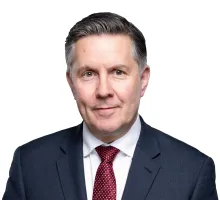
PAUL SAKKAL, HOST: Hi everyone. It's Paul Sakkal from The Sydney Morning Herald and The Age. Welcome to Inside Politics. When the NDIS was created in 2013, it was proof that a rich society could find the money to create a decent life for the disabled. This was social democracy at work. Twelve years on, it's turned into a $52 billion behemoth on track to cost more than the Age Pension. It's become a symbol of government largesse, and stories of fraud and scams have been widespread.
The Albanese Government, last week, admitted the scheme was at risk of collapse. It announced a root and branch overhaul to remove 300,000 Australians off the NDIS over the space of a few years. The man leading the contentious reform agenda is the Health Minister, Mark Butler. The 55-year-old South Australian has emerged as one of Labor's most energetic ministers, taking on big tasks in aged care, tobacco control, and disability support. He's even been asked if he might be the next Labor leader after Anthony Albanese. He joins us now. Welcome, Mark Butler.
MARK BUTLER, MINISTER FOR HEALTH AND AGEING, MINISTER FOR DISABILITY AND THE NDIS: Thanks, Paul.
SAKKAL: Mark, you're having a bit of a moment at the moment in politics. On the one hand, you're being asked for the first time in your quite long parliamentary career whether you want to be the next leader of the Labor Party. On the other hand, you're ripping support away from about 160,000 Australians on the NDIS. Can you give us the elevator pitch on what you're doing to the NDIS and why it's needed now?
BUTLER: Really, last week's announcement and a whole lot of work that I had done, but Bill Shorten and Amanda Rishworth had done in our first term, was really focused on securing the future of the NDIS. It's moved into its teen years, as I described it last year when I was talking about Thriving Kids. It's a reform that is now pretty mature. It's a program that's matured in terms of its period of rollout. And like a lot of social programs, talking to people who've been around a while, this happened in Medicare several years after its introduction, it's had growing pains and needs a very good review.
It's growing too fast. It's too costly. It's expanded in its scope well beyond the original intention of the scheme when it was first set up 13 years ago. And so, we're doing some very serious work to get it back on track for its own sake in the immediate term, but to make sure that this extraordinary reform, which has transformed the lives of hundreds of thousands of people, is secured for the long term.
SAKKAL: Whether or not it was the intent at the start of the scheme, successive governments allowed many Australians to uh jump onto it, and many now derive some part, significant or small, part of their incomes from this game. This will cause misery to a lot of families, right? Do you acknowledge this process will be messy and very hard for individuals?
BUTLER: I certainly acknowledge change is really confronting, and significant change particularly is confronting, and this is going to involve significant change. And this builds on the announcements we made last year to move under nine-year-olds with more mild to moderate support needs to a new program called Thriving Kids. And when I say new, it's not really new in the sense that we had to pull a blank sheet of paper out. This was really the sort of supports that kids like that got well before the NDIS.
Before the NDIS, there were whole range of programs, many of them delivered by state governments located in the community, generally heavily curated by government, so not this individualised market-based approach the NDIS has, which parents were able to access if their children weren't hitting developmental milestones or had some autism symptoms with more mild to moderate support needs. Rebuilding sort of what was there before the NDIS for people who were never intended to be covered by the NDIS was something we built on really. We did last year for that that cohort, and this year, we're building on it.
SAKKAL: Do you think taxpayers who are now footing the bill for a scheme that's almost as expensive as the Age Pension, as well as all the individuals who will be worried about whether to stay on, whether they can stay on the scheme, deserve an apology from the Government? This was Labor's scheme at its outset under the Gillard Government.
BUTLER: I tried to be pretty frank last week at the Press Club that a lot of the issues with the NDIS now reflects some, frankly, flaws in its design and implementation and governments from the time it was-
SAKKAL: And they're Labor's flaws, right? Labor made this scheme.
BUTLER: We designed the scheme, and it was implemented over nine years by the former Coalition Government. I tried to be as apolitical as I could be about this last week at the Press Club. We should acknowledge as a Labor Party that some of the issues that we have here go back to the scheme design. I've tried to be honest about that. Some of it was, effectively, a product of the implement of the scheme by the former government. There's not much merit really in sort of going over all of that and trying to allocate little bits of blame to one party or the other.
SAKKAL: Maybe not for the Labor Party.
BUTLER: Hey?
SAKKAL: Maybe not for the Labor Party. It's unhelpful for the political legacy of the scheme and the legacy of the last Labor Government.
BUTLER: What I tried to do was to say this really is a set of issues we have that goes back to the design of the scheme in some senses, and then in other senses, the implementation. For example, the creep of the scope of the scheme really reflects the way in which people have been able to be signed onto it. I talked about the end, for example of the diagnosis gateway.
SAKKAL: We'll get to all this too.
BUTLER: Those access lists were designed to be a tool to get the scheme up and running and to be replaced, eventually, by a more evidence-based assessment tool, which I talked about last week. So, 13 years on, I mean should that have should that have been introduced earlier during its implementation? The type of market we have, which is heavily unregulated with unregistered providers, is as much a product of the implementation of the scheme as the design. We can go over that for a long period of time. I'm sure people will sort of uncork a bottle of Claret and sit down in the armchair and analyse that. I guess what I tried to do was to be honest last week about the fact that there are some scheme design issues that we need to address, and then start looking forward.
SAKKAL: I'm interested in the politics of it, just quickly, and then we'll get into some detail. Some commentators who have analysed this reform from last week have said this is one of the first moments where the Albanese Government has showed an appetite for big reform. This is a significant change, it will be hard to prosecute in the public debate. There's obviously a narrative that this Government has been somewhat cautious. There are mixed views about that hypothesis on this Government. Do you see this as a bold reform, or is this cleaning up a mess at a time when the budget needed to be reined in?
BUTLER: As, again, I said last week, this is a plan I would have taken to the Prime Minister and to the Expenditure Review Committee and Cabinet, frankly, regardless of the Budget position. I think it's the right plan for the scheme, it's the right plan for participants to ensure at this point in its life, that it is secured for the long term. This is not really a response to any particular budgetary position, it's a response to our analysis of where the scheme is, where the NDIS is, and about the ability of the things we've tried to put in place to grip, to get the cost inflation down. I don't see it as really a response to the Budget position. It's a response to where we think the scheme is at.
As for where it sits in the sort of list of reforms of our Government, and I think our government has been a reformist Government in a whole range of areas including some of them I have responsibility for, like aged care and parts of health. This is a very big deal. This is a big change to a scheme now that is, aside from the Age Pension, our biggest social program, our fastest growing social program, and one that impacts hundreds of thousands of participants directly but, indirectly, family members and a whole lot of providers as well. I'm under no illusions really about the scale of this reform, the difficulty of landing it, in a way that works for participants, most importantly, but for taxpayers and the market itself.
SAKKAL: It might be tricky, particularly with the states co-funding the scheme, to get them on board with the changes. But the Opposition's reaction, which has been largely supportive, and public polling would suggest that there is community support for this change. Rather than being a bold reform where you're trying to shift the public narrative, it seems like some something where you've gone where the public already is.
BUTLER: It seems pretty clear from the research, and I've talked about some of that going back to last year, that the community is deeply concerned about where the NDIS is. Providers and participant advocates have talked about the fact that not too many years ago, the NDIS was really voiced even by those who had no direct interaction with it as a source of real national pride. And that has shifted. I said last week seven in 10 Australians think it costs too much and is riddled with dodgy providers, six in 10 think it is, they actually use the word, “broken”. There's substantial or risk that the social licence that sits behind a $50 billion a year scheme is slipping away. But also, as you say, an openness in the community for some significant change.
SAKKAL: You mentioned autism. That's one of the fastest growing parts of the scheme. I think 43 per cent of the current participants have an autism diagnosis, clearly, not the intent. The other, outside of the NDIS, there's a huge explosion in ADHD diagnoses. At a societal level, what do you make of this phenomenon? What going on here? How much of this is legitimate diagnosis and how much is not?
BUTLER: I think a lot of people are thinking very deeply about that, not just here in Australia, but across the world, frankly, particularly the Western world and in some areas even, particularly the Anglosphere. If you have a look at some of the work around youth mental health, I know you didn't mention that, but a bit adjacent to some of these issues, big inflation in diagnosis numbers is more pronounced in English-speaking countries, which starts to raise questions about the role of social media as well.
SAKKAL: Tell us more about that. Is there a trend?
BUTLER: There's a big trend. There's a very significant trend in anxiety and depression diagnosis among young people, that's probably been going for 20 years. It's more pronounced in English-speaking countries. For example, in Canada, it's more pronounced in the English-speaking states or provinces than Quebec.
SAKKAL: And largely higher income parts of those states?
BUTLER: No, not particularly. Not particularly, I don't think. This really goes to the question of the role of social media in this and the way in which social media, not reports news, but reports sort of world events really in a way that's sort of quite anxiety-inducing. Anyway, these are still questions that are the subject of a lot of research.
Alongside that, there's no question there's been a very big increase in autism diagnosis that, to some degree, reflects a change in the diagnostic manual for this that move from autism being sort of a discreet condition to becoming more a spectrum. Spreading from what used to be thought of Asperger’s right up to what was seen as quite a severe condition of autism. Whether there's been any inflation in the diagnosis beyond that is still the subject, frankly, of debate. And I think trying to unpack that is part of the reason why we want to get rid of the diagnosis list and really focus on functional capacity. Frankly, whether someone has autism or any other type of disability, the loadstar of the scheme really should always be a significant reduction in functional capacity that impacts daily living needs.
SAKKAL: I'm way too young to start any sentences with back in my day, but when I was at school, there was nowhere near the level of diagnosis on ADHD or autism. Part of the conversation around your changes to the NDIS is how many new supports will be required in schools and other places to service the people who will no longer be on the scheme. Is it the case in your, this might be a personal view rather than something that can be attributed to research, but is there a chance that because of this huge diagnosis gateway that's been created, that there are many thousands, potentially tens of thousands of people on the NDIS who don't require any kind of care? That outside support reports don't need to be created for these people, that they should not have been diagnosed?
BUTLER: I've never had that put to me. Certainly, I'm pretty confident, I'm very confident that a big number, particularly of children who have been enrolled on onto the NDIS with developmental delay or autism, could be properly supported by other systems outside of the NDIS who have more low to moderate needs. It doesn't mean that they're not going to benefit substantially from support, but that support probably shouldn't be delivered by a scheme that was designed quite deliberately for permanent significant disability.
If you go back to that original design, you set up a program for people who will have severe lifelong disability very differently to low, to moderate or temporary support needs. That's why it is so individualised. That's why it does really allow much more choice and control for people to determine the nature of their supports and where they get that from than other social programs like health programs or aged care programs or most paediatric programs for that matter.
The NDIS works, really, if your four or five-year-old is enrolled onto it because they have some developmental issues. The parent will receive a plan budget and then be expected to go and work out how to spend it themselves. Traditional programs for childhood support, paediatric support, would really have the parent directed to a series of supports that they could access in their community, which would be -
SAKAAL: What’s that? A special class or?
BUTLER: …heavily curated family centres. Those supports be delivered in places the parents were probably quite familiar with in the community, in group settings where parents were able to interact with other parents going through the same issues. That's certainly what used to exist before the NDIS. Most of those systems were, if not entirely dismantled, certainly wound back very substantially, and rebuilding them really is the focus of Thriving Kids.
SAKAAL: So there'll be a new diagnosis tool created. We know we don't have the details on precisely how that will work.
BUTLER: It's not really a diagnosis tool. It's an assessment tool.
SAKAAL: Assessment tool, apologies, yeah.
BUTLER: That focuses very much on their functional capacity, no matter what their diagnosis.
SAKAAL: So will that assessment tool take into diagnoses of autism provided, for example, by a Telehealth service, or will the assessment tool itself make the determination about whether a condition is severe enough to be on the scheme? How will it alter the way people are getting diagnoses and feeding that diagnosis into the system?
BUTLER: Quite substantially. Because up until now, if you have a particular diagnosis, say level two autism, then you're pretty much on the scheme. And instead, this will, without pre-empting the sort of detail of a process, that it's going to take some time and be conducted in close partnership with states and with the disability community this will be, relatively, blind to the label that you might have and look instead at your functional capacity and whether you have quite high support needs or a substantially reduced functional capacity or not, and be relatively blind to whether you bring a diagnosis of autism or downs syndrome or a more physical quadriplegia or paraplegia, for example, and instead look at how your daily living needs are assessed.
SAKAAL: You're drastically reducing the incentive to go and seek out a diagnosis.
BUTLER: That's right. And I think that has been a real lottery for people who, particularly parents of children, who might have difficulty finding the right specialist to see. Sometimes waiting very long periods of time, a year or two, which, when you're talking about a four or five-year-old, is an eternity, and then having to pay thousands of dollars to get the report.
Now, for people who live in areas which have relatively high numbers of those specialists and have the ability to pay those bills, that's one thing. But in outer suburban areas, in regional areas, for people on low incomes, that's been a real barrier to getting the support their children need, particularly given that the NDIS, as I've said and Bill Shorten used to say quite regularly, has become a bit of a life buoy an ocean or the only port in a storm.
SAKAAL: You want to reassess all people who are currently on the scheme over the next couple of years. Who will actually facilitate the assessment tool? Will there be a new workforce created to do this?
BUTLER: Again, that's work we have to do over the coming months. The agency, the independent agency, which is effectively a statutory agency that that runs the scheme will have oversight of that. Everyone being reassessed will obviously be a little bit calibrated according to functional capacity. There will obviously be some people for whom there's really no question about their ability to stay on the scheme, and others who will be at the edges.
SAKAAL: And they'll still need to go through the assessment tool, the severely disabled people?
BUTLER: Yeah. But I think one of the threshold questions for the group, and the technical advisory group that supports it, that is going to do this work will be really whether there's a light touch first stage process which sorts people who unambiguously have functional needs that mean they're going to stay on the scheme for the rest of their lives on the one hand, and others who might be more at the edge on the other.
SAKAAL: Yeah, okay. Over the last 10 years or so, there's entire professions that have been built up around servicing people on the NDIS; OT’s, allied health, speech therapists. Arguably, this has hurt the productivity of the economy. There's various economists who say that the care economy is less productive, it's grown substantially, and so therefore it's having a dampening effect across the whole economy. I'll ask Jim Chalmers about that rather than you, Mark Butler. What do you expect to happen to that workforce? Do you see them operating in small clinics or businesses charging hourly fees, or will other models of service be created?
BUTLER: That workforce has been an important part of the health and social care ecosystem forever, even as long as I've been around, Paul, which is much longer. But they are much more concentrated in the NDIS now. So really, it's not just a productivity issue. One of the things about how fast the NDIS has grown and the nature of the market that underpins the NDIS, is that it's had a very distorting effect on the rest of the system.
It's now very hard to find an OT or a speechy, and in some cases psychologists and physios, outside of the NDIS. It's hard to find them in veterans care, in aged care, in the public health system. Because there's been this very big gravitational pull in this market that pays relatively well for all of those health professionals to shift to the NDIS scheme. Not just those who might have 20 years of experience in this area, but new graduates are often simply setting up a business immediately upon graduation, operating in the NDIS.
Now, this will have an impact on the way in which that market works. I talked about that last year when I was announcing the Thriving Kids program. Still going to be plenty of work for those people, but that might mean that they're doing a little bit more of their work in those other parts of the health and social care system which have found it very hard to get those allied health professionals.
For people who stay in that, for example, childhood area, they might be doing some of their work in the NDIS, but also some of the work through the Thriving Kids program. That's certainly how I'd like to see things roll out, but that'll involve some change in the way in which that workforce operates.
SAKAAL: One part of your announcement last week at the Press Club was in what's called social and community participation. You announced a big blowout in this part of the NDIS. One of your quotes was that, quote, “too many participants tell us that support workers are spending more time on their phones than engaging with them and providing support.” How do you fix the quality issue there? Are there people servicing this part of the NDIS who should not be disability workers?
BUTLER: There's certainly a lot of people in this part of the system who appear to have very little background in disabilities, and probably very little training as well. For many, it's a part-time job, might be supplementing their education as students, and that's good to an extent. But what I tried to emphasise last week was the importance of the social and community participation stream of the program. It's $12 billion now, which is about the same as we spend on the whole Pharmaceutical Benefits Scheme. It's grown in five years from $4 to $12 billion, tracking to $20 by the end of this decade. And that's, frankly, unsustainable, just looking at it from that perspective. But the quality of it is highly variable. This stream was set up with the intention of participants really finding ways to make friends and engage in genuine social and community participation.
Now, getting out of the house and going to the local shopping centre is valuable, is great, but it can't be the whole thing. What we want to do is also give some support to some of those traditional community groups, some of them are traditional disability groups, but others will be mainstream sporting groups and arts groups, to be able to host those sorts of activities. There's a fund that I announced last week, $200 million, to sort of energise that part of the scheme so that participants have choice. It's not a choice between staying at home or going to the local shopping centre with an individual support worker. That might be what you want to do, but I want there to be other choices as well which involve more genuine community participation than just a one-on-one excursion from home.
SAKAAL: We'll move into other parts of your portfolio, but just one more. I'm not sure if you've come across this, but online in recent months, I've seen a lot of commentary particularly, on X, but also Instagram, on fraud in the NDIS. And this is not so much the crime element of fraud. This is, you know, are mums and dads in the suburbs becoming rich off this scheme, and is that problem widespread? There was a video from Drew Pavlou, the online activist, which had millions of views that was going into migrant communities and showing the extent of this problem, the alleged extent of this problem. You might also be aware of the disability fraud issue in Minnesota which went viral, not just in America, but across the world. How much did this conversation factor into your thinking? Were you worried that the NDIS was becoming a stand-in in the argument on, you know, largess and fraud of government services in the suburbs.
BUTLER: You're right. I don't follow social media closely, but certainly people had been reporting to me a bit of a spike in this sort of commentary in Australia recently. It didn't factor into our thinking particularly. We'd been preparing this work before I think that spike had really started.
SAKAAL: When was that spike? What did that spike look like?
BUTLER: I think it's the last couple of months really that we've seen it. But there's been a bubbling conversation in the community about the unregulated nature of this market. And certainly in the commentary but also anecdotally just among individual members of the community, this idea that little too easy to set up these businesses without necessarily a background in disability services. I think people understand that providers aren't registered in the same way they are in other parts of the health and social care system.
Providing better market stewardship through the registration of providers, particularly those who are involved in more risky, intimate or high-risk intimate parts of the personal care, those sorts of things, is an important part of our reform. We've been progressively doing that over the last couple of years. And frankly, some pretty basic systems like a digital payment system allow us a better line of sight about where the money is going and who the person receiving it is.
SAKAAL: Well, the NDIA wasn't looking at receipts, right? There were receipts submitted which weren't read, some weren't legible, and then all approved.
BUTLER: I made the point that, today, we will review more claims today than five years ago were reviewed in an entire year, and still a whole bunch aren't reviewed. This is a system that I think has 600,000 or 700,000 claims made a day, it's a very big system. We've got to have some basic market stewardship and some integrity systems like a digital payment which I announced last week.
SAKAAL: Would you have liked to, in an ideal world, just start from scratch on a disability scheme, rather than rework the NDIS?
BUTLER: No. Because there's a lot that's terrific about the NDIS. I think I want to make sure that we keep an eye on the degree to which this has genuinely transformed the lives of people.
SAKAAL: How much has it done that? What are some ways to understand how this has made our country a better country?
BUTLER: It's in my lifetime. My early working life, I spent a lot of time at disability institutions and, frankly, also at what we used to call the psychiatric hospitals. But in the disability institutions, people might have been first placed there as a very young child and die there as an adult, spend their entire lives there. I visited them very regularly every few weeks in the early 1990’s for years and saw people in these institutions that housed hundreds of people that were cared for by people who loved their job. But the deinstitutionalisation process through the 1990’s to where we are now, where people can live independently and have the sort of supports that allow them to be involved in their community, the degree of choice and control and dignity that has given people in, frankly, just a generation, is one of the great human rights advances of our time. I've seen it in my working lifetime for the last 30 or 35 years. And we should never underestimate that profound change to the lives of hundreds of thousands of people.
Being able to meet someone now who might be in their early 20s with a severe permanent disability, and compare their position today to their equivalence I was talking to 35 years ago, is beyond profound. It really is beyond profound.
So, no. I don't want to go back and start again because this has delivered a truly profound change for the better in Australia. Deinstitutionalisation was a really important human rights change, both for mental health and for other disabilities. But we've got to make sure we secure those advances for the long term.
SAKAAL: Yeah, well, it's good to see there's bipartisan support to right-size this and hopefully keep it in appropriate shape for many decades to come. Just quickly on a different matter, you spoke last week at the Press Club, obviously, about the NDIS, but it sounded like it may not have even been the top concern in your portfolio. You talked about the ageing of the population as a problem that's about to explode onto the country. You've been obviously talking about it for many years, but it's coming into sight in coming years. You mentioned that you're worried about the 90,000 people turning 80 next year. Tell us about the scale of that problem. We're not building anywhere near enough aged care homes.
BUTLER: Yeah.
SAKAAL: How do we start doing that? What do we need to do over the next few years? What are you thinking of doing?
BUTLER: Yeah. What I've been trying, I mean, I’ve been trying to do this for 15 or 20 years, is just give a sense of the scale of change that is involved in the baby boomers' ageing. I was Aged Care Minister 15 years ago and then sort of 16 or 17,000 people turned 80 every year, this was the depression generation when birth rates had really plummeted. If you take that as the sort of key metric of demand for aged care, 16,000 or 17,000 people, we were building enough beds to cope with that. Ninety thousand next year -
SAKAAL: It's a huge increase.
BUTLER: …it’s just like five times the number. And when you go back, do the maths, what's 2026 minus 80, you're talking 1946. This is the beginning of the baby boom, that four years after the war, ‘46 to ‘51, the numbers were just extraordinary. And so we've got to, I've said, open a new age care facility every three days.
SAKKAL: How often are we currently opening one?
BUTLER: Not every three, nowhere near three days. And we've got to do that not just for a couple of years, we've got to do it for 20 years. Because the echo boom, my generation, Generation X, was just as big. A lot of other countries in Europe, particularly in Japan and Korea, their baby booms were a spike and then dropped away very quickly. Ours kept going for decades. And so this is the new normal, what we're entering is the new normal. It's not a spike. And frankly, the work we did 15 years ago to set up what I hoped was going to be a rolling period of reform that got us ready for the second half of the 2020s went nowhere. It just went nowhere.
Forgive me for being political about this, but in a couple of the budgets in the mid part of the last decade, money was taken out of aged care instead of starting to build on the construction, and we ended up in a terrible position. We had the Royal Commission into aged care. Then we went into the pandemic where aged care performed pretty badly in some parts of the country, and we're now well behind where we should be in 2026. Last week, we announced, Sam Rae and I announced a big change to the incentives for building new facilities. We think that will add about 5,000 or so new beds every year. But we've got to get higher than that. That builds on what we did last term, we've still got more to do to get to the construction level that we need. So, of all…
SAKKAL: What will that require?
BUTLER: Probably closer to 10,000, 10,500 beds a year for 20 years.
SAKKAL: What types of policy changes? I imagine there's lending rules around this.
BUTLER: Capital assistance probably. We talked, when we passed legislation a couple of years ago, it was really about incentivising providers to build new facilities for people who can pay their way, if you like. What I announced last week with Sam Rae was more for people can't pay their way, so don't have the financial means. Providers probably also in some areas need some capital assistance from government, whether that's in the nature of low interest loans and things like that. So Sam Rae will now start a process of consultation with them about that third tranche of consideration.
SAKKAL: Underwriting the building.
BUTLER: Yeah, that's right. And we're just behind where we should be, frankly. We lost years. And so when I say I'm probably more worried about that than any other area of the portfolio, it's because a lot of the pressure is just a product of demographics. It's just the raw numbers that are happening out there in the community. I don't see it as a crisis or a problem. I've always been a huge advocate of the benefit of ageing. In 100 years or so, we've added 25 or 30 years to life expectancy. That's something we should celebrate. It's one of humanity's greatest triumphs. But it does bring some logistical challenges in making sure that that generation who are entering their 80s get the care and the dignity that, after a long life of building this country, they deserve.
SAKKAL: I was going to say, this is in some ways a first world problem because we are such a healthy society and that's a brilliant thing, but it brings social challenges as well. But something that's done a bit more in non-first world, I know that's not a term we use these days, but developing nations have a greater culture of having older people stay with the family as they get older. Is that something we've lost in our society? Is there a way to encourage more of that? To keep -
BUTLER: We have. I've looked at this quite a lot. That is shifting. It's shifting in Confucian traditions. It's shifting in some of the Mediterranean European traditions where it is often thought of as much more deeply rooted than maybe some of the Anglo-Celtic traditions. You are seeing a shift across the world. A country like China that is also ageing very, very fast and doesn't have the demographic benefits that we have of strong immigration and relatively healthy birth rates over the last several decades, like their working age population is going to shrink by 80 or 100 million this decade. They're ageing at a time where they're still a middle income country and their workforce is shrinking. They are having to talk to us, talk to the Japanese who are a bit ahead of them in the ageing space about how they build an aged care system very, very quickly.
This idea that there are a whole lot of other countries where older people are cared for in family and they don't need an aged care system isn't really standing the test of time. Really, other countries are having to do this as well.
SAKKAL: That's interesting. Just on private health insurance, you made a change last week to equalise the rebate for older and younger Australians, reversing the Howard era change. The AMA head also spoke at the Press Club last week and talked about the in the private healthcare system. How broken is private health, and are you considering ways to become more heavily involved in the private health system on pricing and other issues that might run into constitutional concerns?
BUTLER: I wouldn't describe it as broken. It's under pressure. It's under very serious pressure. The levers that Howard put in place 25 years ago worked well to underpin private health membership. I think that change to the rebate that was particularly targeted at older Australians is hard to justify on policy grounds. If there's any cohort that's going to respond to an additional incentive or subsidy to take up private health insurance, it's not the older cohort, it's actually the younger. It was probably more an electoral ploy, frankly, to be cynical about it, than a real policy.
SAKKAL: Mark Latham was ascended, which feels hard to recall.
BUTLER: Yeah, I recall it. But I think more in private health, there is a need to deal with a few things that I think will be the subject of more work during this term of parliament. Specialist fees, so non-GP specialist fees, are out of control, and they genuinely are becoming a barbecue stopper. Much more now than the bulk billing rates in general practice which was the focus of a lot of our work in the first term and was a big concern in the community. That concern's really shifted to stories of people not going to a specialist because they can't afford the out-of-pocket, or not having a procedure because they can't afford the out-of-pocket, or if they do have the procedure, getting news about the out-of-pocket only day before. That has got to be a focus of more work.
SAKKAL: Can you do controls there? What's the mechanism?
BUTLER: I've said to the AMA and said publicly, frankly, as far as we're concerned, every option is on the table. There have been, for a long time, arguments that there are constitutional limitations on our ability to regulate specialist fees. We intend to test the boundaries of that. That's how concerned I am about this, because it's become a genuine access to care barrier. I think more broadly, there is work that our department has been doing with the CEOs of the big hospitals, private hospitals, and the big insurance funds because there are some real pressures on the financial viability of the system that I don't think it's broken in any sense, to go back to your first question, but we do need to pay some attention to whether or not those funding mechanisms are keeping pace with a change in the way in which private health services are delivered. There's more hospital in the home. There are fewer overnight stays because surgery is getting much better. People don't have to stay for several days if they've had a procedure in the way they might have 10 or 15 years ago. Is the financing incentives really keeping up with that is something I think we need to pay attention to.
SAKKAL: Is there a third item that you had there? I think you said -
BUTLER: Our workforce is probably the third issue. Do we have the right specialist workforce in the right place? And are they wanting to do the sort of work that we need them to do? Psychiatrists, frankly, are not doing the same level of admission work in private psychiatric hospitals as we would have seen five or eight years ago. That means that private psychiatric hospitals are suffering real viability pressures. Not because there's not the demand for mental health support in the community, there is. It's just they can't get the psychiatrist to do it. We're having some of the same pressures in maternity services, where we struggle to get obstetrician gynaecologists to work in some parts of the community. Families, young families, who might take private health insurance out expecting that they'd have choice about how they have their baby delivered in some regional communities in Australia are finding at the end of the day they don't have that choice because the right workforce is not there. We've got to deal with some of those pressures.
SAKKAL: Two more and we'll let you go. The immunisation rates are quite troubling post-pandemic. The rate, I think, of full immunisation is from 95 per cent down to about 92 per cent, but far fewer suburbs and regions are hitting their targets. I was talking to a pollster last week who said that one of the underrated elements of the One Nation rise is distrust towards government post the pandemic in a sense that the major parties are, shouldn't be running the show. Do you think we should have done more to inquire into the pandemic and have a public discussion about what went on then? How do we address this public anxiety around healthcare?
BUTLER: There's quite a bit in that. I don't think there's any question there's a level of vaccine hesitancy and fatigue that still hangs over from the pandemic. I think that's mixed in a way that's hard to separate with a whole lot of misinformation and disinformation online that people are seeing about vaccines and risks that frankly aren't substantiated by the evidence. How you unpack that is really difficult to say, well, how much would have been there even if we didn't have a once in a century pandemic?
I think the COVID inquiry that we undertook was well calibrated. I think it was pretty bare bones and didn't pull any punches about what we did right as a country and what we didn't do well. And the degree to which trust in good healthcare systems was damaged by some of the way in which decisions were made without evidence being presented to community.
SAKKAL: What were they? Even in broad terms. Were the public health officials given too much authority by state governments?
BUTLER: I think really the take-out for me from that inquiry was if we had to do it again next year, probably the community wouldn't follow the directions that were put in place in 2020-2021, such is the damage to trust, frankly. And that the issue with trust was that governments were not as transparent as they should have been about the evidence, including the costs and the benefits of decisions that they were making that impacted lives so substantially, profoundly in some areas.
SAKKAL: Needed to be more balanced.
BUTLER: School closures and things like that were probably the main issue that the inquiry focused on. I think we did have a really good inquiry. It wasn't the sort of months and months long public inquiry that the UK had, for example, that has an inquiry trawling over people's WhatsApp messages that maybe some people would have liked. But in terms of -
SAKKAL: You might have liked it if Scott Morrison was still around, though.
BUTLER: Everyone had WhatsApp messages. It bounces both ways. But look, we deliberately didn't decide to go down a path that would involve, frankly, whether it's state premiers or Australian prime ministers having to go through that sort of process. And I think it was the right balance.
In terms of immunisation generally, though, you're right to say that the national rate decline is a cause of concern. We're seeing it right across the world. The World Health Organisation is talking about this. It's not particularly Australian, which is unsurprising given it was a global pandemic. And the sort of misinformation, disinformation I've talked about is global. It's not Australian. We're thinking carefully about the way in which we prosecute information campaigns, particularly with parents, about the benefits of childhood immunisation. I think there's a bit of mythology out there that this is an issue in Byron Bay and some of the hinterland areas around the Gold Coast and things like that.
SAKKAL: The MAHA crowd.
BUTLER: Yeah, and it is. But it's also the CBD of Adelaide has childhood immunisation rates of under 80 per cent. There are parts of Western Sydney that have those sorts of childhood immunisation rates. This is actually much more complex than some of the first reactions might be to this. We have to think about this carefully and really give parents access to the best available information they can have to do what every parent wants to do, which is to keep their child safe.
SAKKAL: Can I ask you about your future before we go? This conversation, I just got a nod there for listeners, but a tentative nod.
BUTLER: Well, I mean, it could mean a range of things, Paul.
SAKKAL: It's almost a jarring conversation to be having. It's odd that it's come up. But last week, there was a story in the West Australian newspaper about how Labor MPs are speculating about your potential ascension to the leader of the Labor Party at some point in the future. We're obviously about a year away from the last election. The Prime Minister just had a thumping win. It's in some ways, as I said, jarring to be talking about this because he's probably in it for the long haul. But the conventional wisdom has been that the next leader will be one of Richard Marles, Jim Chalmers or Tony Burke, all from the right. The left is now the ascendant faction inside the caucus and you're widely regarded as one of the most competent Ministers, very close ally of the Prime Minister. And someone who people close to the Prime Minister have quietly told me for years now could be in the mix, even though I think you've previously told colleagues that the leadership of the party is not what you see for yourself. Has that changed over time?
BUTLER: I'm a bit befuddled about why we're having this conversation. As you say, it's not even a year since the Prime Minister won a very significant victory. He's got a huge agenda, we laid out some of it last week at the Press Club. And we're in the middle of the worst global fuel crisis that's hit the country, if not ever, then for at least 50 years. And he is in it for the long haul. And as one of his closest supporters, I want him to be in it for the long haul. I feel privileged to be serving under him. I've got a job that I absolutely love and I focus on every day. I think it's the best job in government, Health and Disability and Ageing, it keeps you so in touch with the community. It's a deeply human portfolio. I don't really understand why we're having this conversation, frankly. The Prime Minister has made it clear he's in it for the long haul and there's no one who would be more delighted than me about that.
SAKKAL: I've got no doubt about that. But you've demonstrated in your career a really deep interest in policy. I don't think anyone would doubt that. Having the power of the leadership of a party would allow you to do a lot in terms of reform. Does the idea attract you to lead a party and run the show?
BUTLER: It's just not something I'm thinking about. And frankly, I don't think anyone in Government is thinking about. We're not yet a year from being re-elected. In a really volatile political environment, we don't take that for granted. We know what a privilege and what an investment of trust that involves from the Australian community and that we have to be involved every single day in focusing on them, not these sorts of discussions. It's just not something any of us are thinking about, certainly I'm not.
SAKKAL: I acknowledge it's a very below-the-radar conversation, but is it something you might think about in coming years, three, four years down the track, or is it not an option for you?
BUTLER: It's just not something I'm thinking about. I've got a very big list of things to do for the Government, for the Australian people, and that's what I'm focused on.
SAKKAL: We appreciate you joining us, Mark.
BUTLER: Thanks, Paul.
Media event date:
Date published:
Media type:
Transcript
Audience:
General public
Minister: