
Filter results
You can narrow down the results using the filters
Publication type
Video type
92 results
-
 1:25
1:25Rick and Shelly’s story about the PBS co-payment changes
Rick and Shelly take insulin every day along with other PBS medicines. With the reduced PBS co‑payment, they will save nearly $145 a year. -
 1:01
1:01Shirani’s story about PBS co-payment changes
Shirani takes several PBS medicines. With the co‑payment dropping to $25, two of her daily medicines will cost less each month, helping ease her expenses. -
 1:47
1:47Katie’s story about PBS co-payment changes
Katie relies on PBS medicines as part of her daily life. With the co‑payment dropping to $25, her medicines will cost less each month, helping ease the pressure of ongoing health expenses. -
 1:14
1:14General patient co-payment reduction – Animation
In this animated video, you’ll learn how the PBS general co‑payment has reduced to $25, helping people with a Medicare card save money each time they fill a script. Speak to your doctor or pharmacist to find out how you can save on your medicines. -
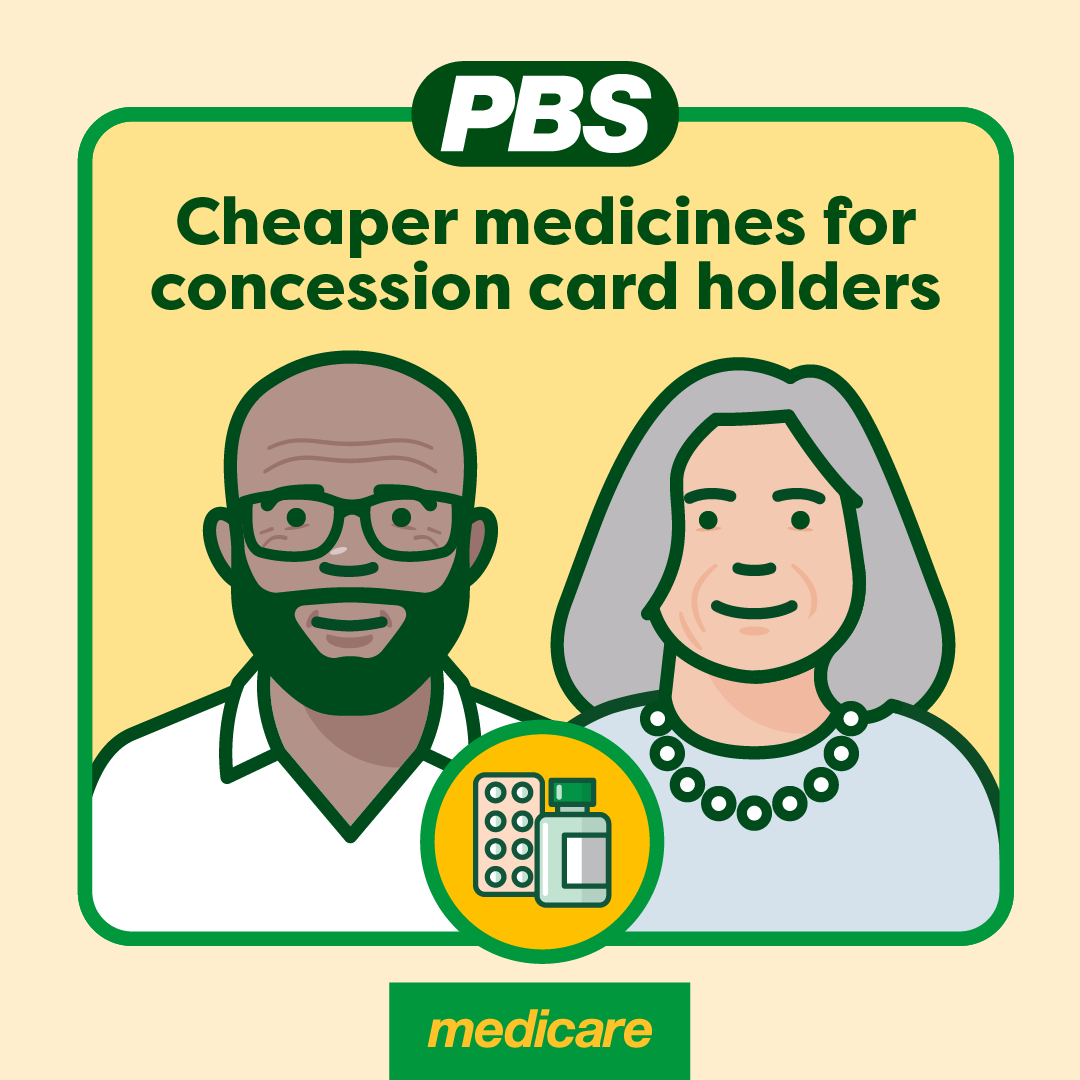
Social media tile – Cheaper PBS medicines for concession card holders
Download and share this tile on your social media channels to help raise awareness that concession card holders can access PBS medicines at more affordable prices until 2030. -
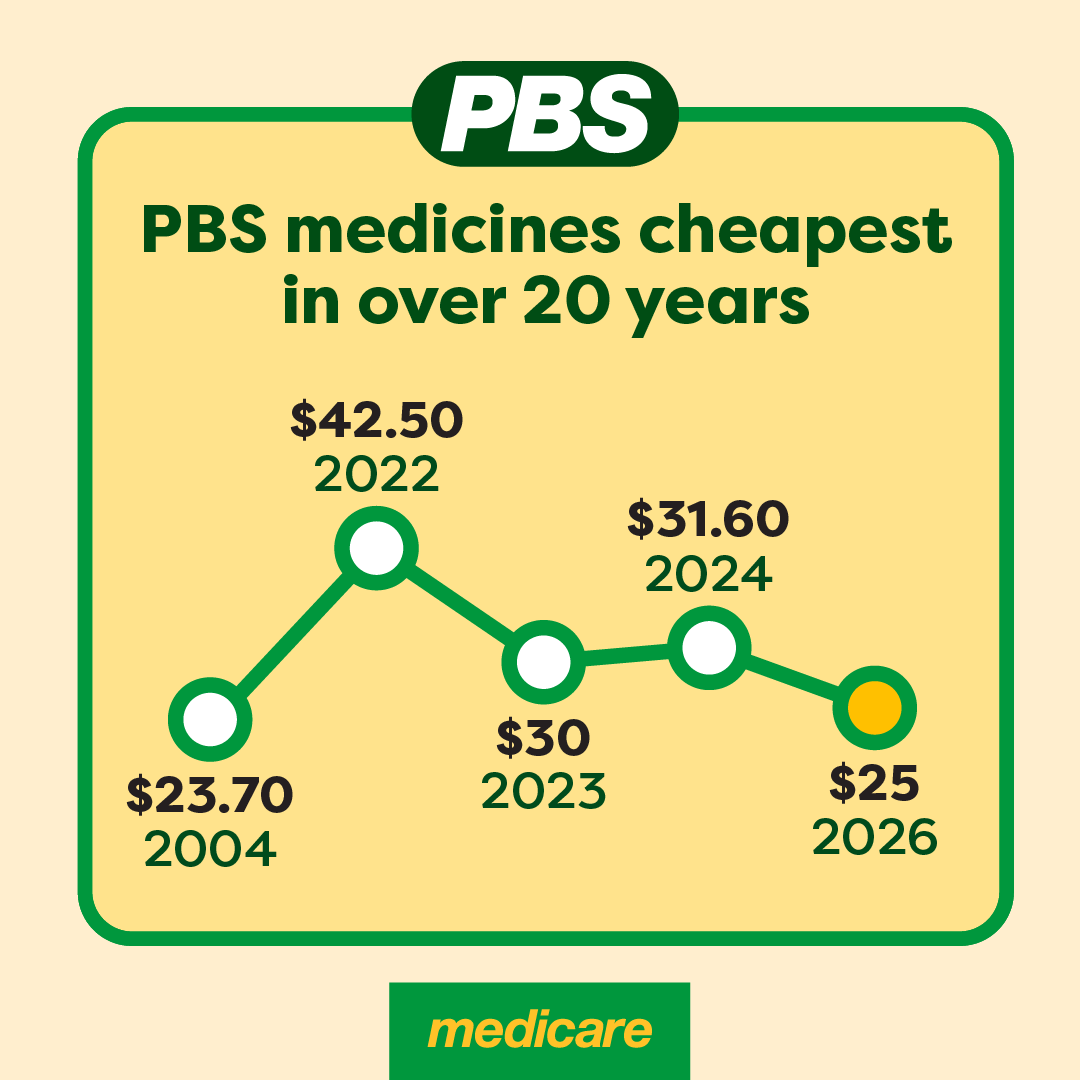
Social media tile – PBS medicines cheapest in over 20 years
Download and share this tile on your social media channels to highlight that PBS medicine costs are now the lowest they’ve been in more than 20 years, helping Australians save on PBS prescriptions. -
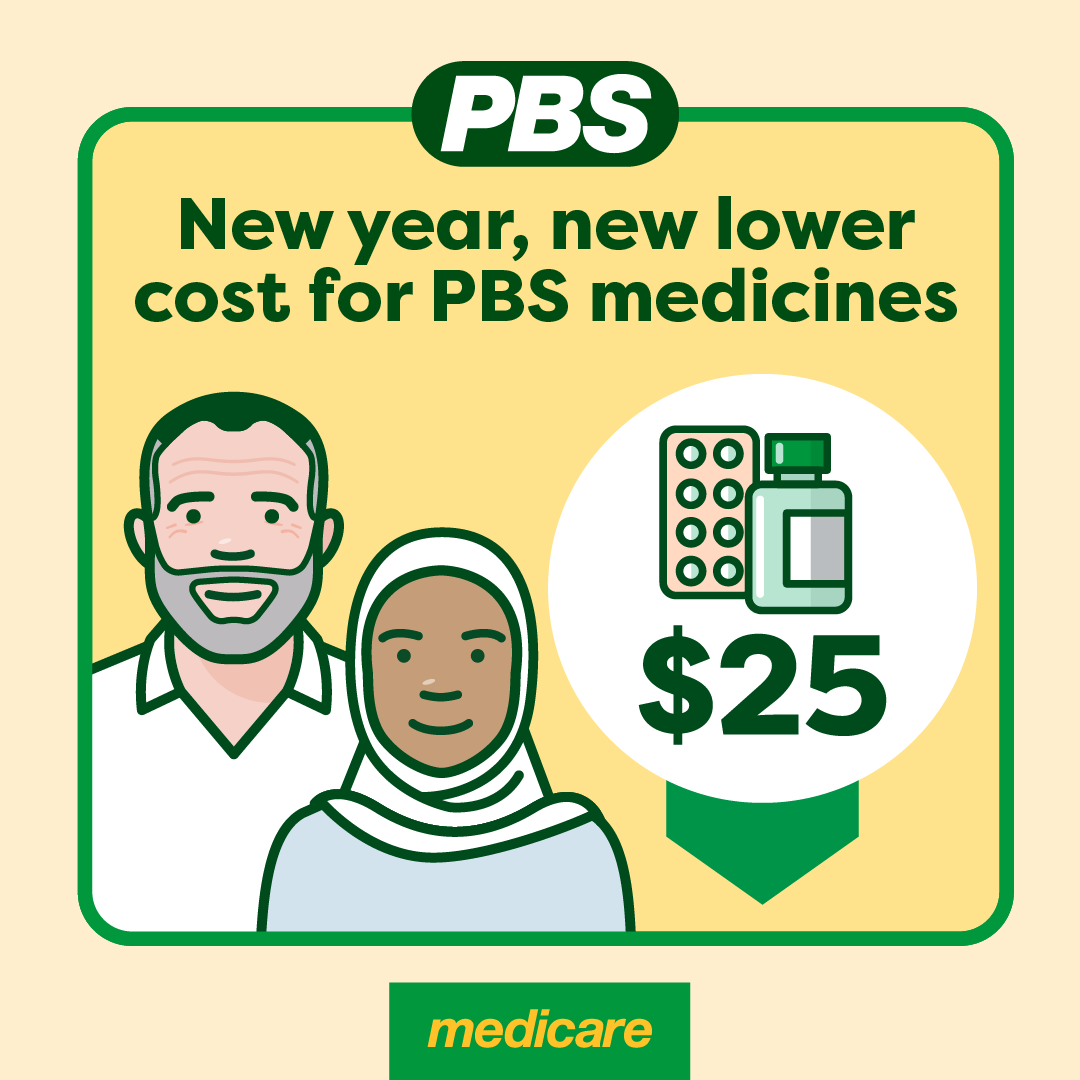
Social media tile – New lower PBS medicine costs
Download and share this tile on your social media channels to help raise awareness about lower costs for PBS medicines and how Australians can save on their PBS prescriptions.
-
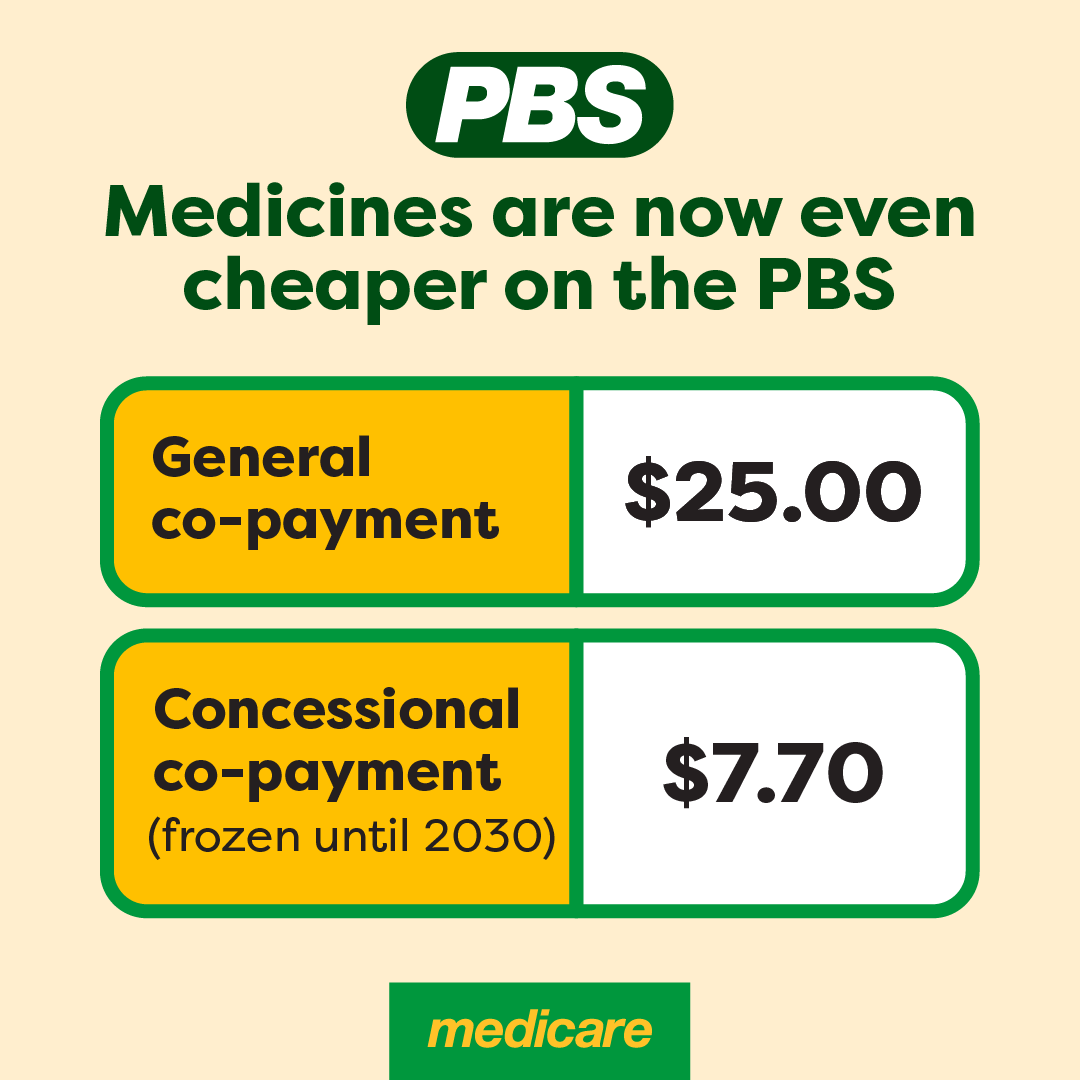
Social media tile – Cheaper PBS medicine costs
Download and share this tile on your social media channels to raise awareness of the reduced PBS co‑payment and how Australians can save on their PBS prescriptions.
-
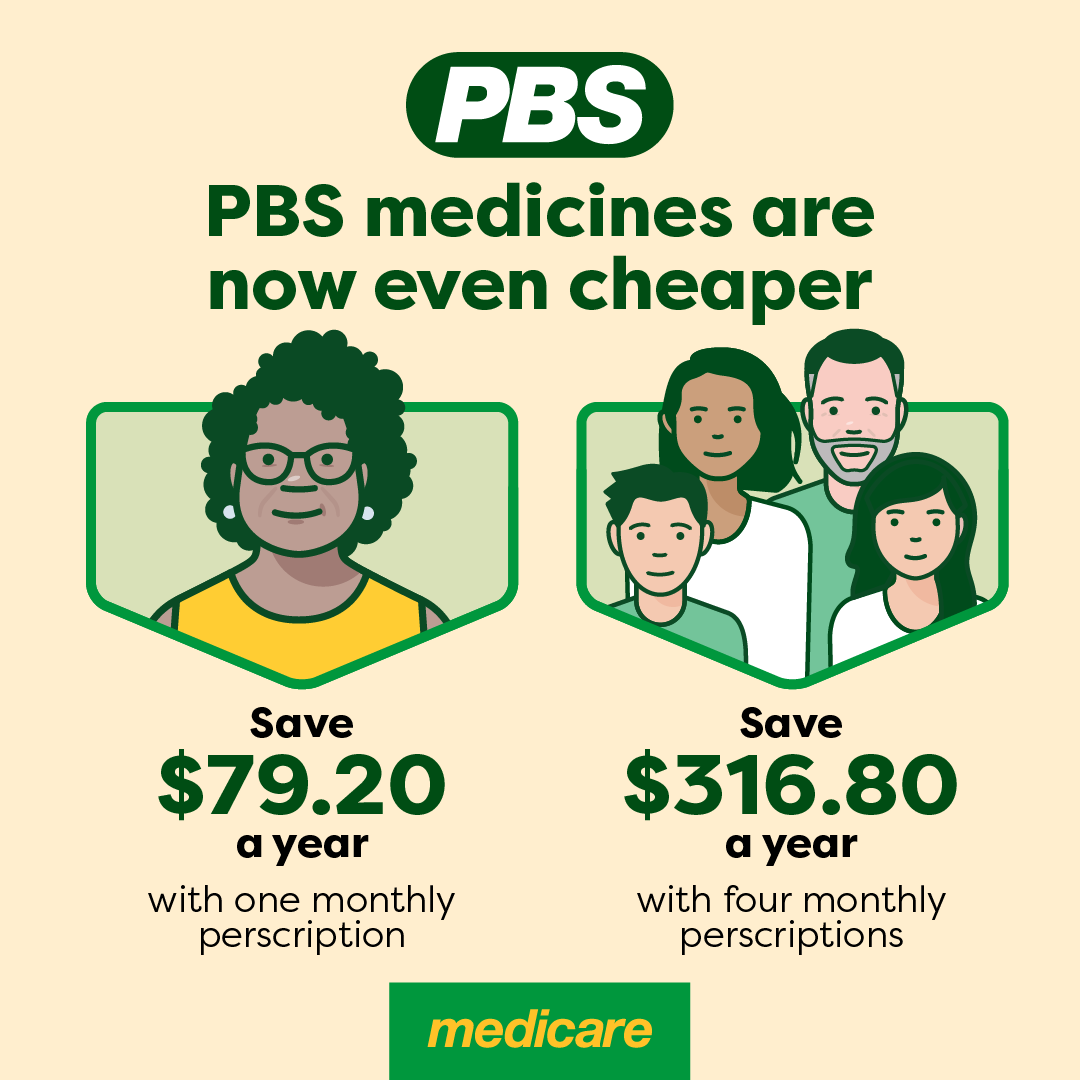
Social media tile – Even cheaper PBS medicines
Download and share this tile on your social media channels to highlight how Australians can save more each year with reduced PBS medicine costs. -
 01:35
01:35Jeanette’s story about the PBS co-payment changes
Jeanette lives with rheumatoid arthritis and relies on four PBS medicines. With the reduced PBS co‑payment, she will save nearly $30 each month. -
 02:41
02:41Ask a pharmacist: understanding PBS co-payments
In this Q&A video, pharmacists answer common questions about PBS co-payments. -
 00:15
00:15PBS concession co-payment freeze advertisement – 15-seconds
For Australian concession card holders, the maximum cost of PBS medicines remains $7.70 until 2030. -
 00:15
00:15PBS co-payment reduction advertisement – 15 seconds
From 1 January 2026, PBS medicines will cost no more than $25, down from $31.60, for everyone with a Medicare card. -
 00:30
00:30PBS co-payment reduction advertisement – 30 seconds
From 1 January 2026, anyone with a Medicare card pays a maximum of $25 for each PBS listed medicine, down from $31.60. Concession card holders continue to pay no more than $7.70 until 2030. -

Cheaper Medicines: FAQs about the lower PBS co‑payment
This FAQ explains how the reduced PBS co‑payment helps Australians save on medicines, what the changes mean for general and concession card holders, and how costs, Safety Net thresholds, and brand premiums may affect what you pay. -
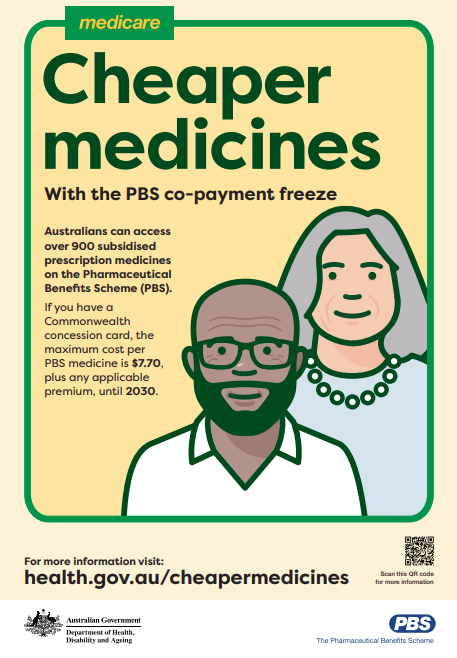
PBS co‑payment freeze : Cheaper medicines for concession card holders – A3 Poster
This poster highlights that concession card holders will pay no more than $7.70 per PBS medicine until 2030. It promotes access to over 900 subsidised medicines through the PBS. -
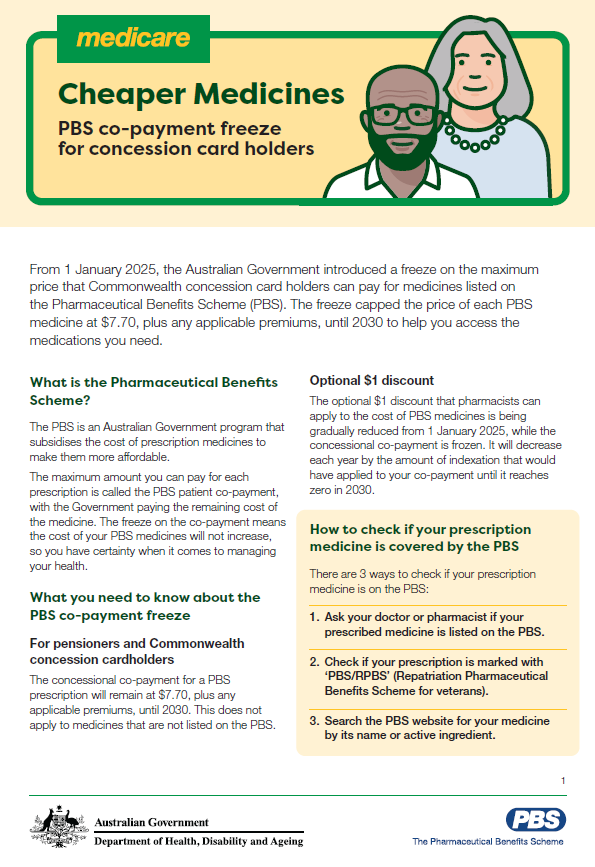
PBS co‑payment freeze: What it means for concession card holders – Fact sheet
This fact sheet explains the PBS concessional co‑payment freeze, keeping medicine costs capped at $7.70 until 2030. It outlines how the freeze works, ways to save on medicines, and where to find more information. -
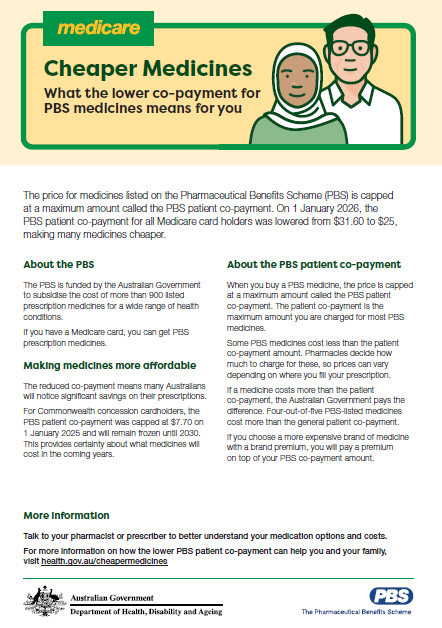
PBS price reduction: What the lower co‑payment means for you – Fact sheet
This fact sheet explains the reduction of the PBS patient co‑payment to $25 for Medicare card holders and the continued $7.70 cap for concession card holders. It outlines how the PBS works and how the changes make medicines more affordable. -
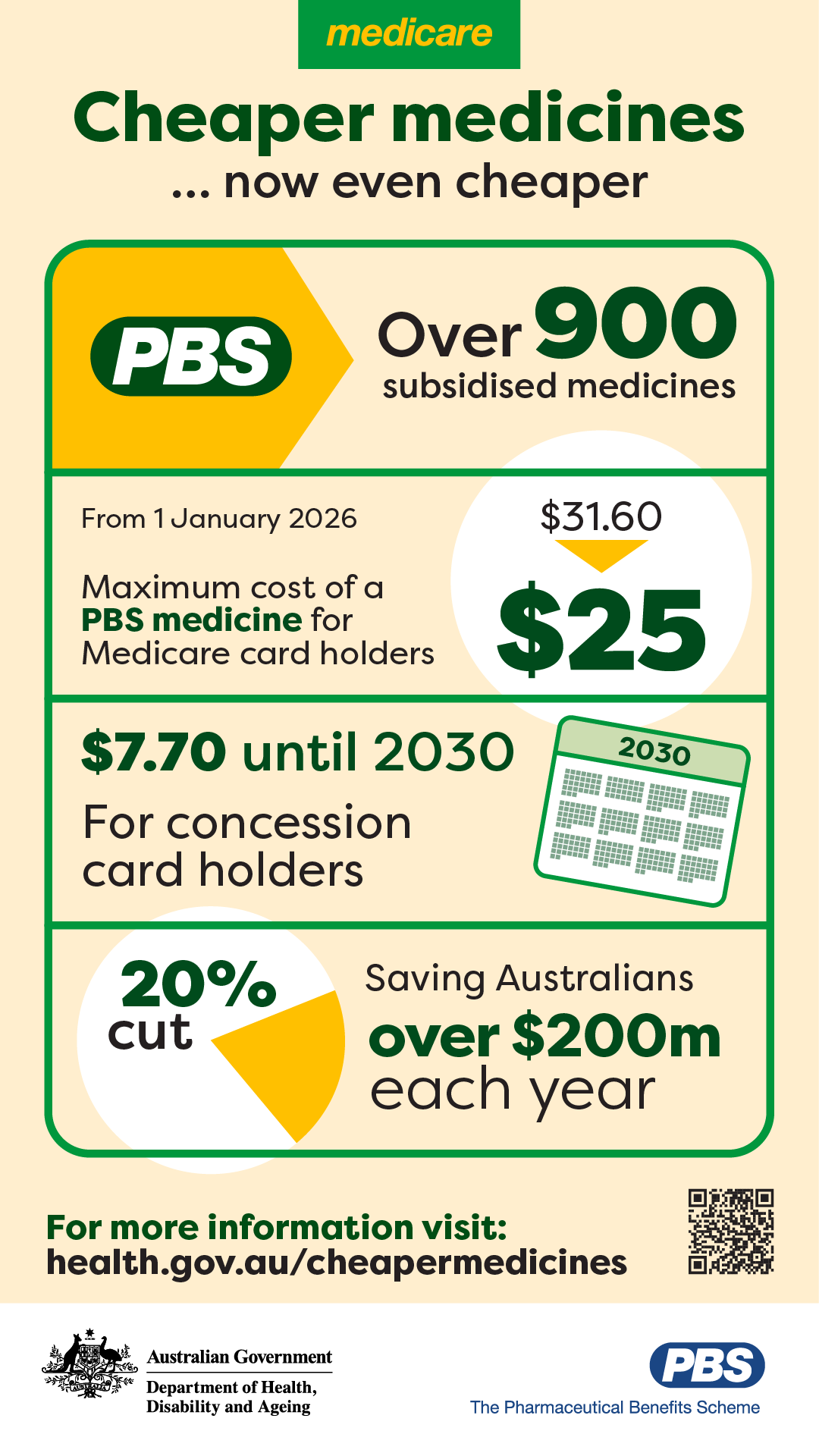
Cheaper Medicines: Key facts about lower PBS medicine costs infographic
This infographic highlights changes to PBS medicine costs, including a $25 cap for Medicare card holders and co-payment freeze for concession card holders until 2030, applying to more than 900 subsidised medicines. -

Cheaper Medicines: PBS price changes for Medicare and concession card holders – Postcard
This postcard highlights PBS patient costs dropping to a maximum of $25 for Medicare card holders from 1 January 2026, while concession card holders continue to pay $7.70 until 2030. -

PBS price reduction: Lower prescription costs for Medicare and concession card holders – A3 Poster
This poster highlights PBS medicine costs dropping to $25 for Medicare card holders from 1 January 2026, with concession card holders continuing to pay $7.70. It promotes savings on prescriptions through the PBS. -
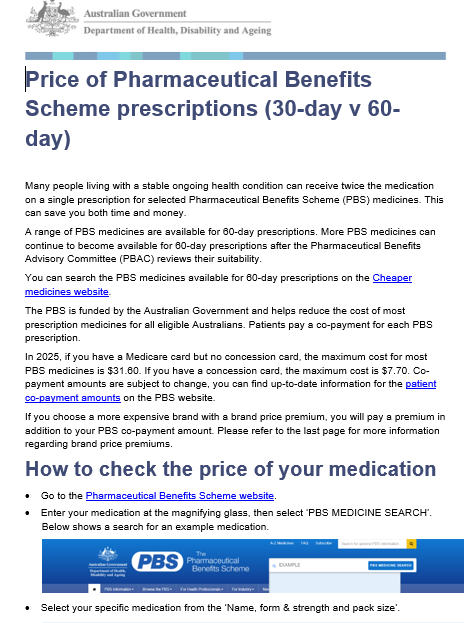
PBS Medicine Price - Fact sheet
Many people living with a stable ongoing health condition can receive twice the medication on a single prescription for selected Pharmaceutical Benefits Scheme (PBS) medicines. -
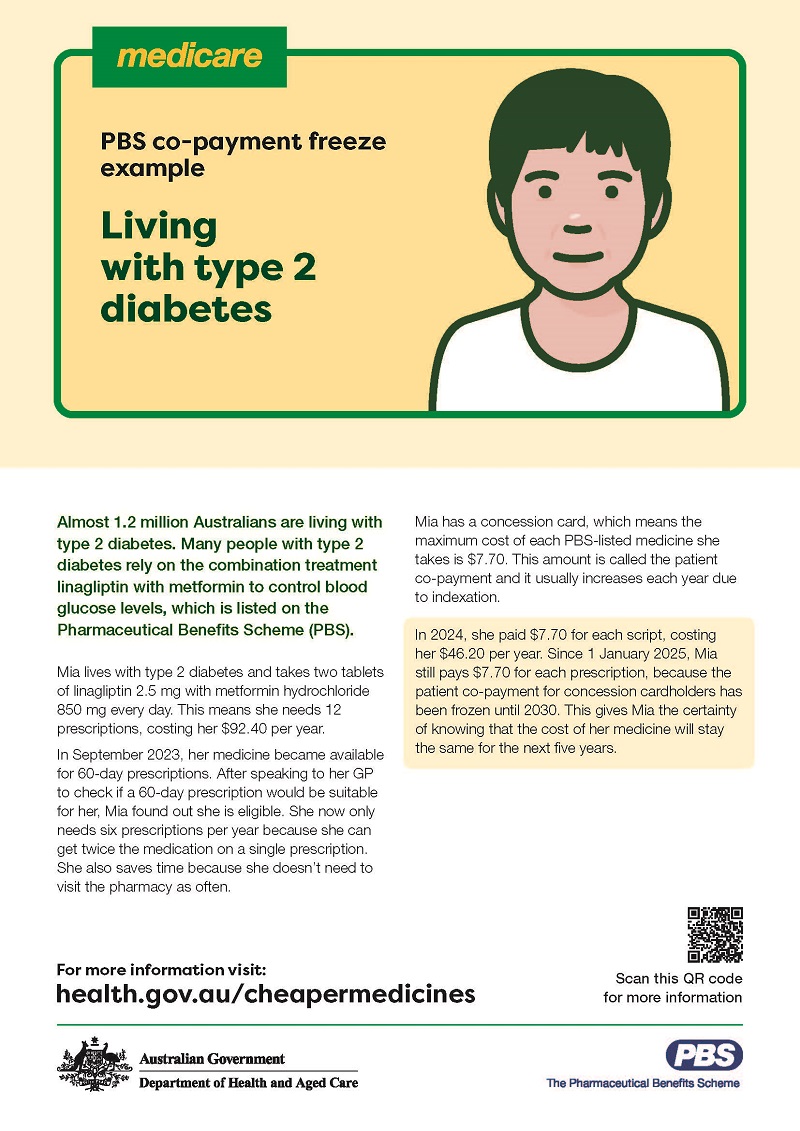
PBS co-payment freeze case study – Mia
A fictional case study on Mia, who is saving time and money on PBS medicines from the freeze on the patient co-payment. -
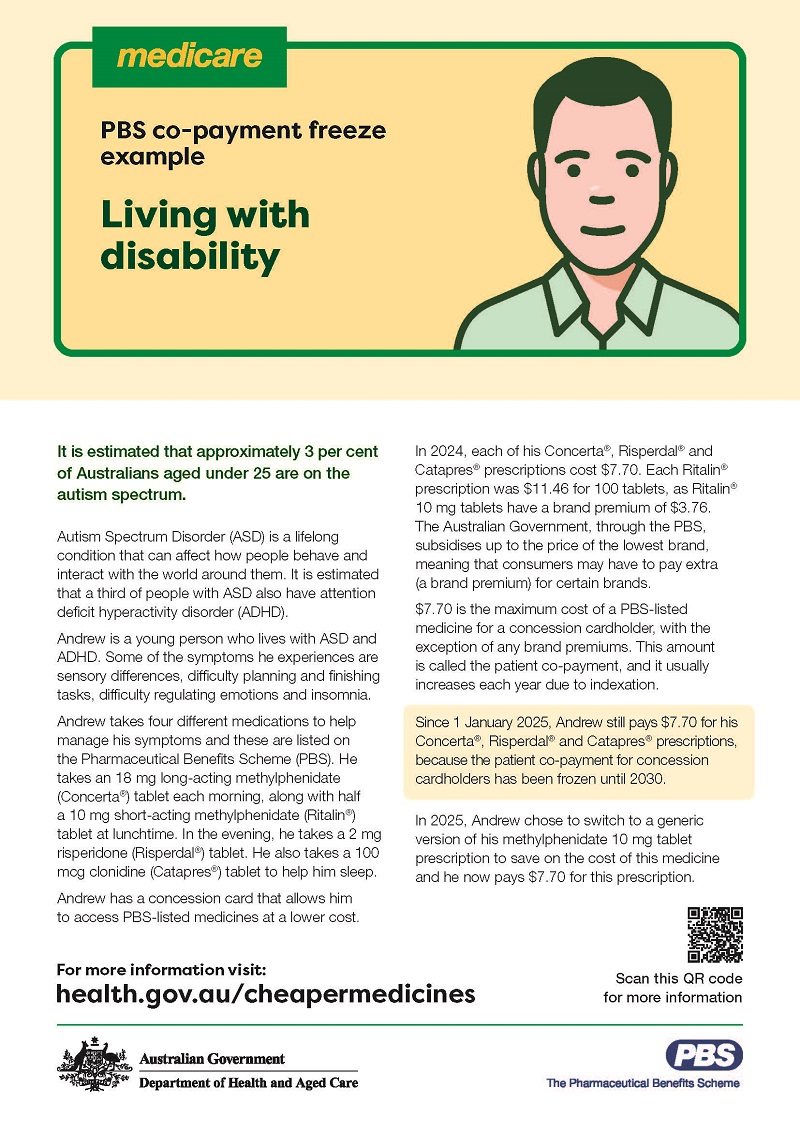
PBS co-payment freeze case study – Andrew
A fictional case study on Andrew, who is saving time and money on PBS medicines from the freeze on the patient co-payment and by switching to a generic medicine. -
 1:33
1:3360-day prescriptions – Scott Bates, a First Nations community pharmacist video
In this video, Scott Bates, a community pharmacist talks about how 60-day prescriptions benefit the community and First Nations peoples.