
Resources

3:58
Working with rural and remote communities to deliver mobile lung cancer screening services
Robby Chibawae, CEO of Puntukurnu Aboriginal Medical Service talks about why health programs need to be designed in partnership with First Nations communities.

1:58
Why having lung cancer screening available in community is important
Deidre Armstrong from Derby, Western Australia talks about feeling welcome and supported during her Heart of Australia mobile clinic visit. She explains why early detection is important and how mobile screening can reduce travel, stress and time away from family.

7:37
Accessing health services in remote areas and why mobile lung cancer screening is important
Shelly Kneebone, CEO of Derby Aboriginal Health Service talks about the challenges of accessing health care in remote communities and the benefits of place-based codesign.

2:24
Mobile lung cancer screening making it easier to access health care on Country
Clive Sampson from Jigalong Community, Western Australia talks about his experience undertaking a lung cancer screening and the benefits of having a mobile screening service come visit his area.

2:59
National Lung Cancer Screening Program – Mobile screening process
The video describes the process and what to expect when having a low-dose CT scan on the mobile screening truck.

2:21
Having a lung cancer screening through a Heart of Australia mobile clinic
Eileen Charles from Jigalong Community, Western Australia talks about having a lung cancer screening at a Heart of Australia mobile clinic. She shares how staff explained the process, helped her feel comfortable and why she would encourage other community members to have a scan too.

6:21
Connecting with communities to encourage mobile lung cancer screening
Caitlin Wharton, Health Promotion Officer at Puntukurnu Aboriginal Medical Service talks about helping communities learn about the National Lung Cancer Screening Program and the importance of accessing mobile screening.

6:33
Delivering Lung Cancer Screening to Regional and Remote Communities
This video explains how the National Lung Cancer Screening Program delivers free lung cancer screening through mobile lung cancer screening to improve access to regional and remote communities.

National Bowel Cancer Screening Program – GP assessment report
General practitioners should use this form when your patient has received a positive iFOBT test result with the program. Completing it lets us know the patient has been referred for colonoscopy or other examination.

BreastScreen Australia – Accreditation status report
This report lists all the currently accredited BreastScreen Australia services by state and territory.

Update on cervical screening self-collection uptake
This report provides data on the uptake of the Cervical Screening Test self-collection option for the first quarter of 2026 and was published in May 2026.
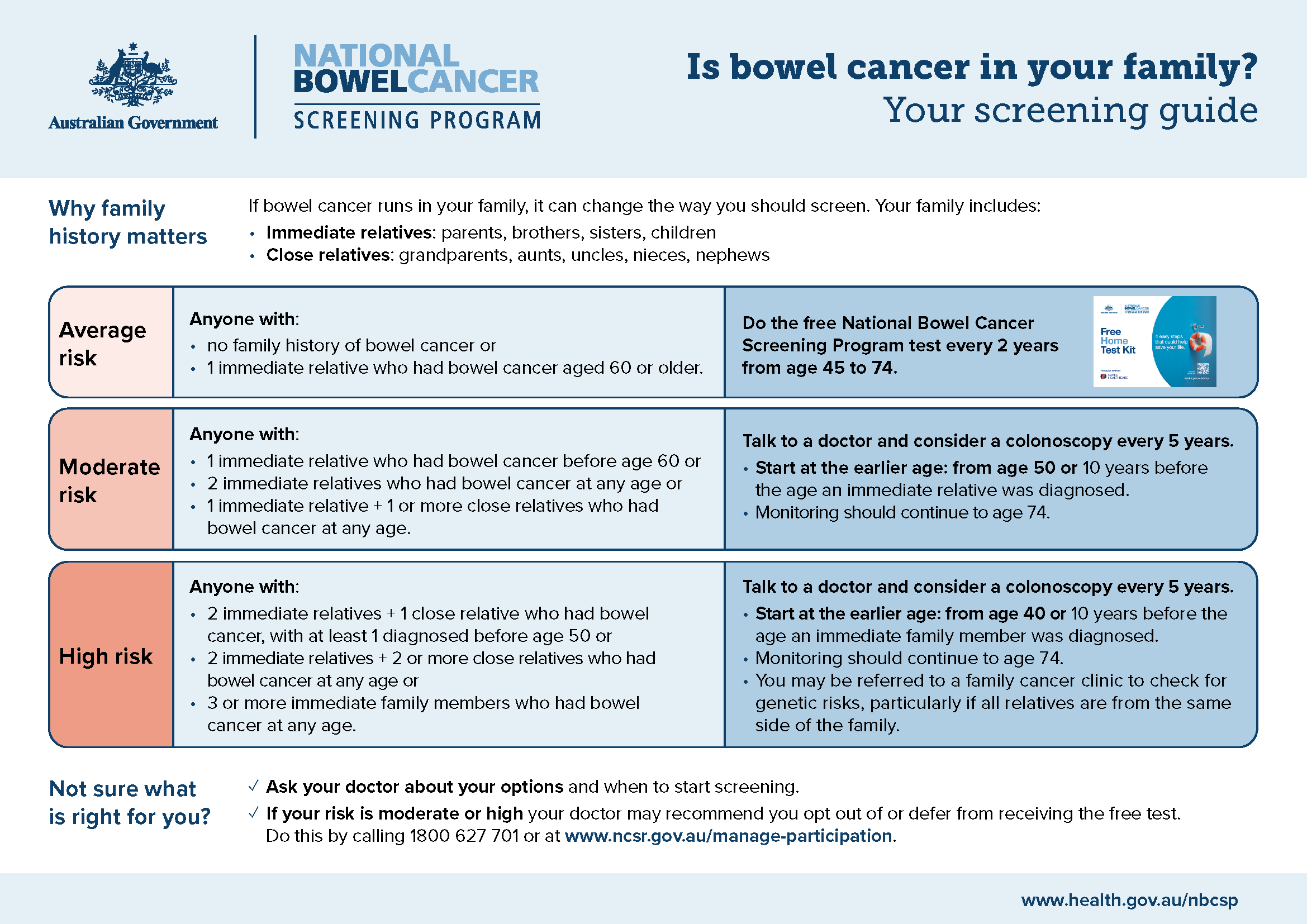
National Bowel Cancer Screening Program – Family history screening guidance
This guide explains how your family history can affect the way you should screen for bowel cancer. It helps you understand your risk, when to do the free test, or when to talk to your doctor about other screening options.

National Cancer Screening Register – Privacy Impact Assessment for Data Linkage Projects
This report considers the privacy impacts of linking data from the National Cancer Screening Register with data from the Australian Bureau of Statistics’ Person Level Integrated Data Asset and the Australian Institute of Health and Welfare’s National Health Data Hub.

National Bowel Cancer Screening Program – Pre-invitation
This letter is sent to people letting them know to expect their bowel screening kit in the mail soon.

National Bowel Cancer Screening Program – Skip a test after colonoscopy
This letter is sent to people after they had a colonoscopy, letting them know they can skip their next 2-yearly bowel screen test. Skipping the test is optional.

National Bowel Cancer Screening Program – 8-week reminder
This letter is sent 8 weeks after a person has got their bowel screening kit. It reminds them to do the test. Sometimes it will be sent via an SMS.

National Bowel Cancer Screening Program – Invitation to screen (aged 73)
When people aged 73 and over are sent their free bowel screening kit, this letter comes with it.

National Bowel Cancer Screening Program – Invitation to screen
When people are sent their free bowel screening kit, this letter comes with it.

Independent review of cancer prostheses equity in Australia
This final review examines current access to external prostheses across Australia for people impacted by cancer.

National Bowel Cancer Screening Program – Training guide for alternative access to bowel screening kits
This training guide covers key steps for practice staff and health professionals to implement and promote bowel cancer screening. Before you order or issue kits for the first time, both the person ordering kits AND the person issuing kits must read this short guide.
National Lung Cancer Screening Program – Healthcare provider presentation
This presentation toolkit is designed to promote the National Lung Cancer Screening Program and share messaging with a healthcare provider audience.
4:44
National Lung Cancer Screening Program – Lung cancer screening explained
This video provides an overview of the National Lung Cancer Screening Program. It outlines who is eligible for lung cancer screening, how screening works and next steps.

National Lung Cancer Screening Program – Health support workforce presentation
This presentation toolkit is designed to promote the National Lung Cancer Screening Program and share messaging with a health support workforce audience. Health support workforce can tailor it for use with their respective workforce and communities.
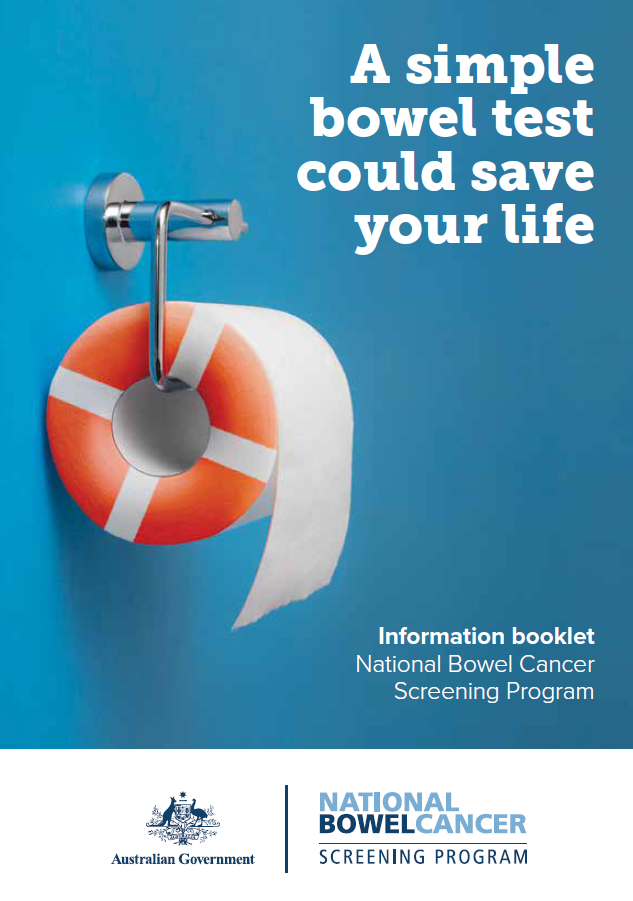
National Bowel Cancer Screening Program – information booklet – large print
This booklet is in large print and explains why you should do the free bowel screening test. It tells you about bowel cancer, how to do the test at home, and what your test result means. It also explains how to opt out or take a break from screening.
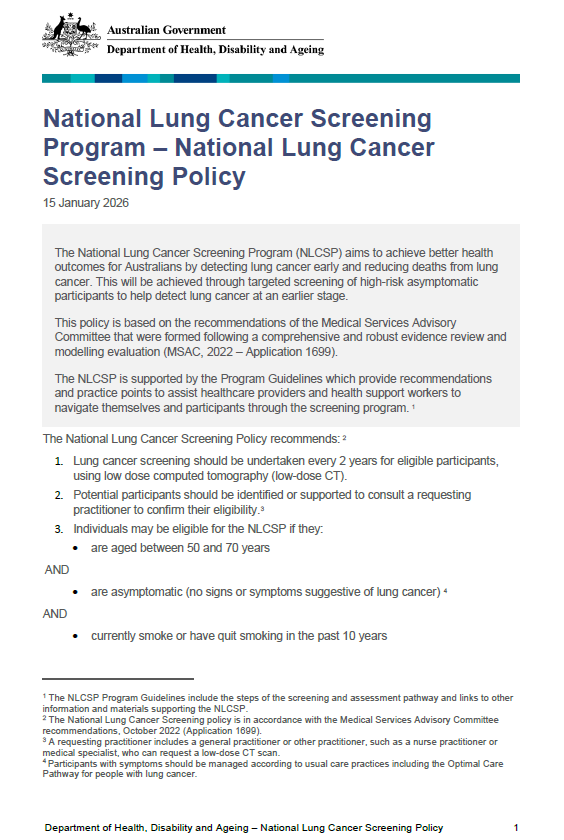
National Lung Cancer Screening Policy
The National Lung Cancer Screening Policy sets out our approach to improving health outcomes for Australians by detecting lung cancer earlier and reducing lung cancer related deaths.
Date last updated: