
Filter results
You can narrow down the results using the filters
Audience
Topics
Our work
Diseases
11940 results
-

Emissions Reduction Plan 2025–2026
This plan is our commitment to implement the Government’s APS Net Zero 2030 Strategy. -
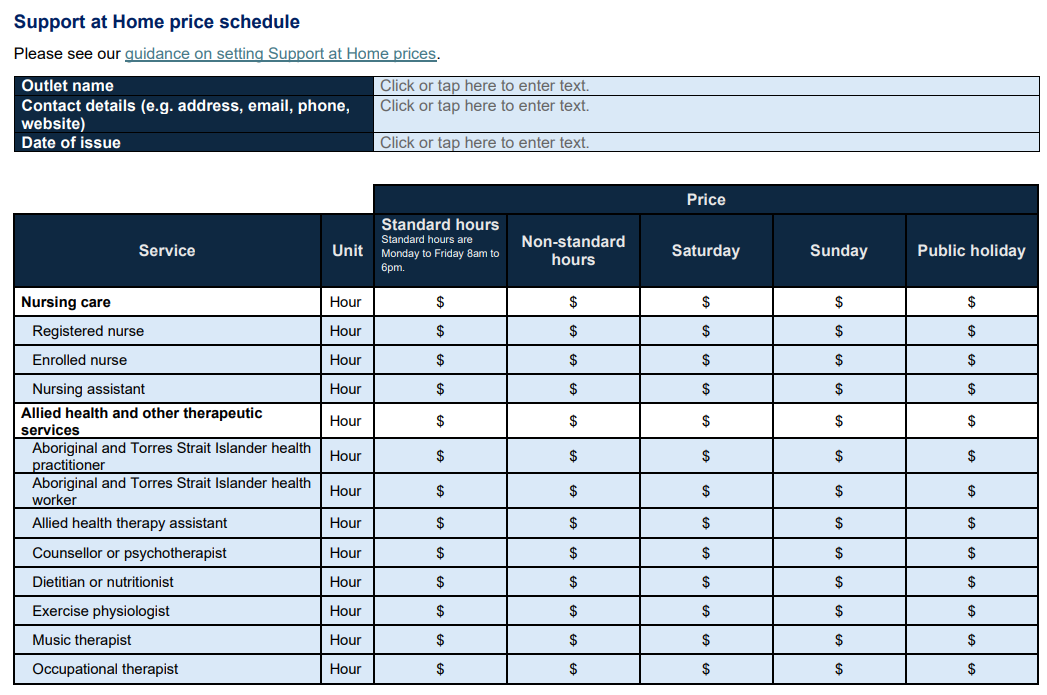
Support at Home – example pricing schedule for providers
This document is intended to assist providers to create their price schedule. -
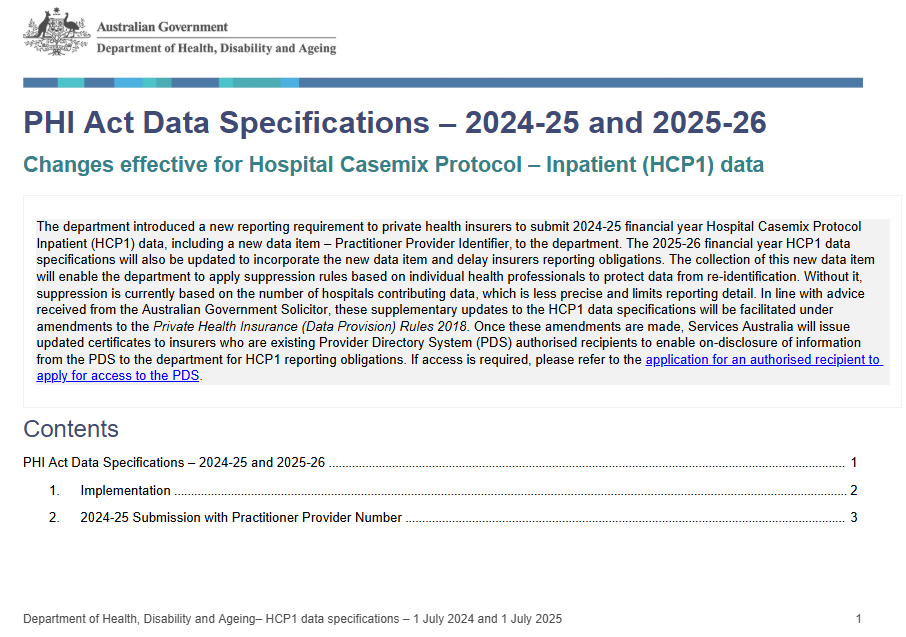
Supplementary changes in HCP1 data specifications – 2024–25 and 2025–26
This fact sheet outlines changes in the supplementary data specifications for Hospital Casemix Protocol – Inpatient (HCP1) data for the 2024-25 and 2025–26 financial year. They take effect on 1 November 2025. -
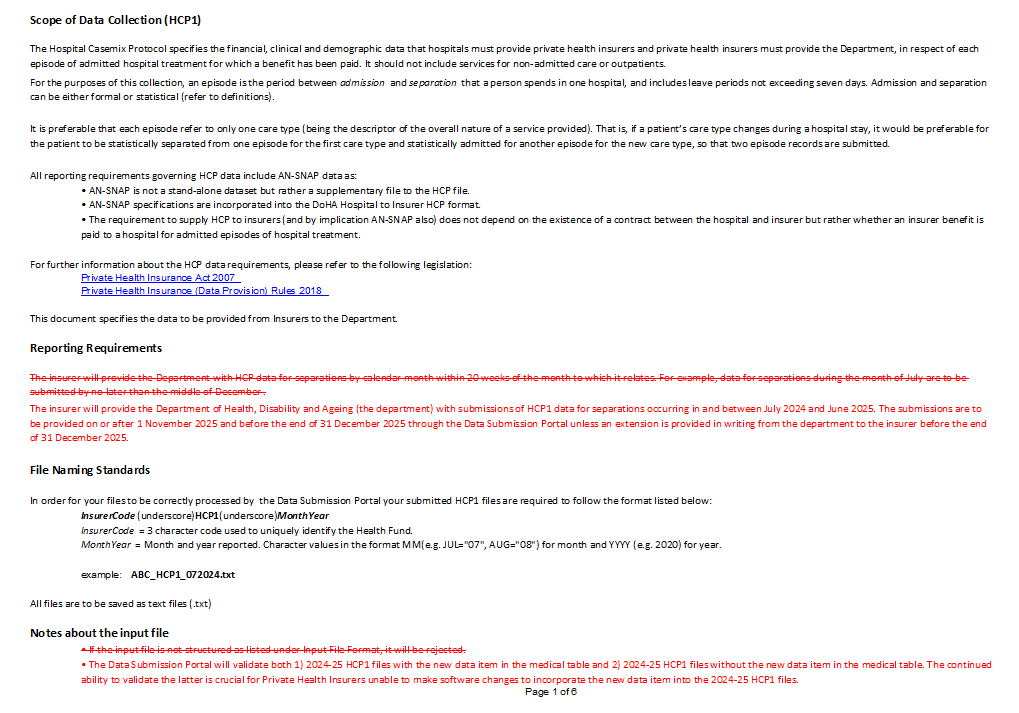
Supplementary HCP data specifications – HCP1 – Insurer to department – 2024–25
The Hospital Casemix Protocol (HCP) data specification for HCP1 files for 2024–25 details the financial, clinical and demographic data that hospitals must provide private health insurers. Private health insurers must then provide this data to us. Effective from 1 July 2024. -
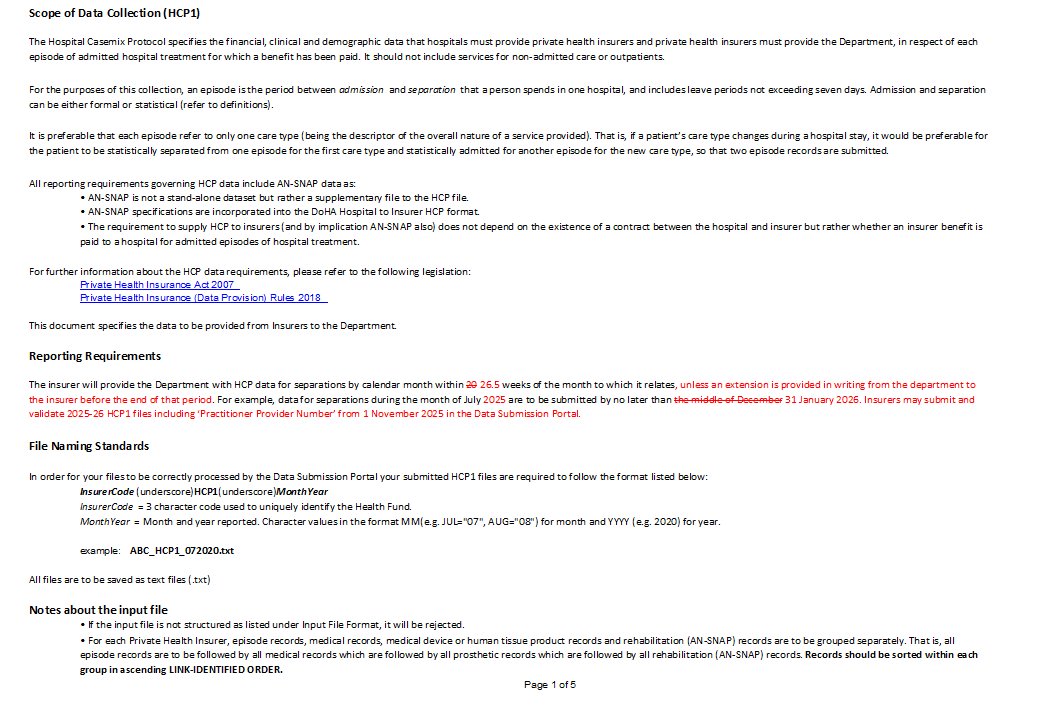
Supplementary HCP data specifications – HCP1 – Insurer to department – 2025–26
The Hospital Casemix Protocol (HCP) data specification for HCP1 files for 2025–26 details the financial, clinical and demographic data that hospitals must provide private health insurers. Private health insurers must then provide this data to us. Effective from 1 July 2025. -
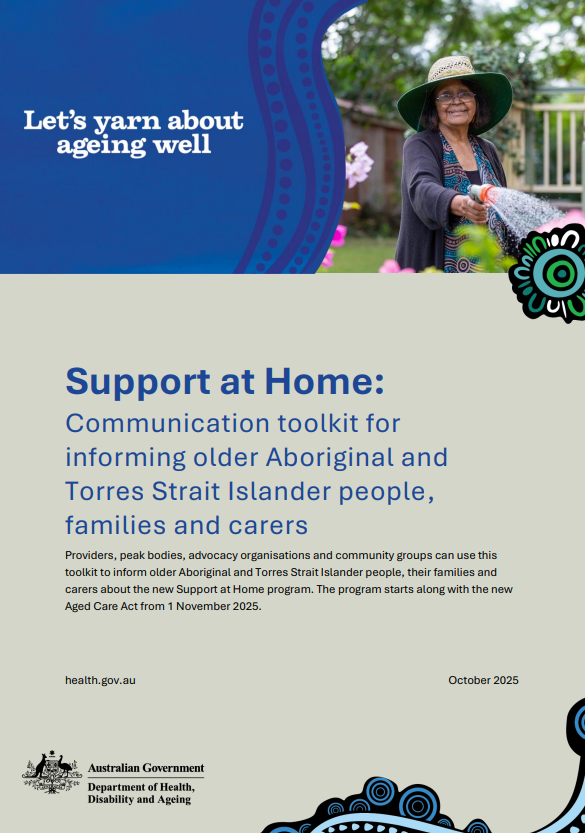
Support at Home communication toolkit for older Aboriginal and Torres Strait Islander people
Providers, peak bodies, advocacy organisations and community groups can use this toolkit to inform older Aboriginal and Torres Strait Islander people, their families and carers about the new Support at Home program. The program starts along with the new Aged Care Act from 1 November 2025. -
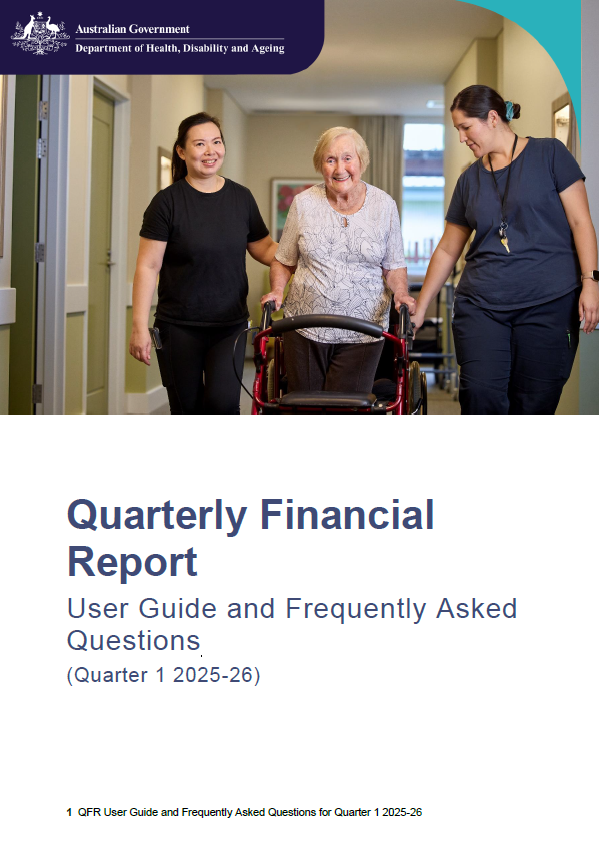
Quarterly Financial Report – User Guide and Frequently Asked Questions – Q1 – 2025-26
Quarterly Financial Reporting frequently asked questions for aged care providers to use as a guide when collating their financial information. -
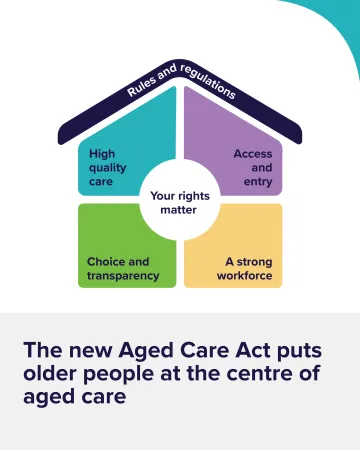
New Aged Care Act resources for communications practitioners
These resources can help communications practitioners working in aged care to communicate with their audiences about the new Aged Care Act. -
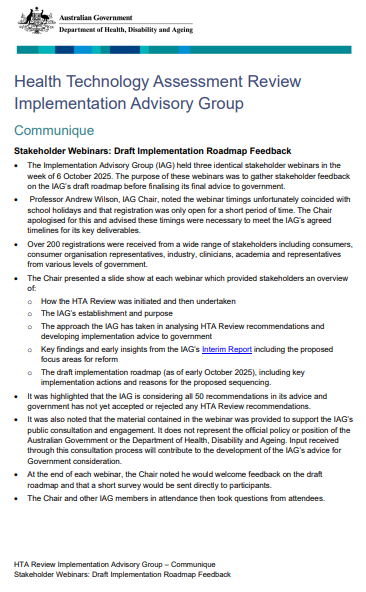
HTA Review Implementation Advisory Group communique – October Webinars
This communique summarises the Health Technology Assessment (HTA) Review Implementation Advisory Group webinars, held in early October 2025. -
HTA Review Implementation Advisory Group – October Webinar Slides
This presentation was used at the Health Technology Assessment (HTA) Review Implementation Advisory Group webinars, held in early October 2025. -
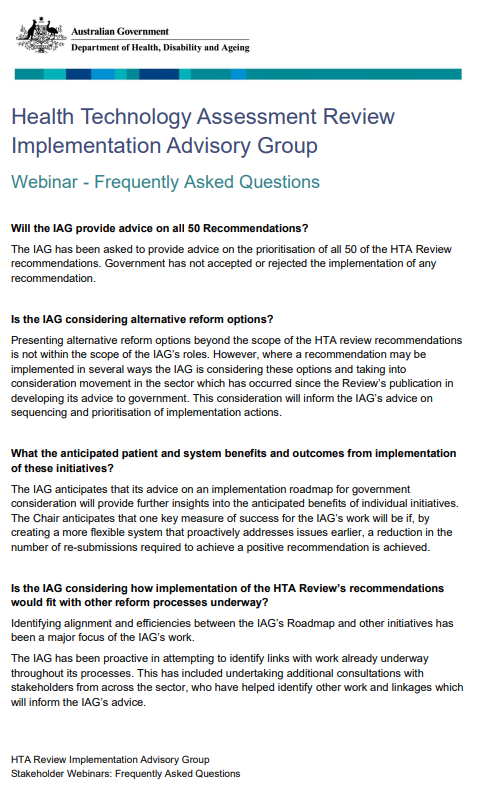
HTA Review Implementation Advisory Group – October Webinar FAQs
This fact sheet answers some of the Frequently Asked Questions (FAQs) raised at the Health Technology Assessment (HTA) Review Implementation Advisory Group webinars, held in early October 2025. -

Voluntary acknowledgement of incorrect payments (PBS)
Use this form to notify us that you are acknowledging that you were not entitled to receive Pharmaceutical Benefits Scheme (PBS) payments in relation to the PBS claims. -

Voluntary acknowledgement of incorrect payments
Use this form to acknowledge incorrect payments of Medicare benefits, Child Dental benefits and other payments that have been made to you by Medicare. -
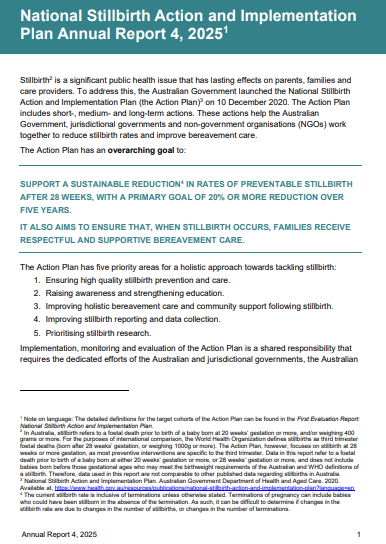
The National Stillbirth Action and Implementation Plan Annual report 4, 2025
This is the fourth Annual Report for the monitoring and evaluation of the National Stillbirth Action and Implementation Plan (Stillbirth Action Plan). -
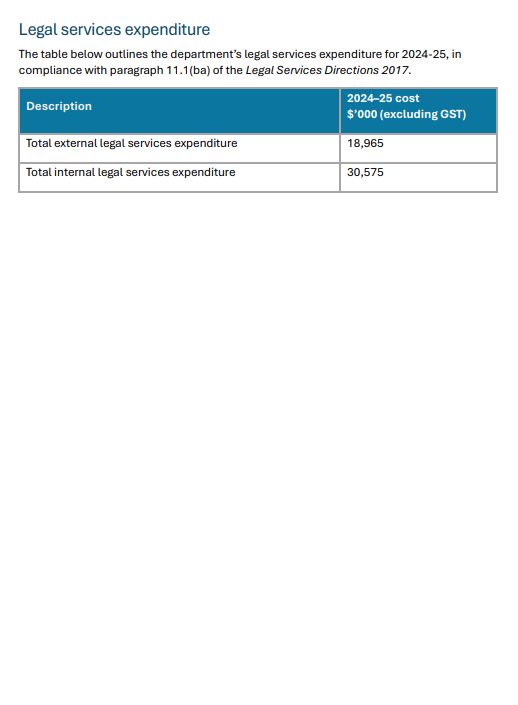
Legal services expenditure 2024–25
The Department's Legal services expenditure report for 2024-25, in compliance with paragraph 11.1(ba) of the Legal Services Directions 2017. -

Accommodation Pricing Review Consultation Paper
This document proposed consultation questions for the Residential Aged Care Accommodation Pricing Review. -
MyMedicare practice registration – Frequently asked questions
Learn more about MyMedicare eligibility, registration, and benefits. -
MyMedicare patient registration – Frequently asked questions
Frequently asked questions for MyMedicare patient registration. -
MyMedicare GP toolkit
An information kit to help you engage with your patients about MyMedicare and answer questions they may have. -
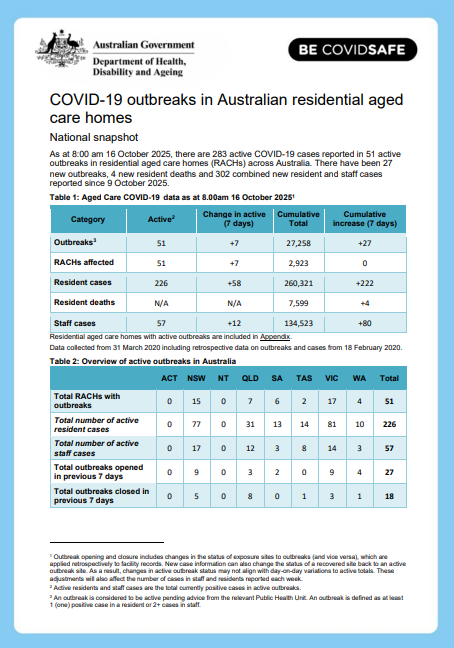
COVID-19 outbreaks in Australian residential aged care homes – 17 October 2025
This weekly report provides a snapshot of data on the impact of COVID-19 in residential aged care facilities nationally in 2025. It includes data on the number of services impacted and number of staff and resident cases, as well as workforce, vaccine rollout, testing and PPE provided to services. -
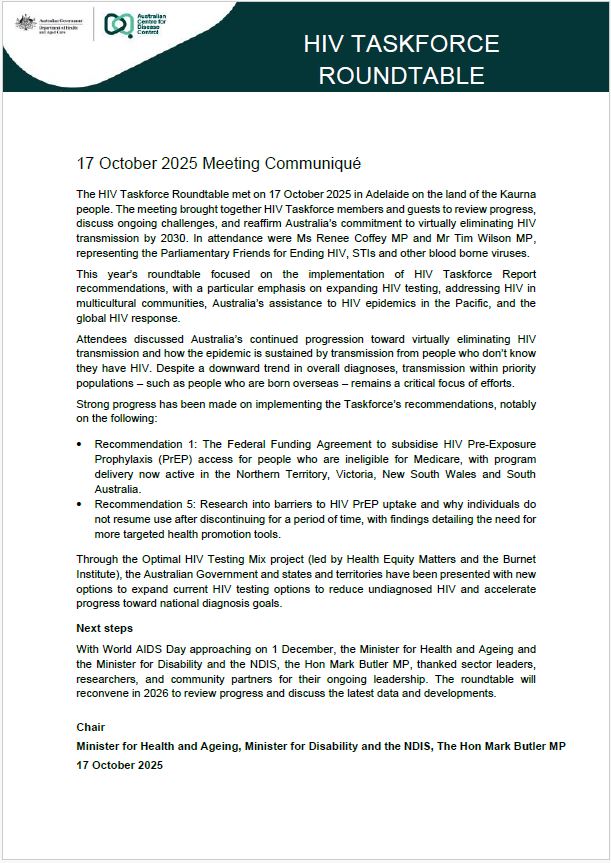
Human immunodeficiency virus (HIV) Taskforce Roundtable communique – 17 October 2025
This document presents a summary of discussions by the Human immunodeficiency virus (HIV) Taskforce Roundtable on 17 October 2025. -

Privacy policy
Our privacy policy sets out how we comply with the Privacy Act 1988. -
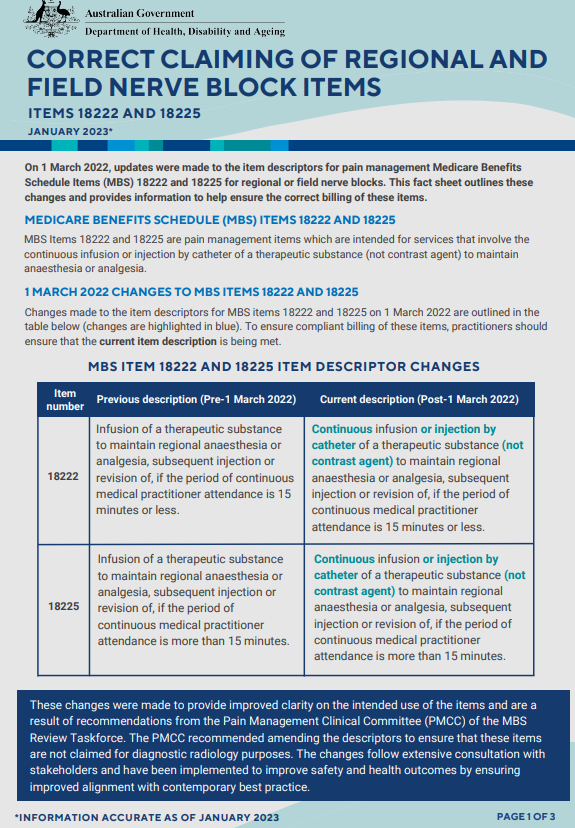
Correct claiming of regional and field nerve block items (18222 and 18225)
This fact sheet provides information to help support the correct billing of Medicare Benefits Schedule Items (MBS) 18222 and 18225 for regional or field nerve blocks. -
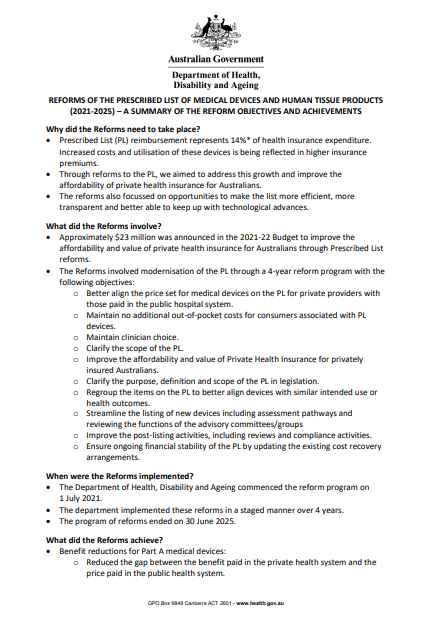
PL reforms – summary of objectives and achievements
The Prescribed List reforms finished in June 2025. This document list the reforms objectives and achievements. -
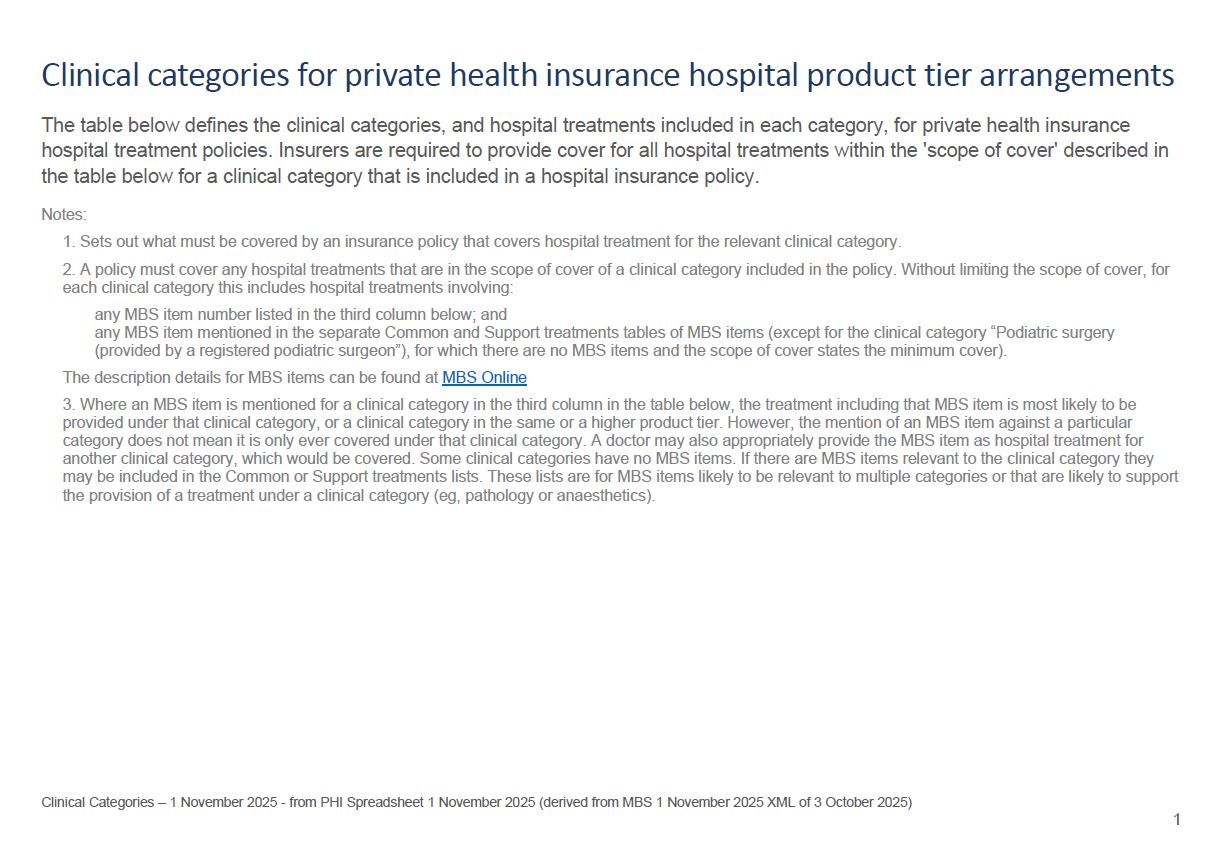
Private Health Insurance clinical category definitions 1 November 2025
Standard clinical category definitions for private health insurance hospital policies, released on 16 October 2025 and effective 1 November 2025.