
Wellness and reablement
Wellness and reablement are person‑centred approaches to service delivery that build on older people’s strengths, abilities and goals to support independence, confidence and quality of life. Wellness is a philosophy that guides how services are delivered, while reablement uses time‑limited, goal‑focused support to build or restore capacity.
The resources on this page support aged care providers to embed wellness and reablement into everyday service delivery and organisational practice and, while originally developed for Commonwealth Home Support Program (CHSP) providers, can be applied more broadly across in‑home aged care settings. Aged care providers should refer to the relevant program manuals for the most up‑to‑date program settings and guidance.
Practical guides and tools
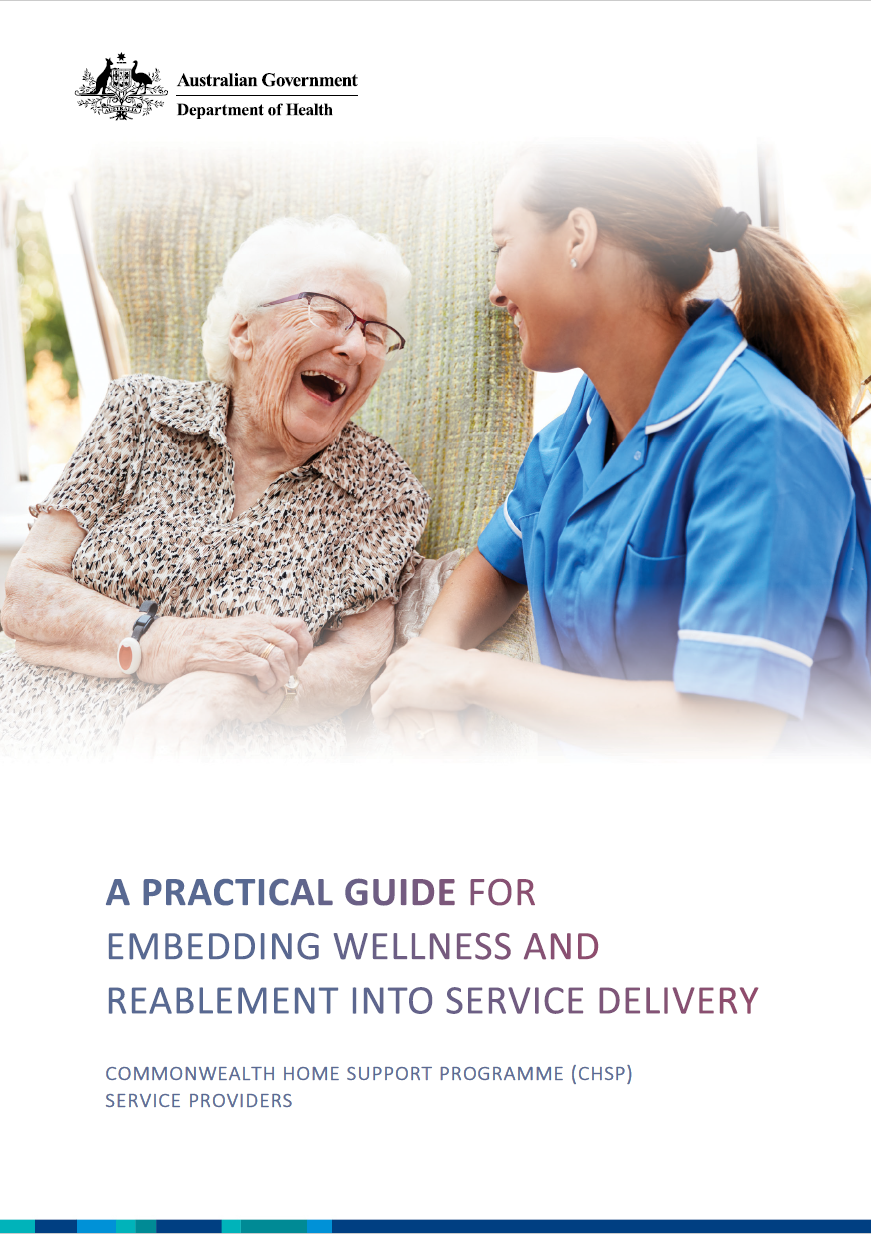
Practical guide for embedding wellness and reablement into service delivery
This practical guide for in-home aged care providers includes information about managing the intake process, developing care plans with older people and their supporters, and delivering person-centred care.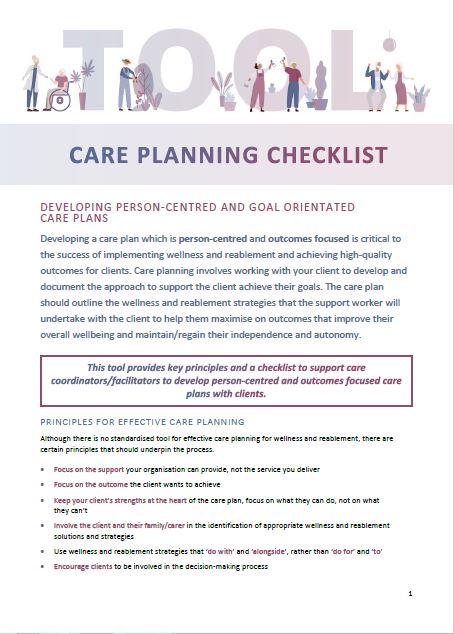
Care planning checklist
This checklist includes useful prompts to help you develop a clear and effective person-centred and outcomes focused care plan with your clients.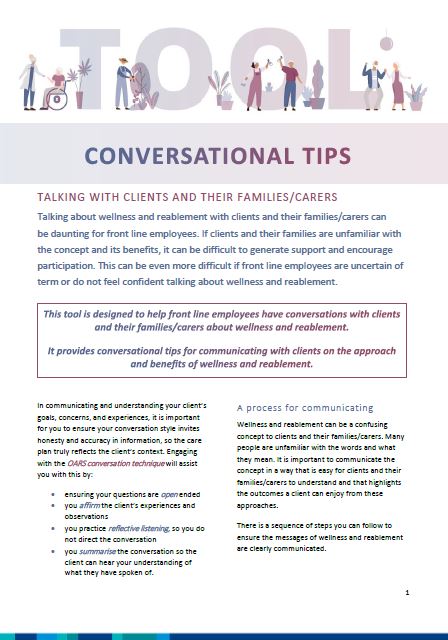
Conversational tips
This guide provides advice on engaging older people in conversations about their goals, concerns, and experiences, and how to explain the benefits of wellness and reablement approaches in an easy-to-understand way.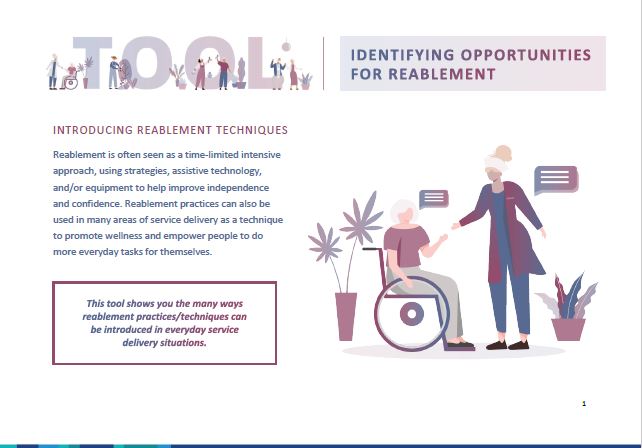
Identifying opportunities for reablement
This guide explains practical opportunities to introduce reablement practices into everyday service delivery, to help empower clients to do what they can for themselves to regain or maintain independence, increase confidence, motivation and social connection.
Wellness wheel
Use the wellness wheel to prompt conversations with your client to better understand what’s important to them across mind, body, and social connectedness. The wheel can assist you in asking questions about your client’s daily life to develop a care plan that is unique to them.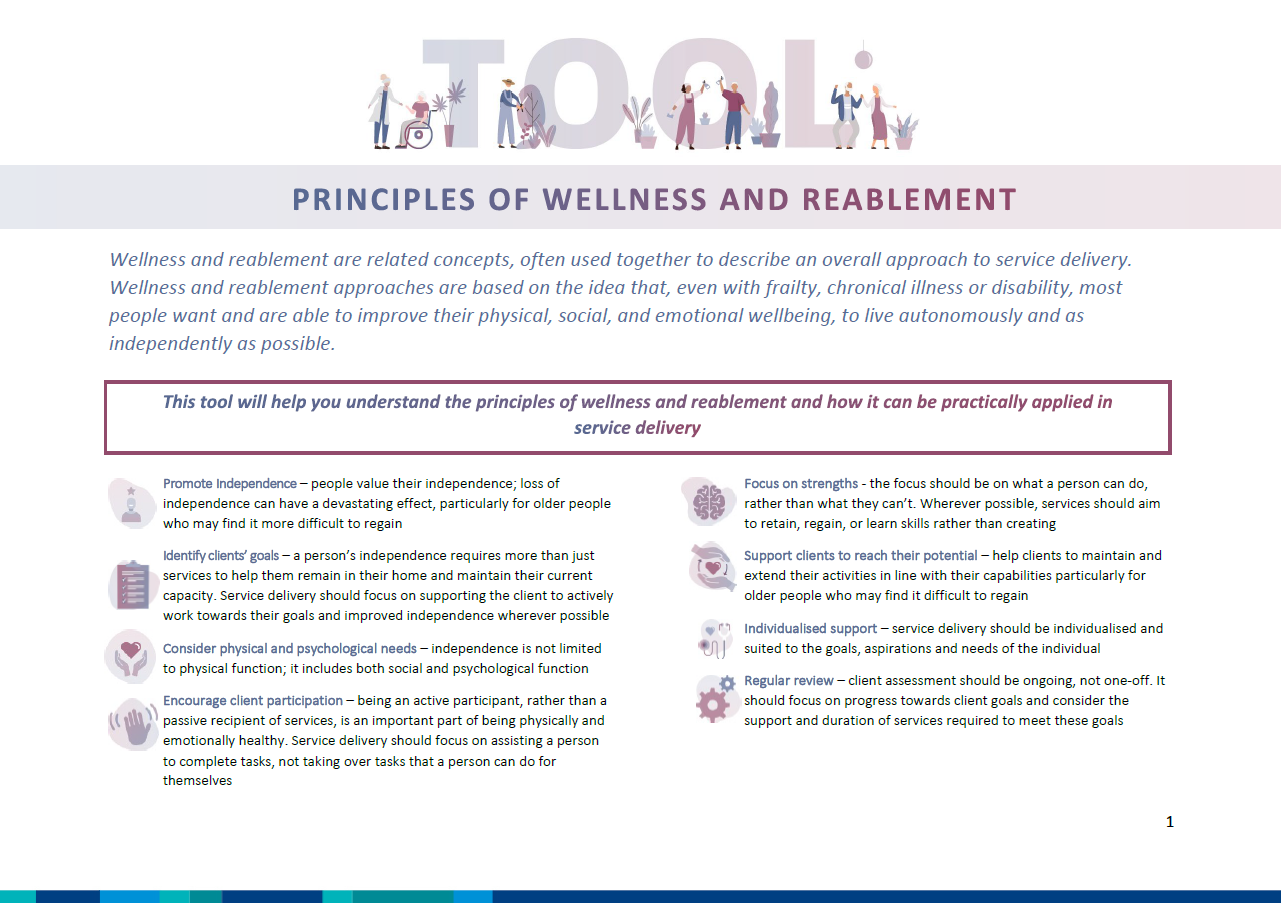
Principles of wellness and reablement
This one-page placemat explains the importance of the 8 key elements of wellness and reablement.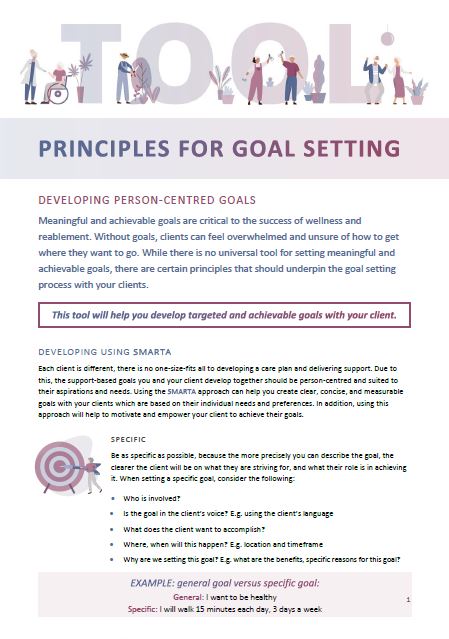
Principles for goal setting
A guide to engaging with your client to identify personalised goals that are clear and achievable.
Service delivery reflection template
This one-page template will help you capture your wellness and reablement activities and encourage continuous quality improvement in your organisation.
Organisational guidance and tools
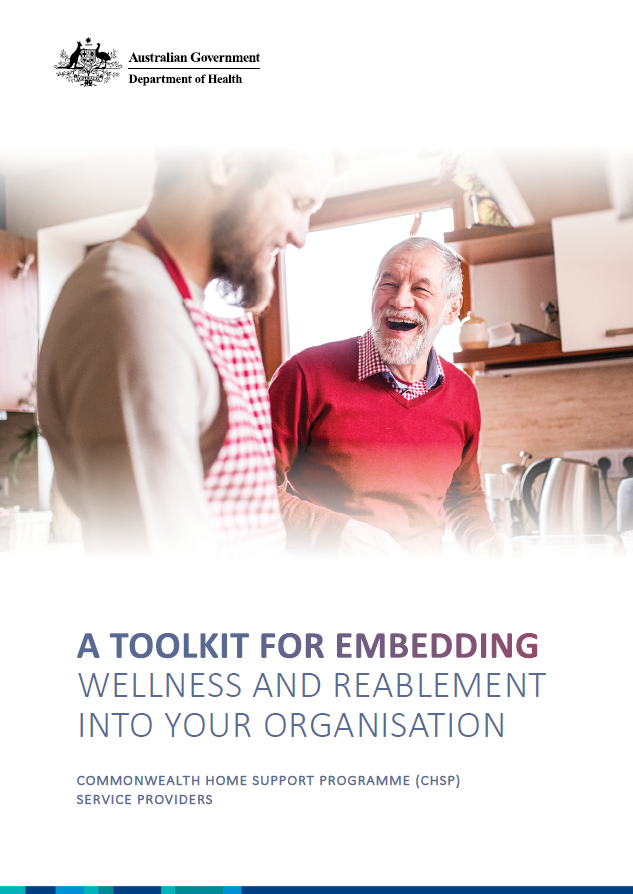
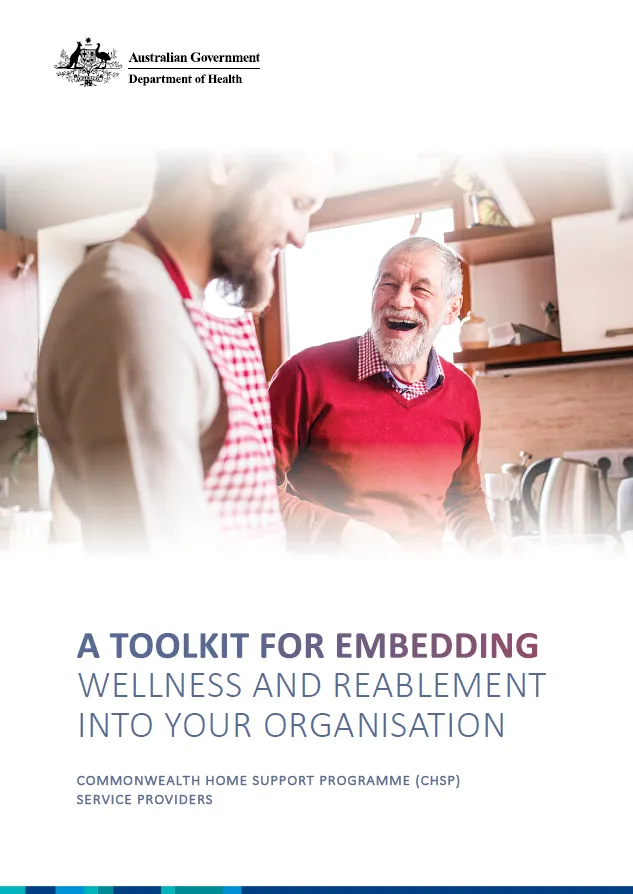
Toolkit for embedding wellness and reablement into your organisation
This comprehensive toolkit provides information on wellness and reablement and tools to help service managers prepare, implement and evaluate your activities.
Change management plan step-by-step guide
Designed as a practical tool to assist management teams to plan and undertake change activities within your organisation. It provides a process to identify and capture change activities and provides a template and examples to help get started.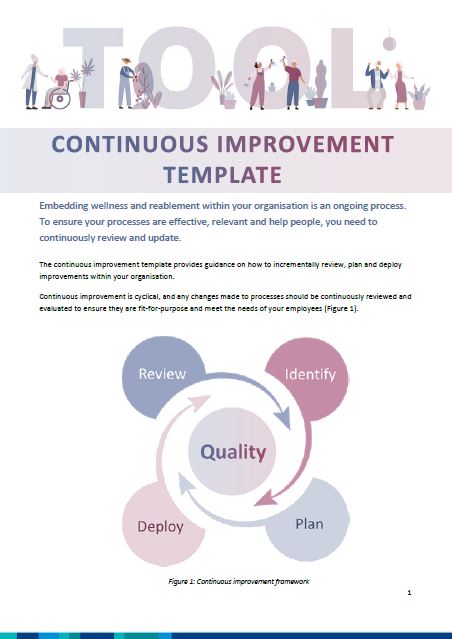
Continuous improvement template
This template can help you undertake a change management process of reviewing, identifying, planning and deploying ongoing quality improvement activities within your organisation.
Organisational culture checklist
This checklist may assist you in identifying the next steps to embedding an organisational culture that embraces a wellness and reablement approaches to delivering care.
Organisational self-assessment tool
The self-assessment provides an overview of the elements you need to adopt wellness and reablement in your organisation. It includes scoring to measure the levels of organisational readiness, helps to identify areas of focus or improvement, and enables a baseline to be developed for future progress.
Standard operating procedure template
Standard operating procedures (SOP) provide an ability to define the steps and processes required to undertake a given activity. This can be critical in setting team expectations and to identify the requirements – such as training or coaching – needed to complete the SOP.
We aim to provide documents in an accessible format. If you're having problems using a document with your accessibility tools, please contact us for help.