
Rural generalists are general practitioners who provide primary care services and emergency medicine, and who have training in additional skills. For example, in obstetrics, anaesthetics or mental health services.
The National Rural Generalist Pathway recognises the extra requirements and skills of rural generalists. It supports them to meet the diverse health needs of regional, rural and remote Australians. Rural generalists give these communities access to a broader range of specialist medical services.
About the initiative
In December 2018, the inaugural National Rural Health Commissioner Professor Paul Worley's National Rural Generalist Taskforce provided Advice to the NRHC on the development of a National Rural Generalist Pathway. In response, the government:
- implemented a training pathway for rural generalists, and
- provided additional training places for GPs in regional, rural and remote communities.
Specific training for rural generalists ensures that GPs and registrars have the right skills to practice in rural settings. This means that rural generalists can address the shifting needs of regional, rural and remote communities.
Why it is important
Rural generalists are an important part of our regional, rural and remote health workforce. They broaden the range of locally available medical services for rural Australians and work as part of health care teams. This helps these communities to access the right care, in the right place, at the right time, as close to home as possible. Growing our rural generalist workforce will reduce hospital admissions, reduce the use of locum services and limit the need for patient travel.
Goals
The national pathway provides:
- formal recognition of the role and skills of rural generalists
- coordination of rural generalist training
- additional supports for rural generalists
- increased opportunities for doctors to train and practise in both hospital and primary care settings in regional, rural or remote communities
- better retention of keep doctors working in regional, rural or remote communities.
Meeting our goals
We are working to meet our goals through the following key activities:
Coordination units
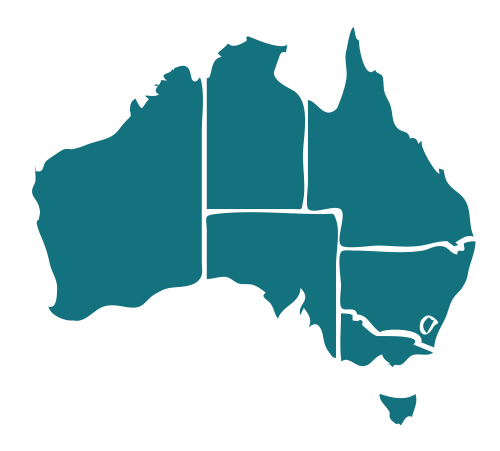
Rural generalist coordination units have been established in all states and the Northern Territory.
Coordination units manage the training pipeline for rural generalists. They also help doctors transition between their postgraduate clinical and training components in both hospitals and primary care.
You can contact the coordination unit in your area for more information on joining a rural generalist training pathway:
National recognition
In 2020, the Australian Government funded a joint application to the Medical Board of Australia (MBA) for the recognition of rural generalist medicine as a distinct field within the specialty of general practice.
In 2024, the Australian Medical Council (AMC) assessed the application and consultation feedback and endorsed the recognition.
In September 2025, all Australian Health Ministers formally approved rural generalist medicine as a new field of speciality practice within the speciality of general practice. This formal recognition acknowledges the critical role rural generalists play in delivering high-quality, comprehensive health care to rural, remote, and First Nations communities across the nation and demonstrates the Australian Government’s commitment to increasing access to general practitioners, including rural generalist doctors, in regional and rural Australia.
In August 2026, the MBA endorsed the AMC's accreditation assessment of the Royal Australian College of General Practice and Australian College of Rural and Remote Medicine rural generalist training programs.
The MBA is working through transition arrangements for doctors practising as rural generalists.
The GP Colleges have established the Joint Consultative Committee Rural Generalist Medicine, chaired by the National Rural Health Commissioner Professor Jenny May AM, to provide guidance on rural generalist medicine and support nationally coordinated approaches on key priorities. The committee's initial focus will include standards, curriculum and advanced skills training.
Australian Primary Care Prevocational Program – Rural
From 1 January 2026 the Australian Primary Care Prevocational Program (APCPP) replaced the John Flynn Prevocational Doctor Program. The Rural stream of the APCPP streamlines and coordinates medical training in rural and remote regions by:
- expanding the number and distribution of rural primary care training rotations available to junior and prevocational doctors
- increasing rural medical training capacity
- improving retention of medical graduates and junior doctors in rural medical practice
- strengthening the rural training pathway to improve training continuity in state and territory regions.
The APCPP – Rural is a main component of the National Rural Generalist Pathway, providing experience and exposure to primary care to encourage a career in rural generalism or rural general practice.
Evidence shows that if medical graduates and junior doctors are trained in rural areas, they are more likely to work in rural areas. The APCPP also addresses some of the priorities under the National Medical Workforce Strategy by helping to grow the rural GP and rural generalist workforce.
Rural generalist training
The government is expanding general practice (GP) and rural generalist training. Fully-funded GP and rural generalist training is expanding from 2026, with the government achieving its target of 2,000 GP and rural generalist commencing trainees 2 years early in 2026.
More than 2,000 Commonwealth-funded GP and rural generalist training places will continue to be offered annually through the Australian General Practice Training (AGPT) and the Remote Vocational Training Scheme (RVTS) programs. This includes 100 rural generalist places previously delivered under the Rural Generalist Training Scheme, which have been consolidated into the AGPT program.
By consolidating these rural generalist places within the AGPT, all rural generalist registrars training on Commonwealth-funded programs have the same access to supports, including National Consistent Payments, and the ability to apply for a range of flexible funds to support relocation, priority workforce placements and pastoral care.
Self-funded training pathways are offered by both GP Colleges and offer an alternative entry point for trainees outside Commonwealth-funded programs, while still meeting rural generalist curriculum requirements, including advanced skills and rural experience.
Other ways we support rural generalists
The Advanced Skills Training Posts Rural Generalist and General Practitioners Program (AST Program) provides funding to partially subsidise 15 new hospital-based advanced skills training posts annually. This funding supports GP and rural generalists and fellows to acquire advanced skills relevant to supporting the needs of their rural communities. All disciplines supported by the GP Colleges are eligible for funding under the AST Program.
The Single Employer Model introduces new employment arrangements for GP trainees, helping to build our future GP workforce.
To further support rural careers, various incentives are available to GPs and general practices. These incentives aim to encourage medical professionals to pursue and sustain careers in rural areas, ensuring that high-quality healthcare is accessible to all Australians, regardless of their location.
For example, the Workforce Incentive Program – Rural Advanced Skills payment which commenced in January 2024. The payment, among other things, aims to encourage:
- GPs to consider the National Rural Generalist Pathway
- GPs and rural generalists to provide advanced skills and emergency medicine services to patients in rural communities.
A range of incentives and programs are available to support GPs and general practices. This includes incentives to support multidisciplinary team care. Incentives are typically scaled so that the more remote your place of practice, the higher your incentive. To find out more, see the Modified Monash Model classification fact sheets.
The Pre-Fellowship Program (PFP) supports the rural generalist workforce by providing International Medical Graduates and other non-vocationally recognised doctors valuable GP experience prior to joining a GP training pathway. The PFP provides support in the form of funding for supervision and learning and development for eligible participants.
Eligible participants must practice in a Distribution Priority Area or an Aboriginal Medical Service or an Aboriginal Community-Controlled Health Service.
Life as a rural generalist: providing health care to rural and remote Australia
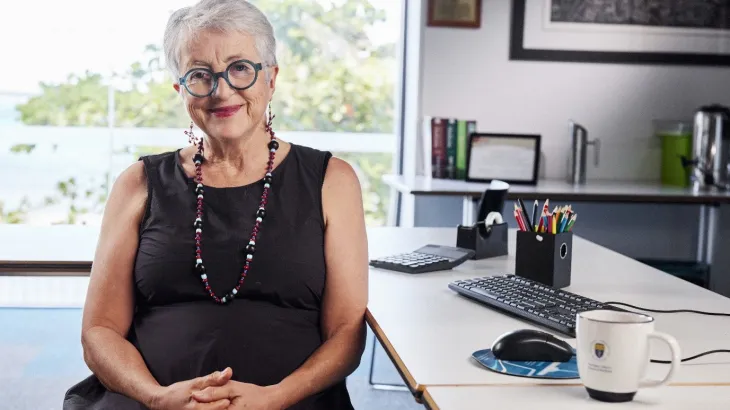
This video created by former National Rural Health Commissioner Adjunct Professor Ruth Stewart highlights the vital role of rural generalists in delivering healthcare to regional, rural and remote communities. Her insights continue to inspire us. The role of Commissioner for Rural Health is now held by Professor Jenny May.
RUTH: I’m Ruth Stewart, I’m the National Rural Health Commissioner and I’ve been a rural generalist for over 35 years now. It’s the best job in the world.
Rural generalists are equipped to work in rural and remote settings. We really need very skilled clinicians working in remote communities. The National Rural Generalist Pathway is a training program for doctors so that they can end with the skills and competence – and confidence – to work in a rural or remote community, anywhere in Australia. So that governments and health departments, hospitals and clinical practices will recognise the scope of practice and those qualifications as being the signifier that you have the skills to work here.
In setting up the pathway, we’re seeking recognition of rural generalism as a specialised field within general practice. That’s a bit the same as cardiology is a specialised field within internal medicine. So, you’re still a physician with an expertise in internal medicine, but your specialised field is cardiology. Well, I’m still a general practitioner, but I have a specialised field of rural generalism.
PRESTON: I’m Preston Cardelli. I’m one of the provisional senior medical officers working here at Thursday Island. I work as a trainee rural generalist and my skillset is that I’m a training GP registrar with an advanced skill in anaesthetics. I’m able to provide support in a critical care situation and also help out with aeromedical retrievals if needed.
I grew up in a rural area. I always knew that I was going to live in a rural and remote area as much as I could. I knew that I wanted to be a rural doctor because it meant that I could return back to where I felt like my foundations were. And through my medical student rotations, I was able to meet people who were working in the role of a rural generalist. Just fascinated and inspired by the stuff that they do day-to-day because it’s amazing, they do such a wide scope of practice. That’s why I wanted to be a doctor that could manage lots of things, that’s why I chose rural medicine.
RUTH: Rural generalists work in what we often refer to as a resource-poor environment. We don’t have CT scans, MRI scans, we don’t have a coronary catheter lab just onsite. If someone has a heart attack, we need to be able to stabilise them, to consult with our specialist colleagues who are at a distance, not just down the corridor, and deliver the care that’s needed now and decide whether this patient needs to be transferred for further care. And that’s a really important thing about rural generalist training – if you turn up in that environment, you train for it, you know what to do when stuff happens because stuff happens. And if you are a person living in a rural and remote community, you want to know that the doctor who you’re just about to meet knows what to do when stuff happens.
PRESTON: The days in the life of a rural generalist up here, probably very different to a lot of other places. My role, I could be doing anything from adjusting a medication on someone for a long-term treatment plan to retrieving someone and putting someone in a coma in an outer island or delivering a baby. You know, it’s just such a wide scope.
RUTH: Yes, some of those emergency situations that I intervened and saved a life, and you know they come but it’s those times where it’s not as easy as just doing one thing. Where it’s being with someone through the course of their illness and the management of it that can only occur if you provide continuity of care.
PRESTON: I think some of the most rewarding parts about being a rural generalist are the fact that you get to be involved in the community. Torres Strait Islander people are very cultural and very family-based and to be invited into someone’s wedding or funeral is a really big deal, and I don’t think that I would get a chance to be involved in something like that if I wasn’t living and working in a remote area. What I would tell myself 6 or 7 years ago when I first embarked on the journey when I first signed up, it’s everything that you’re expecting it to be plus a whole lot more.
RUTH: Innovation, when you approach it as a rural generalist, you can enable the delivery of care in your community that is equal to what anybody in Australia can get. It just looks different. I never have to wonder whether the work I’m doing is helpful. I know every night when I go to sleep that I have made a difference to people’s lives and that is such, such a wonderful and privileged experience.