
Missions in medical research
A Mission allows researchers to think big.
Missions are programs of work with ambitious objectives that are only possible through significant investment, leadership and collaboration.
Missions tackle significant health challenges by bringing together key players:
- researchers
- health professionals
- stakeholders
- industry partners
- patients
This joint effort supports the discovery of new techniques and treatments, leading to healthier Australians.
Benefits of Missions
Missions:
- enable key players to work together and exchange insights that lead to better research
- position Australia as a global research leader
- promote new evidence-based approaches to disease management
- create new jobs and business growth
Missions challenge current ways of thinking. They allow researchers to be bold and change the face of medicine.
MRFF Missions
The MRFF 10-year Investment Plan outlines plans for 10 Missions.
- The Australian Brain Cancer Mission supports research into brain cancer treatments. It aims to double the survival rate and improve the quality of life of patients living with brain cancer. Cancer Australia will coordinate and administer the Mission.
- The Cardiovascular Health Mission brings together researchers, health professionals, industry and patients to make transformative improvements in heart and vascular health and stroke for all Australians.
- The Dementia, Ageing and Aged Care Mission supports older Australians to maintain their health and quality of life as they age, live independently for longer, and access quality care when they need it.
- The Genomics Health Futures Mission will help improve testing and diagnosis for many diseases, help personalise treatment options to better target and improve health outcomes, and reduce unnecessary interventions and health costs.
- The Indigenous Health Research Fund supports Indigenous-led research to tackle health issues facing Aboriginal and Torres Strait Islander people. It aims to improve health outcomes and close the gap on health mortality and morbidity of Aboriginal and Torres Strait Islander people.
- The Low Survival Cancers Mission aims to improve care and health outcomes for people with cancers where the 5-year survival rate is less than 50 per cent.
- The Million Minds Mental Health Research Mission supports Australians with mental health issues by enabling access to new approaches to prevention, diagnosis, treatment and recovery.
- The Reducing Health Inequities Mission supports research that improves access to high quality health services by priority populations.
- The Stem Cell Therapies Mission is investing in the development of innovative, safe and effective treatments that improve health outcomes, in partnership with patients and carers.
- The Traumatic Brain Injury Mission supports research to improve patient recovery after brain injury. This includes projects that predict recovery outcomes or identify effective care and treatments, to reduce barriers to living the best quality of life after a traumatic brain injury.
See all MRFF initiatives.
See more information about the MRFF funding process.
Monitoring, evaluation and learning
We commenced an Evaluation of the MRFF Research Missions program in July 2025.
The evaluation will assess our progress in meeting the objectives of the:
- Research Missions program
- MRFF as articulated in the MRFF Monitoring, Evaluation and Learning Strategy.
The findings will inform the government on the future direction of MRFF Missions and funding investments.
Stakeholders had an opportunity to provide their views on MRFF Missions through:
- a survey of lead chief investigators of Mission grants in November 2025
- public consultation between 2 December 2025 and 27 February 2026.
We expect the review findings will be available in mid-2026.
A Mission Evaluation Panel comprising the following people will guide the review.
| Member | Background and experience | Declarations of interest |
|---|---|---|
| Professor Annemarei (Anna) Ranta (Chair) | Professor Ranta is an academic stroke neurologist and the Head of the Department of Medicine at the University of Otago in Wellington, New Zealand. | President-Elect, Australian and New Zealand Stroke Organisation Medical Director and Board Member, Stroke Aotearoa Board Member, World Stroke Organization Board Member, Asia Pacific Stroke Organization |
| Ms Ainslie Cahill | Ms Cahill is a member of the National Health and Medical Research Council (NHMRC) Council. She is Chair of the NHMRC-MRFF Consumer Advisory Group, providing strategic advice on health and medical research from a consumer perspective. | Chair, NHMRC-MRFF Consumer Advisory Group 2024-2027 NHMRC Community Observers Working Committee |
| Associate Professor Alwin Chong | Associate Professor Chong is a Wakamin descendent from Far North Queensland. He was Director of the Yaitya Purruna Indigenous Health Unit at the University of Adelaide. He led the first Clinical Centre of Research Excellence in Aboriginal and Torres Strait Islander Health. Associate Professor Chong was program leader for the Healthy Communities Program for the Lowitja Institute Cooperative Research Centre. | Nil |
| Ms Amelia Olsen-Boyd | Ms Olsen-Boyd is an Executive Manager at CSIRO. She previously led the design of CSIRO’s Missions Program. | Nil |
| Dr Douglas Hilton (Advisory role for MRFF-specific matters, to March 2026) | Dr Hilton is an Australian Medical Research Advisory Board (AMRAB) representative and the current CEO of CSIRO. He is immediate past Director of the Walter and Eliza Hall Institute of Medical Research and former president of the Association of Australian Medical Research Institutes. | CEO, CSIRO Ex-Officio Member, National Science and Technology Council Trustee, Science & Industry Endowment Fund Fellow, Australian Academy of Science Fellow, Australian Academy of Technological Sciences and Engineering Fellow, Australian Academy of Health and Medical Sciences Honorary Associate, Museums Victoria |
| Professor Raymond Chan | Professor Chan is an NHMRC Council member and the Deputy Vice-Chancellor (Research) at Flinders University. | Deputy Vice Chancellor (Research), Flinders University Board of Directors, Flinders Partners Board of Directors, Flinders Foundation Board of Directors, Aus Science Media Centre |
| Dr Shyamsundar Muthuramalingam | Dr Muthuramalingam is the Director of Research and Teletrials at Barossa Hills Fleurieu Local Health Network in South Australia. He is a member of the NHMRC-MRFF Consumer Advisory Group and the Australian Medical Council. | Health consumer member, Australian Medical Council Health consumer member, Medical School Accreditation Committee – Australian Medical Council Committee Member, NHMRC-MRFF Consumer Advisory Group 2024-2027 Consumer Co-chair, Australian Teletrial Program Clinical and Consumer Advisory Group Lived experience representative, Flinders Caring Futures Institute External Strategic Advisory Board Consumer member, Consumer and Community Advisory Panel – Bellberry Limited Manager, Consumer Engagement and Health Promotion – South Australian Prison Health Service, Central Adelaide Local Health Network Member, Health Translation SA Consumer and Community Involvement Action Group Consumer member, Kidney Health Australia Clinical Advisory Committee Director, Clinical Research and Teletrials, Barossa Hills Fleurieu Local Health Network, SA Health, Government of South Australia |
| Associate Professor Stephen Adelstein | Associate Professor Adelstein is an NHMRC Council member. He is Head of the Department of Clinical Immunology and Director of the Central Sydney Immunology Laboratory at Royal Prince Alfred Hospital. He is an Associate Professor of Medicine at the University of Sydney. | Nil |
| Ms Sue MacLeman | Ms MacLeman is the Chair of Medicines Australia. She has more than 30 years' experience as a pharmaceutical, biotechnology and medical technology executive. She has held senior roles in health administration, corporate, medical, commercial and business development. | Board Member (Non-Executive Director), Omico Former Chair, MTPConnect (until March 2023) Panel member, MRFF Genomics Health Futures Expert Advisory Group (2018-2021) Chair, Women’s Health Foundry Advisory Board |
| Dr Tammy Clifford | Adjunct Professor Clifford is the Vice-President, Research – Learning Health Systems at the Canadian Institutes of Health Research (CIHR). She is also an Adjunct Professor at the University of Ottawa’s School of Epidemiology and Public Health. | Nil |
| Professor Andrew Wilson (from May 2026) | Professor Wilson is an AMRAB representative. He is Professor of Public Health in the Sydney School of Public Health and Co-Director of the Leeder Centre for Health Policy, Economics and Data (University of Sydney). | Board Director, Bellberry Ltd Chair, Independent Accreditation Committee, Australian Health Professional Regulation Agency Chair, Onshore Vaccine Program Scientific Advisory Committee Co-Director, Leeder Centre for Health Policy, Economics and Data, Faculty of Medicine and Health, University of Sydney |
|
Learn more about MRFF monitoring, evaluation and learning.
Researchers speak
Professor Helen Christensen AO (Director and Chief Scientist of the Black Dog Institute) explains how the Million Minds Mental Health Research Mission enables a national response to mental health issues.
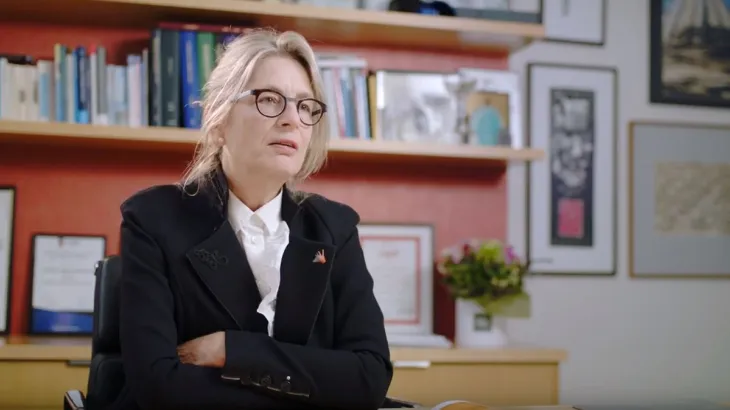
[Image appears of Professor Helen Christensen sitting in an office talking to the camera and the camera zooms in on her face as she talks]
Professor Helen Christensen: In Australia there’s about 4,000,000 people who have a mental health problem.
[Music plays and the image changes to show an open pamphlet with a note pad next to it with the Black Dog Institute logo on it]
[Images move through to show the Black Dog Institute building, a statue of a black dog, Helen talking to the camera, and then people sitting in an auditorium]
Understanding big problems like mental illness requires a large national response and the Medical Research Future Fund really allows us to do that.
[Image changes to show Helen talking to the camera and text appears: Professor Helen Christensen AO, Director and Chief Scientist, Black Dog Institute]
I sit on the Million Minds Advisory Committee.
[Image shows Helen talking to the camera and then the image changes to show Helen and three other staff members sitting around a boardroom table in conversation]
Our role is to help shape the way in which the Medical Research Future Funds will be used in the cause of mental illness.
[Images move through to show an open pamphlet showing a suicide prevention research chart, a Black Dog brooch on Helen’s suit jacket, and then Helen talking to the camera]
Many young kids in their early teens start to develop mental health problems like depression, anxiety and so on.
[Images move through to show Helen talking to the camera, a “Creating a mentally healthier world” booklet on a desk, and then Helen in conversation with a group of young people at a table]
However, we do know that around 22% of those young people could be prevented from developing these disorders in the first place.
[Camera pans around Helen and the group at the table and then the images move through to show Helen talking to the camera and Helen and her colleagues sitting around a boardroom table]
The Medical Research Future Fund has contributed $125 million over ten years to try and make a difference to the lives of people who have mental health problems.
[Camera zooms in on a male listening and then the image changes to show Helen talking to the camera]
At the moment we have three different areas of particular interest.
[Image changes to show a female giving a presentation to a group of people and the camera zooms in on their faces]
One is mental health issues in young people and adolescents.
[Images move through to show Helen talking to the camera, Helen working at a laptop, and then Helen scrolling through the Million Minds Mission Grant Opportunity website]
A second issue is around eating disorders. They cause so much suffering and severe disablement.
[Images move through to show Helen talking to the camera, three females in conversation, a group of people in conversation sitting around a boardroom table, and then Helen talking to the camera]
And the third one is indigenous mental health because we know for example the suicide rate in indigenous young people and adults is two or three times higher than that of non-indigenous people.
[Image changes to show scientists working in a busy laboratory and then the image changes to show Helen talking to the camera]
The Medical Research Future Fund aims to focus on translational research.
[Image changes to show scientists working in a busy laboratory and then the image changes to show Helen talking to the camera]
Australia is very good at discovery but we’re not so good at getting our innovations into practice.
[Image changes to show Helen and a male scientist in conversation while conducting tests on a male’s brain activity and then the image changes to show the “I Had a Black Dog” book on a table]
In fact, we rank much lower than comparable countries around the world and I think the Medical Research Future Fund is a way in which we can bring that investment to make sure that our discoveries are kept here in the country and actually lead to major transformative health care change into the future.
[Camera pans along the Black Dog Institute corridor showing a painted mural of a male next to a dog and the camera zooms in on the mural]
The Medical Research Future Fund is really important for Australian health. I’m totally committed to mental health.
[Image changes to show a rear view of Helen walking up a flight of stairs and then the image changes to show Helen talking on a mobile phone while looking out of a window]
Like many people I’ve experienced mental health problems myself. I’ve had family members with mental health problems.
[Images move through to show a Black Dog Institute logo on a window, Helen talking to the camera, and then Helen smiling at the camera]
I think there’s a lot of stigma associated with it but I actually think science and research is the answer both to reduce stigma but also to make the innovations that we need in this space.
[Music plays and a blue, red and white hexagon pattern appears over the screen and then the image changes to show the Coat of Arms and text appears on a blue screen: Australian Government, Department of Health, Medical Research Future Fund]
Professor Michelle Haber AM (Executive Director, Children’s Cancer Institute) speaks about the Zero Childhood Cancer program, which is part of the Australian Brain Cancer Mission.
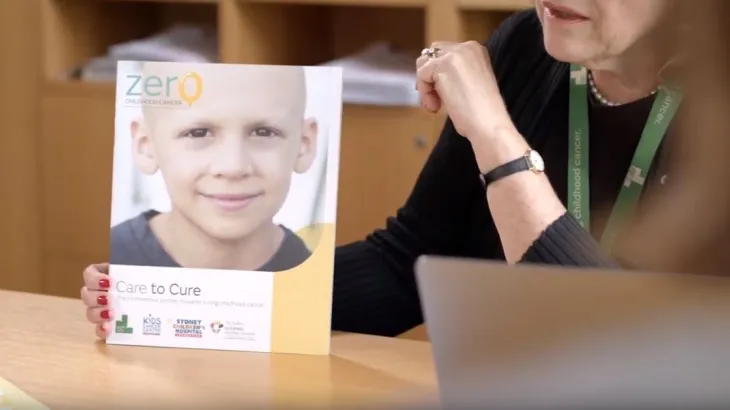
[Music plays and images move through of a male walking into the UNSW Children’s Cancer Institute, and a sign on the side of the building]
[Images move through to show a Zero Childhood Cancer brochure, and then Professor Michelle Haber talking to the camera and text appears: Professor Michelle Haber AM, Executive Director, Children’s Cancer Institute]
Professor Michelle Haber: The Zero Childhood Cancer program is directed only towards the children who are at serious risk of dying from their disease.
[Music plays and images move through of various views of the inside of the UNSW Children’s Cancer Institute]
[Images move through of a Zero Childhood Cancer brochure, Michelle and two colleagues talking at a desk, Michelle holding up the brochure, and then Michelle talking to the camera]
The Medical Research Future Fund have supported, specifically through the Australian Brain Cancer Mission, so that ultimately we can achieve our goal of zero children dying of cancer.
[Music plays and images move through of Michelle and another female in a laboratory walking towards the camera, and then through the laboratory]
[Images move through of researchers at work in the laboratory]
The Zero Childhood Cancer program is at the absolute forefront of child cancer precision medicine programs internationally.
[Images flash through of a laboratory worker drawing liquid up into a syringe and squirting into a test tube, Michelle talking, researchers working in a laboratory, and Michelle talking to colleagues]
It’s one of the most comprehensive, personalised medicine programs worldwide because it combines extremely comprehensive molecular profiling with the responses of the child’s tumour cells
[Camera zooms in on laboratory workers squirting liquid into a test tube and the camera zooms in on the syringe and the test tube]
that are being grown in the laboratory and actually tested empirically for their response to anti-cancer drugs.
[Image changes to show Michelle talking to the camera]
Their tumour cells will be flown here to Children’s Cancer Institute.
[Images move through of workers inside the laboratory, a worker removing a container from a fridge, Michelle talking to the camera, and a researcher studying a liquid in a clear container]
We will extract the genetic material from those tumour cells and in collaboration with our partners that data, the whole genetic sequence of both the tumour and for comparison the normal DNA of that child’s cells, will be sequenced within two weeks.
[Image changes to show Michelle talking to the camera and then the image changes to show a laboratory worker looking through a microscope and the camera zooms in on her face]
And we have been able to turn around that data and give answers back in real time to children who would otherwise have died of their disease and it has fundamentally changed their life.
[Images move through to show the liquid in the container on the microscope stand, the researcher looking through the microscope, Michelle talking, and then holding up a brochure]
The funding from the Medical Research Future Fund has allowed us to address three major challenges in the area of treating these most resistant childhood cancer brain tumours.
[Camera zooms in on the brochure and then images move through of a female listening to Michelle talking, and then Michelle talking to the camera]
The first is to have sufficient funding to actually roll out this program nationally and ensure that every child in the country with high-risk brain tumours has access to this precision medicine platform.
[Images move through of labelled bottles on a shelf in a laboratory, boxes of samples being gently rotated on a machine, Michelle talking to the camera, and researchers working in the laboratory]
The second challenge is having access to the clinical trials of the latest treatments and a significant proportion of this funding is focussed specifically on more, newer, innovative clinical trials for children with brain tumours.
[Images move through of a male looking through a microscope, a hand adjusting the microscope slide, Michelle talking, and then with a colleague in the laboratory]
And the third focus of the MRFF funding is to develop new immunotherapies for children with cancer, to find new ways of treating these children who have such limited opportunities for cure.
[Images move through of Michelle and a colleague in conversation, Michelle talking to the camera, Michelle and the colleague looking at a sample in the lab again, and Michelle talking]
So, this is genuine translation of bench to bedside research and then back again where the responses that we see in the clinic then inform the next experiments in the laboratory.
[Images move through of Michelle and a female colleague in the laboratory looking at data on a screen and talking]
And this is the sort of funding that the MRFF was committed to supporting.
[Image changes to show Michelle talking to the camera]
These are the ways that we will take on this challenge and beat it.
[Images move through of Michelle and a researcher at a microscope, a close-up of a sample under the microscope, the researcher looking through the microscope, and an area outside of a building]
We’ve seen the results of research, the impact of improvements in survival rate from zero to 80% for kids with cancer.
[Image changes to show Michelle talking to the camera]
That’s hundreds of thousands of children who are alive today who would not have been without medical research.
[Camera zooms in on Michelle’s face as she talks to the camera]
That is the power of what we do.
[Music plays and the image changes to show Michelle standing in a laboratory and smiling at the camera and then the image changes to show a hexagonal blue, white and red pattern on the screen]
[Coat of Arms and text appears on a blue screen: Australian Government, Department of Health, Medical Research Future Fund]