
TOM CONNELL, HOST: And back home, the Government has responded to shortage concerns with a temporary relaxing of fuel quality standards. This was the Energy Minister, Chris Bowen, announcing this in Question Time.
[Excerpt]
CHRIS BOWEN, FEDERAL ENERGY MINISTER: Today, I have decided to relax the requirements under the Fuel Quality Act, Mr Speaker, when it comes to sulphur content on a temporary 60-day basis. This will see 100 million litres of fuel extra flow in Australia a month over that time.
This, Mr Speaker, is relevant only to the Ampol refinery, which currently makes fuel for export to countries with lower fuel standards than us. I have asked for and received an assurance from Ampol that this extra supply will be prioritised for regional Australia and for the spot market, to take pressure off those regional areas feeling such pressure.
[End of excerpt]
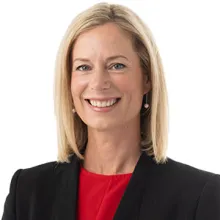
CONNELL: So that's fuel with a higher sulphur content. It's not great for the environment or air quality, but the Government's saying this is needed as a temporary measure. Joining me now for more on this and a few other topics, the Assistant Health Minister and Aged Care Minister, Rebecca White. Thank you for your time.
So, 100 million litres. Look, it's something - I think we use 1.2, 1.3 billion litres of petrol a month. Is it a sign the Government's having to sort of scramble and do anything it can right now?
REBECCA WHITE, ASSISTANT MINISTER FOR HEALTH AND AGED CARE: Well, we're trying to respond in the best way possible. We see the constraints across the supply chain around Australia, and that's because people are hoarding fuel or buying fuel because they're worried. And the key message really is that there is as much fuel in Australia now as there has been in preceding weeks, but there's been a rush because people are concerned about what they see happening overseas.
So we are responding. We're putting more fuel into the Australian market - the Minister announced that in Question Time today. We don't want farmers, and particularly those in our regional and rural areas, to be without supply of fuel.
CONNELL: Is there any- because we're hearing from farmers, in particular people with businesses, that they've put in an order for diesel and they've said it'll be three or four weeks and they might miss cropping windows. I know you've got a big electorate. What would that mean? How quickly could this particular fuel actually get out there for those sorts of people?
WHITE: Well, it's 100 million litres of fuel a month that will be coming from the refineries in Queensland to be mixed in with the rest of the fuel that's coming into the country. So, that'll be distributed, as the Minister said, to the areas that are most in need.
CONNELL: Prioritised.
WHITE: Correct.
CONNELL: So, if someone right now is waiting three weeks, though, is there any indication on how much quicker it could happen, or not?
WHITE: Well, in addition to that, there's also other fuel coming into the country, and the Minister's spoken about that. There are supplies coming in just as normal to Australia, and that is being circulated through the national market.
CONNELL: [Talks over] But it's not getting out there normally. Is it sort of your- is the Government a bit helpless?
WHITE: It's still being distributed as per normal. The problem is that people are taking more than they usually would when they're going and filling up at the bowser. And so, they're stockpiling because they're concerned, and I can understand the nervousness. But I think the key message is there is as much fuel in Australia now as there was a couple of weeks ago. There's fuel coming in just as normal. There hasn't been a disruption. And really, what we're seeing is a run on stocks because people are trying to protect against something which may not happen, and that’s impacting-
CONNELL: [Interrupts] We saw retailers during COVID have limits on toilet paper, which I know people don't really want to cast their mind back to but the whole country lost its mind. Can retailers do that? Can wholesalers do that? Should they get that power so they can just go, look, you're in your car, put your 50 litres in, we don't need to fill up your three jerry cans?
WHITE: Look, I'm not aware if those powers exist. And of course, people have different reasons for why they might need to take more fuel, and sometimes that is incredibly legitimate. I think the key message is to make sure Australians understand that there is no need to go out and fill up jerry cans of fuel. There is as much fuel in the country as we've had before…
CONNELL: [Talks over] There is now-
WHITE: …and it's about making sure there is appropriate supply to the regions in particular.
CONNELL: We have the same amount now, but we've just had a story on Iraq now stopping or shutting down a fuel export site. If this keeps going for a long time, for weeks or months, or escalates, there might not be, right? In Australia, we can't- there's no guarantee. We've got our 30 days and then who knows?
WHITE: Well, I think there's a couple of things here. We do have stockpiles onshore. So that is something our Government moved to change…
CONNELL: [Talks over] That’s the 30 days or so.
WHITE: …to bring it on board into Australian shores from Texas, which is where it used to be stored - so that's the first thing. I think the second thing to note is, you're right, we don't know what's going to happen in the future, but we're doing our very best to plan to protect supply chains in Australia.
The Minister announced today how we're providing more fuel into the Australian market from Australian refineries. So, we'll continue to work to make sure we address that need. It's why every week, we're meeting with the industry, with the Farmers' Federation and others, so we can be across the details of how we need to respond where we see those challenges.
CONNELL: Any assurances you can give to the Farmers' Federation or retailers beyond those weeks? Would the US give us some of their supply or…?
WHITE: Look, they're not answers that I have. You'd have to put them to the relevant minister.
CONNELL: On your portfolio, so a particular focus on women's health, a couple of things I wanted to ask about. You had an announcement on an egg-freezing calculator. Talk us through this. So essentially, you're trying to get people a better understanding for their chances of getting pregnant when they freeze their eggs. Because some people are doing it, thinking, hey, these are- I'll basically be guaranteed a pregnancy. I'll freeze my eggs and see what happens. But there's a formula and sometimes the chances of getting pregnant are lower than people think. Because it's pretty expensive to do this.
WHITE: It is expensive. It's an emotional cost as well as a financial cost. So, we have established this registry where people can go on and calculate what is likely to be an outcome or not an outcome. And it's really about providing an evidence base that is free of marketing, and making sure that it's independent for women to assess their chances of being able to successfully freeze eggs, and then their chances of successfully having a baby.
CONNELL: We have had fertility rates steadily down. People are having babies later and, like, people study, they work first of all. And, you know, no judgement - I started pretty late, I feel like a pretty old dad at times. But what do you make of that? Is this just a reality? Is it something the Government's conscious of? Is there anything that should be addressed in that or monitored? Or is this just the reality of the modern-day Australia?
WHITE: I think, well, there's a few things happening here. I think the first is our Government's responding to prioritise women's health which has been, sadly, overlooked for very long. So, we are making significant investments. And, as part of that, improving access to good information for women so they can be informed about their options. Like you, I know a lot of women who are choosing to have children later and a lot of women who are thinking about whether they should freeze their eggs. So, this is just an online calculator that is free for them to use to assess what that looks like.
Because it can cost between $8,000 and $12,000 to go through an egg freezing cycle. It's a lot of money, but it can also be very emotional. So, this is really about providing good information so people can make good choices.
CONNELL: Yeah, a lot of money each cycle. But, you know, once the window closes, I guess that's it. So, it's something that, well, good to have more information. And on heart health, what's your focus here? Because normally when I think of these sort of things we monitor, its men who are pretty lax at getting check-ups. What's happening in the women's area here?
WHITE: So, following on from our landmark Women's Health Package, which was an $800 million investment, we are establishing expert panels on women's health. And the first one's focusing on cardiovascular disease. It's one of the leading causes of death for Australian women - about one in four Australian women will die of cardiovascular disease.
But the symptoms that women have are different to men - they're not always the same. And I think there's a misunderstanding about that, both for women but also for clinicians. And the result of that is that symptoms aren't diagnosed and therefore aren't treated as quickly and we have adverse health outcomes.
CONNELL: [Talks over] What are they missing and what are the usual causes then?
WHITE: Well, I think a lot of people would associate heart disease or a heart attack with gripping chest pain - which is very true for men, it's quite a common symptom. But for women, that's not necessarily the case. And so a lot of women present to an emergency department and they might have the symptoms that are typical for a woman but are not typical for a man. And then they have delayed diagnosis and treatment and that can result in terrible outcomes, including death.
So, this panel's work will be looking at the research, they’ll be looking at the diagnosis and treatment and understanding what we need to do to increase heart health for Australian women.
CONNELL: So, sort of that very common perception of what a heart attack is. I mean if you were playing charades, you'd clutch and hold your left arm, that's more a male thing? What are the more common symptoms of the women?
WHITE: That's right. And a lot of the research has been undertaken on men and men's symptoms, and that's how the clinicians have been educated.
CONNELL: [Talks over] Which has happened in a lot in the medical fields for a whole host of things.
WHITE: That's correct. There's a lot of gender bias built into the system. So, women's symptoms can be far less obvious and, often, that's why they're dismissed. It might be something that they just put off as feeling tired, or they might have a headache. They might have general pain. They might have pain in their back. So, different symptoms that often can be just sent away with some pain medication and not properly investigated. So, we're looking at how we can address that.
CONNELL: Organ donorship. So, South Australia has gone down the opt-out model. So you will donate your organs if, essentially, you die suddenly in their [indistinct]…
WHITE: [Talks over] That's not necessarily true - you still need to have the consent of your family.
CONNELL: Right. So, in the South Australian model, the default is you do it with the consent of your family after the death.
CONNELL: And is that a model you would look to follow?
WHITE: So, we really do need to lift organ donation rates in in the country, including through registration. So, what the South Australian Government has done is retain registration for organ donation through their driver's licence. And we're talking with states and territories about how they might also reintroduce that. Because that used to be a pretty common practice. But the-
CONNELL: [Interrupts] You go for a licence - there's a little box saying, will you donate your organs?
WHITE: Yeah. Do you agree to be an organ donor?
CONNELL: Do you agree? And they've actually gone, you have to opt out, otherwise you're a default, yes.
WHITE: So, the research tells us that opt out and opt in result in, largely, the same outcomes as to whether somebody consents to be an organ donor. At the end of the day, it's about putting the question in front of them to make them think about it. Because the key thing is having a conversation with your family.
Consent rates in Australia sit at around 53 per cent for people who have already said they want to be an organ donor. So, I'm an organ- I've registered as an organ donor. If I were to die, it would be still up to my family to agree with the clinicians that I would be able to donate my organs.
CONNELL: And about half the time the family says, no.
WHITE: The family says, no.
CONNELL: And they're in this incredibly traumatic moment. And people say, well, we're not going to change your mind. But if the person has said, hey, just so you know, if something happens, please do it, then they honour that wish.
WHITE: So, one of the things I think would help is having it back on driver's licences, because it prompts the conversation. Having that conversation is the key thing.
CONNELL: [Talks over] So, it got taken off, did it, in most states?
WHITE: When we moved to a national registry. So, there was a change in how we collected data. But I think, Tom, like, last year we had the biggest number of donations - 1,438 people received a second chance at life from 557 donors, which was a record in Australia. So, people are doing incredible things. We know the majority of Australians support organ donation, but the majority of Australians aren't registered.
So, it is still easy to do. You can jump on donatelife.gov.au and register or through your Medicare app. But we also want to make it easier where possible.
CONNELL: Rebecca White, thanks for your time.
WHITE: Thank you.
Media event date:
Date published:
Media type:
Transcript
Audience:
General public
Minister: