DEBORAH KNIGHT, HOST: Repeating this afternoon's breaking news, the Greens Senator, Jordon Steele-John, is taking a leave of absence after allegations were made against him around his behaviour towards female colleagues. Jordon Steele John denies these allegations.
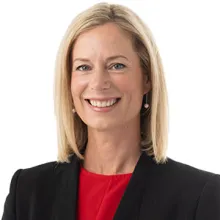
Joining us live now is the Assistant Health and Aged Care Minister, Rebecca White. Thanks so much for your time. We'll get to some portfolio issues shortly. But first do you have any reaction to that news this afternoon, that Jordon Steele-John is taking leave in the face of these allegations, where we just heard from David Shoebridge who says that the Greens will be conducting an inquiry into these allegations which date back several years now, back to 2015?
REBECCA WHITE, ASSISTANT MINISTER FOR HEALTH AND AGEING: No, I don't have any comment to make on this. I did read the reports and I know that the Greens themselves are going to conduct an investigation. Let's just hope that it's cleared up quickly.
KNIGHT: Okay. Well, the Greens Leader promising that this will be an independent and fair investigation which will be conducted by the WA Greens. David Shoebridge insisting that he didn't have any knowledge of these allegations prior to this letter that he received from seven people within and outside the Greens alleging this behaviour.
Rebecca White, let's move on and look at the big issue that you've been dealing with there in Parliament this week - private health insurance rebates. We all agree, of course, savings need to be found to fund aged care, and that's what the government wants to do with this $3 billion you'd save with these proposed reforms. But why are you targeting pensioners with these reforms? Tens of thousands of older Australians are set to downgrade or drop their private health cover as a result. Wouldn't that just place more pressure on our already stretched public hospitals?
WHITE: I think it's really important to put a few facts forward here, and the first is that people aren't having their rebate entirely removed. I think a lot of people have been unnecessarily concerned with the way this information has been debated in the public.
Pensioners who are in receipt of private health benefits will still get nearly 25 per cent of their health insurance funded by the Commonwealth Government - that is not going to change. What we’re trying to do is to redirect funding into areas where there is enormous need which is, of course, aged care. So these reforms are about making sure that we continue to support people who are in receipt of private health benefits by providing them a government subsidy by the federal government, at the same time redirecting money into aged care, $3 billion that would help support more packages of care and fund more aged care beds.
So this really needs to be considered in the context of what else we are providing for, across the country, when it comes to healthcare and aged care, $47 billion going into aged care just this year alone, alongside our investment in Medicare Urgent Care Clinics, an uplift in bulk billing, cheaper medicines. All designed to help keep people out of the hospital system and keep them well. But for those who do end up in hospital, we've provided an uplift of $25 billion of funding across states and territories as part of the National Health Reform Agreement. So, we are doing a lot in health, there's no doubt about that, and this is just part of it, to make sure we can continue to fund those packages of care in aged care.
KNIGHT: Okay. So you're worried about misinformation surrounding this debate. Is it correct, though, that tens of thousands of older Australians, according to the modelling around this policy, we would see older Australians downgrade or drop their health cover entirely as a result of your changes.
WHITE: What the Treasury modelling shows us is that about 44,000 Australians by 28/29 would drop out because of these changes. But we also know that there are more and more people taking up private health insurance each year. So the modelling illustrates to us that, actually, more people take out private health insurance over that same period of time.
I think what we've also seen through commentary is a-
KNIGHT: [Interrupts] But among that cohort, you're saying 44,000 Australians would then be more likely to turn up at public hospitals as a result?
WHITE: So 44,000 Australians by 28/29 is the first thing. The other thing, as I said earlier, is our government has invested a significant amount in system, including in our hospital systems - an uplift of $25 billion in the public hospital system to support states and territories. We're also providing additional funding for primary health care to keep people out of hospital. I think all of these things need to be seen together about how our government is approaching this. Because we also know we've got a massive demand for aged care services. We need to find a way to fund that, and this is one of those ways that we've identified.
Now, making decisions like this is never easy, particularly when you do have some in our community who will be disadvantaged. But as I said at the start, they will continue to receive a subsidy of nearly 25 per cent on their health insurance premiums - that will not be changing.
KNIGHT: The AMA has what it thinks is a compromise here. It wants to try and protect these older Australians we're talking about who are on lower incomes by exempting people who are on that Medicare levy surcharge base-tier income from the proposed changes. Is that an idea that the government's open to?
WHITE: Look, we want to debate the legislation. What we saw yesterday in the Senate was they didn't even take it on for discussion. We had a Senate inquiry handed down last week with recommendations that didn't even get considered by the Senate yesterday. The Greens, who said they had amendments to move, didn't even move them. Instead, they voted with the Coalition, becoming again the no-alition, to vote down the opportunity to even debate this legislation.
The minister has been very clear. He is interested in talking and having a debate about this in the Parliament. What we've done again today is reintroduce that legislation to give the Greens a chance to come to the table, to have a conversation and to talk about how we can make sure we progress these reforms. You can't do that if they shut down debate, which is exactly what happened yesterday.
KNIGHT: Rebecca White, thanks for joining us.
WHITE: Thank you.