
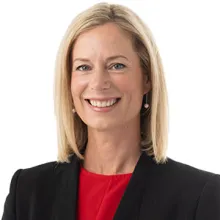
Hello, I’m Rebecca White and it’s a pleasure to be here.
I’d like to acknowledge the Traditional Owners of the land where we are gathered – the Gadigal people of the Eora nation – and pay my respects to Elders past and present.
I extend that respect to First Nations people who are here today.
Thank you for inviting me to speak to you today.
To the healthcare professionals, leaders, policymakers and researchers who’ve made the time to be here for this event, thank you for your service to rural and remote communities.
Our rural and remote health system relies on a strong, sustainable workforce.
And that’s what the Australian Government is focused on.
From training and support.
Through to national workforce reform.
We’re working hard to give people living in rural and remote locations high-quality care closer to home.
I grew up on a farm and live on a small acreage in Tasmania.
I know how important good health care is, no matter where you live.
Growing our rural and remote health workforce is one of the most important things we can do for future health.
We’re training more GPs and rural generalists through programs such as the Australian General Practice Training program and the Remote Vocational Training Scheme.
And at least 50% of this training is in rural, regional and remote areas.
In fact, 2026 has overtaken 2025 for the largest group of GPs and rural generalist in training on record.
More than 2,000 doctors have accepted government-funded GP and rural generalist training places.
The next generation of doctors is seeing the benefits of creating strong, lasting relationships with their patients and put down roots.
Take the Single Employer Model trials and the Remote Vocational Training Scheme, which is benefiting trainees and country communities.
In my home state, 27 registrars have participated in a Single Employer Model trial.
So far 7 registrars have become Fellows, and 100% of doctors transitioning out of this model have continued working in general practice in Tasmania.
To see the benefits, let me tell you about Shannon, a GP registrar in Beaconsfield, who moved with her family.
In this trial, Shannon has been able to practice across private practice and public hospital services, in multiple regions around Tasmania.
Shannon has found that the Single Employer Model has many benefits – portability of leave, consistent salary, and the ability to work across multiple sectors, such as GP practices, nursing homes and public hospitals.
She and her family plan to live and work in Beaconsfield long term.
The Single Employer Model trials are continuing to expand, with 12 trials operating across 7 states and territories now.
For parts of Australia that can’t wait and need more health professionals now we are making it easier for appropriately qualified internationally educated health practitioners to work in Australia.
These reforms create faster access to practitioners, particularly in regional, rural and remote communities.
It’s not the full solution.
But it complements our longer-term investment in homegrown health workers.
As at 30 June this year, 716 specialist international medical graduates registered through the streamlined pathways: 26 anaesthetists, 632 general practitioners, 9 obstetricians and gynaecologists and 49 psychiatrists.
And, 2089 internationally qualified registered nurses have received registration, along with 71 medical radiation practitioners, 8 podiatrists and 338 occupational therapists.
Wherever they’re trained, we’re also backing health professionals through professional development and support programs.
I’ll touch on First Nations health only briefly, as I’m speaking at the AH&MRC Indigenous Healthcare Conference next door in a few minutes.
The Australian Government keeps working to create a healthcare system where every Aboriginal and Torres Strait Islander person can get culturally safe care and support, when and where they need it.
This comes from partnership and shared decisions with Aboriginal and Torres Strait Islander people, communities and organisations.
Thank you to everyone from an Aboriginal Community Controlled Health Organisation – your work is so valuable.
We’re funding a wide range of health organisations, programs and facilities led by First Nations people.
These programs are working to boost the First Nations health workforce.
There’s still so much to work on together to improve the lives, health and wellbeing of First Nations peoples.
Women’s health is an area we’ve also really been focusing on, and many of these initiatives help women in country Australia.
This includes our $792.9 million landmark women’s health package.
From making contraception cheaper to providing First Nations mothers and babies with Birthing on Country services, we’re supporting women’s health and choices.
We have opened 33 Endometriosis and Pelvic Pain Clinics across the country and from 1 July they are now delivering perimenopause and menopause services.
We are also opening LARC Centres of Excellence across the country.
And our recent perimenopause campaign is providing practical information to improve this time of life, empowering women with knowledge when they speak to their trusted health professional.
We’ve put additional medications for perimenopause on the PBS too – making them cheaper and more available.
Many of these services, cheaper medicines and access to more bulk-billed appointments are happening in rural and remote areas.
We’re working on lots of ways to make women’s health, and lives, better.
To continue our work in Women’s Health I have established a new Ministerial Expert Panel on Women’s Health that has an initial focus on cardiovascular health.
We know it is the largest cause of illness and death for women and we have heard from women that their symptoms are under-recognised and their treatment has been delayed.
That is why we are tackling the barriers women face accessing the care they need, when they need it.
On access and affordability of services we know if people can’t afford the services, they won’t benefit.
It’s why we’re making primary care cheaper for everybody.
We’ve invested $7.9 billion to encourage practices to bulk bill their patients.
Late last year, we expanded the eligibility for MBS bulk billing incentives to all Medicare-eligible patients.
Before this, MBS bulk billing incentive items could only be claimed where medical practitioners bulk billed patients under the age of 16 or Commonwealth concession cardholders.
And medical practitioners can also claim relevant bulk billing incentive items when bulk billing all Medicare-eligible patients.
To further support practices and providers to bulk bill patients in rural and remote areas, the value of MBS bulk billing incentives are scaled.
They actually increase in regional, rural and remote communities.
In addition, late last year, we launched the Bulk Billing Practice Incentive Program.
This program provides a 12.5% incentive payment on MBS benefits earned from eligible services, split evenly between the GP and the practice.
To receive it, all GPs at a practice need to bulk bill all eligible services for all Medicare-eligible patients.
This is a voluntary program.
General practices decide whether they participate.
But we’re delighted that many are.
As at 8 July this year, more than 3,800 practices had registered, including more than 1,000 practices across rural and remote Australia.
And we’ve seen national bulk billing rates rise to 82% in March.
Now, not everyone can, or wants to, get to a clinic for health care.
That’s why we’re investing in digital health and telehealth, which is particularly helpful for people in rural and remote areas.
1800MEDICARE launched at the start of this year.
It’s a free, national service with 24/7 expert health advice, information and connection to care.
When someone calls 1800MEDICARE, a registered nurse will assess their needs, provide expert advice and guide them to their next step.
This may be care they can provide for themselves or referral to a local GP, a Medicare Urgent Care Clinic, a hospital emergency department, the after-hours GP helpline, or a free 1800MEDICARE GP telehealth consultation.
The service complements local care and supports continuity of care.
Nurses can provide handovers when referring callers, and callers can receive care summaries by SMS, share consultation notes with their regular GP, or upload notes to their My Health Record.
1800MEDICARE particularly supports people who find it difficult to access urgent GP services.
It also gives rural, regional and remote health professionals another way to connect patients with care.
We’re continuing to work on the design of 1800MEDICARE to ensure rural, regional and remote perspectives shape it.
So, please, let us know what you think.
In a similar vein, we’re introducing MBS Patient-End Support items.
GPs and nurse practitioners can now provide support in person while their patient joins a video consultation with a specialist or consultant physician.
This service will improve access and quality for anyone who needs a little support, including people from multicultural or First Nations communities, older people, housebound patients and people with disability.
That’s why we’ve committed a further $12 million to expand it.
From March next year, many other healthcare workers will be able to support eligible patients this way.
Thank you for your part in providing high-quality health care to people wherever they live.
It takes ingenuity, research and hard work to provide great health care right across our nation.
But, with your help, that’s exactly what we’re doing.
Enjoy your conference.
Thank you.