
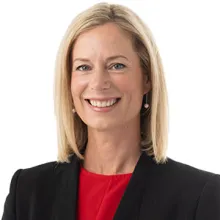
KYLIE BAXTER, HOST: While this was all unfolding, another vote was also taking place designed to help us all make healthier food choices in the supermarket. Food ministers, including Tasmania's Federal Assistant Health Minister, Rebecca White, discussed today whether to make Health Star Ratings compulsory on all food labels. Rebecca White, thanks for joining me on the Drive program.
REBECCA WHITE, ASSISTANT MINISTER FOR HEALTH AND AGEING: You're welcome. Good afternoon, Kylie.
BAXTER: And so, what was the outcome of today's meeting?
WHITE: Well, the outcome today is that all food ministers have, by majority, agreed to do what's called raising a proposal with the Food Standards Australia New Zealand to look at mandating Health Star Ratings on all food products. And this will require 12 months of work including public consultation where anyone could put forward a submission to understand how we do this and implement it in practise.
Because what we really want is for anyone who's going into a supermarket to have a look at a shelf compare products that are from the same category and make a decision about which one's the most healthy one to buy. And at the moment, as you point out, it's a voluntary system. Only about 39 per cent of products on supermarket shelves are participating, and it makes it really hard if you want to have a true comparison of the health quality of the products that you're looking at when you're going into shop.
BAXTER: And I think most people would want to know that. I mean, I currently don't actually look at those Health Star Ratings because I know the kind of food I want to buy. I think, okay, I'm walking in the supermarket to get this, and this. Yet I think that it would be a really popular thing. Do you think it'll take off?
WHITE: Well, we know from the consumer research that people have a high level of trust in the system, and they do have a good recognition of the system. So across the country, the majority of Australians, around 80 per cent, have seen a Health Star Rating. They know what it means. And they do use it when they are buying a product. About 50 per cent of Australians can probably say they use it when they're going into shop. But what we want is to make it even easier.
And there's a piece of education we probably have to do around that as well so that people understand how to compare products. Because it's not about comparing a cereal with something else like spaghetti. It's about comparing a like-for-like product and deciding which one has less sodium, less saturated fat and less sugar and is therefore probably a healthier choice for you.
BAXTER: Okay. Classic example, you might compare baked beans because baked beans are full of sugar and salt, and I think everybody knows that. But if there was a product that had a lot less sugar and a lot less salt, surely that would be a great way to, you know - assuming anyone even cares or likes baked beans, someone who likes eating them - but yeah, I mean, that sort of thing would be an idea because that's a product that could vary greatly.
WHITE: Yeah, exactly right. And there's just a quick front-of-the-pack information guide for you. And if you want more information, you turn the pack over and there's a nutrition information panel and it goes into a lot more detail. But we know people often don't have time to do that and, especially if you're in a rush after work trying to pick stuff up to get home and cook, or you've got the kids in tow and you just really need to hurry up and get through the supermarket. So this is about making it easier for you as you're shopping, just to get a quick front of the pack glance, say, yep, okay, that's four and a half stars. That one's three and a half, basically the same product. I'm going to get the one that's four and a half because I know that's a better choice for me in terms of a health choice.
BAXTER: And do you think that it's going to be difficult for food producers? I'm kind of thinking, how are they feeling about this? Because that's a lot of extra effort on the food producers' part to figure out their star ratings, isn't it?
WHITE: There's a really simple guide available online at the moment where anybody who's producing a product and wants to voluntarily opt into the scheme can put the details in and that produces the star rating for you. And if you've got any issues, you just call someone in the department and there's a dedicated team to help with that.
So, the process of assessing the star rating for a product is actually quite simple. The time it might take to replace the labels on products that are already on supermarket shelves, for instance - so once they've washed through the system and you then have the new products come through with labels - could take some time. And that's where the consultation will help us understand what that looks like for industry.
But we also know from talking to industry, they understand this is likely to happen. It's been something food ministers have talked about since 2020 when we started to implement targets for when we'd like to see the scheme hit, you know, 30 per cent, 40 per cent, 50 per cent, 70 per cent uptake by 2025, which we didn't reach, it only got to 40 per cent. So there's been writing on the wall there for about six years now, that this is likely to happen if the voluntary program wasn't more successfully taken up by industry.
BAXTER: My guest is Rebecca White, the Federal Assistant Minister for Health. Now, of course, there's a lot happening in federal politics today. Angus Taylor has overwhelmingly won the Liberal leadership, defeating Sussan Ley 34 votes to 17. What are your thoughts on this?
WHITE: Well, I mean, we need a better Opposition. It's been a bit of a mess for a couple of months now. And I have to say first instance that I pay my regards to Sussan Ley as the first woman Leader of the Liberal Party, a party that's been around for 80 years. It's quite a remarkable feat. But she really had a tough go and from day one was undermined, and she hasn't really been given a fair chance to lead the Liberal Party as she may have wished to. So I pass on my respect to her and wish her all the best for the future. Giving such a significant contribution to public life does deserve our recognition.
But I think if you change the Liberal Party leadership, that's one thing. What they actually need to articulate is their vision for the country and how they're going to help people have a better life. And I listened to the speeches given by the new Liberal Leaders today, Kylie. I didn't hear them mention health once. And if you're going to be a credible alternative government, you need to have a plan for healthcare for our country.
And I know in Tasmania it is by far and away the number one issue that gets raised with me and has been the case for many elections now. And people want access to Medicare services, Medicare Urgent Care Clinics, better mental health services. And to not mention health I think just indicates that they really haven't changed their spots.
BAXTER: And just coming back to Sussan Ley who's resigned following her defeat just nine months into the leadership position, I mean, do you think she just didn't get enough support? What does it say about females in political leadership positions?
WHITE: It was clear she was undermined from day one. You can see that from the point they had a ballot and she only just beat Angus Taylor in that first ballot, that forces in the party were working against her. Whether that was because she's a woman or whether that's just because she was a moderate leader and the conservative elements wanted a different approach, other commentators may have a view on that. But I think it is a sad thing to see that the first leader of the Liberal Party has been rolled in nine months because it just makes it harder for the next woman to step up and take a job like that on.
BAXTER: Good to hear your perspective. Thanks for joining me on the program.
WHITE: You're welcome. Thank you.
BAXTER: Rebecca White there, Federal Assistant Minister for Health.