
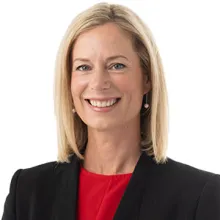
REBECCA WHITE, ASSISTANT MINISTER FOR HEALTH AND AGEING: This week is World Breastfeeding Week. It’s an opportunity for us to talk about the importance of breastfeeding, but also to acknowledge that, for most mums who’ve just welcomed a newborn baby into the world, it can sometimes be really hard to work what you need to do to successfully breastfeed.
in Australia, we are very, very lucky because we have hundreds of volunteers who are at the end of a phone call who can support new mums to answer those questions, no matter what time of the day or what day of the week.
The Breastfeeding Helpline has been a stable of the Australian community now for many, many years. And in fact, since it’s been operational 1.2 million women have called to receive support from a volunteer to help them navigate some of those questions they have about breastfeeding or sleeping or just managing their little one who is struggling. And they’ve been able to get some extraordinary advice
We have 465 breastfeeding consultants who are volunteering at the end of the line right around the country. Many of them, I should say most of them, have been mums who’ve breastfeed. I think that’s a requirement isn’t it, Jo?
JO SLAMEN, BREASTFEEDING COUNSELLOR: Yes. It is, yes.
WHITE: All 465 volunteers have breastfed themselves and they can share advice about what they did and support mums so they can support their babies.
It’s really important for us as part of our community, to acknowledge how natural breastfeeding is, how it is something that is very beneficial for the mum, but really beneficial for the baby. And for us to also recognise that this is something women can do anywhere. We shouldn't be confined to bathrooms. This is something that's completely normal and natural and we should be feeling welcomed and supported to breastfeed our children anywhere that suits us and suits our baby.
So, I'm really proud to be supporting this work and talking about the importance of breastfeeding during World Breastfeeding Week, and also recognising the extraordinary work of this helpline that has helped thousands of mums, in fact 1.2 million mums, since it started. Mums just like Felicity who is here with us today with little baby Esme, who herself made a call at 3:00am in the morning. when she was feeling like she didn't really know how to support Esme and didn't really understand what else to do. She received support from a volunteer at the end of the line, and it was something that I'm sure Felicity can speak to better than I can, but it sounds like it was just the help she needed just at the right time.
Jo whose here also is a Breastfeeding Consultant, a volunteer, and speaks to women just like Felicity and supports and guides them with their breastfeeding. I'm going to hand across to Felicity now, who can speak about what her experience has been like and how you've she navigated being a new mum breastfeeding.
JOURNALIST: If you could just tell us about your experience.
FELICITY LOVETT, BREASTFEEDING MUM: Yes. I was probably a couple of weeks postpartum, so you know, I was in something of a state, I guess, as a lot of new mums are. And breastfeeding was not going particularly smoothly. In my case, experiencing a bit of pain which is something that doesn't really get discussed that much - how it can be quite painful for some women. And at this point, I was at the point of chucking in the towel a bit. It was about 3:00am I'm feeling like I couldn't quite feed my baby and I just had to reach out. And the woman on the phone - I wish I could remember her name - but she was so beautiful, so compassionate, and she gave me so much of her time, you know, it was the early morning, and she just gave me a lot of support and understanding.
I could tell this is someone who genuinely knows what's going on. This is someone who has lived it too. It was just that comforting, clear voice with really good suggestions and advice. Her help made me seek further help and support as well, which I would say was really critical at that moment it enabled me to keep breastfeeding from then on.
So, Esme is now six months and she's still breastfeeding really happily and really well, and that's just meant everything to me. Because I know how it can be quite distressing to not be able to breastfeed your baby when you really want to. I'm just really grateful that the ABA was there.
JOURNALIST: Felicity, just on that, how beneficial do you think this is for new mums overall? You know you're struggling through something. Obviously, it’s extremely new. Was it a bit of a lifesaver?
LOVETT: Absolutely. It's so hard to describe how painful or distressing it can be when you are struggling to breastfeed, the thing that you've got this really strong drive to do. And for whatever reason, there's so many ways it can go wrong. So being able to reach out any time of day or night, and it's often at night when things are not going well. So, having it there, really it just turned things around for us.
JOURNALIST: How does it feel having the security of knowing there's 24/7 help just like a phone call away?
LOVETT: It's remarkable really. I feel really lucky to have had the helpline on hand. I've got my ABA magnet on the fridge just in case I need to make that call, again, and that it's not restricted to just daylight really makes a difference. As I've said, like, nighttime, in the middle of the night is often when things are harder to deal with as well as the wheels can kind of come off in the middle of the night when everybody's a bit tired. So, it's there at those critical times. It is awesome, and I feel lucky, like I would be able to reach out again if I needed to.
WHITE: We also have Jo here, who might be to speak about the other side of that phone call.
JOURNALIST: Obviously, you just heard a testimony from someone who has used the service. How does it feel to hear that positive feedback?
JO SLAMEN, COUNSELLOR, AUSTRALIAN BREASTFEEDING ASSOCIATION: It’s great. It's really lovely and gratifying, just as it is to be taking calls on the Breastfeeding Helpline because that's one of the really motivating things. Having been there ourselves, we really understand the unique experiences that people can have. Everyone's situation is different, and we're there to provide a range of suggestions and help mums come up with a strategy to take their next steps, whatever those next steps might be for them.
JOURNALIST: I know you said everyone's different, but what are the most common issues mothers face, or could you give me a couple of examples of why people do call?
SLAMEN: Yes, sure. Just as Felicity was discussing, having pain with breastfeeding is one reason people call. Being concerned about whether or not their baby is getting enough milk is another big one. Questions about sleep and settling are another thing that people are looking for reassurance about and whether or not their baby is normal.
JOURNALIST: And how many volunteers would you say are on call each night? The Minister said there was 1.2 million mums who helped, but what kind of volunteer base does it have?
SLAMEN: I don't know how many people are on overnight. It's a long time since I have done an overnight shift. But there's enough people to answer the phones, which is really lovely. I think we get the majority of our calls during daylight hours.
JOURNALIST: Why do you think people are doing this? Obviously, it's a good thing to be a volunteer, but what do you think motivates them?
SLAMEN: I think that empathy and that understanding and the relatability and understanding how important breastfeeding can be to individual mums, it is a wonderful thing to be able to help.
JOURNALIST: Minister do you have an idea of how many volunteers there are?
WHITE: Yes. So, the Australian Breastfeeding Association has 465 volunteers who are working right across Australia, and I understand that they average about three minutes to answer most calls. So, they're available 24/7, which is an extraordinary effort from a group of volunteers who do it because they've got a shared experience that they can lend to women who are ringing and seeking help. But the fact that they are available every single hour of every single day, including public holidays, is just a testament to the value of this service.
JOURNALIST: I was just going to say, what do you think the emotional benefits of having the 24/7 helpline are, especially for first-time mothers?
WHITE: I think any of us who've had a baby and have attempted breastfeeding and found it really hard knows that it can be a disaster in the middle of the night as well as in the middle of the day. So, having a 24/7 service can be a real lifesaver and can really help you when you think, how on earth am I going to support this little one and provide them with the nourishment that they need and do it by myself? And knowing that you've got a 24/7 phone line there supported through the ABA is really important, and that's why 1.2 million women have used it.
JOURNALIST: It's Aged Care Employee Day today. The latest data shows these workers are 6.5 times more likely to get assaulted on the job, with industry leaders now calling for regulators to do more to protect staff. Do you have any thoughts on that as the Assistant Minister?
WHITE: Well, I would first like to acknowledge all of our aged care workers and all the employees who work in our aged care facilities right across the country for the extraordinary, important work that they do. We want all employees to be safe at work, and all employers have an obligation to make sure that is the case. We have a quality and safety framework and a commission that has been established to look at any cases where there are breaches of safety standards. So, I do encourage employees who may be dealing with matters like this to raise it with their employer but also to feel free to raise it with the appropriate regulator. We want all employees to be safe at work, especially those who are working on the frontline in aged care, because it is such important work.
JOURNALIST: Thank you.