
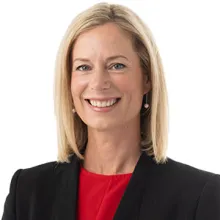
REBECCA WHITE, ASSISTANT MINISTER FOR HEALTH AND AGEING: The Albanese Labor Government has been very dedicated to improving women’s health and putting a real focus on it, because we know that for many women, they’ve felt dismissed or ignored when they’ve presented to get the healthcare that they deserve. It’s why we launched our nearly $800 million landmark women’s health package last year that’s been providing access to new services and medicine for hundreds of thousands of women across the country.
But the work is not done, and I’m really excited today to announce an expert panel on women’s health that will have a specific focus on cardiovascular health, because we know that the symptoms between men and women presenting with cardiovascular disease are different, but that’s not widely understood. So there’s work that we need to do to make sure that we are explaining this to women, to practitioners, but also the broader public so there is greater understanding and awareness of the risk of cardiovascular disease, they symptoms, diagnosis and treatment. But also, how we as a government can support women to have access to the care they need and to have good cardiovascular health.
This expert panel is made up of representatives from some of the peak organisations in this country who've been doing leading work, such as the Heart Foundation, Her Heart, Stroke Foundation, as well as those representing the primary care sector and the research sector and the consumer voice.
This is important work because we know that one in four Australian women will die of cardiovascular disease or related disease, and that is something that I don't think is widely understood. There are half a million women living with cardiovascular disease in Australia right now, and some of them may not even know it. We need to do a better job of making sure that when women are presenting with symptoms of cardiovascular disease they are taken seriously and can access the treatment they need. This can be life-saving, and we are hearing too many stories where women's symptoms have been ignored or dismissed and that has led to some serious adverse outcomes.
LINDA WORRALL-CARTER, HER HEART CEO: Thank you, Assistant Minister White, and thank you for the opportunity to be here today. I'm speaking as a member of the expert panel but also as founder and director of Her Heart, Australia's only not-for-profit dedicated to women's heart health. I'm really very pleased to support this important initiative.
As was mentioned, cardiovascular disease remains one of the biggest killers of Australian women. Shockingly, almost one woman dies every hour – that's 20 women a day. In comparison, the national road toll is just over 20 people a week. I often say, if we were losing 20 people a day on our roads, there'd be a national outcry. If we at why this is happening, I think there's three key things which contribute to women being underdiagnosed and undertreated. Awareness remains very low. For decades, it's been viewed as a man's disease, reinforced in the media and public perception. Women are also significantly underrepresented in cardiovascular research, often making only 20 to 25 per cent. This means that many of the diagnostic tools, treatment approaches and clinical guidelines have historically been based around large male data, even down to actually what they work on, which is male mice rather than female mice.
The second thing is women have unique symptoms. It's typically portrayed in the media as a Hollywood heart attack, men having a central crushing chest pain that goes down the arm. But, you know, there's 40 per cent of women that don't even get chest pain. So women often experience these symptoms such as shortness of breath, nausea, extreme fatigue, pain in the jaw, or even going through back to the shoulders.
The third thing relates to recognition and response. We know that women do seek out and look out for help. We’ve had over 100 women share their stories at Her Heart, many with the same issues and patterns. However, their symptoms can be misinterpreted by health professionals, attributed to other causes or even dismissed entirely, which significantly delays appropriate investigation and treatments. Research shows that women experience delays not only in diagnosis, but they can also receive lower triage scores when going to the emergency department, they receive fewer investigations, such as angiograms and also stents, compared with men.
All of these have very real consequences, and this is why the establishment of this panel is so important. It's an important step towards improving recognition, diagnosis and care for women all across Australia. While improving diagnosis and treatment is critical, prevention and early identification is just as important, given that we know more than 80 per cent of heart disease is actually preventable.
I would also like to acknowledge this government extended the MBS Heart Health Check, and this International Women's Day, if there's one thing I would suggest that you all do it's go and get a heart health check. I would encourage you to take advantage of this, speak with your GP about the risks and ensure that you have ongoing heart health checks.
DEBRA CLARE, HER HEART COMMUNITY AMBASSADOR: Good morning, everyone. My name is Debra Clare. I'm 49 from Walcha, New South Wales. I'm the type of girl who won't sit still. I love spraying, tractor work, cattle work. The last few years have been tough for us recovering from the drought and dealing with family. So yes, I do have stress in my life. But we all keep going. I love the land and its challenges. I work full time for Betts Transport in Walcha as their compliance officer, and I've been there for eight years. On 1 May 2021, my life changed. I woke up early on a Saturday morning as we were off to the camping show in Tamworth for the day. I went and put on a load of washing. As I was walking back inside, I got the most intense pain across my chest. I can handle pain, but this was overpowering. I sat down on a chair. The sweat was running off from me like I just stepped out of the shower. I was so sick. I'm trying to struggle with pain and being sick at the same time. I had never experienced anything like that before. I went in and said to my partner, take me to the hospital, and explained to him what had happened. We didn't call an ambulance due to the fact by the time they got to Walcha Road, we were in town, as it’s a 20 minute drive from my house to Walcha.
At the hospital I was given some pain medicine and I had an ECG. They took some blood but said everything was fine so they sent me home. From that Saturday morning for the next 12 months, my life became a nightmare. I got up on 3 May to go to work and went out to feed my poddy calf. I went down in pain again. My chest was worse than on the Saturday. I had sweat running from me. I was so sick. Brian could hear me screaming from outside. He picked me up and rushed me straight to Walcha Hospital. I thought I was going to die. I had no idea what was going on. We got to the hospital there, there was no doctor on duty. So they gave me two endone and told Brian to drive me to Tamworth Hospital about an hour away.
They ring Tamworth Hospital to tell them I was on my way. I was getting this pain in my chest. It was so intense. Pins and needles from my fingertips up my left arm, and a heartbeat in my throat. It was the pain that was so bad. We got down the road. I was crying. I said to Brian, this pain hasn't stopped. Why is it hurting so bad? The pills they gave me were doing nothing.
We got to Tamworth Hospital. I sat in emergency for some time, then they came and took me to a bed. I explained my pain, showed them where my pain was in my chest. They had performed an ECG, took some more bloods, and I had a CAT scan for a pinched nerve in my neck. The doctor then came and seen me to tell me the scan was clear. I was either under stress, anxiety or I was having problems at home for this to be going on. I did say, are you kidding me? Well, take this thing out of my arm so I can go home.
Then started the worst 12 months of my life. Any time of the day, anywhere, I would get this pain shoot up my left arm and then across my chest. My heart was beating in my throat. 12 months, backwards and forwards to doctors, only to be told it was stress, anxiety, nerve damage in my arm. I was heartbroken and frustrated that no one was taking me seriously. For a while, I gave up going to doctors due to the fact that they would not do anything but turn me away. It was like I was making this up. Some nights I was too scared to sleep because I was scared I would die if I went to sleep.
In February 2022, my younger brother suffered a heart attack. He went into cardiac arrest and was airlifted from Taree Hospital to John Hunter, he's extremely lucky he is here today. So, I went to my doctor at the time and said my younger brother has just had a heart attack, I want to see a cardiologist. I was told it would cost me a lot of money, but at that point I didn't care.
So, I got in to see a cardiologist. I had a stress test and an echo and was told I had some muscle damage around my heart, and he would send me for a CT angiogram. I was told if I didn't hear anything back at the end of the month, they would call if anything was found. It took a while to get in to have that done, but that's okay. At least something was being looked at.
At the end of April 2022, I had just driven from Walcha to Coffs Harbour to have a nerve conduction test on my hand because apparently the pain I was getting was from nerve damage. So, I was just about to walk into my appointment when the phone rang. It was the doctor's surgery. They told me I would have a phone link-up with the doctor on Friday 13 May at 3pm. So that was a long two weeks’ wait.
I looked at my scans they send you on your phone. To me, because I'm not a doctor, everything looked fine. I wonder what they had found. I was sick for two weeks. So I went home from work early on that Friday and I'll never forget that phone call: Debra, you are not to do anything to put strain on your heart as your right coronary artery is completely blocked, I will see you first thing on Monday morning to let you know what the next steps are. I was so devastated. After countless visits to doctors and hospitals, not one person had checked my heart despite my ongoing symptoms. I knew something was wrong and they kept pushing me. No one listened. I felt so alone.
On the 15 May 2022, only two days after receiving that terrifying call, I had my second heart attack. I was rushed to ICU in Tamworth Hospital cardiac unit where I spent the next week. I was cared for by an incredible team of nurses and doctors who quite literally saved my life. It was a Thursday morning and they were getting me ready to have my stents put in. I was scared and alone because it was COVID, so they gave me some Valium to help me relax a little bit. I do think when I was on the table watching them work to try and unblock my artery and save my life, they would have been thinking, oh my God, why didn't we completely knock this girl out? Because all I kept saying was, have you got the blockage? Is it fixed yet? They could tell I was extremely scared, and they were having trouble. If they couldn't get the blockage, I would have to have a bypass. That means see you Tamworth, hello Sydney.
But I had outstanding team working on me that got two stents in and I do remember them calling the resus team. Then I do remember going back to my ward where I will never forget. I had my amazing two doctors come in, and I'm sorry I can't remember their names, but they both hugged me and said, you are so amazing. I just laughed and said, I'm not amazing, you have both just saved my life. And I kind of laughed and cried. And they said: Debra, you are extremely lucky you are here with us today. And they both hugged me. I promised them, which I'm still trying to do, and that's if I ever win Lotto, I will be sharing it with them.
The nurse that was looking after me that night said to me, Debra, we never have doctors both come into the room like that, you are extremely lucky you are here. And she hugged me as well. I started crying. Even though I had been pushed away so many times, the care and support I had in that week in Tamworth was just amazing and I will never forget that. But then I started to get a massive hematoma on my arm and all I kept thinking was, what have I done so wrong? But the amazing staff and the cardiac care unit in Tamworth again worked their magic and fixed me up.
Then my journey began. I found Linda and her amazing team from Her Heart. I received a phone call, hello Debra, my name is Vicki from the telehealth cardiac coaching at John Hunter, I will be your cardiac rehab nurse. And we started our journey. Vicki is still one of the most important people in my life. Vicki was my lifeline. Our weekly phone calls were a blessing. I learned so much on how to manage my health. Along with Vicki and Her Heart, they gave me the knowledge and confidence I needed to take control of my recovery. Without them, I would not be here today. I was depressed, constantly in tears and overwhelmed by the fact that no one would believe me.
When I returned home from hospital, I felt a lot worse than what I did before I went in. I thought I'm not fixed at all. My chest was in pain, my boobs felt like they were on fire. I could not walk, stand up, do my ironing. I was crying, I was completely messed up. I went back to the doctor, they said give it some time because of what has happened and your body is not used to all the changes that had happened, I let it go for another week, and I remember calling Vicki early one Monday morning saying no one will listen to me again, I’m going to start changing my tablets myself, I can't do this again. So with that, Vicki got onto the GP, who got onto the cardiologist, who then wanted to see me straight away. I got into trouble because I was going to change my tablets, and all I said was please, all I want is someone to believe me.
When I say I'm not feeling right, it's not a joke. I'm very serious. My blood pressure was extremely low due to all the blood thinners I was taking. It took a while, but we finally got my crazy body back on track, and again I owe my life to Vicki, because without her stepping in, they would not believe me. As I started to pick up, I really could not wait for my call from Vicki each week. It was something to look forward to. I hit some low spots in my recovery, but I got there in the end. With the support of telehealth cardiac coaching, Her Heart, each week I had a story to tell to Vicki. From falling off motorbikes, my goats, my life, my boobs were getting better, I had a few more down times, but Vicki always seemed to bring me back.
I believe we must do more to help women in rural areas. Without telehealth cardiac coaching programme, Vicki, the Her Heart team, I truly don't know where I would be today. Even now, Vicki continues to provide guidance and support whenever I need it.
I'm incredibly fortunate to have found Dr Jones, my GP in Walcha, and my heart specialist, Dr Nojoumian. I can't thank them enough for the care. My cardiac nurse has played a critical part of my journey, as we need more nurses like Vicki, who dedicate their time to helping people like me recover and thrive. I'm extremely lucky to have found Anna, who is my psychologist, who is helping me get through the trauma I was put through. I'm extremely lucky to have such beautiful people in my life now, especially the team from the Her Heart to help me to tell my story- I'm extremely lucky to have such beautiful people in my life now who can help me tell my story to other women.
I'm just a lady from a small country town, but thankful that my heart took over and decided to grow its own collateral arteries to keep my blood flowing, which I call my very own tentacles. It's scary to think I was a ticking time bomb waiting to go off, and I was extremely lucky I didn't lay on the lounge and just give up. I kept working even with the pain I was getting. I fought so hard and that's why I'm here today to tell my story.
I would also like to extend my heartfelt thanks to the organisers of this event for inviting me here to share my story and raise awareness about women's heart health. Please let's take action and support women facing heart health challenges, especially those in rural areas. What I went through is something no one should experience. Thank you.
LISA MURPHY, STROKE FOUNDATION CEO: My name is Dr Lisa Murphy, I'm the CEO of the Stroke Foundation. Women and men are different. They're different for cardiovascular disease, including stroke. Stroke happens more commonly in different life stages than men and women. The signs and symptoms of stroke are different in men and women. The diagnosis of stroke is later in men than in women. The emergency treatment for stroke happens later in men than in women. And the outcomes and quality of life are poorer in women than in men. We cannot treat men and women the same. We need to take a different approach. I applaud the Albanese government for putting together this advisory group and thank Assistant Minister White for her leadership in this matter.
WHITE: I don't know if there are any questions, but I'll just finish by saying that women's hearts work to look after everybody else and it's about time that we make sure we protect them. I thank everyone for their contributions they've made today, and particularly to Debra for sharing her very personal story which highlights why it's so important we look at cardiovascular disease for women, because her story gives a perfect example of how women ask for help time and again for cardiovascular disease that aren't taken seriously. So we look forward to the work of the panel over the next 12 months focusing on where the gaps are, whether it be in research or in symptoms, diagnosis and treatment. And we'll work alongside one another, as well as consumer reps, First Nations and multicultural groups to understand how we can put forward a solution to make sure that women have access to the same care for cardiovascular disease as men.
Thank you.