SIMONE ALEXANDER, ADJUNCT PROFESSOR CHIEF EXECUTIVE, ALFRED CARE GROUP: Good afternoon everyone. My name is Simone Alexander. I'm the Chief Executive of Bayside Health Alfred. I'd like to begin by acknowledging the Bunurong and Wurundjeri Woi Wurrung peoples of Eastern Kulin Nations, who are the traditional custodians of the land and waterways where Bayside Health delivers services. I'd also like to take respects to elders past, present and emerging.
Thank you all for joining us here today at the Alfred to mark the start of DonateLife Week 2026. Firstly, I'd like to welcome Assistant Minister for Health and Aged Care, the Honourable Rebecca White MP, Organ and Tissue Authority Chief Executive Lucinda Barry, Organ and Tissue Authority National Medical Director Associate Professor Helen Opdam, our own medical donation specialist Professor Dash Gantner, the DonateLife and Alfred Donation transplant teams and of course everyone else involved with this important work.
A very special welcome too to three guests whose stories really sit at the heart of why this week matters. We are so grateful to have them with us today and we’ll hear from them shortly. Olivia whose father became an organ donator and who is here with her mum, Gail, Vic who had a heart transplant here at the Alfred, and Chloe who had a liver transplant as a baby at Royal Children’s Hospital and is here with her mum, Valencia. Thank you for being here, for sharing your stories and for helping us raise awareness organ donation. You are the reason we do what we do.
Last year, 37 families said yes to organs and tissue donation at the Alfred. And because they said yes, these donations were able to give 58 people life-saving organ transplants, plus many more life-enhancing eye and tissue transplants. Here at the Alfred we are home to state-wide donation and transplant services and every day we have the privilege of seeing the life-changing impact of organ donation. We see this impact not just for the recipient, who is given a second chance at life, but also for the donor family and their loved ones. In a time of grief and profound sadness, honouring a loved ones’ wish to become an organ donor is an act of extraordinary generosity. Honouring someone's life in this way and provide some comfort during a dark and emotionally challenging time. And importantly, the ultimate gift, the gift of life leaves a legacy. Today we celebrate that hope. To share more about this, please welcome Minister White.
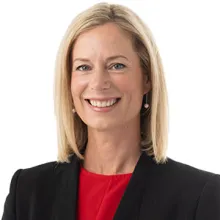
REBECCA WHITE, ASSISTANT MINISTER FOR HEALTH AND AGEING: Thank you so much, Simone, for having us at the hospital. Hello everybody. It's such a great opportunity during DonateLife Week for us to have a conversation with our families about the importance of registering to become an organ donor. One of the most important things we know is that even for people who are registered, if they haven’t had a conversation with their family, it can be really difficult for treating health professionals to know what somebody’s wishes are. So I really do encourage people this DonateLife Week to jump online to DonateLife, register or through your Medicare app and register to become an organ donor. This is something you want to do and talk to your family about it. You could be changing somebody else’s life. And here today we are joined by some recipients who have their own stories to share of a life that they will have to live for years to come with their families, particularly for somebody as young as Chloe, a whole life ahead of her which she’ll be able to participate just like any other nine year old girl in all of the wonderful things that you do when you're at school or playing sport or playing music with your friends.
We also have fabulous donor families with us today who are here to represent what it means to be a part of something bigger. To be able to be part of the hope that you give to somebody else when you are dealing with one of the most tragic circumstances that you could possibly face. I want to thank and recognise our donor families for joining us today and I know that Olivia will be sharing some stories later about what it’s meant for her and her mum when her father passed away and the ability they shared to be able to then give life and hope to other families in one of the most difficult times of their own life.
DonateLife Week is a chance for Australians to have a conversation. It’s a chance for us to recognise those who are donors and those are recipients, but also to thank our hardworking health professionals. We’re joined by lots of them here today. I know firsthand from meeting with health professionals in hospitals just like this and others that they are the ones who are making such an enormous difference. They’re having conversations with families, guiding them through the process about what it means to proceed as an organ donor and helping hold their hands through those moments. And I just want to say thank you to them because it is really tough but it’s incredibly important work and they are making a significant difference in the lives of hundreds of Australians.
ALEXANDER: Thank you, Minister. I’d now like to introduce Vic who had a heart transplant here at the Alfred.
VIC WIGGINS, HEART TRANSPLANT RECIPIENT: Thank you, Simone. So my name’s Vic. I was born in the UK in 1970 and in 1971 I became the youngest child in the UK at the time to receive life-saving open heart surgery for a congenital heart problem that I was born with. My life is actually quite good in the sense of doing normal things up until I was about 35. By that stage, I’d had two open heart surgeries and numerous testing with various procedures along the way. And then unfortunately in 2005, the start of a long and sort of gradual decline I suppose over the last 20 or so years which then ended up me needing a heart transplant and I was put on the waitlist in early 2004 and almost a year later, I received the gift of life. And I suppose I’m just here really today to pay extraordinary credit and respect to the donor families, all of whom none of this would happen. I’ve met already Olivia and her mum Gail today and just sharing a couple of stories is just so lovely. So to reinforce what the Minister has said, this is the opportunity to have a conversation with your families and if it’s right for you, please consider becoming an organ donor. Thank you.
ALEXANDER: I’d now like to welcome Olivia, one of our donor families.
OLIVIA CARROLL, DAUGHTER OF ORGAN DONOR: Thank you very much. Good afternoon, my name’s Olivia. I'm here representing my grandfather, a kidney recipient, my auntie, a living kidney donor, and my dad, my hero. My family's first experience with organ donation was in 2018, when my auntie selflessly donated one of her kidneys to my grandfather. He was at the horrible stage of needing to be hooked up to a dialysis machine three times a day, seven days a week, and essentially had no quality of life. My auntie's gift freed him, allowing him to return to his passions of fishing, golfing, and being able to live life on his own terms. A year later, on my sister's ninth birthday, and when I was 11, my dad was in a freak accident in our driveway. He was on life support here at the Alfred, but unfortunately, there was nothing that could have been done to save him. This is where our journey with organ donation started again. Luckily, mum and dad had already had a discussion about what they would want to do if the worst happened. My dad's philosophy in life was to be kind, and to help others wherever an opportunity arose. We knew that it was what dad would have wanted. To be an open donor. To save lives.
That was the hardest time in my family's life. But from that darkness came the light of knowing that, because of my dad, there were three people alive today. Three people who can keep making memories with their families and enjoy their lives. All thanks to my dad. In the weeks following my dad's passing, We received letters from the recipients of his organs. One of them told us that because he received a kidney from my dad, he would now be able to travel, something that wasn't possible while on dialysis, and spend more time with his family. Until our family experienced it, tragedies were only something that happened to other people. None of us know what will happen tomorrow. But we can make a decision today that could one day save lives. I encourage everyone listening to take just one minute to register as an organ donor. And, just as importantly, have a conversation about it with your family.
Organ donation has changed my family's life in more ways than one. And by making the choice to register as a donor You could one day give another family precious gift of hope, freedom and a second chance at life. Thank you.
ALEXANDER: And now it's your turn, Chloe. Mum is coming back? Okay, sweet. Want to come and stand over here with me, and mummy will come and stand beside you?
CHLOE LOO-TANDIYONO, LIVER RECIPIENT: Hi everybody. My name is Chloe and I’m nine years old. Next month marks my ninth year liver anniversary, but I bet none of you here would have guessed that. I look well, I feel well, and in general, I am well. But that hasn't always been the case. I was very sick when I was a baby. I was getting more and more yellow, with [Indistinct] soon after I got- soon after I was diagnosed. I have two scars on my belly. The first one is a straight line, and that was when I was seven weeks old. The second one is an L shaped scar. I don't remember anything that happened, but to me, from pictures and videos I can only imagine how uncomfortable and painful everything was. I was the baby with the huge tummy. At eight months old, the doctors finally decided that I needed a new liver. I waitedseven days for a suitable liver.
My surgery was performed overnight, and it took a total of ten hours. A lot of machines were attached to me when I woke up. Mum and dad were in tears of relief and happiness. My eyes were finally white, and slowly my skin came into its natural colour too. Fast-forward to now, my liver transplant is the greatest gift I’ve ever received. It means that I’ve got a second chance at life. I can go to school, play with my brothers, spend time with my family, and play with my friends. It allows me to do all the things that I love, like singing, dancing, arts and craft, and even more. I do have to have medicine every morning, but I don’t mind that. My parents say that is a small price to pay. Organ donation truly saved my life. The scars are a great reminder of how lucky I am. I’d like to take this opportunity to say thank you to my donor family for saying yes to organ donation. Thank you.
ALEXANDER: I am not sure how you follow any of those touching stories, and I feel quite emotional. Thank you, the three of you, for being here. I’m sure you’ll agree that it’s a powerful reminder of the profound impact of organ donation. Thank you so much for so generously sharing your stories with us here today.
I’ll step aside now and invite media to ask questions of Minister White and the group.
JOURNALIST: You all spoke so beautifully, thank you. Minister if I could, and then someone from the medical field would be great.
Minister, your simple message this week to Australians?
WHITE: The simple message this DonateLife Week is please register and have a conversation with your family. It’s simple to do, you can jump online, it takes one minute on the Donate Life website or through Medicare.
JOURNALIST: I mean, to hear the stories that you've heard today, how do you feel during that? Does it reinforce the importance to you?
WHITE: There's nothing more special than the gift of life. And today, we’ve heard stories from people who’ve been recipients and the enormous joy it's brought them and their families. But also, those who have been able to share stories of their loved ones who have been donors – giving hope and a gift of life for somebody else. It is a remarkable thing that we do in Australia. I think organ donation is something that we should be incredibly proud of. We have an incredibly strong system with a lot of integrity built around it and we do encourage people to sign up because you can help save somebody else’s life.
JOURNALIST: Are you confident the message is getting around to Australians - that they need to opt in to be able to change a life.
WHITE: We would love to see more Australian register to become an organ donor. We know that we could save more lives if we have more people registered. So, we are hoping that people see the messages week and that they do jump online. It takes just one minute, please, and you can save somebody else’s life. And have a conversation with your family about it. We know that if we were to get just 15 per cent of Australians to sign up, to register as an organ donor, we could save 200 more lives a year.
JOURNALIST: Thanks. Dr Opdam where do we sit when it comes to organ donations in this country?
HELEN OPDAM, NATIONAL MEDICAL DIRECTOR, ORGAN AND TISSUE AUTHORITY: Look, we’ve made at big change the last 15 years. There's more people donating, more Australians receiving those life-saving transplants, but there's more we can do. And our consent rates are relatively low – 53 per cent – we want to see that get better. And the biggest thing people can do is register on the Australian Organ Donor Register, and then let your family know that you want to be a donor.
JOURNALIST: I mean, I imagine the hardest thing for a lot of families is the waiting.
OPDAM: People waiting for a transplant, yes. I can only imagine how desperate people might feel. I think if people really put themselves in the position of those in need of transplant, they would more readily be willing to be a donor and register. In fact, you know, the change to be a donor is actually quite rare – you need to go into particular circumstance. So, there's only about 1,500 people a year who die, but there's many more people who need a transplant - currently about 2,000 people are on the waiting list.
So, we really want to get the message out there – people need to register, let their family know, and we will increase the number of lives saved.
JOURNALIST: I mean, to see that consent growth, great. That increase from 53 per cent up to close to 100 per cent. What difference would that make in the grand scheme of things?
OPDAM: I think we would make tremendous in-roads into giving more Australian that chance of a lifesaving transplant. It’s extraordinary for the individual, for their family. I think we would want that for ourselves, whether it being for family. We're each more likely to need a transplant in our lifetime than actually die under circumstances where donations are feasible. I think Australia is very generous. We support donation. People just perhaps haven't got around to registering. It only takes a minute at DonateLife.gov.au, or through Medicare.
JOURNALIST: Let me speak to you, Dash. How important is it?
DASHIELL GANTNER, DONATELIFE MEDICAL DONATION SPECIALIST, THE ALFRED: I think this is a chance for the work of the donation and transplantation team here at the Alfred and in Victoria and across Australia to really promote the amazing work of the donation and transplantation community. And also to have their incredible work recognised through the incredible stories of Vic, Olivia and Chloe and their families. For me, donation and transplantation is a demonstration of really the best elements of community spirit that our society can offer. We turn what is the worst day of one family's life into a story of hope and recovery for another family, and a strangers’ family. It's a demonstration of community and spirit that I think you don't see in many other developing societies.
JOURNALIST: What do you think of the numbers here at the Alfred when it comes to transplant rates?
GANTNER: In my work as an intensive care specialist here at the Alfred, every week I see people who are on the transplant waiting list waiting desperately for the call that the organ is available. And often I see people who, sadly, can't be supported through to receiving their transplant. And I contrast that with the incredible work of the transplant teams when organs do become available and the stories of recovery and hope and survival, when people are able to receive transplantation.
And I would only wish that every day I was able to look after more people in the transplant recovery phase than I was in the waiting for a transplant phrase.
JOURNALIST: I can imagine that your staff really relish in the moment being able to pick up the phone and ring a family to say, there’s a donor organ ready to go.
GANTNER: It’s one of the most rewarding aspects of many of my team’s jobs, making those phone calls. But on the donation side, we know also that as Olivia has so beautifully spoken of, knowing that their family member was able to help others through the gift of donation, it could be incredibly meaningful in the process of grieving down the track.