SYLVIA JEFFREYS, HOST: Well, let's get more now on respected independent MP Helen Haines who is this morning fighting for life after a shocking alleged attack outside her Wangaratta electorate office.
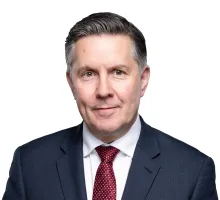
TOM STEINFORT, HOST: For more, we'll bring in Federal Health Minister Mark Butler, who joins us from Sydney. Minister, thanks for your time. Let's start with your reaction when you heard this news breaking yesterday.
MARK BUTLER, MINISTER FOR HEALTH AND AGEING, MINISTER FOR DISABILITY AND THE NDIS: One of shock, and I think waking up again this morning, I think I felt sick to the stomach like so many do. And I can only imagine the shock and distress that Helen's family are feeling right now as they wait for news about her surgery overnight, also her community, her staff, her friends. The people of Wangaratta who are coming to grips with this shocking attack in their beautiful community. I think this is incredibly confronting, and we're all waiting for what we hope will be positive news about Helen's very serious injuries.
JEFFREYS: We are all hoping and praying for that news this morning for the sake of Helen and her family, her husband and her three children, her team as well and the wider Wangaratta community. We've been given a sense this morning of how widely, universally respected she is. Could you give us a sense of the impact she's not just had on her community but in parliament?
BUTLER: It's hard to imagine a more gentle, compassionate, decent member of Parliament than Helen. I’m not sure I’ve ever heard her raise her voice, and I can't say that about many MPs. The debate can be very vigorous, but from Helen it's always incredibly respectful. She's a nurse, she's a midwife, she's got a doctorate in public health. As the Health Minister, I probably deal with her more than most. I value her advice very, very highly and she gives it very freely and with great respect. I think it would be a shock for any member of Parliament to be attacked in this way. But Helen's decency and gentleness, I think, has given it a particular shape of shock that we're all coming to grips with.
STEINFORT: Have you had some concerns about the political discourse for some time, whether that be from politicians who, I guess, are becoming more and more personal in some of their attacks, as well as the wider sentiment on social media from more rogue elements of the community? Is that a concern for you lately?
BUTLER: Yeah, I think we've all seen a level of often hate and disrespect and intolerance in our political debate that we never really used to see here in Australia. And whether it's the Director of National Intelligence, the head of ASIO, or the head of the Federal Police, or the Prime Minister, or many others, there have been warnings now for a number of years to turn the temperature down and rediscover that sense of respect and tolerance that I think always did characterise our debate here in Australia. We can disagree respectfully about the direction of our country.
Almost everyone comes to these debates with the best interests of a terrific country at heart. But we just seem to have lost a bit the ability to have those debates with respect. And as the Director of National Intelligence has said, hate becomes the breeding ground for violence. And I fear that's what we've seen overnight.
JEFFREYS: Would you like to see an increase in the amount of security and protection that's offered to members of Parliament?
BUTLER: We've already seen a substantial increase. The way in which we go about our affairs is quite different to when I first came into the Parliament because of official advice from the Federal Police. I take that advice. All of my colleagues do. I'm not an expert in these matters, I just try to do my job as openly as possible with as much public access as possible, which we've enjoyed here in Australia in a way that you just don't see in other democracies, in Europe, in North America where public officials, particularly ministers, are sheltered behind cordons of armed security guards.
People from overseas tell me all the time, they were telling me last night, how amazed they are at the openness and the accessibility of the system here in Australia, and I don't think anyone wants to see that change. Today, what we're doing is hoping for Helen's recovery and wishing her family and community all the very best. But I hope over time there is also the ability to reflect on what has happened over the last several years in this change in political culture that seems to have lost, in a significant way, that sense of respect and tolerance and openness that really characterised Australian political debate.
STEINFORT: It really is a time for reflection, as you say. Look, before we go, just quickly on your portfolio, there is a big milestone that has been reached by 1800MEDICARE.
BUTLER: Yeah, this is a great new tool in the Medicare toolbox, alongside our Urgent Care Clinics and other things we're doing. People can now use this 1800MEDICARE system. It's totally free of charge, it's convenient, and it has the sense of quality you'd expect from an official Medicare service. And well over a million Australians have already used it. Importantly, a couple of hundred thousand of them say otherwise they would have had to go to the local emergency department. It's also taking real pressure off our busy emergency departments.
JEFFREYS: Health Minister Mark Butler, we appreciate your time today on what has been a dark day in Australian politics. Thanks for joining us today.
BUTLER: My great pleasure.
Media event date:
Date published:
Media type:
Transcript
Audience:
General public
Minister: