
SARAH ABO, HOST: As we are still all trying to come to terms with the horror that unfolded on Bondi Beach, we did see those awful new images that emerged to alarm us once again. Dramatic scenes out of Liverpool in Sydney’s South West yesterday evening, as counterterrorism officers swooped on a group of men that they believe have been plotting a possible violent act. Joining us to discuss today’s headlines is Health Minister Mark Butler in Adelaide, and Shadow Minister for Small Business Tim Wilson in Melbourne. Good morning to you both. Mark, let’s start with you. hose heavily armed officers detained seven men who were reportedly making their way to Bondi Beach. I mean, these are frightening scenes.
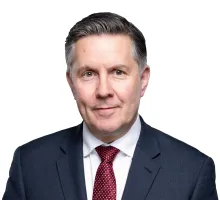
MARK BUTLER, MINISTER FOR HEALTH AND AGEING, MINISTER FOR DISABILITY AND THE NDIS: They are extraordinary images, Sarah, and they remind us that while we’re all mourning, while the nation’s trying to come to grips with what happened on Sunday night, our policing intelligence authorities are still working day and night to keep our country safe from any further threats of violence and harm. I’m sure we’ll hear more from the New South Wales Police over the course of today. There was a short statement issued last night. But they are extraordinary images and remind us that our authorities just work day and night to keep us safe.
ABO: Tim, there are very scant details that have emerged, as Mark's just outlined there. But what we do know is that it was a car with Victorian plates, so it's believed that these men may have made their way up from Melbourne. No weapons were allegedly found in the vehicles. But this unfolding, as the Bondi and the Jewish community is still reeling, I mean, everything is so raw at the moment.
TIM WILSON, SHADOW MINISTER FOR SMALL BUSINESS: Everything is raw, and it brings home that while we’re still waiting on the details, people’s minds logically go to terrifying outcomes. Police don't ram vehicles lightly. They don't have counterterrorism forces descend upon vehicles like this lightly. It says that they obviously had serious intelligence and they're going to take action. I think what Australians are looking for right now is reassurance from leadership because we're going into a Christmas period that is a very difficult one for our country, and now is the time for all good people to stand up.
ABO: Mark, there are rightly questions from the community about whether this is actually cutting through to the government. Obviously, everyone's been moved by what we've seen in those scenes, and the Prime Minister was at that vigil before it even started, laying down the first bouquet of flowers, but he hasn't been back. He hasn't been to any of the funerals. Yesterday the youngest victim, Matilda, was buried. Why hasn't he inquired about attending? He doesn't need to be invited to inquire with the families. What's he dodging?
BUTLER: I think it is appropriate the Prime Minister attend, particularly funerals, which are such a personal, family-centred moment, when he's invited to attend. He's been working day and night since Sunday night. He's talked with families who've lost loved ones, with health workers, with first responders, and he's been working with authorities to make sure that we move forward with action that is going to keep the community safe. He announced a range of measures yesterday, the toughest laws against hate speech ever, that finally allow us to target these preachers and leaders who spew this hatred …
ABO: I'm going to get to that, Mark, but it's just …
BUTLER: … and the organisations that employ them.
ABO: We are coming to that. I'm not going to ignore it. Obviously, we're coming to that. But it's just the notion that the community feels as though they're being ignored. I mean, Tanya Plibersek was at Matilda's funeral, as I understand, yesterday. The PM, it's as though he just doesn't want to face the families.
BUTLER: The Prime Minister has said he'll attend those funerals where he's invited, but he respects the right of the families to invite people to those funerals. They're not a public event, but I think that's the right thing to do as an individual, whether you're Prime Minister or anyone else. You attend a funeral where you're invited to attend it.
ABO: And if that's his tactic and he hasn't been invited, I guess that speaks volumes as well. But let's move on now to those hate speech laws that you mentioned there, Mark. So what will they actually enforce? Because we're not quite sure, you know, yesterday when the Government was asked about exactly what phrases or what organisations, whether it's from the River to the Sea or Global Interfata, or if it's an organisation , we don't know what's actually going to be outlawed here. So will they have any impact?
BUTLER: To be frank about it, for years now, governments of both political persuasions have been struggling to get laws that capture the hatred that is spewed from so many preachers and leaders of organisations throughout our country. And we're determined to get those laws right to make sure that we can shut those things down, and where appropriate, also kick those people out, because we'll also have additional powers, new powers, to cancel and to refuse visas on the basis of hate speech as well, because we know hate speech is the fertile ground from which the violence and the murder that we've seen over the last seven days sprouts. That's why these are such an important part of our response to what happened on Sunday night. But these are hard laws to draft. That's really why I think governments over the last many years have struggled with this, to get those laws right in a way that can actually shut down this hate preaching that we've seen far too often in Australia.
ABO: Yeah, and they're hard to enforce. We had the Race Discrimination Commissioner on earlier saying, basically, good luck with actually having anything enacted. Tim, we know that there have been accusations this is too little, too late. At least it's something. Will the Opposition support the government here?
WILSON: Well, of course, we'll ultimately have to wait to see the details, but the spirit of what's being done, of course, we'll be supportive of because we want to see hate preachers shut down. We want to make sure that Australians are safe, but we also believe there are further things that need to be done. I'm genuinely perplexed why the Government's not prepared to consider a Royal Commission into the events of the past week. And we also need to make sure there are clear laws dealing with hate preachers going forward.
But when it comes to the issue of hate speech, yes, these laws are difficult to draft. But that is not a reason why we shouldn't try, because we know that these preachers or these organisations deliberately find a way to get right to the letter of the law and to push their luck, for want of a better phrase. And it's not just about the incidents and one thing that's said in a moment, it's actually about the graduation and the repetition that's part of the radicalisation process. That's the task and that's the challenge, and that's the one that we need to meet, because that's the pathway that's leading to this radicalisation that ends in horrific incidents.
ABO: I guess you don't think that the government's proposals go far enough, Tim? I mean, there are concerns from the Jewish community that they might end up being watered down by the time they are eventually legislated. And I know Sussan Ley put forward the Coalition's own plan yesterday as well.
WILSON: We did put our own plan forward yesterday about the steps we think are going to be necessary in addition to what the Government's done. But the truth is, yes, what the Government put forward is welcome, and a number of people in the Jewish community have said so. But it really would have been welcome a lot earlier. The challenge we face now is - and this isn't a problem of partisanship or even for specific for the Government - it's a problem for Australia. For two years, the Jewish community has been saying very clearly that we are seeing an escalation in anti-Semitism, that without strong leadership and action at a national level, at a state level, that it will continue to unfold to the point where we'll reach a moment of crisis. On Monday night, I was at Caulfield Synagogue in Melbourne. A vigil was held, of course, for the victims of Bondi. And while, of course, there were soft hearts, there was a hardened skin and a resolve because people feel like they have been saying this now for two and a half years, and it's simply fallen on deaf ears.
ABO: All right. And Mark, just to confirm, you guys won't recall Parliament, will you, to try and hasten these laws?
BUTLER: We'll put them to Parliament when they're ready. The Prime Minister said that yesterday. That's not going to be next week, but as soon as those laws are ready, we're open to recalling Parliament so that we can get them through as quickly as possible, and I hope with the support of the Opposition.
ABO: All right guys, thank you so much for joining us. We do need a lot of unity and bipartisan support at this time. Appreciate your patience this morning.
Media event date:
Date published:
Media type:
Transcript
Audience:
General public
Minister: