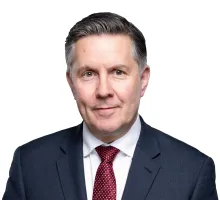
NATALIE BARR, HOST: Thank you. For more on the fuel crisis, we’re joined by Health Minister Mark Butler and Deputy Opposition Leader Jane Hume. Good morning to you.
Mark, we might just follow on from that. We’ve just had an energy expert say the fire at that Geelong refinery is a big problem and we’re in a super vulnerable position, and yet we had the Deputy Prime Minister this morning says it’s going to have a relatively minimal impact. Which is it?
MARK BUTLER, MINISTER FOR HEALTH AND AGEING, MINISTER FOR DISABILITY AND THE NDIS: We need to hear from Viva, obviously, the operator of that refinery. It has hit their ability to refine petrol and also aviation gasoline, although we do have a very substantial stockpiles of aviation gasoline for the smaller planes in Australia, but we'll need to get to the bottom of exactly what the impact on this fuel refining is going to be. I think the Viva managing director said yesterday that they were confident they could replace that refined petrol with imports. But obviously this is why the Prime Minister has flown there directly to get an in-person briefing from the head of the country in what is really an event that couldn't have happened at a worse time for Australia.
BARR: Okay. Mark, the WA Premier says he has no confidence that the fuel situation won't worsen and that we might even have to go to Level 3 of our national plan, which is taking targeted action. We're at Level 2 now. What does Level 3 look like?
BUTLER: It does, as you said, ensure that industries that really need fuel, the mining sector, the agriculture sector, emergency services, the health sector, are targeted if shortages become quite pronounced. But I think what Roger Cook, the WA Premier was saying there was voicing a reality that none of us really know, how long this conflict is going to go on, how long the Strait of Hormuz will be closed, and after it does open, how long it will take for the oil to start flowing in a more normal way.
Yes, we hope for the best. We've got good supply now to the end of May. We're out there getting as much fuel from the global market that we possibly can get. But, of course, we've got to prepare for the possibility that this will get worse before it gets better, and we will start to see shortages. I think Roger Cook there was really stating the obvious. You can't govern on hope alone and that's why we've got the National Fuel Security Plan.
BARR: Jane, was Roger Cook going rogue by using quite different language to what the government is using, saying he has no confidence that we won't go to Level 3?
SENATOR JANE HUME: Nat, Roger Cook is doing what all Australians are doing. Even a Labor Premier doesn't trust Anthony Albanese and Chris Bowen telling us that there's fuel certainty. We're getting such mixed messages across the country. No one knows whether to fill up at the bowser today or to wait for another two weeks. Is the situation going to get worse? There's already 468 petrol stations around the country that still haven't got one or both kinds of fuel. What we saw in Geelong potentially could make the situation much, much worse.
I've just got back from Perth, actually, and I'm hearing from businesses over there, things like people that are hiring mining equipment to miners up in the Pilbara and Ford dealerships, car dealerships, that their businesses have simply dried up because of this fuel crisis and the lack of certainty that's going into it. The Coalition have been calling on the government to deliver a national dashboard that shows us where the fuel is, where there are shortages, where the distribution is going to, what's coming on the ships that have been secured, how much and how many ships. Because at the moment, we're just hearing the good news stories, we're seeing photo opportunities from overseas, but the certainty simply isn't there for businesses and households to make the decisions that they need.
BARR: Mark, do you think the uncertainty is harming businesses?
BUTLER: Of course, and you've seen that right across the world. Consumer confidence is down at levels we haven't seen for decades. That's not a particularly Australian phenomenon. We're seeing that right across the world because there's no confidence, there’s no confidence about how long this conflict will go on and when the oil will start to flow in a normal way again, when economies can get back to normal. Yes, there's a loss of confidence in business among consumers, and governments have to prepare for all scenarios because we have no control about what is happening over in the Middle East.
BARR: Okay, we're just seeing pictures of the Prime Minister, Anthony Albanese. He's just flown back from Asia and he's just arrived at Viva Energy in Geelong. He's told the media he's just going inside. He's going to talk with the officials and then talk to the media and let us all know what's happening after he's had a report. We thank you both for that update. We’ll see you next week.
Media event date:
Date published:
Media type:
Transcript
Audience:
General public
Minister: