
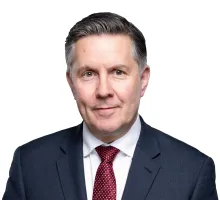
ANDREW CLENNEL, HOST: Mark Butler was at the National Press Club this Wednesday last, making arguably one of the biggest announcements in the life of the Albanese government. Finally they were going to take some action on the cost of the NDIS.
[Excerpt]
MARK BUTLER, MINISTER FOR HEALTH AND AGEING, MINISTER FOR DISABILITY AND THE NDIS: The NDIS was originally intended and expected to support around 410,000 people with a disability. Today, there's more than 760,000 people on the scheme. While new eligibility rules obviously need to be worked through carefully, our initial modelling will see the number of people on the scheme reduced to around 600,000 by the end of the decade.
[End of excerpt]
CLENNEL: Well, the first real foreshadowing of this came last July at Sky News' Economic Summit event where I interviewed the Prime Minister, Anthony Albanese, and he indicated the government needed to do something about a scheme which was originally set up for the profoundly disabled, which had grown to have more than 700,000 participants.
[Excerpt]
ANTHONY ALBANESE, PRIME MINISTER: One of the things that we've been trying to do is to make the system more sustainable. It had been allowed to just drift over the three terms of the former government. My government intervened. Credit where credit's due, Bill Shorten and credit where credit's due, he opposition supported the reforms that we put in place.
CLENNEL: Will you have another go at it?
ANTHONY ALBANESE: We will always look for spending to produce better value because if the NDIS had we not done that reform - our concern is that the vision of the NDIS is a great one. It's one we should be really proud of as Australians. We need to make sure that it is made more sustainable.
[End of excerpt]
CLENNEL: So in the budget, we'll see growth paired back to an alleged 2 per cent average over four years before settling at 5 per cent. So that's down from the current growth rate of 10 per cent. We will then see legislation which will put in place provisions to attempt to achieve that cut. So in that legislation, there'll be attempts to properly register providers to ensure this scheme is only for either the most permanently or seriously disabled. Now, will the government cop a backlash over this? Undoubtedly. But the view of the Government is the thing was just so out of control, something had to be done. The Prime Minister, Anthony Albanese, sees this reform as one of the biggest things his government will do. And he believes only a Labor government, as the originators of this scheme, would ever have a political licence to enact this kind of reform. Now, there are some hurdles ahead. The states might refuse to pick up some of the slack for those who come off the NDIS scheme. For example, Queensland Premier David Crisafulli is not committing to signing up to the replacement Thriving Kids programme. There will be scare campaigns and the government knows with these sorts of cuts taking place, some bad case studies might be found and wheeled out. And there is legislation, so it's got to get through the Senate. The PM and Opposition Leader, Angus Taylor, I can reveal, spoke on Thursday on the NDIS. Mr Taylor is said to have been constructive about supporting the proposals. Now, there's every chance of failure here with such ambitious targets. Some people say it's spin in the budget, 2 per cent a year growth only over four years. And they're setting sights on bigger NDIS cuts than were expected. But Anthony Albanese took the view that the government could keep fiddling around the edges to rein in the scheme or go for broke and do it properly. And the government went for the latter.
So joining me live now is the Minister for the NDIS Health and Aged Care, Mark Butler. Mark Butler: thanks so much for your time.
BUTLER: Morning, Andrew.
CLENNEL: How are you going to do it? How are you going to kick 160,000 people off this scheme?
BUTLER: Well, your introduction talked really about the two-track process we are putting in place. The first is to bring those costs back under control. That will require legislation that I'll be introducing to the Parliament when we go back in a couple of weeks' time. But there is a longer-term piece of work we have to do over the course of probably the rest of this year with states, importantly with the disability community itself, to redefine those rules around eligibility. Currently, it's essentially a diagnosis gateway. If you can get a doctor to give you that label, to give you that diagnosis, you're probably on the scheme. The intention always was to have a much more evidence-based functional capacity assessment so that the scheme was preserved for those it was intended for in the first place, people with a substantially reduced functional capacity. Now, designing that that tool will take a while. We'll have a technical advisory group. We'll have the states in the room, obviously, and most importantly, we'll have the disability community in the room as well, because I'm very much committed to the core philosophy of this scheme, which is 'Nothing About Us Without Us'. But I make no qualms about this, Andrew. This is a big change. It's hard reform. But as I tried to outline over the course of last week and as the Prime Minister has been saying for a while now, this is absolutely necessary reform.
CLENNEL: But you say you're cutting growth straight away. Is this a case of declaring victory and then having to figure out how to win?
BUTLER: This bill is a very substantial reform in terms of giving the Government finally the financial controls that I think we should have had for some time. I said at the press club earlier this week that the scheme actuary, so the guy who monitors the numbers in this scheme, only reported to me a few weeks ago that the scheme has blown out by $13 billion just since December. And that's because a range of the changes that we wanted them to put in place, they just haven't been able to put in place. Things like getting down the unscheduled reassessments that on average see plans inflate by 20 per cent. Really, pretty fundamental financial controls like that. The legislation I'll be introducing in a couple of weeks' time gives us that power to do that immediately. And that's why you will see in our budget papers, and you saw me outline this last week, you see growth come down very, very quickly. In terms of a reset for the scheme, a reset was the language I use, it's really important we get that growth back down and then see it return to the normal level you would see in a social programme like this of about 5 per cent, which is essentially population growth plus inflation.
CLENNEL: Do these changes basically mean, in a nutshell, a lot more people will have to reach into their own pockets for services, Mark Butler? It'll be more user pays, particularly for conditions like autism, I guess.
BUTLER: It depends what you're talking about, Andrew. That first tranche of changes that will take effect immediately really is about curtailing out-of-control growth. It's not reducing the scheme size, which is currently over $50 billion, the largest social programme we have outside the age pension. It's about curtailing the growth. We've seen areas, for example, that I talked about quite a bit last week, the social and community participation stream of the NDIS. That's gone from $4 billion five years ago to $12 billion this year. It's the same we spend on the Pharmaceutical Benefits Scheme, our entire medicine system, and is projected to grow to $20 billion by the end of the decade. We'll be making sure that growth is brought under control. The longer term changes around eligibility, I again say quite honestly, they're going to be hard changes. They're going to be hard to design. They're going to be hard to get everyone signed up to. And then they're going to be a challenge to implement. I want to be really clear about that. But they are utterly necessary to return the scheme to its original purpose, which was supporting people with severe and permanent disability.
CLENNEL: I understand what you're saying, and I appreciate you're explaining all this. But the real nub of the question is, will you admit under these changes there will be more user pays? There will be more disabled people, parents of disabled people, or people now classified as having disability, reaching into their own pockets to pay for their services?
BUTLER: It depends what sort of supports they want. What I have said very clearly, and you've seen this through the Thriving Kids reforms that I've been rolling out over the last several months for children under the age of nine, is if people are not going to be on the NDIS because they're not severely and permanently disabled, there obviously have to be government-funded supports in place for them. That's why we're rolling out Thriving Kids over the coming 18 or 19 months before those access changes.
CLENNEL: I'm struggling to get you to admit what I think is the truth, that, yes, there will be state government supports, but there will be more cases of people having to reach into their own pockets to pay for these services. Yes or no?
BUTLER: I don't necessarily accept that, Andrew. What we're doing now is building supports, for example, in Thriving Kids, which is the more advanced programme in this area. They will be supports available in a whole lot of areas where families live and learn and play, and they're going to be government funded services.
CLENNEL: Does the taxpayer end up paying for a lot through the back door, I guess, because we still have Medicare and a lot of people will seek treatment through that system if they come off the NDIS?
BUTLER: People are seeking treatment through Medicare anyway. I don't expect that to increase substantially. That's not our projections. Yes, they'll be getting government-funded supports, which will be government funding separate from the NDIS, but it will certainly be much more efficient support. Generally, for example, young kids, again talking about Thriving Kids, will be receiving support in more congregate or collective settings rather than this sort of market-based individual therapy that children are doing in numbers that we don't see in any other part of the healthcare system. This is going to be a much more efficient but also effective way in which to give support to people, frankly, who were never intended to be covered by the NDIS in the first place. The other thing I'll just quickly say, Andrew, is that back in 2023, the National Cabinet, so all of the country's governments, allocated $10 billion to this foundational support system, so supports outside of the NDIS. Now, we've allocated $4 billion of that to Thriving Kids, but there is still $6 billion in our budgets for those foundational supports for people who, over the coming years, will find themselves not covered by the NDIS.
CLENNEL: So 160,000 off. At present I think it's been reported 43 per cent of the people on the scheme have autism, a lot of kids with autism. Would 43 per cent of the 160,000 roughly that are coming off have autism or would it be higher?
BUTLER: I don't really want to pre-empt that, Andrew. As I said last week, we're not taking a diagnosis by diagnosis approach. I think that's been part of the problem with the NDIS over the last several years. We're going to take a functional capacity approach. It really won't matter what condition or disability you have. You will be assessed through a programme or through an assessment process that applies equally across the scheme. But obviously, given that people with autism are such a big part of the scheme's population, you'd expect them to be a reasonably substantial part of that 160,000. But there will be representation, probably pretty proportional, right across the disability types.
CLENNEL: How did you come up with this figure almost straightaway of just 2 per cent growth average over four years? So 4 per cent first year, I think it is. Then it goes down to 1 per cent. Have you and Jim Chalmers, the Treasurer, plucked that figure out of the air? Is there any modelling on it? Is it an unrealistic figure? Because how many people do you expect to come off the scheme in the next 12 months?
BUTLER: The reductions you'll see in spending don't reflect people coming off the scheme. As I said, people won't be coming off the scheme until 2028 at the earliest. The big reductions you see in spending growth are those things that I talked about, out of control financial growth that is not about scheme reform or scheme design. It's really just about good financial management, getting that out of control growth in parts of the scheme down, dealing with some of the things that we've been trying to do, but legal decisions in the Federal Court and the Administrative Review Tribunal has prevented us from doing as well. We'll be clearing up the law there. But to your point about plucking figures out of the air, you know how this works, Andrew, particularly in a package as complex as this. We've been working on this for months. As I think is public, we've had a cross-department task force with Treasury very much involved in that. A senior Treasury official seconded to lead up that task force. And we've been crunching these numbers very, very carefully. We've been checking them with the NDIS actuary, the agency over there, which operates independently, making sure that our numbers correlate with their numbers. I'm very confident that if we can get this legislation through you will start to see very sharp reductions in what I think is out of control growth in this scheme.
CLENNEL: When you say you're looking at functionality instead of the current system, can you give us like a case study example of how that would work practically? Like someone who's on the NDIS who might be eligible now because of the current criteria, how would they not be eligible under functionality or how would that be assessed?
BUTLER: I'm nervous to pre-empt what is going to be a very involved process, but broadly at a principles level, what we're looking at is the ability of people to function in a day-to-day sense. That will cover a whole range of facets that your viewers understand to be ordinary parts of daily life, looking after yourself, toileting, personal care, meal preparation, getting around, mobility, things like that. This will be much more evidence-based than the diagnosis gateway I've talked about being the way in which people get onto the scheme. But, there will be a lot of engagement with people in the disability community. States and territories will have to agree to the rule changes that implement whatever it is that we ultimately get advised to do.
CLENNEL: You said on Wednesday some of the well-intentioned measures that were put in place in the first term by your predecessor, Bill Shorten, to control spending weren't, quote, gripping, unquote. What measures are you talking about there? What are we talking about and why didn't it work?
BUTLER: A couple of things, for example, were I just talked about the Federal Court taking a different view to the government on whether people should be permanently disabled to be onto the scheme. That was a view we had. It was a view that was recommended by the NDIS independent review back in 2023. We've not been able to do that because of court decisions, so I'll change the law to implement that. I also talked about the unscheduled reassessment of plans. During the currency of a plan, which might only be 12 or 24 months, someone applies to get their plan reassessed. On average, that sees plan inflation of about 20 per cent, so a huge driver of cost growth. We wanted to get that figure down from 20 something closer to 15 per cent. The agency has told us they haven't been able to do that, so we'll help them do that with some legislative change. It is, at the end of the day, not really about scheme design or really deep reform, just about good financial management, good financial control, which we tried to put in place. To some extent, we saw the growth come down from 22 per cent to 10 per cent, but that's not enough of a reduction. Other social programmes aren't growing anything like that, even where we've got a big growth in demand, for example, in aged care. I think we've simply got a responsibility to get that figure down.
CLENNEL: When you bring this legislation forward, what do you reckon will be the part of it that creates the most backlash or blowback?
BUTLER: I don't want to predict that. This is a big piece of legislation. We're deliberately, very consciously leaving the scheme reform for a more detailed process of consultation. This is about financial management, this Bill. It is substantial. It will have a material impact on the finances of the scheme so I don't pretend it's nothing. It's quite substantial. As I think you said in your introduction, the Prime Minister and the Leader of the Opposition have already had a general talk about this and will be setting up a briefing for either Angus Taylor or one of his shadow ministers. That will be up for him. But we want to see this passed during the budget session, at least by the end of June, so we can start to implement those changes from the 1st of July.
CLENNEL: What if the states just refuse to fill the gap with the Thriving Kids thing? That would mean a lot of people miss out, don't they? How many billions more are you expecting states to have to pay to fill the gap?
BUTLER: The first thing I'd say about that is that at the National Cabinet meeting a few months ago, every state signed back on to Thriving Kids. In return, we gave them $25 billion of additional hospital funding, and they said that we'd help out with NDIS reform, including the Thriving Kids reforms. Now, every state and territory has signed a bilateral agreement with us that details the broad details of the Thriving Kids programme. There'll be some difference between states depending on what programmes they already have. The only state that hasn't signed yet is the state of Queensland. I tried to make clear again last week that is part of the deal that sees them get additional hospital funding. And frankly, they'll be answerable to their community if they don't put in place the additional supports that all governments have recognised as important. They've signed onto it at a National Cabinet deal. We've said that of the $2 billion we committed to Thriving Kids, the vast bulk of that will be paid over to state and territory governments who told me they wanted to deliver the programme. They didn't want the Commonwealth to deliver it. They want to deliver it at a local level. I get that there is argy-bargy in politics between state governments and the federal, particularly when dollars are involved. But I think really the community just wants us to get on with this. And I think state governments that delay it or give a sense to disabled Australians that there won't be those supports in place when these necessary reforms are implemented are not doing a great credit to their community.
CLENNEL: What if this is just a cost shift? I mean, what if basically us as state taxpayers are just going to wear what used to be in the NDIS a lot of this?
BUTLER: The NDIS is co-funded, co-designed between states and the Commonwealth. And these foundational supports, for example, Thriving Kids, are also co-funded and co-designed. We recognised in the last couple of years through National Cabinet decisions that we wanted to continue a partnership approach on disabilities. As I said at the Press Club, it was open to state governments at any time since the 2023 National Cabinet decision where this was really reaffirmed. It was open to them to come to us and say, we don't really want to be a part of NDIS reform, so we'll leave that to you, and we won't ask for additional hospital funding because we recognise that's our responsibility. That's not what they did. They said we want partnership in both. We need additional funds for hospitals, and in return, we'll lean in, we'll put our shoulder to the wheel, not only in supporting you on NDIS reform, but in co-funding, co-designing.
CLENNEL: Yeah, but is it a cost shift? Is it just a cost shift, Mark Butler? Is it just a cost shift?
BUTLER: It's not a cost shift. We co-fund all of these programmes Hospitals, NDIS, Thriving Kids. They're not a cost shift. They reflect understandings negotiated by all the premiers, the Prime Minister and the chief ministers. That's happened since 2023, this has been going. At any point they could have said, we're out, we'll just focus on hospitals, and they didn't. And I think that's for the good of the community. I think having that skin in the game by both levels of government in these critical social programmes is really important. And I think that was the right decision. But they've got to implement it now. They've got to deliver on it.
CLENNEL: Alright, I'm trying to get a couple more in before we're out of time. And I appreciate your time, Mr Butler, because it sounds like you've got a bit of a cold. So I really appreciate you coming on. You've committed to reassessing everyone.
BUTLER: And the Port Adelaide victory last night also, Andrew.
CLENNEL: Is that what it is?
BUTLER: Yelling at the TV didn't help.
CLENNEL: There you go. All right, well, less sympathy now. All right, so you've committed to reassessing everyone who's currently on the NDIS. Why should a quadriplegic or a blind person be reassessed?
BUTLER: I think that's a really important question that people in the community are asking. I really don't want to pre-empt what this system looks like. We are going to engage very closely, but I think it doesn't take much reflection to conclude that as we go through that process, it'll be a two-step process where there's very much a light touch review of a person's condition and it will be pretty obvious that they're going to remain on the NDIS with not much additional assessment. Those people who are probably more at the margin will be subject to a more detailed assessment. Now, I say that a bit reluctantly because I want to get into this conversation, but I think any system that's going to have a look at 760,000 people when the bulk of them are undoubtedly those for whom the NDIS was initially designed would have to have that sort of two-track process as well.
CLENNEL: Why are you charging 3 million people over 65 $240 a year more for their health insurance?
BUTLER: This was a hard decision, as I said at the press club. Budgets now are very constrained, particularly at a time where we need to do a lot of additional heavy lifting for older Australians as aged care demand really starts to spike this year as the oldest of the baby boomers hit 80. This is about choices. Now, the choice John Howard made in 2004 was to pay a higher private health insurance subsidy to older Australians than he was going to pay to other households on the same income. If you are all about getting more people signed on to private health insurance, that's the opposite of what you would have done, because older Australians are not much impacted in terms of their private health behaviour by things like this. If you really wanted to boost private health membership, John Howard should have paid it to younger people. Now he didn't. And on equity grounds, it just doesn't make any sense that one household on a particular income gets more government support than another simply because of their age. At a time when we have to make hard budget decisions, I had to go to the Government and say we need more funds for aged care. But in this area, I don't think that is good value for money from a Government perspective. I wish I didn't have to do that, but at a time when budgets are frankly framed by hard choices, we have to put more money into aged care and every one of those dollars we save through this decision will be ploughed back into better care, more packages and more residential care beds.
CLENNEL: Alright, you're launching a new vaccine campaign today. Have people gone off vaccines since COVID? Is that the thought behind this?
BUTLER: There's undoubtedly right across the world, other countries are reporting this as well, a bit of vaccine fatigue, a bit of vaccine hesitancy that we're still seeing after COVID. We're also, though, seeing a lot of misinformation and disinformation online. What we're trying to do today is firstly reinforce the importance of vaccines, particularly for our under fives. Right across the world, vaccination for some very deadly diseases for our little ones is declining. Not hugely, but declining steadily at a pretty, worrying and concerning rate. We want to make sure that parents, when they're thinking of another way to keep their kids safe, have access to high quality, highly reliable information. The second campaign we're launching today is for older Australians, just a reminder as we go into winter, that vaccination for flu, for COVID, for RSV is, again, one way to make sure that that if they do pick up one of those respiratory illnesses, they're protected from serious impacts, which can be, frankly, life-threatening.
CLENNEL: Alright, nearly out of time. Just a couple more. Just on ISIS brides, a cohort has left their Syrian camp. Will they be allowed back into Australia, do you think?
BUTLER: I've read those reports overnight, Andrew. Our position hasn't changed. We're not providing them with any assistance, no repatriation. Obviously, as a matter of law, if they are citizens, they're able to obtain passports, but that's a legal issue, not a practical issue. What Tony Burke has said right through the course of this is that if they manage to get to Australian borders and they have committed any crimes, they will be met by the full force of law at those borders. Also, obviously, security agencies will be providing Tony Burke with security advice to ground any decision. I think there's already been one, in terms of making a temporary exclusion order on the basis of national security grounds. So our position hasn't changed about this, Andrew.
CLENNEL: Just finally, Mark Butler, you were responsible for the triumphant health policy at the last election. You are now undertaking the Government's major reform. Do you want to replace or have any ambitions to replace Anthony Albanese eventually as the Labor leader and Prime Minister of this country?
BUTLER: Anthony was only re-elected less than 12 months ago with a huge majority. He's got a very big agenda. He's steering the country through probably the worst global fuel crisis we've experienced, if not ever, then certainly for 50 years. He's not going anywhere. I've supported Anthony probably more closely and more consistently than anyone else in the caucus. I don't want him to go anywhere. I feel privileged to be able to serve under him. And I think I've got the best job in Government supporting Australians' needs in health and disability and ageing. So, less than 12 months after an election where he won an emphatic victory, I want to see him stick around for the long term.
HOST: That's not a no, Mark Butler.
BUTLER: It's just not something we're thinking about. Anthony, I think, said last week he's enjoying the job. It's a hard job. But right across Government, we want him to stay in it for the long term. Certainly I do.
CLENNEL: All right. Well, I've got something of an answer. Mark Butler, thank you so much for your time.
BUTLER: Thanks, Andrew.
Media event date:
Date published:
Media type:
Transcript
Audience:
General public
Minister: