
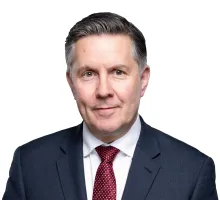
PETER STEFANOVIC, HOST: Well, let's get some immediate reaction to that now. Joining us is the Health Minister, Mark Butler. So, good to see you this morning, Mark. As Netanyahu just said, wake up. Are you awake now?
MARK BUTLER, MINISTER FOR HEALTH AND AGEING, MINISTER FOR DISABILITY AND THE NDIS: You know, Pete, that we don't provide a commentary on Prime Minister Netanyahu's contributions to what is happening here in Australia or any other country. We are focused on doing the right thing by our country. You saw some very significant measures announced by the Prime Minister and the Minister for Home Affairs and others yesterday standing alongside our Envoy, Jillian Segal, and the AFP Commissioner. We're focused on going forward on what we need to do as an Australian Government for Australians.
STEFANOVIC: Well, Anthony Albanese said more could have been done to combat antisemitism. Do you concede your government failed our Jewish people?
BUTLER: I agree with the Prime Minister obviously. More could have been done, that's crystal clear this week in the most tragic way. Antisemitism has been spiralling in this country over the past couple of years, really in every part of society. We've seen it on our streets, on our campuses. I've seen it in the health sector. We've been taking action there to combat it. We've seen it in the arts and in so many other parts of a country that prides itself on being so tolerant. We've been taking action, of course, but you can't go through a traumatic terror attack like Sunday night and not think that the system needs examination, not just our response to antisemitism. Of course, over time, there's going to have to be an inquiry into our police and intelligence response to this. The fact that these two men were able to have so many guns for such a period of time on that bridge, of course, is going to have to be the subject of inquiry and inquest. We should all be honest enough to reflect on what's happened on Sunday night and what happened before it and what we need to do going forward, and that's very much our focus as a government.
STEFANOVIC: So you just said that more could have been done, as the Prime Minister said yesterday. So here and now, would you like to apologise to the Jewish community?
BUTLER: I've been working very closely with the Jewish community really from the first few days after October 7. I've seen that very much as one of my responsibilities as the Health Minister and the member of the government. I was at the event in the eastern suburbs of Sydney only two or three days after October 7, standing alongside Peter Dutton and Premier Chris Minns on behalf of the government. I was there 12 months later again with thousands of Jewish members of the Sydney community in particular. I'm doing all that I can, but what's clear from Sunday night is that more could have been done. The Prime Minister of course has been honest about that. You cannot have an event like Sunday night with frankly all elements of society, all levels of government reflecting on what has come before and what we need to do going forward. That's really our focus. That’s been our focus all week.
STEFANOVIC: Okay, but you said more could have been done. Back to the question. Would you like to apologise to the Jewish community?
BUTLER: Well, Pete, of course we're desperately sorry to the Jewish community about what they have had to endure. I've gone through that with you over the course of this morning. The fact that Jewish students have to go to school behind 12-foot fences with armed security guards and with police often outside their schools, no other part of society has to send their kids to childcare or to schools behind security fences. No other part of our society is putting their loved ones in aged care facilities that have 24/7 security guards because of the threats of violence against old people, people at the end of their lives, some of them Holocaust survivors. I've been calling that out since October 7. Frankly, some of it existed, those security arrangements at schools and childcare centres existed before October 7 as well. But we have seen an unprecedented explosion of antisemitism over the last couple of years that has had to be called out in almost every part of our society. The law, the health system, campuses.
STEFANOVIC: The problem with that though, Minister is that you didn’t listen to their concern about marches. Every week those marches took place. There were constant threats that you just explained. Why didn't you listen to Benjamin Netanyahu warning just four months ago when he told the Prime Minister that this would happen?
BUTLER: The Prime Minister called out that first march, that first terrible march on October 9 in Sydney at the Opera House. He called it out before and he called it out after. We had a very clear statement from the nation's Parliament about that.
STEFANOVIC: Yeah, the marches kept on going.
BUTLER: It was supported by the Prime Minister and the Leader of the Opposition. They kept on going. And this hate speech has to stop, which is why we've announced the measures we announced yesterday, because the hate speech we've seen for years and years, particularly since October 7, but before that as well. The hate speech has started from preachers and from leaders of organisations that for years have been able to continue doing it with legal impunity, because the laws that have been drafted by governments of both political persuasions for years now have just not worked to shut them down and where appropriate, frankly, to see those people kicked out of the country. Because, I don't know, they have legal advisers that ensure that they take it right to the legal limit. We're determined to toughen those laws up in a way we've never seen before in this country to introduce new powers, to reject and to cancel visas where appropriate.
STEFANOVIC: Was it a mistake to formally recognise Palestine?
BUTLER: That was a decision taken with a whole bunch of like-minded countries. We still think that was a decision taken at the right time to move the peace process forward.
STEFANOVIC: Even though it was seen as a reward for terror?
BUTLER: It was seen by some as that perhaps, Pete, but also it was seen by many, including many of our allies, the UK, France, Canada and others, besides dozens of countries at the UN, as a way to progress the peace process in the Middle East, particularly between Israel and the Palestinians.
STEFANOVIC: Just a couple of quick ones, Minister, before you go. There's been seven arrests overnight with a group of men who are enroute to Bondi. Details still coming on that. ISIS has called this attack a source of pride and has threatened more to come. Does Australia have a problem with Islamic extremism?
BUTLER: We want to hear more about this extraordinary intervention by the New South Wales authorities overnight. I've only seen the still images, but they're pretty extraordinary and they remind us that while we're all grieving, while we're all coming to grips with what happened on Sunday night, our police authorities, our intelligence authorities are still working hard every day, every night to keep us safe. Great tribute to those New South Wales police officers and we're looking forward to hearing more detail, I imagine, for the New South Wales Police this morning about that. I'm not going to speculate about what those men were doing or what motivated them.
STEFANOVIC: Okay. Does Australia have a problem with Islamic extremism?
BUTLER: We've seen that problem for the last few decades, not just here in Australia but around the world. As I said, that extremism and the impact that it has on people physically starts from that hate speech, starts from those preachers being able to spew hatred day in, day out with legal impunity. We've tried as governments for years now of both political persuasions to shut it down and it hasn't worked. The laws that we announced yesterday have to work because we cannot see a repeat of what we saw on Sunday night.
STEFANOVIC: I know you've got another interview to go to, Minister, and I appreciate your time today. Mental health programs are now in place post-December 14. Can you run through those?
BUTLER: Tragically, we have too much experience of knowing what sort of mental health supports we have to put in place for communities that have experienced disasters. Usually, in Australia, they are natural disasters, but we've put some of those supports in place after October 7. We've carefully analysed what the New Zealanders did after the Christchurch massacre and we're standing up supports right now.
Frankly, we stood them up earlier this week in partnership with New South Wales Health. We've had mental health nurses and psychologists down at Bondi working out of the mental health hub there. But some of our crisis support lines that your viewers would be so familiar with; Lifeline, Kids Helpline, Beyond Blue and the like, they've seen unprecedented spikes in their demand over the course of the week, so we're funding them extra. We're funding Black Dog Institute extra for the work that they do in supporting first responders. But obviously, the bulk of our investment will go to Jewish communities themselves for the support services they have for their members, not just in Sydney, but beyond across Australia, Pete.
STEFANOVIC: That is the Federal Health Minister, Mark Butler. Appreciate your time this morning, Minister. Thank you.
Media event date:
Date published:
Media type:
Transcript
Audience:
General public
Minister: