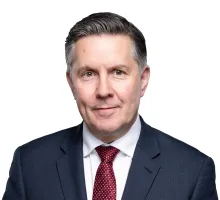
PETER STEFANOVIC, HOST: Well, Federal Labor has a troubled end to the year. That $150 million COP conference that went nowhere, and another shocking inflation report that continued to question the government’s economic credentials. But one of its bright spots was in health, where a number of policies passed with support of the Greens. Joining us live this morning, the Health Minister, Mark Butler. Minister, are you the only one in the frontbench with a spring in your step this summer?
MARK BUTLER, MINISTER FOR HEALTH AND AGEING, MINISTER FOR DISABILITY AND THE NDIS: No, I just saw a couple of ministers walking down the Press Gallery corridor to talk about our gas reservation policy that passed the Senate last night and will pass the House this morning. It’s a tremendous win for manufacturers and households. We’ve been talking about this for I don’t know how long, the idea that we are one of the biggest gas exporters in the world but too often don’t have enough gas for our own manufacturing industry, the manufacturing jobs that rely upon it. And when we can get it, it’s too expensive. So finally, after a lot of consultation with the gas industry, with the manufacturing industry and good engagement with the Coalition, we’ve finally been able to achieve that. And I think that, along with the Digital Duty of Care that we passed as well, which is a transformation around safety and choice in the online world, they were two very big wins for Australia in the parliamentary week.
STEFANOVIC: Okay. More on that in a moment, but -
BUTLER: I didn’t even talk about health.
STEFANOVIC: I mean, we’ll get to that in a moment as well. But with so many questions around the PM and the Treasurer, will you be leader of the party ahead of the next election?
BUTLER: I hope I’ll be Health Minister ahead of the next election. This is an enormous privilege. I’ve got to work with the hundreds of thousands of people who work hard to build a healthier Australia, to deliver an aged care system and disability care system that supports those Australians as well. That’s my job, Pete. It keeps me pretty occupied every single day, and I love it.
STEFANOVIC: All right. So let’s get to health. Your trimmed healthcare rebate plan passed with the Greens in the end, but the cash raise is about $1.5 billion short. So where are you going to find that extra cash now?
BUTLER: Yeah, I expect the Treasurer and the Finance Minister are going to ask me the same question. In the 2026 Budget as you know, Pete, the government announced about $60 billion in savings. More than $50 billion of those were from my portfolio. And obviously, you’re right this week, we weren’t able to achieve the full $3 billion in savings from private health insurance changes that were targeted at expanding aged care services. We’ll have to reconcile that. It’s not unusual in a portfolio as big as mine that some of those numbers go up and down and have to be reconciled every single budget update. But I’m sure the Treasurer and the Finance Minister are going to ask me exactly the question you did, Pete.
STEFANOVIC: Well, you had, okay. Well, you had similar success for capped medicines now as well. But at the end of the day, isn't it just a Band-Aid solution to the greater inflation problem, which is your government spending?
BUTLER: Look, the cheaper medicines laws we passed yesterday, which cap medicine prices at $25 for the rest of the decade remember, that's where they were way back in 2004, are important for household budgets. We want to protect households against having to think about whether they undertake essential services like going to the doctor or going to the chemist and getting a script filled. But we recognise it's a modest measure. It's about $240 million over the forward estimates. But we know from all of the other things we've done to make medicines more affordable and increase access to free GP visits, it does make a difference to household budgets.
But you also get that twin objective of making a healthier Australia. Too many people were failing to fill their scripts, deciding not to go to the doctor because of cost, even though they sort of knew they had to.
STEFANOVIC: Sure, but these handouts, though, they're not free. As you point out, they cost the budget. So, doesn't that make the Treasurer's MYEFO job harder?
BUTLER: As the Prime Minister said when he and I were announcing the cheaper medicines arrangements earlier this week, there's not going to be a lot more in the mid-year budget update in December. This is a modest measure, really, in the scheme of the Budget, but an important one, we think. And as the Treasurer said again in his comments earlier this week, we know we're going to have to make sure that any new expenditure like this, which is pretty modest, really, in the scheme of things, needs to be offset by savings. We've done that with every budget and budget update so far in our 4.5 years in government. We're going to do it again in December.
STEFANOVIC: Okay. If Labor loses 40-plus seats in the most progressive state in Australia this weekend, that's some message being sent. What's your read on that kind of result if it comes to pass?
BUTLER: This is going to be a really tough election for the Labor Party in Victoria. They've held government there for a very long time, obviously 12 years straight, but a long time before that as well. And Victoria's had a tough time over the last several years. They were hit so hard by COVID, much harder than any other jurisdiction in the country, and there are still the legacy effects of that.
STEFANOVIC: Yeah, but a lot of that was self-inflicted, though, wasn't it?
BUTLER: We can debate that, Pete, but they were hit hard by waves of virus. We’ve had a review about the response to that across the country. I don't have time to go into that. But at the end of the day, this is going to be a really tough election for Victorian Labor. Ben Carroll's worked really hard, great credit to him. He's fronted up every single day, knowing that things are against him, that the polls don't look great, but absolutely determined to put a Labor vision before the Victorian people. But at the end of the day, these state elections, we had a South Australian one earlier this year, we've got a Victorian one this weekend, New South Wales in a few months, you'll see different results in different jurisdictions, because people know when they go to the ballot box for a state election they're voting on state issues.
STEFANOVIC: Okay, so you wouldn't be seeing this as any kind of protest against the federal government then?
BUTLER: I don't see any evidence of that. It's very rare that it is. I think Australians well understand the difference between the federal government election and the state government election. They provide different services. They've been around for different periods of time. They have different personalities leading them. I don't think there's any evidence that there's much overlap, and I think that's why you'll see quite different arrangements in different state elections over this 12-month period. But I wish Ben Carroll all the best. I think he has done exactly what a Labor leader should do: fronted up every day, put the Labor story to the Victorian people. Ultimately, we'll see the result tomorrow.
STEFANOVIC: Okay, that's the Federal Health Minister Mark Butler joining us in the program this morning. Minister, appreciate it. Thank you.
Media event date:
Date published:
Media type:
Transcript
Audience:
General public
Minister: