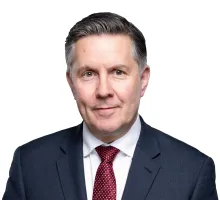
JAMES GLENDAY, HOST: Let’s take you to federal politics- well, national politics because there are hopes that an impasse over hospital funding could finally end at a meeting today, and the Federal Health Minister Mark Butler joins me now. G’day Minister. We’ve spoken about this quite a few times. Is today the day that a deal will finally be done?
MARK BUTLER, MINISTER FOR HEALTH AND AGEING, MINISTER FOR DISABILITY AND THE NDIS: I certainly hope so. I'm pretty cautiously optimistic about this. There's a lot of goodwill at this meeting. The Prime Minister had dinner last night with premiers and chief ministers, and there's a formal meeting that kicks off pretty soon here in Sydney as well. We've got a very generous offer on the table, $23 billion on top of the $12 billion that states would have received in growth funding under Scott Morrison's own deal. So a very big increase in hospital funding. But really we're starting to run out of time to get this deal done. We've got a whole range of other elements in the negotiation around the NDIS, around support for young children with developmental needs. So really the time for a deal is today.
GLENDAY: Viewers will not be shocked to learn that in this negotiation, states want more money, the federal government is pushing back, and that's where it keeps breaking down. Is that $23 billion figure your best and final offer?
BUTLER: There's a negotiation underway. As I said, it's a very generous offer, the biggest increase in hospital funding in anyone's memory. But you're right, really, the truest truism, if you like, of Australian politics is state premiers always want more from the Commonwealth, particularly for their hospitals. But this offer is on top of everything else we're doing to strengthen Medicare and take pressure off our hospital system, rolling out bulk billing support. We opened the 120th Medicare Urgent Care Clinic this week with more to come over coming weeks. The 1800Medicare hotline has already talked to tens and tens of thousands of people, many of whom would otherwise front it up at hospital EDs.
So we're doing our bit. Now really is the time for all jurisdictions to do this deal and get on with the job of providing the world's best health care to Australians.
GLENDAY: So you're hoping for a deal but if one can't be done today, South Australia is not far away from going into caretaker mode ahead of an election in your home state. What happens if an agreement can't be reached before then?
BUTLER: We can't continue negotiations while any jurisdiction is in caretaker. That's the nature of health negotiations. We then start to get very close to the 30 June deadline when the current agreement expires. I think all jurisdictions recognise our officials have been doing terrific work over recent months to narrow the differences between jurisdictions. Now we've got the bosses, we've got the premiers, the Chief Minister and the Prime Minister at the table. It's hard to get them all together obviously because they're so busy. Today is the time to strike this deal.
GLENDAY: Just on a slightly different issue, independent MP Sophie Scamps is the latest politician to voice her concern over the impending visit of the Israeli president, Isaac Herzog. She claims it risks further division at this time. Is that a concern you share at all?
BUTLER: This is an invitation that was issued by the Governor-General, our head of state, and the Prime Minister. I think it's important to maintain those state-to-state relations that we've had since the creation of the State of Israel. This will also be a very important visit for Australia's Jewish community, which is so traumatised by the horrific terrorist attack on 14 December. So we look forward to the President coming to Australia, to having those discussions, for him to connect with Jewish Australians. And of course, you know, that's something that we think is the appropriate thing.
GLENDAY: Just before I let you go, Minister, the two parties formerly known as the Coalition are, of course, experiencing absolute turmoil and chaos. You're not going to be shedding a tear about that. But it does have consequences for how you negotiate laws through Parliament. Are you expecting Sussan Ley to survive the next sittings?
BUTLER: That's a matter for her own party, frankly. I thought yesterday's spectacle was pretty crass. A whole bunch of blokes getting together to decide whether or not they dispatched the party's first female leader on a day where the party was mourning the loss of a much-loved female colleague. I mean, this was supposed to be a secret meeting. They called the TV cameras to make sure it was recorded. And after all of that display of disloyalty and division, they still can't decide what to do.
GLENDAY: Yeah, it's an interesting time, that is for sure. Health Minister Mark Butler, thanks for joining the program.
BUTLER: Thanks, James.
Media event date:
Date published:
Media type:
Transcript
Audience:
General public
Minister: