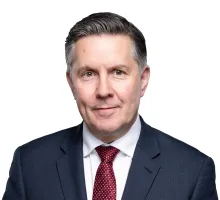
JAMES GLENDAY, HOST: Well, as we just heard, the Federal Parliament is going to resume today with speeches paying tribute to injured independent MP Helen Haines, who was attacked outside her electorate office in regional Victoria. The Health Minister is Mark Butler, and I'm happy to say he joins me now. Mark, welcome back to our show.
MARK BUTLER, MINISTER FOR HEALTH AND AGEING, MINISTER FOR DISABILITY AND THE NDIS: Thank you, James.
GLENDAY: In the weeks since this attack, a lot of ideas to improve the safety of politicians have been floated. But what sort of things do you think would make a real difference?
BUTLER: We'll take advice from the Federal Police about that, but you're right to say there's been quite an energetic discussion among MPs and their staff with people like the Federal Police about what we can do to improve security at a time where there's no question that the number and the nature of threats of physical violence and death, and all sorts of other things, have increased dramatically. So coming back to Canberra again this week is an opportunity for us to dive deep into those discussions and chart a path forward. But today, as your introduction said, other than Question Time, which will go ahead this afternoon, all of the rest of parliamentary business will be suspended so that all of the MPs can send a message of support to their much loved colleague Helen Haines and to her family and staff and community.
GLENDAY: You've been in parliament a long time. Can you understand why some newer members of your backbench think it might be a good idea to make some immediate changes to improve the safety of MPs, potentially at their homes and their offices as well?
BUTLER: Yes and they're precisely the discussions I think we will have this week as early as today. There has been good engagement with not just Labor MPs, but MPs right across the political spectrum about what they're experiencing, about what their complaints are, if they have complaints, about the way in which security is being provided to them up to date, and what their concerns for the future are. And we're going to take that very seriously.
GLENDAY: The normal business of government is of course continuing. On a policy of yours, you're expanding a trial today. Can you take us through what you're doing?
BUTLER: This is part of our program to improve access and affordability for women's healthcare. We've done some amazing things over the last couple of years, but today I'm also announcing an opportunity for people to go and see their local pharmacist when they urgently need medicines, particularly for uncomplicated urinary tract infections, which really need to be treated within 24 hours, but also for hormonal contraception. We don’t want to see women having a gap in their contraception simply because they're not able to access their usual GP. So this program will pay for the consult on behalf of those women and also treat the medicine as if it were a PBS medicine, which will very significantly reduce the cost of that medicine as well, just continuing to expand access, continuing to expand choice and affordability for Australia's women with their healthcare.
GLENDAY: On another issue, Minister, it's going to be a big week in the Senate. There are Senate estimates taking place. Green Senator Jordon Steele-John has decided he's not going to be coming to Canberra, though it took a fair bit of back and forth before that was decided on. What have you made about the way this whole issue has been handled by the Greens, given the allegations against Jordon Steele-John?
BUTLER: I'm a bit reluctant to make a comment about that, James, because all I've seen is the press reports. Obviously, there are some pretty serious allegations that the Greens party is having to deal with, and many of them, frankly, are longstanding, which obviously, at first blush, doesn't seem ideal that it's taken this long to deal with them. But I think the party should be allowed to conduct a proper investigation. As you say, Senator Steele-John is not coming to the Senate this week. He’s on leave, I think, is the final report after, frankly, several days of confusion about this issue. But I think everyone would expect this investigation to be thorough and robust because all members of political parties, particularly staff who are in a workplace, deserve to be able to conduct themselves safely.
GLENDAY: Finally Minister, there's a fresh poll in The Australian newspaper this morning, I'm sure you've seen it, suggesting Labor could be smashed in Victoria and that the Coalition could soon form majority government at a state level. I know you're a federal politician but you're very influential within the Labor Party. Does this come as a surprise to you at all?
BUTLER: After 12 years, and some of them very difficult years for Victoria, particularly through COVID, it's no surprise that this is going to be an uphill battle for Ben Carroll and the Labor team. I do say the campaign hasn't yet started, and campaigns can change things. But I think everyone recognises this is going to be a tough one for Victorian Labor. But Ben Carroll’s working to his utmost to make sure he puts an alternative, compelling vision for the Victorian people to consider in the election.
GLENDAY: Mark Butler, we always appreciate your time. Thanks for joining us.
BUTLER: Thanks, James.
Media event date:
Date published:
Media type:
Transcript
Audience:
General public
Minister: