
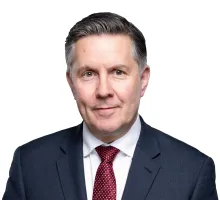
SARAH FERGUSON, HOST: The dollar figures associated with the NDIS’ ballooning costs are indeed startling, and the blow out includes an extra $13 billion since December. I spoke to the Health Minister, Mark Butler, straight from his meeting with state and territory disability ministers this afternoon. Mark Butler, welcome to 7.30.
MARK BUTLER, MINISTER FOR HEALTH AND AGEING, MINISTER FOR DISABILITY AND THE NDIS: Thank you, Sarah.
FERGUSON: You’ve set a target of January 1 2028 for new eligibility criteria to decide who gets into the NDIS. What tool will be used to decide that – who gets in, who stays?
BUTLER: We need to work on that tool very closely. We’ll have a technical advisory group supporting that work. But obviously, it’s the sort of work we do very closely with the disability community itself, and with states and territories who co-govern the scheme. Ultimately, we’ll then have to agree rule changes with every state and territory. We want to do that work over the course of the rest of this year. So, there’s a fair run-way before we start to introduce it from 1 January 2028.
FERGUSON: How much will these changes save – just to be clear on that?
BUTLER: Over the course of the four years it will be about $35 billion, but that includes the $13 billion we have to recoup from the recent cost blow out. So really, in net terms it’s more like $22 billion – a significant figure, but one that we are confident is necessary to get this thing back on track. And after all, what we’re trying to do is to secure its future for the long term.
FERGUSON: How much, though, will you also need to spend on the services that will replace the NDIS? So, these are savings within the NDIS, but you’re going to have to create new services. How much will you be spending on the new services?
BUTLER: We’re already doing that, as you know Sarah, for children under the age of nine. The Thriving Kids program is in the process of being designed and rolled out over the course of the rest of this year and next. Government’s allocated about $4 billion to that program – we’ll pay half, and the states and territories combined will be the other half. A couple of years ago, the National Cabinet agreed another $6 billion to be allocated the NDIS review called, foundational support – so supports for people who do need help but aren’t necessarily going to be in the NDIS.
We’ve got $6 billion in the kitty - $3 billion from us, $3 billion from states and territories – to rebuild, in many cases, what was there in the past. Before the NDIS there were these supports that community organisations - some of them disability organisation, some of them mainstream – had services there to support people with disabilities, certainly, but with lower or more moderate support needs.
FERGUSON: I understand that you’ve just come from a meeting with state disability ministers, what was their response?
BUTLER: Well obviously, they want to see more detail, and we’ve committed to doing a range of things. To share the legislation I’ve foreshadowed, I’ll introduce into the Parliament when we return in budget week. Obviously, they want to see a lot of the modelling that I indicated is guiding some of our thinking in this area. But also, they were up for the challenge. Disability ministers are talking with participants every single day. They’re talking with disability providers and all of them are saying they want a better quality of service delivered to them. They want this sort of free for all market that’s grown up over the last 10 years of so cleaned up. They want to see the fraud cleaned up. They want to see more integrity into the system. So, there’s a lot of enthusiasm for the job of getting this thing back on track because, frankly, everyone associated with it is so proud of what the NDIS has done to transform the lives of hundred of thousands of Australians. But we’re also deeply aware of the risk to its sustainability that the current position faces.
FERGUSON: I just want to ask you a little bit more about that relationship with the states, because Queensland, for example – which hasn’t signed the bilateral agreement yet on the Thriving Kids program, that’s the program for children under the age of nine with mild autism or developmental delay – they say it’s because you haven’t provided enough support to deliver that program which is due to start rolling out in October. They say– and the words are tough – Queensland says you’re walking away from children in need.
BUTLER: Well, I just don’t accept that, obviously. As I said today, Queensland and every other state, only a couple of months ago, signed on to this package deal. We’re providing them huge amounts of additional money to run their hospitals and, in return, they committed in writing to support this disability reform direction and to implement the Thriving Kids deal. Every other jurisdiction is just getting on with the job. Of the $2 billion we allocated to Thriving Kids from the Commonwealth, $1.4 of that will simply be handed over to states to fund their additional support.
We had a good discussion with Queensland today. I’m still very confident they will sign the agreement because their communities will expect them to do it. I mean, at the end of the day, people out there watching this program, Sarah, just want governments to get on with the job. We’ve been talking about this now for two or three years, this is the right direction for families with young children, we should build on that for the broader community. And I think it’s time governments just got on with the job of doing it.
FERGUSON: Let me just ask you a simple question about being a parent right now. If you have a parent concerned about a child with early developmental delays, and you that maybe they’re not going to get into the NDIS or be able to stay in the NDIS in a couple of years time or 18 months time, what should they do? Should they join the NDIS, knowing it may be short-term, or look for some other arrangement? What would you advise to a worried parent tonight?
BUTLER: Well, right now the best port to go into is the NDIS. Any family, any child of this age who is on the NDIS on 1 January or before 1 January 2028 will stay on it, subject to all the usual rules. But I’ve been quite clear – we are grandparenting children who are on the NDIS now, or enter the NDIS between now and 1 January 2028. We don’t want to see people fall between two schemes and be left without supports, particularly for our youngest children in the community.
We’re getting on with the work of building those Thriving Kids programs. They’ll be situated where families live, learn and play, and I think families will find this a terrific source of support for their young ones and for themselves – connecting with other parents who are in the same position. But of course, until they’re there, we recognise that the NDIS is the right place for these children, to go onto the early intervention pathways that’s been there and will remain there until the year after next.
FERGUSON: The NDIS Actuary’s report that there are more gains to be had in constraining the growth in people’s individual packages than there is in closing the eligibility criteria. So, how do these changes today tackle that side of the NDIS?
BUTLER: I think we need to do both. We need to return the Scheme to its original purpose – supporting people with significant and permanent disability – and I’ve outlined a pathway to do that. But there are areas of cost growth that need to be brought under control as well. Some of them are about the way in which the system works – people getting unscheduled reassessments where there really aren’t the circumstances to justify that - big plan inflation through that we’re going to crack down on. But what we’ve tried to do is make sure that those really important parts of an individual’s plan – their accommodation, their personal care, continence, feeding, showering, dressing, transport to medical appointments – that that’s preserved, that we’re not touching that in any way.
But frankly, the social and community participation part of the scheme, which is about a quarter of the spending right now or equivalent to about what we spend in the entire Pharmaceutical Benefits Scheme, we are going to cap that growth and bring it back down to where it was a couple of years ago. Because that’s been growing out of control. So, to that extent, we do support the NDIS Actuary. I just don’t agree that it’s an either/or – we’ve got to do both.
FERGUSON: On the hugely important question or rorting and the integrity of the Scheme, you say you haven’t been able to flick the switch on integrity. Why has it taken so long to bring in something as basic as registration of providers?
BUTLER: That was a key recommendation of the NDIS Review, and then we asked the Commission to do further work on that. And their recommendations was that we approach it in a risk based way. So, we’ve been moving through the sector, starting to register those organisations that have most intimate, personal involvement with participants. So, from 1 July the supported independent living providers, for example, will have to be registered.
I announced today a range of other support services, personal care services – the sorts of things that involve quite intimate connection with a participant - they should be mandatorily registers. And once what I announced today is complete, that will cover about 90 per cent of all claim. Integrity will also some, though, from a digital payment system. Frankly, 90 per cent of claims made to the NDIS have no evidence behind them. We have no line of sight on that, both the merit of the claim and who’ll end up getting the money.
FERGUSON: It’s kind of an incredible fact.
BUTLER: It is sort of extraordinary, and it’s pretty easy to fix. Put in place a digital payments system so that we have a line of sight of everyone who is receiving every dollar from the NDIS.
FERGUSON: You say it’s sort of easy to fix, and I say it’s incredible. Why wasn’t it done years ago?
BUTLER: Better now than never, I say. We’ve been working on this for a while. It’s a significant ICT build – information and technology build. I’m not going to say we can do that overnight. We process hundreds of thousands of claims every single day. We looked at more claims today than the former government looked at in an entire year. So, we have been building integrity – more prosecutions, more people being knocked out of the scheme. But I want to honest with people, there’s a still a long way to go to get to where I think the community, and most importantly participants, will have confidence every dollar being spent by taxpayers is going to the benefit of participants, not some shonk on the side.
FERGUSON: Mark Butler, thank you very much indeed for joining us.
BUTLER: Thanks, Sarah.
Media event date:
Date published:
Media type:
Transcript
Audience:
General public
Minister: