
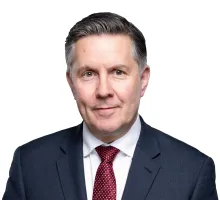
BEN LAWRENCE, HOST: We've gotten in contact with the Federal Minister for Health and Aged Care, who is up on the coast today, Mark Butler. Mark Butler, thank you so much for joining us today.
MARK BUTLER, MINISTER FOR HEALTH AND AGEING, MINISTER FOR DISABILITY AND THE NDIS: My pleasure. What a beautiful day it is.
LAWRENCE: Yeah, you've picked a really good time to come down to the coast. You were down in Launnie yesterday. Today, I believe you're up in Burnie.
BUTLER: Yeah, I've been in Launceston on Monday and Tuesday, then Devonport yesterday, and I'm just on that beautiful road between Devonport and Burnie right now to do some stuff in Burnie this morning.
LAWRENCE: Yeah, the Bass Highway is truly beautiful at this time of day. Now, obviously, Labor's been putting through all these new urgent healthcare clinics. You've also got- it's just recently been put into legislation those ones are going to stick around, I believe.
BUTLER: That's right, I’m visiting the third urgent care clinic in the north. I was at Launceston yesterday, Devonport yesterday afternoon, and the newest one at Burnie, the urgent care clinic’s providing already terrific service for thousands of people in that part of Tasmania, free of charge, and it's taking pressure off the local hospital as well. So really looking forward to seeing that for the first time.
LAWRENCE: By any chance, do you have any numbers on the actual rates of bulk billing that's kind of changed since the opening of these urgent care clinics across Tasmania?
BUTLER: Every urgent care clinic is fully bulk billed. Every attendance there, and there have been well over 3 million people who've gone through our urgent care clinics since we started opening them a couple of years ago. But what's really pleasing as well, the bulk billing rate for general practice overall has really climbed quite sharply in the north of Tasmania. I'm in the northwest right now, and the bulk billing rate there has increased to well over 90 percent, which is just terrific because it was in freefall when we came to government a few years ago.
So people are able to go to the doctor when they need to rather than when they feel that they can afford a gap fee, because those gap fees are disappearing and people are being able to go to the doctor for free. They're getting cheaper medicines at the pharmacy. That's obviously good for household budgets, but it also means that people are getting the healthcare they need when they need it.
LAWRENCE: Yesterday you were in Launnie, and our State Health Minister, Bridget Archer, was raising some concerns about the levels of people that are going through the Launceston General Hospital and the overflowing there, kind of telling people to go towards urgent care clinics where possible. I presume you'd be echoing that statement?
BUTLER: Where you've got something, a condition that's urgent but non-life threatening, then the urgent care clinic is probably the right place for you. The Launceston Urgent Care Clinic is actually the busiest in the whole country. We've got 137 open right now and Launnie is the busiest urgent care clinic, so it is taking pressure off the ED there. If, for example, your kid falls off a skateboard or gets an injury on Saturday afternoon sport, up until now, really the only port of call has been the local ED, and you might end up waiting for hours and hours there with a kid with a broken wrist. Now, you can go to one of these urgent care clinics and be seen pretty quickly by really high quality doctors and nurses and you'll be fully bulk billed, so it's completely free of charge as well.
LAWRENCE: And then, looking kind of towards the future, obviously I presume there's intentions for more urgent care clinics to be opened across the country and Tasmania as well.
BUTLER: I'd love to see more of them open. They're a new model, which I promised at the 2022 election. So we've only really been rolling them out for a few years now. They're pretty common in many other countries we usually look to. New Zealand, they’ve been there for decades, and Europe and America. I want to see them really become a permanent feature of our healthcare system. They're delivering really good quality care. But over time, I'd love to see more. We've got 137 open. We promised that at the 2025 election. We've delivered on that promise. But over time, I'd love to see more.
LAWRENCE: And I suppose a final question, not necessarily on the urgent care clinics, but I believe over the last few days there's been some quotes attributed to you regarding bowel cancer rates and the bowel screening for these cancers and young people getting affected with that. Are you able to just confirm people get the testing sets sent to them at 50, but people can receive them beforehand by request?
BUTLER: That’s right. We got some advice from our research people that we might want to consider extending the bowel cancer program down to 45 years of age. For years now it's been for people over 50. I've got a birthday today and it's a bowel cancer birthday, so I'll be waiting by my mailbox, eagerly waiting for that kit to come to me for me to do it again. But jokes aside, look, it is a really, really important way to save lives. Know that if a bowel cancer is detected early, 90 per cent of them can be successfully treated. And this is the easiest way to detect them early. But only about 42 per cent of people who get one of these kits in the mail end up returning it.
We really want to see that rate increase. So if you get one of them in the letterbox, like I'm likely to over the coming few days, certainly don't throw it away but don't even put it in the drawer. Just leave it on the bench top in your bathroom and make sure you do the test, it's pretty straightforward. Get it back in the mail because it could save your life.
LAWRENCE: There you go. It's a very important messaging there. The Honourable Mark Butler, the Federal Minister for Health and Aged Care, thank you so much for joining us today.
BUTLER: Good to speak with you.
LAWRENCE: And happy birthday, of course.
BUTLER: [Laughs] Thank you.
Media event date:
Date published:
Media type:
Transcript
Audience:
General public
Minister: