
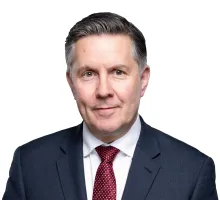
JADE MACMILLAN, HOST: Federal parliament is coming back early, with the Prime Minister announcing both houses will return on Monday, 2 weeks ahead of schedule. On top of the agenda will be hate speech and gun law reform in the wake of the Bondi terror attack. Anthony Albanese says he wants to see the proposed legislation pass the parliament on Tuesday. Mark Butler is the Minister for Health and Ageing. I spoke to him a little earlier, just before the Prime Minister's press conference got underway.
MARK BUTLER, MINISTER FOR HEALTH AND AGEING, MINISTER FOR DISABILITY AND THE NDIS: Thank you, Jade.
MACMILLAN: There's a lot in this legislation that is going to be introduced next week in response to the Bondi terror attack. The Prime Minister is giving the parliament only a couple of days to deal with it and pass it. Is that achievable, do you think?
BUTLER: We think it is. It's obviously urgent legislation we've been working on and consulting about for the last several weeks. The Opposition was briefed comprehensively on it last night, and opportunities are there for crossbench MPs to be briefed over the coming couple of days. And as well, obviously, there's an inquiry that was already started by the Intelligence Committee. We're confident that allows parliamentarians time to get through the detail of this legislation and to participate in a parliamentary debate over the first of days of next week and get through what is really urgent legislation.
MACMILLAN: Are you confident at this stage that there's enough support that it will be passed?
BUTLER: Obviously that remains to be seen. We're confident the parliament wants to act in these areas, but obviously the Opposition needs to work through the detail of this. I'm sure they come to this question with a lot of goodwill and a lot of shared commitment to respond to both the motives that lay behind the horrific Bondi terror attack, namely antisemitic hatred, but also the methods, the tools that were used by those alleged terrorists, and the need for further gun control 30 years on from John Howard's historic gun control laws after the Port Arthur massacre.
MACMILLAN: The opposition has raised concerns about wrapping those two issues together, the proposed hate speech changes and gun laws, into the one bill. There's a suggestion that the government is trying to wedge the Coalition. Why not split the 2 issues out?
BUTLER: Really, from the first day after the terror attacks, when National Cabinet came together, all of the premiers and chief ministers along with the Prime Minister, it was clear the government's recognised a need to respond to the motives that lay behind the terror attacks and also to the methods and the tools. And it really is hard to separate those 2 things, which is why we made a commitment at the time to respond to both and why we brought legislation to the parliament that does respond to both.
MACMILLAN: On another issue, you've committed to listing the weight loss drug Wegovy on the Pharmaceutical Benefits Scheme. Who specifically will get access to that drug on the PBS, and when will that happen?
BUTLER: We're committed to listing all of the drugs that are recommended by those experts that essentially oversee the PBS. It's not just Wegovy, all of the recommendations I received from that advisory committee I'm committed to following through. The recommendation just before Christmas was for GLP-1s, which is one of this new class of drugs that people might know, particularly through the brand name of Ozempic. It's the same company that makes Wegovy, for people with a BMI or a body mass index of 35 or higher, that level of overweight or obesity, but also established cardiovascular disease, quite a significant number of Australians there.
What we'll do now is we will start work with the company to agree a price that works for them, but importantly, from our perspective, works for taxpayers and once we've done that, we can proceed to a listing.
MACMILLAN: So do you have a sense at this stage of what that cost will be to taxpayers, but also how much Wegovy is going to cost to people who access it on the PBS?
BUTLER: People who access it on the PBS won't pay any more than $25 a script. That's because we slashed the price of PBS medicines on 1 January. A concessional patient, they'll pay even less than that, just $7 or so for a script as well. But we've got a job of work to do. This happens every time we receive a recommendation from the advisory committee. We then have to make sure we sit down with the company, we achieve the best possible price for taxpayers and obviously a price that works for the company.
MACMILLAN: The online GP directory, Cleanbill, has found national bulk billing rates are increasing, but it's found that it's patchy depending on where you live. This report finding that just over 1 in 10 clinics in the ACT are fully bulk billing and in WA it's just under 20 per cent. What's behind that? Why are they further behind?
BUTLER: It's really hard to tell why ACT clinics charge such high gap fees and have such low bulk billing rates compared, for example, to Western Sydney where it's pretty expensive to find property and run a business, but they have bulk billing rates over 95 per cent. That's why we've decided to intervene in the market in the ACT and to support the establishment of a number of new general practices which bulk bill all of their patients, because we frankly think there needs to be more competition in a market like that.
I've said that if there are other parts of the country that also are finding it difficult to see levels of bulk billing that we enjoy in other parts of the country, then we're open to looking at that sort of intervention as well. Because for Labor, bulk billing’s the beating hard of Medicare, and that's why we've put so much effort into turning the bulk billing rates around that we inherited when we came to government. Since 1 November, only 10 weeks or so ago when that record investment took effect, more than 1,200 general practices across the country have moved from charging gap fees, which is what they were doing just in October, to bulk billing all of their patients all of the time. And that number of general practices is increasing every day.
MACMILLAN: This report has also suggested that out-of-pocket costs for those who aren't being bulk billed is rising from a nationwide average of about $43 to a bit over $49. The Opposition has argued that there's a two-tier system here between people who can get to a bulk billing clinic and those who are paying more when they can't. How do you respond to that?
BUTLER: That's always been the case, and gap fees have been rising for several years, which is exactly why we've put this focus on increasing bulk billing rates. We want to make sure that as many Australians as possible feel able to go to a GP when they need to rather than when they feel they can afford to. Yes, those gap fees have been increasing for years now. That's precisely why we're putting such an effort and such significant investment into turning bulk billing rates around.
MACMILLAN: I want to ask you about the controversy surrounding the Adelaide Writers' Week. You're a South Australian MP, but we'll also make clear to our listeners that you're married to one of the Adelaide Festival's former board members, Daniela Ritorto, who's now stepped down. Do you think that Randa Abdel-Fattah should have been cut from this event?
BUTLER: The Prime Minister and the Minister for Arts were asked about that, made it clear that the Commonwealth government doesn't have a position on that. Our position is that the line-up at writers' festivals anywhere, including in Adelaide, is a matter for those relevant festivals. And that remains the government's position.
MACMILLAN: Your federal colleague, though, Madeleine King, has weighed in. She says that she's on a unity ticket with the South Australian Premier who's backed this decision, and she said that she’s surprised that Dr Abdel-Fattah was invited in the first place. What do you make of that?
BUTLER: That's obviously a personal opinion of Madeleine's. The Minister for Arts, who talks for the Commonwealth government on these matters, has made it clear that from a government perspective these are questions for festivals, not just writers' festivals, not just in Adelaide, but right across the country. Boards are appointed by relevant governments, in this case the South Australian Government, to make these decisions, and they remain decisions for those boards.
MACMILLAN: Are you concerned about the future of the Adelaide Festival more broadly now?
BUTLER: There's obviously real pressure on the viability of Writers’ Week in South Australia this year, and I think obviously we're all concerned that might spill into the festival this year. We pride ourselves in South Australia on being the festival state. This festival, including Writers' Week, has been a really important part of our calendar for at least six decades. And we all want to see it have a really vibrant future. But we'll get through the particular period, I'm confident, because our community and, frankly, people beyond South Australia have such an attachment to the quality of the festivals that we put on here.
MACMILLAN: Minister, thank you.
BUTLER: Thanks, Jade.
MACMILLAN: Mark Butler is the Minister for Health and Ageing.
Media event date:
Date published:
Media type:
Transcript
Audience:
General public
Minister: