
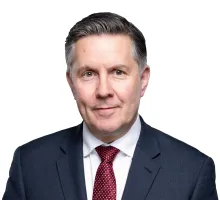
MELISSA CLARKE, HOST: The number of elderly Australians stranded in public hospital beds because they can't get the aged care support they need has seen a significant surge in the past three months. That's according to new data released by the state and territory governments as they prepare to face off today in negotiations with the Commonwealth over a new hospital funding deal. Mark Butler is the Federal Minister for Health, Ageing and Disability. Mark Butler, welcome back to Radio National Breakfast.
MARK BUTLER, MINISTER FOR HEALTH AND AGEING, MINISTER FOR DISABILITY AND THE NDIS: Thank you, Melissa.
CLARKE: Mark, can you set out for us what the Commonwealth’s current offer is that's on the table for states and territories for public hospital funding?
BUTLER: As I think the Queensland Government revealed yesterday, the Prime Minister wrote to his colleagues, the premiers and chief ministers this week, to increase our offer so that it would be effectively about $33 billion in additional hospital funding. That's the $12 billion they would have got under the old agreement and also an additional $21 billion, so $33 billion in additional hospital funding, and an additional $2 billion to deal with the issue you mentioned in your introduction, which is the number of older patients who are ending up in hospital and having difficulty getting out as well. A very substantial increase, first of all, on what they would have got under the longstanding existing agreements, but also on the latest offer that had been made a couple of months ago. I hope that that's going to lead the premiers and chief ministers to consider that position very seriously because we do want to strike an agreement before Christmas.
CLARKE: And what's the growth cap you're offering, given that's at the centre of the states and territories' frustrations with your offer?
BUTLER: The growth cap under existing arrangements has been about 6.5 per cent for a very long period of time. That is impacted particularly by price increases that flow from decisions state governments make. We don't have any line of sight about that. Certainly no control, for example, on the wage agreements that one state might make that ends up flowing through the system. There have always been price caps or growth caps. They were 6.5 per cent. We've already increased that in this current financial year. They're receiving double-digit increases, some, Northern Territory for example, an increase in Commonwealth funding as high as 30 per cent this year. And then that will taper back to 8.5 per cent under our latest offer, and then 8 per cent, a very significant increase on what the hospital system had been receiving for many years.
CLARKE: The Queensland Health Minister, Tim Nicholls, has told his State Parliament that the current offer is underwhelming. I think he likened the latest offer that you've put on the table as like hearing from the Grinch. Is there more room today to give more today? Because it doesn't seem like the offer that's currently there is one that the states and territories are willing to accept at this point.
BUTLER: I think health ministers know I'm not bringing more money today. I don't have the authority to do that. We caught up last night, including Tim Nicholls here in Brisbane, for an informal dinner where we canvassed a whole range of these issues. They know that our job as health ministers is to narrow the points of difference as far as we possibly can and then recognise that this deal, which is not just about hospitals, it's also covering some very important disability issues around the future of the NDIS.
The deal ultimately is going to be landed by first ministers, by the Prime Minister and the premiers and the chief ministers, particularly that big question of dollars going into hospitals, but also NDIS reform. Our job as health ministers today is to try to narrow those points of difference so that our bosses, the first ministers, can come together hopefully before Christmas and land a deal.
CLARKE: That growth cap of 8.5 per cent, that does seem to be the area where the states and territories are still not satisfied. They say it's not just a matter of costs growing beyond that because of inefficiencies or general inflation in health costs. They say a large part of that is because demand for their services are increasing. Do you acknowledge that that's something that states can't adjust, that if people turn up at an ED, they need to be treated?
BUTLER: Of course, some of it is about the volume of activity coming through their hospitals, but we've seen since the first deal was struck in principle by the National Cabinet in 2023, the big driver of that cap has been price. The first year after that 2023 deal, the unit price of hospital activity went up by more than 12 per cent, really reflecting wage deals that the state governments had been doing that we ultimately read about in the media. Yes, there is some demand increase, but the big driver of price has been the unit price that state governments deal with.
Can I say about activity, if you look at the emergency department data released by the Institute of Health and Welfare this week, for the first time, that has been flat. First time I can remember there's broadly not been an increase in ED activity, largely because the less serious cases that present at ED, so your kid breaking his or her arm falling off a skateboard, that's actually declined quite significantly because of our Urgent Care Clinic program. We are doing quite a lot to relieve that pressure on hospital systems as well.
CLARKE: Did states and territories make a mistake by giving wage rises to the extent that they did to healthcare workers?
BUTLER: No, ultimately that's a matter for them. We negotiate with our employees at a Commonwealth level. They negotiate with theirs. They obviously have to ensure that they're providing wage deals that not only are the proper thing for hard-working health workers, but also ensure that they can recruit and retain the nurses and the doctors and the other health professionals. I'm just making the point that that is a big driver of the price increases that are happening in the hospital system that has caused this pressure. It's not just demand, the number of patients coming through the system -
CLARKE: But if that's a reasonable part of the cost of running a hospital, then why wouldn't it come under the funding split that doesn't fall outside of the cap? If that's a reasonable cost for states and territories to agree to, to run a public hospital, then why wouldn't you pay 42.5 and ultimately 45 per cent of that cost?
BUTLER: The exposure that the Commonwealth has to this has always been capped, and that's a proper thing because it maintains some discipline in the system. The contributions that state governments make to the NDIS equally has always been capped at a very low cap, frankly, of 4 per cent, so that the Commonwealth has had to deal with all of the financial impact of the growth in the NDIS over the last several years to the point where we're now paying for pretty much three quarters of the cost of the NDIS. This goes both ways, and part of the deal that I think prime ministers and premiers want to strike is to ensure we recognise we're both in these programs together because they are both such incredibly important programs for our public.
CLARKE: Earlier this year, you announced Thriving Kids as a structure to set up new supports as alternatives to the NDIS because the states wanted a centralised approach. It seemed like the Commonwealth was frustrated with the lack of progress in that area. So since having outlined Thriving Kids, have the states and territories developed any further plans for these foundational supports that is sufficient, in your view, as part of these negotiations?
BUTLER: There's been really good discussions on this important program. I've got an advisory group working with me. We had a full day meeting earlier this week that also has some state government representation, but parent groups, service providers, experts in the area. We're getting very close to finalising our advice. There's been a parliamentary inquiry that will deliver its report next week. And we've been having discussions bilaterally, if you like, with individual state governments about their plans. I think there's a really constructive level of contribution here to land a system over the early months of next year that's going to give parents confidence that their children, if they do have some of these developmental needs, are going to be supported.
CLARKE: Do you think that a deal can be struck by the end of this year? I know that's what you've been aiming for.
BUTLER: Yes, I do. I think there's real goodwill. Obviously, there will be the sort of media performances that inevitably we see from different negotiating partners. But behind the scenes, there are very good, constructive, mature negotiations taking place. Officials are working very hard. Health ministers will work hard today to try and narrow those points of difference. I hope that before Christmas, first ministers are able to come together with three or four issues. They'll be big issues, but three or four issues for them to resolve as the heads of government.
CLARKE: Do you think the states and territories raising these issues about bed block and the extent of elderly Australians not being able to get to aged care that they need, that that's a media performance?
BUTLER: No, I'm more perhaps referring to introductory remarks about a bit of name calling and Grinch -
CLARKE: The Grinching?
BUTLER: And Christmas references and things like that. There's always a bit of political hyperbole around this. And I know that the issue of older patients in hospitals and not having enough aged care facilities being built right now is a very serious issue. I feel that very acutely as the Cabinet Minister responsible for aged care. I've talked about it publicly. I've sat down with aged care providers and said, now we have passed these important reforms to the aged care system last year, we need you building new aged care facilities. We're at an incredible inflexion point, Melissa, where the baby boomers are starting to turn 80 this year, which is really the age where they start to need aged care. I very much agree with state ministers. We need more aged care supply into the system.
CLARKE: You're listening to Radio National Breakfast and my guest is the Health Minister, Mark Butler. Mark Butler, when we look at the health sector in recent years, one of the biggest things and biggest changes has been medications like Ozempic, originally developed to treat people with type 2 diabetes, but around the world helping people manage obesity. Is there scope in Australia for drugs like Ozempic to be offered under the PBS to patients to help with obesity?
BUTLER: There is, and that is being considered really as we're doing this interview, Melissa. The companies, or at least one of the companies, has put an application into our medicines panel, the Pharmaceutical Benefits Advisory Committee, which under the national health laws provides advice about what medicines should be put on the PBS. And they put an application in to consider one of these drugs, you say is Ozempic, but there's a number of them, called GLP-1s, to put on the PBS to treat people with a particular level of obesity and some cardiovascular disease risk, and so very shortly we'll receive that advice. And more broadly than that at a sort of system-wide level, I've asked those same experts to provide me with advice as the Health Minister about ways in which we can ensure that there is equitable access to these new, very significant range of drugs. At the moment there's hundreds of thousands of people using them for the private market, but they're having to pay as much as $4,000 or $5,000 a year. And there's a big number of Australians who would benefit from these drugs that just can't afford that money. I think governments across the world are trying to work out how we tap into the benefits of this drug, but do it in an equitable way as well. And I'm expecting to receive that advice from those experts very shortly.
CLARKE: When you say very shortly, what are we talking about? Days, weeks, months?
BUTLER: Maybe not before Christmas because time marches on. But my advice was they're pretty close to finalising that advice. It'll probably be early next year now.
CLARKE: Alright. We'll check back in with you in January. Mark Butler, thank you very much for joining me.
BUTLER: Thanks, Mel.
CLARKE: That's Mark Butler, the Federal Minister for Health, Ageing and Disability.
Media event date:
Date published:
Media type:
Transcript
Audience:
General public
Minister: