
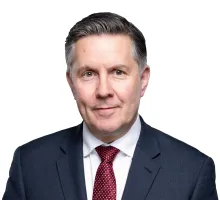
SALLY SARA, HOST: Well, continuing the conversation we've been having this morning about the visit to Australia by Israeli President Isaac Herzog, nine protesters have been charged, including five accused of assaulting police after demonstrating against the Israeli President's visit on Monday night in Sydney. Joining me now is Mark Butler, the Federal Minister for Health and Ageing. Mark Butler, welcome back to Breakfast.
MARK BUTLER, MINISTER FOR HEALTH AND AGEING, MINISTER FOR DISABILITY AND THE NDIS: Thanks, Sally.
SARA: The Israeli President has reportedly said his effort on this trip is to bring the relationship between the Australian Government and Israel, quote, back on track and trying to bring Israel into focus of being a bipartisan issue. Does the Australian government think its relationship with Israel is off track?
BUTLER: It's pretty obvious that there have been differences of view between the Israeli government and our government. The Israeli Prime Minister has expressed that his disagreement, for example, with the Australian government's decision to recognise the state of Palestine, along with a number of like-minded countries like the UK and Canada and France and many others. It's no secret that there have been disagreements between our governments about positions the Australian government has taken, whether it's about the way in which the conflict has been conducted, the killing of aid workers or the recognition of the state of Palestine. It's no particular surprise to me that the President would make that comment.
But the principal purpose of the invitation the Governor-General extended to President Herzog with the government's support was to provide comfort and solace to a community that is in pain, is grieving and is frightened. And that's why we thought the invitation was a proper one to extend.
SARA: What does the phrase globalise the intifada mean?
BUTLER: You'd have to ask people who use it. It's not a phrase I use, but what I take from that is to really extend conflict to other parts of the world.
SARA: Is it an acceptable phrase to use in process here in Australia?
BUTLER: It's not a phrase I think is useful. As the Prime Minister said in the Parliament yesterday, obviously many Australians feel very deeply about the conflict that's raging over in the Middle East on the other side of the world. But we don't want to see that conflict brought to the streets of Australia. And I think that's the view of the majority of Australians, to the extent that globalise the intifada means bring the conflict to the streets of Australia, it is not a proper phrase to be using.
SARA: Does it mean that?
BUTLER: I think it may well mean different things to different people. That's how I take it. I think we have a great tradition of freedom of speech, of the right to demonstrate and protest. Here in Australia, people have done that for decades, including about their views on conflicts that are happening in many other parts of the world. People did it in relation to the Vietnam War and the Iraq War and many others. Really is a question of reiterating the importance of peaceful protest, of respectful dialogue. And as the Prime Minister said again yesterday and has said repeatedly, turning the volume down here in Australia.
SARA: Is it an acceptable phrase for a former Australian of the Year to use?
BUTLER: That's a matter for every individual who uses the phrase to answer to, not for me to answer about a phrase that an Australian of the Year or any other Australian uses.
SARA: On a separate issue, the Queensland Premier has confirmed his state won't participate in a proposed national gun buyback. Is the government disappointed?
BUTLER: Oh, clearly we're disappointed. We had hoped that out of the National Cabinet decision and meeting immediately after the Bondi terrorist attack and the agreement to undertake gun reform, that there would be more uniform action by state and territory governments across the Federation. But ultimately, we recognise that's a matter for each sovereign state government, and Premier Crisafulli will answer for that.
SARA: You're listening to Radio National Breakfast. My guest is the Minister for Health and Ageing, Mark Butler. Turning to your portfolio, the government has released new figures indicating that bulk billing rates for Australians have increased. What do the new figures tell us?
BUTLER: They tell us, first of all, that hundreds and hundreds of general practices that a few months ago were charging gap fees are now bulk billing all of their patients all of the time. 1,300 additional general practices are now 100 per cent bulk billing. It also tells us that there has been a very big increase, a record increase, in bulk billing for the group of Australians I was really focused on in this latest wave of reform, and that is Australians who don't have a concession card.
Bulk billing for pensioners and people with a concession card is already back comfortably over 92 per cent, but it was continuing to fall for many people on relatively low to middle incomes who don't have that card, people who were, we know, starting to make decisions about whether or not to go to the doctor based on whether they could afford to rather than whether they needed to. An 8 per cent increase in bulk billing in just three months for those Australians is a really, really good start to what we think will be an ongoing process of rebuilding bulk billing.
SARA: On aged care, you've spoken about the need to open a new aged care facility every three days for the next 20 years to deal with the demand. That's not happening at the moment. How far are we falling short of that requirement right now?
BUTLER: I'll be frank, we're falling quite a long way short of it. And beds we open or facilities we open today reflect decisions taken several years ago. It takes that long, obviously, to build what is often a very big facility, planning, finance, the actual construction and so on. We're well behind right now, and this is something that I'm very worried about and very focused on.
We talk about intergenerational equity in this country and it is a very serious challenge. Opportunity for young Australians, particularly when it comes to housing, is the most important challenge in continuing a record of great intergenerational equity this country has. But dignity for very older Australians, Australians over the age of 80 who significantly do need aged care is also a big challenge in this country, particularly as we see that early group of baby boomers hit their 80th birthday this year and over coming years. It's a very big focus for the government. I'm very worried that we're not seeing the big increase in approvals for new aged care facilities that providers said would follow the passage of once-in-a-generation reforms we passed in 2024. I'm continuing to talk with them, as is the Aged Care Minister, about what else we need to do to spur that extra investment we must see.
SARA: Minister, thanks for coming in this morning. I appreciate it.
BUTLER: Thanks, Sally.
Media event date:
Date published:
Media type:
Transcript
Audience:
General public
Minister: