
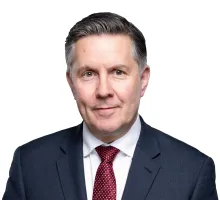
RAFAEL EPSTEIN, HOST: Significant changes coming to the NDIS. They want it to stop growing nearly as fast. There are 760,000 people participating in the scheme. They want to get that number down to 600,000 in the future. Mark Butler is the Minister who has to implement these changes as both Health Minister and Minister responsible for the NDIS. Good morning. Thank you for joining us.
MARK BUTLER, MINISTER FOR HEALTH AND AGEING, MINISTER FOR
DISABILITY AND THE NDIS: Morning, Raf.
EPSTEIN: Is the reality that some people are going to be worse off?
BUTLER: I've tried to be really honest with people that there are going to be changes that do impact on people's budget. First of all, their social and community participation budgets which have been growing very, very quickly. I am going to take them back to the 2023 levels. They've tripled over the last five years. They're now costing collectively the same as the entire Pharmaceutical Benefits Scheme, and we can't continue to see that growth. But what I have done is made sure that we won't be touching the budgets that people have for their more immediate supports, their accommodation, their personal care, showering, medications, hygiene, transport to appointments and things like that.
I try to be honest with people that we've got to get this spending under control and that is going to have an impact on the growth in those budgets. And there will, over time, also need to be a reset around access to the scheme. It has grown far beyond its original intent, which was to cover people with significant and permanent disability. And over the coming few years, we're going to be implementing a much more objective assessment tool to make sure that it does return to that original intent.
EPSTEIN: I'll come back to eligibility in a moment. When you say that you're going to focus on the social and community participation funding, people, kids have got psychosocial issues, even people with quite profound physical disabilities, the social and the community participation stuff, that's the crucial thing that keeps them going. If you take that away from them, that creates problems, doesn't it?
BUTLER: We're not taking it away. We're returning a program that's been growing dramatically back to where it was in ‘23. So five years ago, it was about a $4 billion program. This year, it's $12 billion, the same as the PBS. By the end of the decade, if we don't do anything, it'll be $20 billion. We just can't continue to see that level of spending growth on that program. But also I've tried to be clear, we want to provide better quality supports available to people as well.
I talked about complaint after complaint that we received from participants where they're taken out of their homes, which is good, but they might be taken out one-on-one by a support worker to a food court or a shopping centre, and the support worker, instead of engaging with them, too often is scrolling on their phone, not engaging. We want to see really the intent of that scheme, which was for genuine community participation. We're putting in place a $200 million fund for community groups. Some of them will be disability groups. Some of them might be mainstream sporting organisations or art groups who want to host that sort of activity where people can go and get genuine social participation, build friendships, have genuine interaction. There is a bit of spending -
EPSTEIN: Sorry, is that fund outside of the scheme?
BUTLER: Yep. That fund's outside the scheme and it's targeted at community groups. We'll design that fund in greater detail along with the disability community.
EPSTEIN: That's a lot smaller than what's there at the moment though, right? So some people are going to miss out, yeah?
BUTLER: Sure, but it's intended really to rebuild the capability that's been degraded by the market that's built up around this, which is highly individualised, of highly variable quality and not really delivering too often the sort of genuine community engagement that I think participants want.
EPSTEIN: The starting point appears to be, and I just wonder how this lands for people who are currently on the scheme, your starting point yesterday appears to be not who should get help. Your starting point appears to be how many should get help. That's very unnerving for people. You appear more worried about the numbers first and the eligibility second.
BUTLER: Horse and cart issue really here, Raf. I tried first of all to outline the importance of the original intention of the scheme, which was to cover people with significant and permanent disability. I tried then to describe the degree, really, of mission creep that's seen a lot, many more people covered by the scheme than was intended, and that's not their fault. It reflects a couple of things. Firstly, some relatively undisciplined entry arrangements to the scheme, but also the fact that a lot of those other support systems that used to exist have been dismantled or wound back. And I said that we would do what was always intended and build a more objective assessment system to look at people's functional capacity. Like if they had a substantially reduced functional capacity because of their disability, then they should be on the scheme. And if their functional capacity impact was more mild to moderate, they should be on another support scheme.
Now, I thought, I tried yesterday to be as honest and frank as I could be to set out the direction of travel that I thought we needed to go down, but also in at least an indicative way, describe to people what that would look like. Now, the number that you mentioned, 600,000 people being covered by the scheme by the end of the decade is our initial modelling. Ultimately that number will depend on the system that we build in partnership with the disability community and with states and territories. It might be a little bit more, it might be a little bit less.
The point I was making though is it's really important to get the scheme back to its original purpose and it's really important to design an access system that is more evidence-based and gets away from this lottery we currently have about whether someone or a parent is able to find a doctor to give them a label or a diagnosis that they can then take to the NDIS, probably 12 or 24 months after initially waiting for it and paying several thousand dollars. That's not how the scheme was intended to operate.
EPSTEIN: You've pointed to that phrase a lot, and I think it's in the original legislation, a significant reduction. To qualify, you need to have a significant reduction in capacity day to day. When are people going to know what that means? Because people are nervous. So when will their nerves be settled?
BUTLER: I'm really conscious of the fact that people are nervous and people are uncertain. And what I said yesterday will be very confronting because change, particularly significant change, is confronting. And this is significant change. And I wish I would have been able to stand up and say everything's going pretty well with the NDIS, but I think most people in the community understand that's not the truth. The truth is the thing is off track. It's losing community support. It's losing, frankly, the support of participants themselves in terms of what they're being delivered in many cases. And we need a major reset. I've tried to be honest with people, recognising that we'll be confronting, and I want as soon as we can to be able to -
EPSTEIN: When?
BUTLER: - manage that uncertainty and manage that anxiety. Over the course of the coming months, we'll be working with disability community representatives about what that will really mean, that big change to access, really trying to put some meat on the bones of that concept of substantially reduced functional capacity, which should be the lodestar or the touchstone for the scheme. I'd like that work to be done this year. We'll also have to do it with states and territories. They ultimately have to agree to whatever that change is. We'll need some technical support. There'll be a technical advisory group we establish. But that idea of co-design with the disability community that really is at the core of the philosophy of this scheme is something I'm very much committed to.
EPSTEIN: They feel they’re blindsided, I think.
BUTLER: And I understand that. At some point, when you stand up and say, as the government minister, things are off track, we're determined to get them back on track in a way that secures the future of this scheme for the long term and that involves significant change, I get that that will be confronting and I wish I didn't have to do it, but I think we can't continue to kick this ball down the road. Community support for this scheme is dropping, and I know that that is more of a concern for NDIS participants and disability advocates than it is to the government and I'm very concerned about it.
I talked about research yesterday that says seven in 10 Australians think this thing is costing too much and riddled with dodgy providers. Six in 10 think it's broken. It’s not too many years ago when the NDIS was talked about as a source of national pride, and rightly so because it's transformed the lives of so many. Now, too often, I hear it talked about as a source of national concern, and sometimes even worse. And I just feel a deep responsibility as someone who has the privilege of being the minister right now, to take what might be hard decisions to secure it for the future. It's such a great advance. We can't see it fail.
EPSTEIN: Did you deliberately not consult with most people using it and most of the user groups? Did you deliberately not consult with them before you announced the big change?
BUTLER: Also, we need to be clear. This is a Budget announcement. In the ordinary course of events, this plan would have been dropped out on Budget night by the Treasurer and would have been, in many sense, just swamped by all of the other drama that you're familiar with, Raf, in Budget week. We took a very deliberate decision to pull this out of Budget week and to give a lot of clear air around this to the extent you can, given everything else happening in the world, but as much clear air as we can give to a big announcement by the government to allow the attention it deserves.
But at the end of the day, it's a Budget decision by government. It has to be announced at some point. But I'll be very clear that the implementation of many of the directions, the core directions I talked about yesterday, are not going to happen tomorrow. They're going to be the subject of a lot of engagement and co-design with the community.
EPSTEIN: The people who live with a disability already feel like they struggle to get acceptance. They might already feel like they struggle to get support from government. They are now also going to all have to be reassessed if they're on the scheme. If it's off track and you designed it in power, last time you were in power and you set it up, is it a Labor government's fault or many Labor government's fault that people are feeling this pressure and uncertainty?
BUTLER: We should all take responsibility for this. I was in the Cabinet when we designed this scheme. I was the Minister for Mental Health and Ageing, which, in many senses, is adjacent to it. Very much involved. And I think the government that implemented it should take responsibility. And we've been in power for the last four years, so we take responsibility for that. On the plus, we should all take responsibility again for a genuinely profound human rights advance that has transformed the lives of people. But we should also take responsibility for the fact that it's gone off track, and that is causing uncertainty to many people. That means a lot of people are not getting the value from their plans that they should get because the market is a free-for-all and, in too many cases, filled with some providers who are pretty dodgy and other providers who don't have the qualifications they should have.
I feel a deep sense of responsibility, which is why I didn't think I could stand up and not be honest with people about the fact that we need a major reset here. We've made a lot of progress over the last few years. I pay credit to the work of Bill Shorten and Amanda Rishworth in our first term. Jenny McAllister has been doing really good work on fraud. We're doing many more prosecutions, kicking more providers off the scheme if they're dodgy. But there's a lot more work to do, Raf. There really is. And it's important we get on with it.
EPSTEIN: I appreciate your time this morning. Thanks for joining us.
BUTLER: Thanks, Raf.
EPSTEIN: Mark Butler is the Health Minister in Anthony Albanese's Federal Labor Government.
Media event date:
Date published:
Media type:
Transcript
Audience:
General public
Minister: