
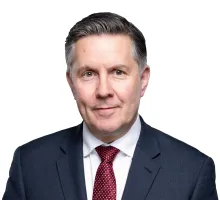
OLIVER PETERSON, HOST: The Federal Health Minister, Mark Butler, joins me here in the ABC studios. Welcome to Drive.
MARK BUTLER, MINISTER FOR HEALTH AND AGEING, MINISTER FOR DISABILITY AND THE NDIS: Thanks, Oly.
PETERSON: You're in Perth today to promote the opening of three new Urgent Care Clinics. Where are they? When do they open? Are they fully bulk-billed and what sort of services do they provide?
BUTLER: Booragoon opened on Monday. It's already seen several dozen patients over the first two days. Yanchep and Mundaring open on Monday next week. They're open seven days a week. That brings the WA fleet of Urgent Care Clinics to 13. We've got a 14th that we're in the process of rolling out in Geraldton, which we think will open sometime in March. So, 14 clinics. They're open seven days a week, with extended hours. The Booragoon clinic I was at, for example, was 7 AM till 9 PM, seven days a week. They're fully bulk billed, and they're really designed to cater for those non-life threatening emergencies.
PETERSON: So you just turn up?
BUTLER: That's right. You just turn up. Interestingly, we've had them operating for a couple of years now as we've progressively built the network up. We're up to about 126 now and a third of the patients going through these clinics are kids under the age of 15. That's much higher than I expected when we came up with the idea. And when you think about it, it's no surprise. They're falling off their skateboards. They're playing sport on Saturday afternoon. They're breaking a finger or even an arm. Their general practice is not open, and so, the only alternative for parents has been to take them to the local hospital ED. If it is a broken finger, you know that you will be shuffled and shuffled to the back of the queue as more life-threatening emergencies come through the front door of the ED. So, it's a better experience. It's a much shorter wait time.
PETERSON: And is it also seeing, therefore, a better result in our public hospitals, in our emergency departments?
BUTLER: Yes. That's right. We're already seeing official data show that those less urgent presentations to hospital EDs are coming down. They're not just flatlining, but they're coming down. They're coming down pretty substantially in areas where there is a Medicare Urgent Care Clinic that's been operating for quite some time. Now, that doesn't mean hospital EDs are sitting around twiddling their thumbs. They're still very, very busy, but they're focused more on those life-threatening emergencies, which, hospitals were built for and equipped for.
PETERSON: Do we need to retrain ourselves that the Urgent Care Clinic is the first port of call if it is not a life-threatening emergency?
BUTLER: That's right, not life-threatening but needs to be seen quickly. Now, that's not just breaks and injuries. It will be urgent respiratory illnesses. Often, we're finding parents taking their children early in the morning because they've had something happen overnight. We worked really hard with state public health systems and with ambulance services to get the protocols right so that everyone across the system was clear, from a clinician point of view, from an ambulance system point of view, about where people should be. There's been a really pleasingly low level of people ending up at the wrong place. Ending up at an Urgent Care Clinic where really they should be at a hospital ED, it does happen. People present maybe with chest pain, in very rare cases, they're very quickly triaged and sent to the local hospital. But pretty quickly, there's only been a system operating for a couple of years – clinicians, GPs, the Urgent Care Clinic Network itself, but also hospital systems ambulance services, and the phone system we now call 1800MEDICARE. It used to be called Healthdirect, tens and tens of thousands of people use every month. They're getting very good at directing people to the right place.
PETERSON: You have given the green light for the private insurers to lift their premiums by 4.41 per cent in April. That's the biggest rise in almost a decade. How on earth are families supposed to absorb that kind of increase, Minister?
BUTLER: This is going to be tough for families, I know. I worked hard over the last few months to get the insurers' claims, they started much higher than 4.4, to get them down, to get them to sharpen the pencil. I'm convinced that's the lowest possible increase for insurance premiums that is consistent with keeping the private hospital system viable.
PETERSON: So how did you arrive at that number?
BUTLER: Well, mainly from advice. We have people, the prudential regulators, that look at hospitals and insurance funds to make sure that they're liquid, that they're going to survive and thrive. But also my own department has a whole lot of technical people who look at this, provide me with advice right through the summer period, about where some of the insurers are frankly asking for more than they can justify, where they're putting too much money into their own profits or management expenses, not enough back to the actual hospitals that deliver the services. It's important to say that 4.4 is an average. If you're a private health insurance member, have a look at what your insurance fund is likely to be doing. Obviously, a lot of people in Western Australia are members of HBF, for example.
PETERSON: Yes, it's about 2 per cent.
BUTLER: It's about 2 per cent.
PETERSON: So, it's a lot lower. But some of those insurers, and you just mentioned there, have inflated profits over the last year. Do you pick up the phone and ring them and say, what are you doing?
BUTLER: I don't pick up the phone. I write to them. There's been a lot of correspondence going back and forth and saying to some of them – some are not-for-profits and some are for profits, very big listed companies – and saying, too much is going to profits, too much is going to management expenses, not enough is going back to hospitals. What we've found is particularly through COVID, insurers dropped the share of their income that they earned from 15 million hardworking Australians who pay their insurance premiums, dropping the share of that income that was actually going out to hospitals to deliver the services. That meant that our private hospital system was really coming under a lot of viability pressure. I've also forced the insurers to start to increase the percentage of the income they earn, or the revenue they earn, that actually ends up in hospitals, delivering surgery, delivering babies, and all the other things.
PETERSON: And is that happening?
BUTLER: That is happening. We'll see it continue over the course of this year and next year as well. I've said the insurers need to do more to get it back up to the average of about 90 per cent of their revenue, which is where it was before COVID, but it's heading in the right direction.
PETERSON: Federal Health Minister Mark Butler is in the ABC studios this afternoon. If to have a chat to him, ask him a question, go for it. The except though with hikes, like this 4.41 per cent now for the insurance premiums, in this inflationary environment, Minister, is it just going to send more families and retirees to the wall? Because they're going to leave the private system and join these public wait lists.
BUTLER: That’s why we work so hard to get that increase down as low as possible. Inflation's running at three-point something. It's higher than inflation, but we know that the cost of delivering healthcare is increasing faster than general inflation. The cost of delivering medical and hospital services has been climbing by 5 per cent over the last year. That's part of the reason why you'll see that increase at 4.4 rather than something with a 3 in front of it. The first three years that I had to approve these increases, we did manage to keep it below general inflation. Across the four years, we've kept the increases to about 3.5 per cent in a pretty high inflationary environment. That's lower than it was, for example, before COVID.
I'm under no illusions about the pressure this is going to place on households at a tough time. I wish I weren't in a position of having to approve these, but I'm confident that this is the minimum increase consistent with keeping our hospitals healthy.
PETERSON: Alex at Karnup wants to know why he now has to pay over $40 for his PSA blood test. It's a newbie. Please ask him, he says.
BUTLER: Let me step back. Medicare pays for items on the Medicare schedule. It's about 5,800 different items, different blood tests, different procedures you might get. They are recommended to us by a group of medical experts, and it's constantly being updated to reflect the latest clinical evidence we have about what is an effective form of treatment. The PSA test was the subject a review by the clinical experts in the area, particularly of prostate cancer, and so there were some changes made. If you are at high risk, if there is any clinical reason why you should have a more frequent test, you're certainly able to do that and claim it on Medicare. But the general frequency of tests for people who aren't at particular high risk has changed over the last few years on the basis of clinical advice.
PETERSON: All right. Beau is in Thornlie. Good afternoon to you.
CALLER BEAU: I wanted to know the increase to our public health system. I work in a hospital and code yellow after code yellow, not enough bed capacity, and I don't think I'll be able to afford for my family for these premiums of 4.1 per cent. I just don't think you're thinking of the people.
PETERSON: What do you say to Beau, Minister?
BUTLER: I just want to assure you that the impact on consumers is the most important consideration I have when the Health Minister, in this case me, have to go through this every single summer. Obviously, insurers push the envelope a bit. That's why we go through a period over a few months and really press them and get independent advice about what it is they actually need to be able to fund the private hospitals to deliver the care. If you're working in the public hospital system, we've also, as you know, only over the last couple of weeks, struck an agreement with state and territory governments that run our public hospital system to give them a record increase in funding to do the important work that the doctors and nurses and health professionals and support workers do at our 750 public hospitals.
There's a lot of pressure on the health system right across the board, public hospitals, private hospitals, and in primary care, which has been a big focus of ours, trying to increase the affordability, the access that people have. I know it is tough out there, Beau. I know this is going to be tough for households. I wish I wasn't in the position of approving an increase that was like this, but we've really squeezed it down as low as we think we responsibly can.
PETERSON: Sixty-eight per cent of West Australians held a private health insurance policy. Does this decision disproportionately affect and penalise West Australians?
BUTLER: WA is a bit of an outlier there. It's about 55 per cent the national figure, 55 per cent of people holding private health insurance. WA is much higher. It does have that strong tradition with HBF as well. We have been conscious that are differences across the country. About half, almost half, of Western Australians hold a policy with HBF. That average of 4.4 per cent, which you'll see in the eastern seaboard markets that rely upon some of the other big insurers, will actually disproportionately affect the eastern states more than WA.
PETERSON: Debbie in South Perth. Good afternoon.
CALLER DEBBIE: I'm a registered nurse, and I had encouraged my mother to keep up private health insurance so she was able to get very prompt assistance if she required it, which she did when she unfortunately got cancer. One of the things that really distressed me, and her as well, she was a full Australian pensioner so she wasn't earning much money but she kept up private health. The pathology bill, for instance, the Medicare schedule fee was $5 and her bill was $105. So, she was $100 out of pocket. That wasn't covered. And that's the sort of thing that puts people off private health and unfortunately, a lot of companies are wealth creation companies. And I now term it wealth care, not healthcare.
PETERSON: What do you say to Debbie, Minister?
BUTLER: Thank you for that story, Debbie. That pathology fee really does surprise me a lot. The bulk billing rate for pathology out of hospitals is still over 99 per cent, I think about 99.6 per cent. Very focused on trying to keep that bulk billing rate up there. But I know that out-of-pocket costs for people seeing specialists and some other parts of the private system, if you like, have been growing dramatically over the last few years. Our first term, over the last few years, we've focused very squarely on trying to lift bulk billing for general practise which really is the backbone of a well-functioning healthcare system. But I've said publicly and bluntly, including to the AMA, our focus, one of our big priorities of this next term of Parliament is the affordability to see a specialist. In many cases, people are being shocked by the bill that they are either getting from a specialist or are being told the day before their procedure is booked, they will have to pay for an anaesthetist or surgery or something like that.
PETERSON: Should their fees be published? Should that be a mandatory requirement of every specialist?
BUTLER: That's something we committed to in the election campaign last year, and I introduced legislation or laws to the Parliament last week when we were in Canberra to make that mandatory. My predecessor, Greg Hunt, had set up a system where specialists could publish their fees, but it was an opt-in. It was a voluntary system. When we came to Government, 20 or 25 specialists out of thousands and thousands had done it. I think at some point you've just got to say, well, this is a joke. We're going to make it mandatory and we're going to get their data and we're going to upload it for people to look at. The thing about specialist fees is they vary wildly. Gap fees for doctors tend to sort of sit a particular band. We can see specialists in Perth, for example, or in Sydney, who might be doing a single type of procedure like a colonoscopy, charge wildly varying fees. Some will charge next to nothing, some will charge several hundred, and there will be someone who charges $3,000 with no apparent difference about how they do it.
We want to give consumers more information so that they can make choice about whether to go to someone who charges $3,000 or someone who charges less. But also, we're looking at all the other options we have to get specialist fees under control. I describe it now as really the barbecue stopper in our healthcare system. People getting this bill shock. They want to go and get a knee done, or some other procedure, or cancer care in the private system, just getting bills that can run to not just thousands, but in some cases tens of thousands of dollars.
PETERSON: Jane's in Kalamunda. What's your question for Minister Butler? Good afternoon.
CALLER JANE: Good afternoon, fellas. Thank you for taking my call. My husband gets an eye injection roughly every eight weeks because he's losing his vision. He's actually had to retire at 60 because work was becoming difficult and he wants to do a few things like heights before they deteriorate completely. And we just got a letter from the Lions Eye Institute saying that from July 1 your Government plan to reclassify Medicare benefit schedule items 43030 and 43032 from type B to type C for private health insurance purposes, which means we won't be able to use that any longer to help cover the cost, which means we'll have to pay about $1,000 every eight weeks. And he's already said he's not going to do that, which means he'll just lose his vision faster. Is there any possibility] that this can be delayed and looked at in a better way so that it can be still affordable? Because he's quite young. A lot of pensioners get it, but there's a lot of people his age and younger that get it. And he really relies on it.
PETERSON: Is there anything that could be done for Jane?
BUTLER: I was talking about the PSA test and the clinical advice we get to change the Medicare schedule. A bit over a year ago, I got that advice to make that change so that the schedule fee would be paid in many cases only for injections given out of hospital rather than in hospital settings. I pushed pause on that advice because I thought it would really lift out-of-pocket costs for people like you and your husband. I pushed pause on that for 12 months to have further consultation. That 12 months is up on July 1. There will be an announcement very, very shortly about what happens after the July 1. But can I just say, I've very clearly heard stories like yours..
PETERSON: Alright, Jane, stand by for that announcement. Jerry's in Westminster. Good afternoon.
CALLER JERRY: Good afternoon, Oly and Minister. I think one of the biggest areas, it's getting bigger every day, and as I speak, it's just getting huge, and that is mental health issues.. What priorities do the Government give in the system to mental health, and what are they doing to try and meet these needs, because it's growing out of all proportion. Is it too late? Are they past the point of no return?
PETERSON: Minister, mental health's priority under your watch at the moment?
BUTLER: Absolutely. I had the great privilege of being the country's first mental health minister 15 years ago.. This is a passion area of mine and you're right to say it's growing. It’s growing, actually, in most countries, certainly the developed countries across the world, particularly for our young. There's been an epidemic of anxiety and depression for young people, which we think is associated with social media. It's been climbing for 20 years or so, but it seems to have accelerated as you've seen social media come on, which is part of the reason why we've introduced this social media ban for under 16s. We want to try and identify what is driving this huge increase in anxiety and depression among young people and really sort of try and deal with it at the cause. At the same time, though, we're rolling out youth mental health facilities. When I was a kid, which was a long time ago,, if you were depressed or you were anxious, you probably didn't talk about it. If you did want to see someone, you could only go and see mum and dad's GP, which most people didn't for obvious reasons. Since then, over the last couple of decades, we've built headspace and a whole lot of services that are sometimes designed by young people to make them feel comfortable going and getting support. We've said at the last election we'd those services very dramatically.
Another area that I'm very concerned about is older adults, by which I mean not people in their 20s, but older middle-aged adults who might have very severe chronic mental illness, often psychotic disorders like schizophrenia, who 40 years ago would have been in long-stay institutions but now are in the community and we know are not getting the support that they need. We had a meeting last Friday of all health ministers and all mental health ministers in the country. We had that in Canberra. We looked at this very closely. We know this is a priority area, that group of adults with severe mental illness who are getting no support. They're vastly overrepresented in the homelessness population, cycling through our emergency departments very frequently and vastly overrepresented in correction facilities as well. We've got to do better. I've said this really is a major cause of real shame in the country. We're not supporting those people and their families more than we are right now.
PETERSON: Alright, so we'll go to Claire in just a moment, we’ve got one from Kieran who says, in the interest of Public Health, will you reduce the tobacco excise because the growth in the illegal trade has boosted smoking rates and brought firebombings to our suburbs?
BUTLER: This is something, as our Finance Minister has said recently, that is constantly under review. The increases in tobacco excise started probably 15 years ago, or close to 15 years ago, and largely took place last decade in the 2010s where they climbed by a bit over 200 per cent. They've been slower increases over the last several years, but they have continued. What we've seen right across the country - it started in Melbourne and then spread through the rest of the country - including here in Perth, is organised crime just take this on. This is not just an Australian issue. There's a vast oversupply of tobacco products. Most of them illegal, circulating right through the global market. Every country is dealing with this. But it has got to epidemic proportions here in Australia. I know over the course of this week, I read that the Cook Government here is introducing legislation to really crack down on it. Penalties for businesses, penalties for landlords, the sort of thing we've seen in the East really start playing out pretty well. But we understand this - I say as Health Minister - this is now, the biggest challenge we have.
PETERSON: Have you lost the battle?
BUTLER: No, I don't say we've lost the battle. We've still got some of the lowest rates of cigarette smoking in the world. That is a great credit to 50 years of work. But this is now, the proliferation of cheap, illegal cigarettes, is now the biggest threat to our most important public health program. Because even though we've got very low smoking rates now, smoking is still the biggest preventable cause of death in this country. The fight is not over, and this is a very big challenge in that long fight.
PETERSON: Alright, final call goes to Claire in Mandurah. Good afternoon to you.
CALLER CLAIRE: Mine is to do with the NDIS. We've got a lot of stuff in the media over the Thriving Kids program. My question's more for the older children between nine and 16. I have a 13-year-old who has got autism, ADHD, PTSD and a lot of other co-morbidities that goes with autism. What are you doing for our teenagers? You talk about how the NDIS is not meant to be there to support children with autism, and you're making it sound like they're a burden to society, where we acknowledge that autism is part of the Disability Act. There's a disability and we are reducing funding. You get the NDIS every time you go under review saying it's parent responsibility. Who looks after us?
BUTLER: The last thing I want to do is to minimise your experience and your children's experience and the support that the community should be giving to you, principally through Government, to ensure that your children get the best opportunities in life and to support you as parents as well. The point I've made is certainly not that autism is not a disability that should be covered by the NDIS. The point I've made is that the NDIS was established to support Australians with significant, long-lasting, usually permanent disabilities. That doesn't matter what the type of disability is. That was the purpose behind the scheme. And that children with, particularly thinking about children under the age of nine, with developmental delay and or autism and other similar conditions who have lower to moderate needs are better supported through mainstream broad-based supports rather than the individualised care plans that are part of the NDIS. That has been a long discussion we've been having over the last few years with state governments, but more importantly, with parents. Thousands them have inputted into the consultations we've had with peak groups as well and arrived at this agreement that we've got with state governments about them really starting to scale up and expand the supports they have for children and parents with those low to moderate needs through the Thriving Kids program. I'm very sorry that I've obviously unsettled you. That was not my intention. I certainly don't want to give any indication that I don't see autism as a significant disability in our community and one that should be supported by the NDIS for those people who have that level of significance that the NDIS was intended always to support.
PETERSON: Minister, we appreciate you coming to the studios today and we’ll welcome you back to Perth next time you’re here.
BUTLER: Thanks Oly.
PETERSON: That is Mark Butler, the Federal Health Minister.
Media event date:
Date published:
Media type:
Transcript
Audience:
General public
Minister: