
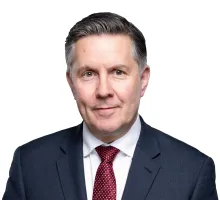
ALI MOORE, HOST: Mark Butler is the Federal Minister for Health and Ageing. Welcome to Drive.
MARK BUTLER, MINISTER FOR HEALTH AND AGEING, MINISTER FOR DISABILITY AND THE NDIS: Thank you, Ali.
MOORE: When you talk about fees being out of control, what are the examples you've seen?
BUTLER: Before I get to that, Ali, can I just say I've been in Alice Springs over the last couple of days and got a sense of just how deeply impacted that community has been by the young girl who was missing for several days and whose body has now been found. And my thoughts just go out to that family and that community. There were hundreds and hundreds of members of that local community out searching, scouring the bushland, and I just know how much they'll be hurting now and frankly how shocked Australians right across our country are at this tragic outcome. It's just heartbreaking. Just heartbreaking. But to your question.
MOORE: No, that's, just let me say that we are going to have a conversation with our reporter up there about Kumanjayi Little Baby and learn a little bit more. And you're right, of course, that the effect of that is far and wide. So let's go to the issue at hand. Yeah, what sort of examples have you seen?
BUTLER: They're frankly right across medical specialties, Ali. In our first term, we focused very much on the growth in gap fees, the decline in bulk billing for general practice visits, and we're starting to see that turn around after a few years of pretty substantial effort. Quite a lot of investment, frankly, by taxpayers. But I'm finding more and more people are talking to us about medical specialist fees for consultations but also for procedures. Those out-of-pocket costs have been climbing rapidly, very rapidly.
MOORE: Why? Do you know why?
BUTLER: There's a range of drivers. It's true that the Medicare rebate was frozen last decade for a number of years, and that put financial pressure on the medical community more broadly, but that doesn't explain the scale of the increase in out-of-pocket expenses. What we also find is that there's very little visibility that people have about what they will be charged. About half of patients report procedures where they don't know what they're going to be charged and where they're surprised and shocked at what they are being charged. Lifting the transparency is important as well.
And the third thing that's quite peculiar to specialists, you don't see this in general practice, is the wild variability in fees. You can look at a procedure in Melbourne, for example, and some specialists will charge very little by way of out-of-pocket, some will charge the average, and there'll be a number who charge just way beyond what the rest of their colleagues are doing. And there's no rhyme or reason. There's no particular difference in quality of the cataract surgery you get or the colonoscopy or the knee surgery. It's just that they feel that they can. It's quite complex. It’s a difficult area, but I've described this as a barbecue stopper because it's the thing people are talking about in healthcare, I think, more than anything else right now.
MOORE: I can certainly tell you that we get plenty of texts. In terms of what you can do to change it, can you strip or will you strip the Medicare benefit from those deemed to be charging excessive fees?
BUTLER: Look, that's on the table. The first thing we're doing is lifting transparency. Greg Hunt, to his credit, my predecessor, Victorian, Health Minister, introduced a system where specialists could publish the out-of-pocket fees that they would be charging. It was a voluntary opt-in system called the Medical Costs Finder. But over several years, out of the tens of thousands of specialists we have in Australia, literally only a few dozen did it. We've taken the decision- I'm serious, a few dozen out of tens of thousands. So we've taken the decision that we'll do it for them. We have access to all those data, and we will start publishing them on a mandatory basis. We've got legislation in the Parliament right now being debated to do just that, a bit more sunlight, frankly.
But I've also said to the medical community, to the AMA, to all of the colleges, every option from my point of view to regulate and control this explosion in out-of-pockets is on the table, and including the one you just said, which is capping the amount that they can charge relative to the Medicare rebate fee.
MOORE: Because medical sunlight is no good if, let's say for example, and we've been talking a lot on this program about dermatologists. I mean I’d be amazed if someone could tell me a dermatologist that actually had a fee that anyone considered to be reasonable. So you can have all the sunlight you like, but if everyone is overcharging, then something else has to happen.
BUTLER: Absolutely. And I've been really clear about this. I think sunlight is a critical factor but it's not sufficient. And so, that will be the first step. But, as you say, transparency depends upon there being good competition in the system. And one of the challenges we have is we don't have enough specialists to provide that competition in many, many parts of the community. You need the option of more direct regulation as well. The third thing-
MOORE: But does that go to, in terms of competition, supply and demand, and this is one of the things that, for example, the College of Dermatologists argues, is that there is not enough training positions, and that is constrained by funding and capacity within public hospitals. So is that something that you would consider as well, increasing the funding for training places for some of these really under pressure specialties?
BUTLER: Yes, but it's also very heavily influenced by decisions the colleges themselves make about number of new entrants to their particular market that they will allow when ultimately, yes, funding is important. Training positions in our state government hospitals are important. But ultimately, those decisions are taken by colleges themselves, and I think there are questions about whether the colleges allow enough people into their professions to provide that competition that I think we all want to see as consumers, as patients, as governments. I think there is a big question there, and that's partly why after National Cabinet directed me to do this a few years ago, we have streamlined the pathway for overseas-trained specialists from jurisdictions where we have high confidence in their training, so the UK, Ireland, New Zealand, Canada, places like that. And we're seeing more of those overseas-trained doctors because they can come in more quickly and they can come in without charging the fees to the colleges, which can run to tens and tens of thousands of dollars.
MOORE: Mark Butler, if I can just also have a look at this other story that I know that you and Cabinet have been focusing on today, the interim report of the Royal Commission into Anti-Semitism. Fourteen recommendations, all of which have been accepted by the government, not all of which are public. But your response to this interim report?
BUTLER: As the Prime Minister has said, this is a really important report to provide a direction forward but also provide some confidence in the community about the national security systems we have in place. And I think it does both of those things. A confidence that our framework is fit-for-purpose, but also some recommendations about ways in which we can enhance our counter-terrorism efforts. And I know there's some work there and some recommendations there for New South Wales, in particular, that Premier Minns has said he's taking very seriously, and I imagine other state governments will look at as well because this could happen in any state or territory across the country. And now, the next phase of the Royal Commission will begin. Already, we've got about 3,500 submissions that have been made. Public hearings will start in May, which will be live streamed for people to be able to follow, and those hearings will start to get to the broader nub of some of the social cohesion and anti-Semitism background that was there for that horrific terrorist event in December.
MOORE: And in the interim, Minister, I mean one of the other recommendations was to make or to prioritise the consistent National Firearms Agreement and together with a gun buyback. I know that this has been a focus, but it seems that actual real actions, practical actions towards a National Firearms Agreement, they seem to have sort of fallen by the wayside a bit.
BUTLER: Our position's been consistent from that first National Cabinet meeting that happened after the terrorist attack. State governments ultimately have to partner with us on that. I hope that the very clear recommendation from the Royal Commission to progress that decision from National Cabinet means that state governments will reflect on their position and start to think about it again.
MOORE: Mark Butler, I appreciate your time this afternoon. Thank you.
BUTLER: Thanks, Ali.
Media event date:
Date published:
Media type:
Transcript
Audience:
General public
Minister: